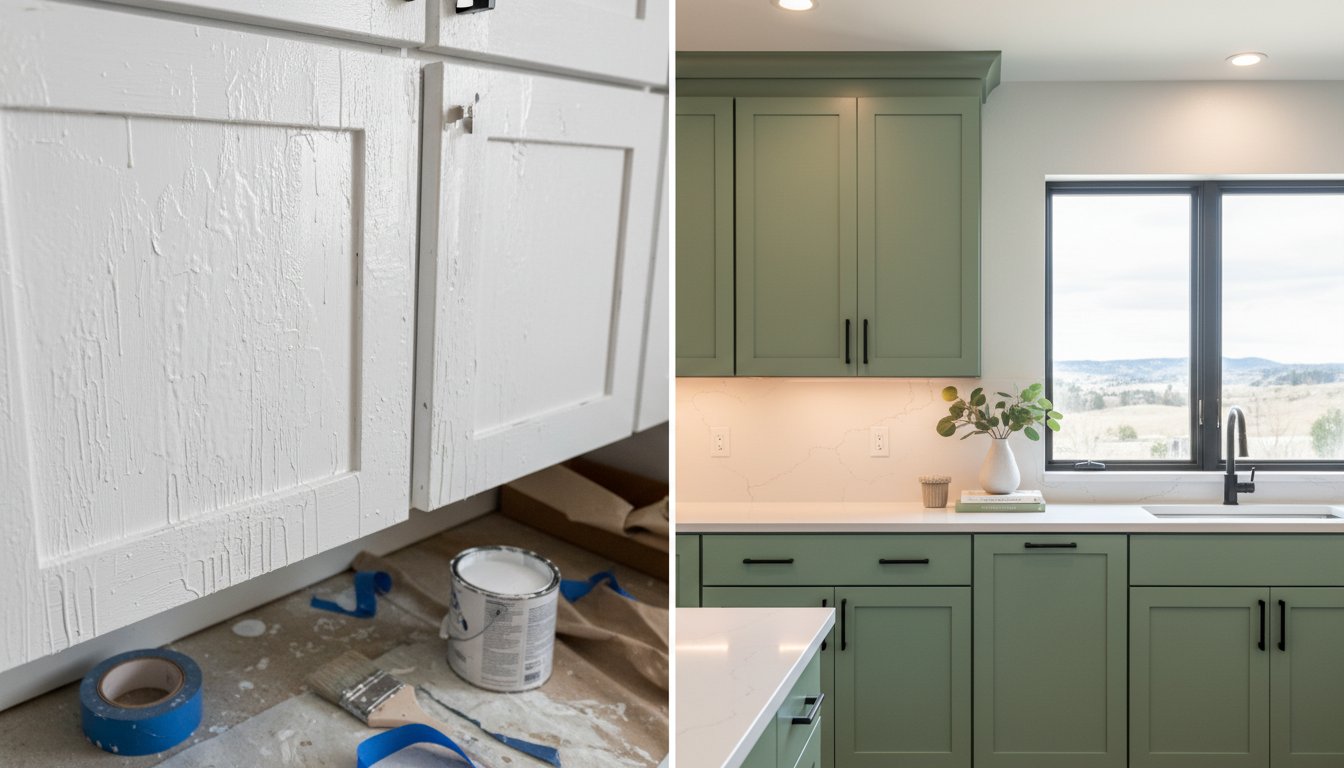
A single weekend spent with a paintbrush can cost you more than $5,000 in professional restoration fees when a DIY finish begins to fail within the first 180 days. Most homeowners start this process to save money while refreshing their kitchen. It’s natural to want a high-end look without the massive expense of a full remodel. You want a kitchen that looks brand new, not a project that shows every brush stroke and drip mark.
The hidden risks of DIY cabinet painting often lead to peeling surfaces and bubbling finishes that occur because of improper preparation. This article explains the technical, financial, and aesthetic pitfalls of doing it yourself. You’ll discover why professional refinishing is the only way to achieve a durable factory finish that withstands daily use. We’ll break down why labor intensive prep work and industrial strength materials are the only things standing between a beautiful home and ruined cabinetry.
Key Takeaways
- Understand the technical risks of DIY cabinet painting, specifically how invisible cooking oils and “no-sand” myths lead to immediate finish failure.
- Learn why the “correction tax” often makes fixing a failed DIY project twice as expensive as hiring a specialized professional from the start.
- Discover how to achieve a durable factory finish using industrial-strength precatalyzed primers and professional spray application instead of brushes and rollers.
- Identify the critical difference between a standard house painter and a specialized cabinet refinisher who prioritizes labor-intensive prep work.
- See why 45 years of experience in the Denver metro area provides a long-term solution that amateur methods simply cannot match.
What Are the Real Risks of DIY Cabinet Painting?
Social media platforms like TikTok and Pinterest suggest that a gallon of latex paint and a few brushes can transform your kitchen in a single weekend. This is the DIY cabinet painting trap. The reality is that the risks of DIY cabinet painting often lead to a result that looks amateur and fails within months. Cabinet refinishing isn’t just “house painting” on a smaller scale; it’s a specialized trade requiring industrial-strength materials and precise application techniques. At Painting Kitchen Cabinet Denver, we’ve spent over 45 years perfecting the process of delivering a durable factory finish that consumer-grade products simply can’t match. We’ve seen thousands of failed DIY attempts where homeowners spent hundreds of dollars only to end up with sticky, peeling doors that require professional stripping and restarting.
Most homeowners head to big-box stores for supplies. These water-based paints are designed for drywall, not for the heavy-duty demands of a kitchen environment. Professional cabinet refinishing utilizes precatalyzed primers and industrial coatings that are chemically superior. These materials bond at a molecular level to the wood. Amateurs often skip the most vital factor, which is proper surface preparation using chemical de-glossers and specialized sanding equipment. Without this, the paint sits on top of the surface rather than becoming part of it. If you don’t use industrial strength products, your kitchen won’t stand up to daily use. You can text us the number of doors and the number of drawers with pictures and we can get you an accurate price immediately to avoid these common pitfalls.
The Aesthetic Risk: The “Painted” vs. “Refinished” Look
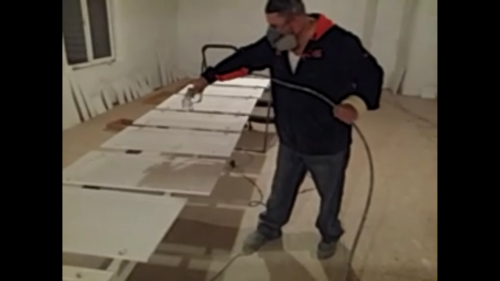
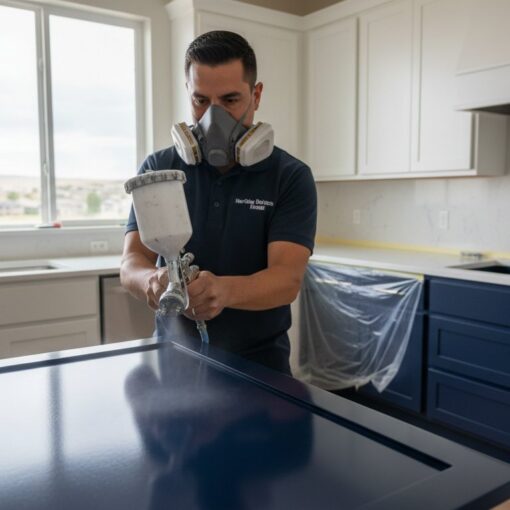
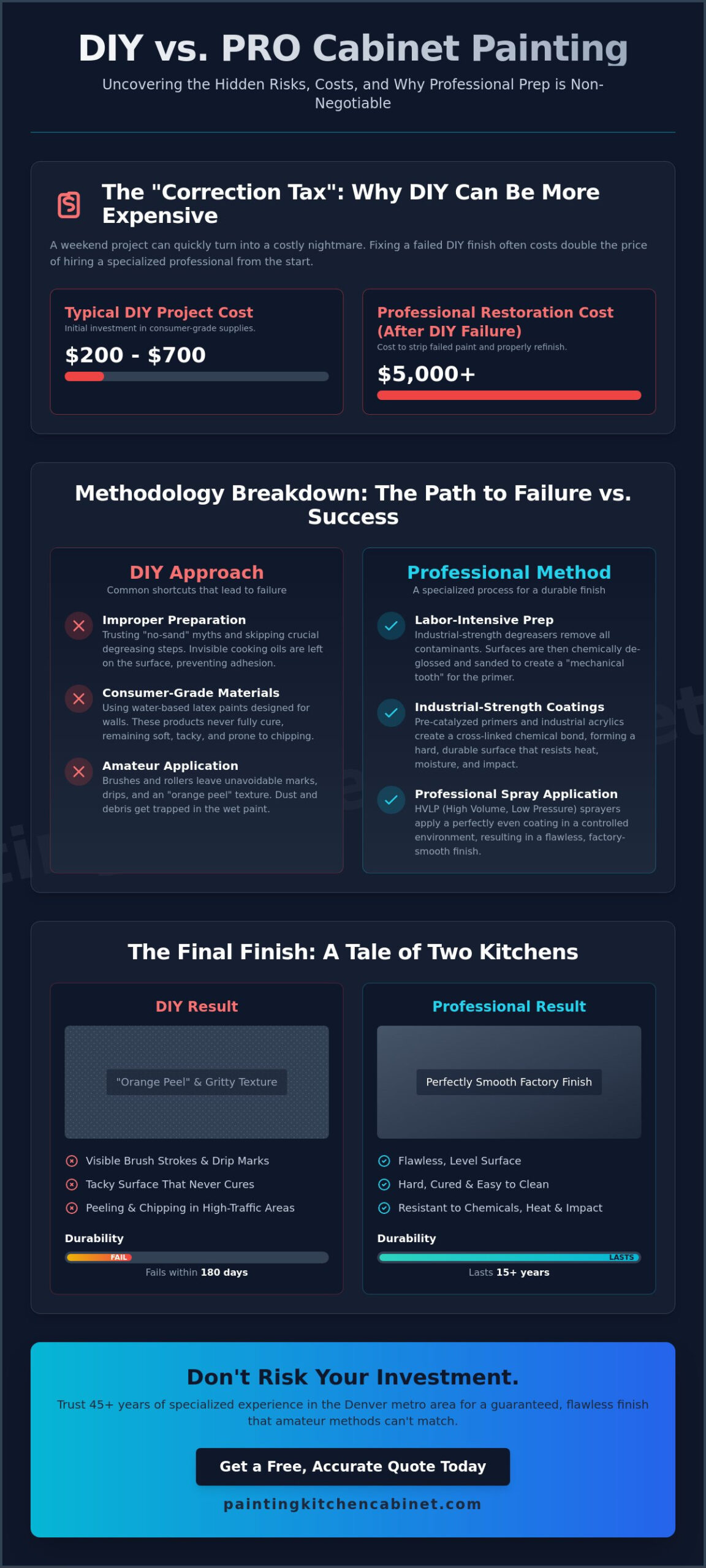
Brush and roller marks are unavoidable for amateurs. Gravity is your enemy when you’re working on vertical cabinet doors. Paint tends to sag or pool, creating an uneven mess that is impossible to fix once it dries. You’ll often see “orange peel” texture, which is a bumpy, pitted surface that ruins the sleek look of a modern kitchen. A true factory finish requires HVLP (High Volume Low Pressure) spray equipment and a controlled environment to ensure the surface is perfectly level and smooth. Amateurs lack the spray booths and professional tools needed to prevent dust and debris from settling into the wet finish, leading to a gritty texture that feels like sandpaper.
The Durability Risk: Why DIY Projects Peel
Your kitchen is a harsh environment. It’s full of heat, steam, and constant moisture from cooking and cleaning. DIY projects usually fail first around high-traffic areas like handles, hinges, and the dishwasher area where steam is most intense. Adhesion failure is the primary cause of DIY cabinet peeling, occurring when the coating fails to bond to the substrate. When you use cheap latex caulking or standard wall paint, the finish will chip the first time a pot hits the door or a wet hand touches the drawer. We focus on labor intensive prep work because it’s the only way to guarantee the finish won’t flake off in six months. The risks of DIY cabinet painting are not just about looks; they are about the longevity of your investment.
The Technical Science of Failure: Why Prep and Chemistry Matter
One of the biggest risks of DIY cabinet painting is believing the marketing on a “no-sand” primer can. These products promise a shortcut, but chemical bonding always requires a mechanical tooth to succeed. Without proper sanding, the paint sits on top of the surface rather than becoming part of it. This usually leads to peeling or chipping within 6 to 12 months of daily use. Professional results require a surface that is physically etched to accept the coating.
The role of contaminants is the second major hurdle. Kitchens are environments filled with invisible cooking oils, steam, and skin oils. Even if a cabinet looks clean, these residues prevent paint from sticking. If you don’t use industrial-strength degreasers, the new finish will “fish-eye” or bubble. Most consumer latex paints bought at big-box stores never fully cure to the hardness required for cabinetry. They stay soft and “tacky,” which means they will eventually stick to the face frames and peel off when you open the door.
Professional shops use industrial-strength acrylics and precatalyzed primers. These products create a cross-linked chemical bond. This technology provides a factory finish that resists chemicals, heat, and impact. If you want a surface that lasts 15 years instead of 15 weeks, the chemistry must be right.
The Colorado Factor: Dryness and Wood Movement
Denver’s environment presents unique challenges for wood. The average humidity in Colorado often drops below 15%, which causes wood to shrink and expand more aggressively than in humid climates. DIY paints lack the specialized flexibility to handle this constant movement. You will often see “spider-web” cracks at the joints of Shaker-style doors because the paint isn’t moving with the wood. Additionally, using water-based DIY products without a professional sealer causes “grain raising.” This makes the wood fibers swell and creates a rough, sandpaper-like texture that ruins the aesthetic.
The Prep Work Bottleneck: 75% of the Job
True professionals know that 75% of a successful project happens before a spray gun is even triggered. This labor-intensive process includes several critical stages:
- Industrial Cleaning: Removing every trace of grease and wax.
- De-glossing: Chemically removing the factory sheen to allow for better adhesion.
- Mechanical Sanding: Creating that necessary “tooth” for the primer to bite into.
- Dust Management: When sanding older cabinets, you must be aware of the dangers of lead dust if your home was built before 1978.
Amateurs often use cheap latex caulking to fill gaps. This is a mistake because cheap caulk shrinks and pulls away from the wood over time, leaving ugly black lines at every seam. Our cabinet refinishing process uses high-solids primers and industrial fillers that stay bonded for the long haul. To see the difference a professional prep process makes, you can text us the number of doors and drawers with pictures and we can get you an accurate price immediately.
The Hidden Costs: Why DIY Can Be More Expensive
DIY projects often look like a bargain on paper. The reality is usually the opposite. One of the primary risks of DIY cabinet painting is what we call the “Correction Tax.” When a homeowner uses the wrong primer or fails to clean the grease off the wood, the paint will eventually bubble or peel. A professional cannot simply paint over that mess. We have to remove every bit of the failed coating before we can apply our industrial strength products. This means fixing a bad DIY job often costs twice as much as starting fresh with a professional team.
The cost of specialized tools is another factor people overlook. You won’t get a factory finish with a cheap brush or a hardware store roller. To do the job right, you need high-end HVLP sprayers, HEPA sanding equipment, and professional-grade respirators. Investing in this gear can easily cost $800 to $1,500. If you try to save money by using low-quality tools, the finish will show it through visible brush marks and orange peel textures.
Your time is a valuable currency. A mid-sized kitchen requires 40 to 60 hours of intense labor. That isn’t just one weekend. It’s your entire vacation or every night and weekend for a full month. When you calculate your own hourly rate, the “savings” of a DIY project disappear quickly. Finally, consider your home’s resale value. Real estate experts know that the kitchen is the most important room for an appraisal. A sloppy paint job with drips or uneven coverage can actually decrease your home’s value by thousands of dollars because it looks like a cover-up for underlying damage.
Fixing a DIY Disaster: The Stripping Process
When we take on a “fix-it” job, the labor is massive. Amateur house painters often use cheap latex paint that stays soft and gums up sanding pads. We have to strip this material from every crevice and molding. This is labor intensive work that requires patience and expertise. Using harsh chemical strippers can damage the underlying wood grain if they aren’t handled correctly. It’s always cheaper to invest in a professional finish the first time rather than paying for a total strip and sand later.
Investment Protection: Refinishing vs. Replacing
Choosing professional cabinet refinishing in Denver is a smart way to protect your biggest investment. Replacing cabinets entirely can cost between $20,000 and $50,000 for a standard kitchen. Our process gives you the look of a full replacement for a fraction of that cost. There’s also the “unseen” cost of your kitchen being out of commission. A DIY project can leave your kitchen unusable for weeks. We get the job done quickly and efficiently, so you aren’t living in a construction zone. Avoiding the risks of DIY cabinet painting ensures you get a durable, factory-quality finish that adds real equity to your home.
The Professional Advantage: Spraying for a Factory Finish
Painting Kitchen Cabinets Denver provides a level of quality that DIY projects simply cannot match. One of the primary risks of DIY cabinet painting is the texture left behind by rollers and brushes. We don’t use them. Our team uses spray application exclusively for every job we perform. This is the difference between a standard house painter and a specialized cabinet refinisher. A general painter might be good at walls, but Cabinet Refinishing requires industrial-strength acrylics and precatalyzed primers. These products provide a surface harder than the wood itself. We perform the heavy lifting in a controlled shop environment. This eliminates the risk of contaminants like pet hair, dust, or kitchen grease ruining the wet finish.
Homeowners often underestimate the technical skill required for a smooth surface. Spraying requires precise pressure settings and professional-grade equipment that costs thousands of dollars. When you attempt this as a weekend project, you often end up with “orange peel” textures or runs in the paint. Our specialized approach ensures that the coating is even across every inch of the wood. We focus on the chemistry of the bond. Our industrial coatings are designed to withstand the heat and moisture of a kitchen, unlike the standard latex paints found at local hardware stores.
Our Meticulous 45-Year Process
Our company has spent over 45 years perfecting the Cabinet Refinishing process. We start by removing every piece of hardware, every door, and every drawer front. These are transported to our shop for off-site spraying. This step is labor intensive but necessary for a professional result. While the doors are being finished, we handle the cabinet boxes in your home using industrial masking and heavy-duty ventilation. This prevents overspray and odors from lingering in your living space. We define a factory finish as a multi-layered, chemically bonded coating system that integrates with the wood substrate rather than just sitting on top of it.
- Total removal of all hinges, handles, and bumpers.
- Off-site spraying in a dust-free, temperature-controlled environment.
- On-site industrial masking of all floors, counters, and appliances.
- Use of high-volume, low-pressure (HVLP) systems for maximum precision.
The Durability Guarantee
A professional warranty is the hallmark of quality Cabinet Refinishing. DIY paint jobs often peel within the first 12 months because the prep work was skipped. We focus on preparation as the most vital factor in the entire job. Our finishes are designed to resist yellowing, chipping, and damage from household chemicals like cleaners or grease. If you are comparing options, use our hiring a kitchen cabinet painter guide to ensure you are getting real value. We serve Denver, Aurora, Littleton, and the surrounding areas with a commitment to durability that house painters cannot offer.
Conclusion: Is DIY Cabinet Painting Worth the Risk?
Painting your own cabinets might seem like a way to save money, but the risks of DIY cabinet painting usually outweigh the initial savings. Most homeowners find that a weekend project turns into a month-long ordeal that ends with peeling paint and visible brush marks. DIY is a short-term fix that often fails within 12 months because household paints and retail primers aren’t designed for the heavy use kitchen cabinets endure. Professional Cabinet Refinishing is a long-term solution that provides a durable, factory finish that stands up to daily heat, moisture, and grease.
Painting Kitchen Cabinets Denver brings a 45-year track record to every home in the Denver metro area. We don’t use amateur house painter methods or cheap latex products. Our process relies on industrial strength materials and precatalyzed primers that bond to the wood at a molecular level. You get the peace of mind that comes from hiring seasoned craftsmen who understand that prep work is the most vital factor in a successful job. Protecting your investment means choosing a finish that looks like it came straight from the manufacturer.
Next Steps for Your Denver Kitchen
Getting started with a professional transformation is straightforward and fast. You don’t need to wait weeks for a salesperson to visit your home. To get an accurate quote, simply count every individual door and drawer front in your kitchen. Once you have your count, text us the numbers along with a few clear photos of your current layout. We provide immediate, accurate pricing based on the scope of your specific project. A typical professional kitchen transformation takes about 5 to 7 business days, minimizing the time your kitchen is out of commission.
The Voltie Difference
Our specialized focus on cabinets makes us the top choice for homeowners across Colorado. We have spent over 45 years perfecting our “factory finish” technique, moving beyond the risks of DIY cabinet painting to deliver results that last for decades. We have served thousands of Denver homeowners in areas like Highlands Ranch, Arvada, and Cherry Creek who chose quality over amateur risks. Our company is based on quality work at affordable Cabinet Refinishing prices. Text us your photos today at our main business line for an immediate estimate and join the thousands of local families who trust our expertise over DIY shortcuts.
Protect Your Investment With a Professional Factory Finish
Choosing to paint your own cabinets often leads to permanent damage and failed finishes that require complete stripping to fix. The risks of DIY cabinet painting are high because standard house paint and brushes simply cannot provide the durability of industrial-strength, spray-applied acrylics. At Painting Kitchen Cabinets Denver, we bring 45+ years of specialized cabinet refinishing experience to every job. We focus on the intensive prep work and technical chemistry that amateur weekend projects ignore. Our process ensures a smooth, factory finish that stands up to daily use without chipping or peeling. We serve homeowners throughout Denver, Boulder, Castle Rock, and all surrounding Colorado cities with a commitment to quality craftsmanship. It’s much more affordable to do the job right the first time than to pay for a professional to fix a DIY failure later. You deserve a kitchen that looks brand new and stays that way for years to come.
Get a Factory-Quality Finish: Text Us Your Photos for an Immediate Quote!
We’re ready to help you transform your kitchen into a space you’re proud to show off.
Frequently Asked Questions
Can I just sand my cabinets and paint them with regular kitchen paint?
No, regular kitchen paint is too soft and will fail under the heat and humidity of a working kitchen. Hardware store paints lack the industrial strength resins found in professional coatings like precatalyzed primers. Painting Kitchen Cabinets Denver uses specialized finishes that create a hard shell. Without these industrial products, your paint will remain tacky and peel off when you clean the surfaces.
How long does a DIY cabinet paint job typically last compared to professional work?
A DIY cabinet paint job typically lasts 12 to 24 months before you see chips, scratches, or yellowing. In contrast, a professional factory finish is designed to last 10 to 15 years under normal use. The difference comes from the labor intensive prep work and the use of industrial strength coatings. Professionals ensure the bond is permanent, whereas DIY paint often sits on top of the wood.
Why is my DIY cabinet paint peeling already?
Peeling is usually caused by inadequate preparation and the failure to remove 100% of existing cooking oils. This lack of adhesion is one of the major risks of DIY cabinet painting. If you don’t use industrial deglossers and high quality sanding techniques, the paint won’t bond to the wood. Most DIYers skip the 3 step cleaning process, resulting in paint lifting off the surface in 30 days or less.
What is the most common mistake homeowners make when painting cabinets?
The most common mistake is rushing the cleaning and sanding phases to save time. Preparation accounts for 75% of the total labor in a professional project. Homeowners often apply paint directly over old varnish or hidden grease, which leads to immediate failure. Professionals spend 3 to 4 days on preparation alone to ensure the finish looks like it came from a factory.
Is it cheaper to paint cabinets yourself or hire a pro in the long run?
Hiring a professional is more cost effective over a 10 year period. A failed DIY project often requires professional stripping and sanding, which can increase the cost of a redo by 50% compared to starting fresh. When you consider the price of professional sprayers, industrial primers, and the 60 plus hours of labor required, the DIY route rarely saves money over time.
Does painting kitchen cabinets reduce the resale value of a home?
A poor DIY job with visible brush marks or drips can reduce a home’s value because buyers see it as a future repair cost. According to a 2023 Zillow report, high quality kitchen upgrades provide a reliable return on investment. A professional finish from Painting Kitchen Cabinets Denver looks like new cabinetry. This professional appearance helps sell homes faster than kitchens with peeling, amateur paint.
Can professional painters fix a DIY job that went wrong?
Yes, we can fix a failed DIY job, but the process is very labor intensive. We often have to strip the old, soft paint down to the bare wood before we can start our standard 5 step preparation. This adds extra days to the project timeline and increases the workload. You can text us the number of doors and the number of drawers with pictures and we can get you a price immediately.
What kind of paint do professionals use that I can’t buy at a hardware store?
Professionals use industrial strength coatings like precatalyzed lacquers and 2K polyurethanes that aren’t sold at retail hardware stores. These products contain high solids and chemical hardeners that cure much harder than standard latex or oil paint. We use these specialized coatings to provide a factory finish that resists scratches and household chemicals for over a decade. These materials require professional spray equipment to apply correctly.