

The thought of a botched cabinet paint job-streaky brush marks, peeling corners, and a finish that looks cheap-is enough to stop any kitchen update in its tracks. You know a transformation is possible, but the risk of hiring the wrong person feels immense. How can you be sure the finish will last? And what is the real difference between a general house painter and a true specialist? Choosing the right kitchen cabinet painter is not just a small detail; it is the most critical decision for achieving a flawless, durable result that looks and feels brand new.
Cabinet Refinishing Service Areas in Denver & Surrounding CitiesCabinet Painting in Denver County, CO
Serving Lakewood, CO, Littleton, CO, Golden, CO, Arvada, CO, Wheat Ridge, CO, Evergreen, CO, and Morrison, CO.
Cabinet Painting in Arapahoe County, CO
Including Centennial, CO, Greenwood Village, CO, Cherry Hills Village, CO, Englewood, CO, and Aurora, CO.
This guide provides the direct, practical knowledge you need to hire with total confidence. We will show you exactly what a professional, labor-intensive preparation process looks like-the only way to guarantee a true factory finish that won’t chip or fail. You will learn how to spot an expert, understand their quote, and know the right questions to ask. By the end, you’ll have a clear roadmap to getting that stunning, updated kitchen without the cost and disruption of a full remodel.
Key Takeaways
-
Understand why a specialist’s skills in wood finishing are fundamentally different from a general house painter’s.
-
Learn how the application method-spraying versus brushing-is the most critical factor in achieving a durable, factory-like finish.
-
Discover the difference between standard latex paint and the industrial-strength coatings a true professional uses for long-lasting results.
-
Get our essential checklist of questions to ask before you hire a kitchen cabinet painter to ensure they follow a professional, labor-intensive process.
Table of Contents
What a Professional Cabinet Painter Does (and a General Painter Doesn’t)
There is a fundamental difference between a general house painter and a professional kitchen cabinet painter, and understanding this distinction is the first step in protecting your investment. A house painter is skilled at applying paint to large, static surfaces like drywall. Their job is about coverage and speed. A cabinet painter, however, is a wood finishing specialist. Their craft is transforming existing, high-use cabinetry into a durable, like-new state. This is not just painting; it is a meticulous refinishing process designed to produce a smooth, hard-wearing factory finish that lasts for years.
The Mindset of a Cabinet Specialist
A true cabinet professional views your kitchen cabinets as pieces of furniture, not as extensions of your wall. This fine-finish approach demands a deep understanding of wood. A specialist knows the nuances of various wood types, from the open grain of oak to the smooth surface of maple. This knowledge of the different types of cabinet materials dictates the entire preparation and priming process to prevent issues like tannin bleed. We prioritize meticulous, labor-intensive prep work over speed, and we invest in specialized equipment like industrial-grade spray systems and dust extraction tools that a general painter simply does not own.
Red Flags: When a ‘Painter’ Isn’t a Cabinet Pro
Hiring the wrong person can lead to a peeling, chipping disaster in a matter of months. An amateur house painter often reveals themselves quickly. Be cautious if you see these warning signs:
-
Their primary service and portfolio are focused on interior/exterior house painting, with few, if any, detailed cabinet projects.
-
They talk about brushing or rolling the finish on your cabinet doors and frames inside your kitchen. This is a guarantee for brush marks and an inferior bond.
-
They cannot clearly explain their multi-step process for degreasing, sanding, and using the correct industrial-strength primers for cabinetry.
-
Their price seems too good to be true. A proper cabinet refinishing job is labor-intensive, and a low price almost always means critical preparation steps are being skipped.
The difference between a painted kitchen and a professionally refinished kitchen comes down to this specialized expertise. A dedicated kitchen cabinet painter has the right tools, materials, and most importantly, the right process to deliver a result that looks and feels brand new.
The Process: What to Expect from a True Professional
A true factory finish cannot be rushed in one or two days. The meticulous process employed by a professional kitchen cabinet painter is labor-intensive and spans several days, blending on-site work with specialized off-site refinishing. Understanding this detailed approach is a crucial part of vetting any home improvement contractor, as it reveals a commitment to quality over speed. This transparency justifies the investment and ensures a durable, long-lasting result. While your kitchen remains functional for most of the project, we minimize disruption by completing the most intensive work at our shop.
Phase 1: In-Home Preparation
Our work begins with the complete protection of your home. We meticulously mask off all floors, countertops, backsplashes, and appliances. A full dust and vapor barrier is constructed to completely seal off the kitchen, containing all work within the designated area. Every door, drawer front, and piece of hardware is carefully removed and labeled to guarantee precise reassembly. The final, and most vital, step in this phase is the thorough cleaning and degreasing of all cabinet boxes and frames to ensure perfect adhesion of the primer and paint.
Phase 2: Off-Site Door & Drawer Refinishing
Your cabinet doors and drawer fronts are transported to our dedicated spray shop. This controlled environment is essential for achieving a flawless, smooth finish free from dust and debris. Here, the real prep work begins. We conduct an intensive sanding process to remove the old finish and create an ideal surface for priming. We then apply specialized bonding primers, followed by multiple coats of industrial-strength acrylic paint, sprayed for a perfect, even coating that looks and feels like it came from the factory.
Phase 3: Final On-Site Work & Reassembly
While your doors are being perfected off-site, our team preps and spray-paints the cabinet boxes and frames inside your home. We use the same high-grade materials to ensure a seamless match. Crucially, we allow for proper cure time-a step often skipped by amateurs that is essential for long-term durability. Once cured, we carefully re-install the doors, drawers, and your new or existing hardware. A professional kitchen cabinet painter isn’t finished until you are completely satisfied, which is why we conclude every project with a final inspection alongside you.
Spray vs. Brush & Roll: Why the Method Matters Most
After preparation, the single biggest factor determining the quality and durability of your cabinet finish is the application method. Many homeowners, and even some general painters, believe brushing and rolling can create a charming, ‘hand-crafted’ look. This is a critical misunderstanding. For a durable, high-end finish, there is no substitute for spraying.
Think about the finish on a new car-it’s perfectly smooth, hard, and flawless. That result is only achievable with a sprayed application. A professional kitchen cabinet painter applies the same industrial logic to your home, delivering a finish that is built to last and impossible to replicate with a brush.
The Flawless Finish of Spray Painting
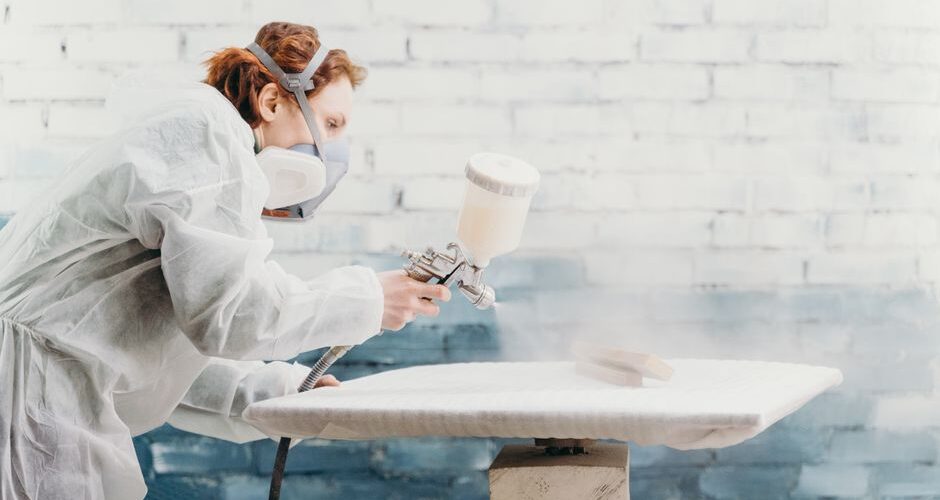
Spraying is the industry standard for all high-end cabinet manufacturing and refinishing for a reason. It atomizes the coating, allowing it to lay down in a thin, perfectly even layer that self-levels into a seamless surface. This method is not just about looks; it’s about performance.
-
A True Factory Finish: Spraying achieves a perfectly smooth, glass-like coating with zero imperfections, mimicking the look and feel of brand-new cabinetry.
-
Superior Durability: This technique allows for the use of harder, more durable industrial coatings like pre-catalyzed lacquers that cannot be brushed effectively.
-
Consistent Coverage: A sprayer ensures that every corner, crevice, and detailed profile of your cabinet doors receives a consistent, uniform amount of paint.
The Problems with Brushing and Rolling Cabinets
While suitable for walls, brushing and rolling are the wrong tools for finishing high-touch surfaces like cabinets. This method inherently introduces texture and defects that lead to a subpar appearance and premature failure. It’s the hallmark of an amateur job.
-
Surface Imperfections: This technique inevitably leaves behind brush strokes and roller texture (stipple), which are especially obvious under kitchen lighting.
-
Thick, Weak Coats: To hide imperfections, paint is often applied too thickly, resulting in a soft finish that is prone to chipping, peeling, and sticking.
-
Inadequate Materials: Brushing is typically done with softer latex paints not designed for the daily wear and tear kitchen cabinets endure.
What About the Mess? Professional Spraying On-Site
The fear of overspray is valid when dealing with inexperienced painters. However, a true professional treats your kitchen like a surgical suite. The on-site spraying process is meticulously controlled and contained. We use extensive masking with paper and plastic to protect every non-painted surface-floors, countertops, appliances, and walls. Powerful ventilation and extraction systems are set up to manage all overspray and fumes, ensuring the air stays clean and the finish lands only where it’s supposed to. The result is a flawless application with zero mess. See our meticulous preparation process.

Choosing the Right Materials: It’s Not Just Paint
A flawless application technique means nothing if the materials are wrong. This is one of the biggest distinctions between a true cabinet refinishing expert and a general house painter. The coatings used on your kitchen cabinets must be engineered to withstand daily abuse, from cooking grease and cleaning chemicals to constant opening and closing. Using standard wall paint on cabinets is a guaranteed path to chipping, peeling, and a sticky, impossible-to-clean surface.
A professional kitchen cabinet painter understands that the product is just as critical as the preparation. We exclusively use materials designed for one purpose: creating a durable, factory-grade finish on cabinetry.
The Role of Primer: The Foundation of Durability
Primer is not an optional step; it is the absolute foundation of a lasting finish. Its job is to ensure the topcoat adheres permanently to the cabinet surface. We use specialty pre-catalyzed primers that are formulated to bond aggressively to wood and block stains. On oak, cherry, or mahogany cabinets, these primers stop wood tannins from bleeding through and discoloring the final paint color. Skipping this critical step ensures the paint will fail.
Top Coats: Industrial Coatings vs. Standard Paint
The topcoat is what you see and touch every day, and it must be tough. This is why we use industrial-strength coatings, not latex paint from a hardware store. These products are chemically designed to cure to a much harder, more resilient finish that mimics the durability of brand-new, factory-finished cabinets.
The advantages of professional-grade coatings are clear:
-
Superior Hardness: Our coatings cure to a hard shell that resists chipping, scuffing, and scratches from daily kitchen activity.
-
Chemical Resistance: The finish will not break down or become sticky when exposed to common household cleaners, grease, or food spills.
-
Non-Yellowing Stability: The advanced pigments and resins ensure your white or light-colored cabinets stay true to their color and won’t yellow over time.
When you interview any kitchen cabinet painter, make sure to ask for the specific product names of the primer and topcoat they use. A craftsman who is confident in their materials will have no problem sharing that information. At Painting Kitchen Cabinet Denver, we are transparent about our process because we know our industrial-grade materials deliver the results our clients expect.
How to Hire a Cabinet Painter: Your Vetting Checklist
Choosing the right company to paint your kitchen cabinets is the most important decision you will make. A low price often signals skipped steps, cheap materials, and a finish that will fail. This checklist is designed to help you separate the true professionals from the amateur house painters. Arm yourself with these questions and you will have the confidence to hire a qualified kitchen cabinet painter who delivers a durable, factory-grade finish.
Questions You Must Ask
A professional will have clear, confident answers to these questions. Vague responses are a major red flag.
-
Do you spray the cabinets or brush and roll them? The only acceptable answer is spraying. Brushing and rolling leaves texture and marks, and it is not the method used to achieve a true, smooth factory finish.
-
Do you take doors and drawers off-site to a spray shop? Professionals work in a controlled environment. Taking doors and drawers off-site minimizes dust and fumes in your home and allows for a flawless, baked-on finish that can’t be replicated in a garage.
-
What specific primer and topcoat products do you use? Ask for the brand and product line. A pro uses industrial-strength, precatalyzed primers and pigmented topcoats designed specifically for cabinetry, not just high-quality wall paint from a hardware store.
-
Can you describe your preparation process in detail? This is the most vital factor. The answer must include extensive cleaning and degreasing, scuff sanding every square inch, and applying a bonding primer. Anything less is a shortcut to failure.
What to Look For in a Portfolio and Reviews
Proof of quality work is everything. Look past the perfectly staged photos and dig for real evidence of craftsmanship.
-
Look for close-up shots that show the smoothness of the finish around corners and edges. Anyone can take a good photo from ten feet away.
-
Ensure the portfolio is extensive and shows a variety of kitchens, not just one or two successful jobs.
-
Read reviews that mention durability and process. Comments like "the finish has held up perfectly for two years" are far more valuable than "it looks great."
Understanding the Quote
The quote reveals everything about the company’s process. A professional kitchen cabinet painter provides a detailed, transparent document that outlines the entire scope of work, including the exact prep steps and the specific materials being used. Beware of vague, one-line quotes that simply state "paint cabinets" for a set price. These are often from companies that cut corners on the labor-intensive prep work that guarantees a lasting finish. A quality job is an investment. For a quote that details every step of our proven process, you can text us photos for a fast, detailed quote.
Your Flawless Factory Finish Awaits
Choosing who to trust with your kitchen is a major decision. As you’ve learned, the difference between a peeling, amateur job and a durable, beautiful result comes down to expertise. A true professional understands that meticulous prep work, spray application, and industrial-strength coatings are non-negotiable. Hiring the right kitchen cabinet painter isn’t just about a new color; it’s an investment in craftsmanship that will last for years.
With over 45 years of specialized experience, we have mastered this labor-intensive process. We rely exclusively on spray application and premium, industrial-strength coatings because it is the only way to achieve the true factory finish your home deserves. We do not cut corners-we deliver lasting quality backed by decades of proof.
Ready for a flawless finish? Text pictures of your cabinets to us for an immediate, accurate quote. You’re now equipped to make a confident choice, and your stunning kitchen transformation is closer than you think.
Frequently Asked Questions About Our Cabinet Painting Process
How long does professional cabinet painting last?
A professional paint job, done the right way, is built for longevity. Our process, which includes meticulous prep work and industrial-strength coatings, creates a finish that can last 8-15 years or more with proper care. Unlike a job done by an amateur house painter, our factory finish is extremely durable and made to withstand daily kitchen use. The quality of a professional kitchen cabinet painter makes all the difference in the lifespan of the final product.
Can you paint any kind of kitchen cabinet, like laminate or thermofoil?
Yes, we can. The key to painting difficult surfaces like laminate, thermofoil, or melamine is proper preparation and specialized bonding primers. We use industrial-grade primers designed to adhere to these non-porous surfaces, creating a solid foundation for our topcoats. This is a labor-intensive process that requires specific products and expertise to ensure the finish does not peel or fail. We have the experience to handle these materials correctly for a durable result.
How much disruption will there be in my home during the project?
We work to minimize disruption in your home. The most labor-intensive part of the job-sanding and spraying the doors and drawers-is done off-site in our controlled spray shop. The in-home portion involves carefully masking your kitchen and painting the cabinet boxes, which typically takes just a few days. Your kitchen will be sectioned off, but we are efficient and clean, ensuring you can return to normal use as quickly as possible once our work is complete.
How long does the entire cabinet painting process take from start to finish?
A complete, high-quality cabinet painting project typically takes between 5 to 7 business days from start to finish. This timeline allows for the proper removal of all doors and drawers, thorough on-site prep of the cabinet boxes, off-site finishing, and crucial curing time for our industrial coatings. Rushing this process compromises the durability of the finish, which is something we will not do. We focus on doing the job right the first time.
What is the best way to clean and care for my newly painted cabinets?
Caring for your new factory finish is simple. For routine cleaning, use a soft, damp cloth with a mild soap and water solution, such as a drop of Dawn dish soap in warm water. Avoid using harsh, abrasive cleaners, scouring pads, or ammonia-based products, as they can dull or damage the finish over time. Promptly wipe up any spills, especially those from acidic foods or oils, to maintain the integrity of the coating for years to come.
Is it cheaper to paint my cabinets or reface them?
Professional cabinet painting is significantly more cost-effective than refacing. Refacing involves replacing all your cabinet doors and drawer fronts and applying a new veneer to the boxes, which often costs 50-70% as much as a full cabinet replacement. Our cabinet refinishing process achieves a like-new, factory finish look for a fraction of that price, making it a much more affordable option for a complete kitchen transformation without the massive expense.
Will the paint eventually chip or peel off?
When the work is done correctly, chipping and peeling are not a concern. Paint failure is almost always caused by improper prep work or the use of inferior materials like latex paint. Our process is labor-intensive and focuses on meticulous preparation, including de-greasing, sanding, and applying industrial-strength bonding primers. This ensures maximum adhesion of our precatalyzed lacquer, creating a hard, durable finish that resists chipping and will not peel off your cabinets.