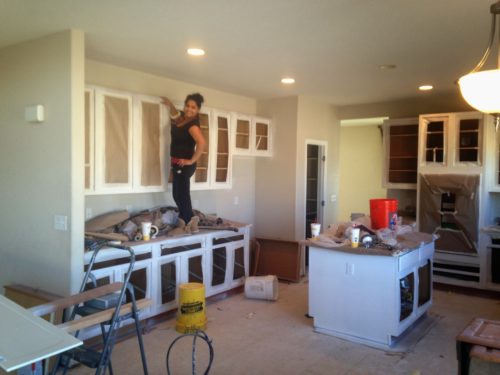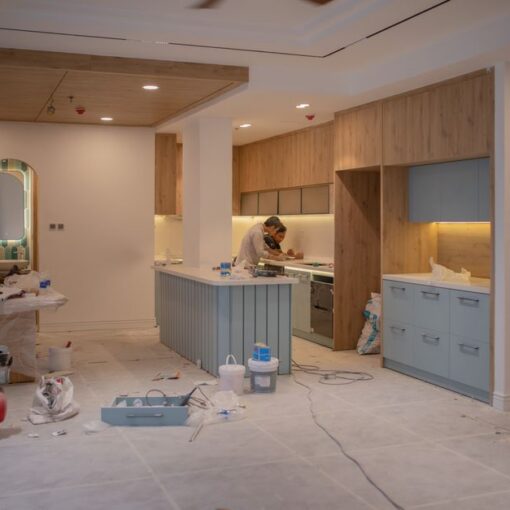

If you are standing in your Denver-area kitchen right now, staring at cabinets that are structurally sound but visually stuck in another decade, you are not alone. Thousands of homeowners across the metro area face the same dilemma every year: rip everything out and spend a small fortune on replacement, or find a way to transform what is already there. Professional kitchen cabinet painting with factory finish in Denver, CO has emerged as the clear answer for those who want the smooth, durable surface of new cabinetry without the six-week disruption and five-figure price tag of a full remodel. This guide walks you through exactly what that service entails, what it costs, how the process works, and how to choose a provider you can trust in communities from Castle Rock to Highlands Ranch.
Table of Contents
- Why Denver Homeowners Are Choosing Factory Finish Cabinet Painting Over Replacement
- What "Factory Finish" Really Means: Shop-Sprayed vs. In-Home Painting
- The Step-by-Step Factory Finish Process Used by Denver Professionals
- Cost Breakdown: What Denver Homeowners Should Expect to Pay
- Can You Paint Over Factory-Finished Cabinets? What Denver Homeowners Need to Know
- Choosing the Right Factory Finish Provider in Denver, Castle Rock, Castle Pines, Highlands Ranch, and Parker
- 2026 Cabinet Color Trends for Denver Kitchens
- Maintaining Your Factory Finish: Care Instructions for Long-Lasting Results
- Frequently Asked Questions About Cabinet Painting with Factory Finish
- Get Started: Book Your Free In-Home Estimate Today
Why Denver Homeowners Are Choosing Factory Finish Cabinet Painting Over Replacement
The math behind the decision is hard to ignore. Full cabinet replacement in the Denver metro area typically runs between $18,000 and $35,000 for a standard kitchen, and that figure climbs higher when you factor in countertop removal, drywall repair, and the inevitable scope creep that accompanies any demolition project. Professional cabinet painting with a factory finish delivers visual results that are nearly indistinguishable from new cabinetry at 50 to 70 percent less cost. A homeowner facing a $25,000 replacement quote can reasonably expect to pay between $7,500 and $12,500 for a comparable factory-grade paint job.
There is more to the equation than savings, though. The term "factory finish" is not marketing language. It describes a specific application method where doors and drawer fronts are removed from the home and sprayed in a dedicated shop environment using industrial-grade equipment. The result is a surface that is smooth, level, and free of the brush marks, roller stipple, and dust nibs that plague in-home paint jobs. This finish cures to a hardness that rivals what cabinet manufacturers achieve on their production lines.
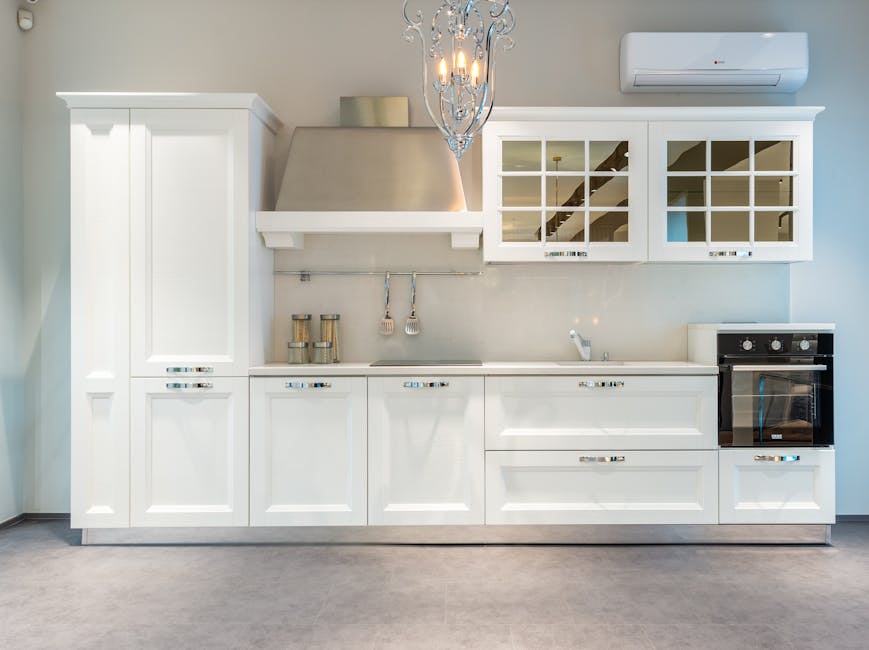
Speed is another deciding factor. Most Denver-area providers complete the entire job in five to seven days. Doors are typically picked up on a Monday and reinstalled by Friday. Compare that to the three to six weeks required for a full cabinet replacement, during which your kitchen is largely unusable, and the appeal becomes even clearer.
There is also an environmental and practical dimension. Painting keeps perfectly functional cabinetry out of landfills. It avoids the mess and waste of demolition. And in Denver's competitive real estate market, updated cabinets consistently rank as one of the top kitchen features buyers notice. A professionally sprayed factory finish offers one of the strongest returns on investment of any kitchen upgrade you can make.
What "Factory Finish" Really Means: Shop-Sprayed vs. In-Home Painting
The phrase "factory finish" gets used loosely in the painting industry, but when applied to cabinet refinishing, it refers to something very specific. The doors and drawer fronts are not painted in place with brushes or rollers. They are removed, labeled, and transported to a dedicated spray facility where every step of the finishing process happens under controlled conditions.
The equipment used is fundamentally different from what a generalist painter brings into your home. HVLP spray systems atomize the coating into an ultra-fine mist, laying down a film so thin and even that it self-levels before curing. No brush, no matter how high quality, can replicate this result. The difference is visible and tactile: a sprayed factory finish feels like glass, while a brushed finish always retains some texture.
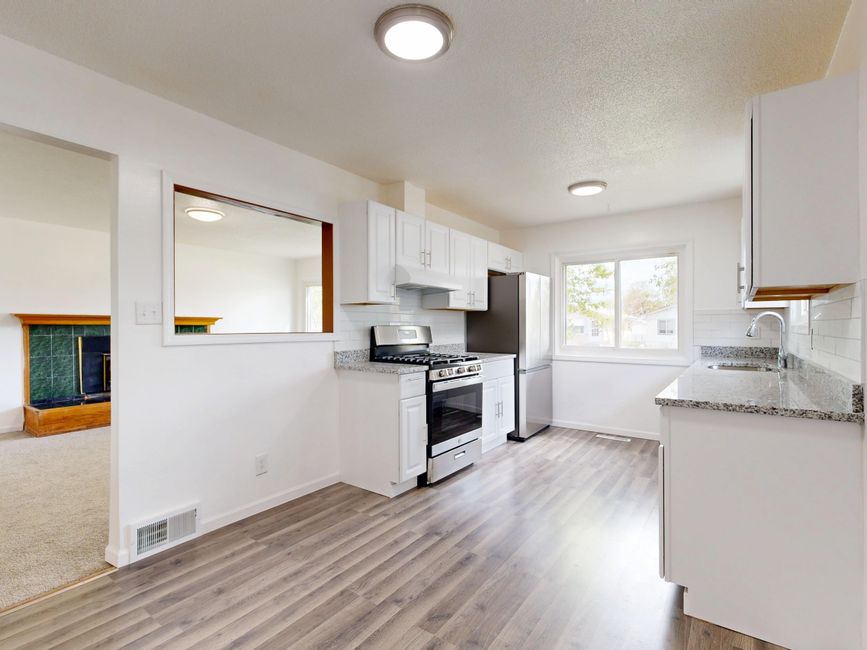
The coatings themselves are another differentiator. Denver providers use products engineered for cabinetry: Benjamin Moore Scuff-X for high-traffic durability, crosslinking urethane lacquers that cure to a harder film than conventional paints, and precatalyzed primers that bond aggressively to existing finishes. These are not the paints you buy off the shelf at a home improvement store. They are commercial-grade products formulated for the specific demands of kitchen environments: heat, humidity, grease, and constant handling.
The shop environment matters as much as the products. Dust is the enemy of a smooth finish, and no matter how carefully a painter masks off a kitchen, airborne particles are impossible to eliminate in a lived-in home. In a spray booth, the air is filtered, the temperature is regulated, and the humidity is controlled. Each coat of primer and paint cures in ideal conditions. Sanding between coats happens on a flat work surface, not against a vertical cabinet face. The cumulative effect is a finish that resists chipping, scratching, and yellowing far longer than any in-home application can match.
The Step-by-Step Factory Finish Process Used by Denver Professionals
Phase 1: Assessment and Preparation
Every professional job begins with a free in-home consultation. The provider assesses the condition of your cabinets, identifies the material they are working with, and determines the scope of work. Solid wood, MDF, and laminate all require different preparation approaches, and an experienced professional will know what each surface needs.
During this visit, you will receive a color consultation. Many Denver providers include this as part of the estimate, helping you narrow down finishes that work with your countertops, flooring, and natural light. Once you approve the quote, the preparation phase begins. Hardware is removed and cataloged. Doors and drawer fronts are labeled so every piece returns to its original location. Countertops, floors, and appliances are masked and protected. The kitchen remains functional, even if it looks a bit stripped down for a few days.
Phase 2: Shop Spraying and Finishing
The doors and drawer fronts are transported to the shop, where the real transformation happens. Each piece undergoes a thorough cleaning and degreasing to remove years of cooking residue, oils, and hand contact. Surfaces are sanded to create a mechanical bond for the primer. This step is non-negotiable: skipping or rushing surface preparation is the leading cause of paint adhesion failure.
One coat of primer is applied, followed by two coats of paint on both the front and back surfaces. Sanding happens between each coat to knock down any raised grain or minor imperfections. If the doors have existing hardware holes that do not match your new pulls or knobs, those holes are filled with Bondo or wood filler, sanded smooth, and re-drilled for the new hardware layout. The final coat cures in a dust-free environment, producing the smooth, factory-grade surface that defines this service.
Phase 3: Reinstallation and Final Touches
By the end of the week, the doors and drawer fronts return to your home. They are rehung, aligned, and adjusted for proper reveal and clearance. This is the moment when many providers recommend upgrading to soft-close hinges. The hardware is relatively inexpensive, but it dramatically improves the daily experience of using your kitchen and helps protect the new finish by preventing doors from slamming shut.
A final walkthrough with the homeowner ensures every detail meets expectations. Any minor touch-ups are addressed on the spot. The typical timeline holds remarkably consistent across Denver providers: doors picked up Monday, finished and reinstalled by Friday. Most kitchens are completed in just one week.
Cost Breakdown: What Denver Homeowners Should Expect to Pay
Transparent pricing is rare in the cabinet painting industry. No major Denver provider publishes a rate sheet on their website, and for good reason: every kitchen is different. That said, industry benchmarks provide a reliable range. Professional cabinet painting with a factory finish in the Denver metro area typically costs between $4,500 and $10,000, depending on the number of cabinets, drawer fronts, panel configurations, and the condition of the existing finish.
Several factors influence where your project falls within that range. A kitchen with 30 doors and 10 drawer fronts will cost more than one with 20 doors and 5 drawers. Raised-panel or Shaker-style doors require more labor than flat-front slabs. Cabinets with heavy grease buildup, peeling clear coat, or previous DIY paint attempts demand additional preparation time. Premium coatings and custom color matching can also add to the total.
The savings math is straightforward. At 50 to 70 percent less than replacement, a homeowner who receives a $25,000 replacement quote can expect to pay roughly $7,500 to $12,500 for a factory finish paint job that delivers comparable visual impact. Additional costs to discuss with your provider include hardware replacement, interior cabinet painting, and any necessary repairs for water damage or structural issues. Always request a free in-home estimate. It is the only way to get an accurate number for your specific kitchen, and all reputable Denver providers offer this service without obligation.
Can You Paint Over Factory-Finished Cabinets? What Denver Homeowners Need to Know
The short answer is yes. Existing factory-finished cabinets can be repainted successfully, but the key variable is surface preparation. Adhesion failure is the number one reason painted cabinets peel, chip, or wear prematurely. The existing finish must be thoroughly cleaned, degreased, and lightly sanded to create a mechanical bond for the new primer. Skipping or shortcutting any of these steps guarantees a shorter lifespan for your new finish.
Some materials present more of a challenge than others. Thermofoil and laminate cabinets require specialized bonding primers and paints formulated for non-porous surfaces. Not every provider has experience with these materials, and it is a question worth asking before you sign a contract. Severe water damage, failing MDF cores, or cabinets that are structurally compromised may not be worth the investment of painting. In those cases, replacement or partial door replacement is the more sensible path.
Ask your provider about their adhesion guarantee and warranty terms. A reputable company will stand behind its work. Some Denver providers offer a three-year warranty on workmanship, which provides meaningful peace of mind for a surface that sees daily use.
Choosing the Right Factory Finish Provider in Denver, Castle Rock, Castle Pines, Highlands Ranch, and Parker
The Denver metro area has no shortage of painting contractors, but cabinet refinishing is a specialization. Generalist painters who spend most of their time on walls and ceilings do not have the equipment, the shop space, or the specific product knowledge that factory finish cabinet work demands. Look for providers with dedicated cabinet painting experience. Ten or more years in the trade is a strong signal of competence.
Reviews and ratings tell you what past clients actually experienced. Look for providers with high volumes of verified reviews and consistent ratings. A 5.0 rating from over 100 reviews carries more weight than a handful of testimonials on a company's own website. Top Pro status and multi-year recognition from platforms like Thumbtack indicate sustained quality over time.
Confirm that the provider serves your specific community. Most Denver cabinet painting companies cover a broad service area that includes Aurora, Parker, Highlands Ranch, Centennial, Littleton, Greenwood Village, Cherry Hills, Westminster, Broomfield, Thornton, Arvada, and Castle Rock. If you live in Castle Pines or Parker, verify coverage before scheduling an estimate.
During the consultation, ask pointed questions. What specific products do they use? Do they spray in a dedicated shop or in your home? What does their warranty cover, and for how long? Can they provide proof of licensing and insurance? A professional who answers these questions clearly and without hesitation is one you can trust with your kitchen.
2026 Cabinet Color Trends for Denver Kitchens
Classic white and off-white remain the most requested finishes in Denver kitchens, and for good reason. They brighten open-concept spaces, reflect natural light during Colorado's long summer days, and provide a timeless backdrop that will not look dated in five years. If you plan to sell your home in the near future, white cabinets are the safest bet.
That said, color is making a strong return. Deep navy, forest green, and charcoal blue are increasingly popular choices for lower cabinets, often paired with white uppers in a two-tone scheme. This approach adds personality and depth without overwhelming the space. Warm neutrals are also gaining traction as homeowners move away from the cool grays that dominated the previous decade. Greige, taupe, and soft cream feel current but not trendy.
Two-tone kitchens continue to dominate design conversations. A darker island with lighter perimeter cabinets creates a natural focal point and breaks up visual mass in larger kitchens. Your provider's color consultation should include physical samples and, ideally, digital visualizations that show how the finish will read in your actual kitchen lighting. Colors shift dramatically between the paint store and your home, and a good consultant will help you account for that.
Maintaining Your Factory Finish: Care Instructions for Long-Lasting Results
A professionally sprayed factory finish is durable, but it is not indestructible. Daily care habits make a measurable difference in how long your cabinets look new. Clean surfaces with mild soap and water or a gentle all-purpose cleaner applied to a soft cloth. Avoid abrasive scrub pads, powdered cleansers, and harsh chemical degreasers, all of which can dull or etch the finish over time.
Wipe up spills promptly. Oils, acidic foods, and standing water are the most common culprits behind finish degradation. Do not hang wet dish towels over cabinet doors, and avoid placing hot items directly against painted surfaces. Periodically check and tighten hinge screws to prevent stress on door panels and maintain proper alignment.
With reasonable care, a factory finish applied by a skilled Denver professional should last 10 to 15 years before requiring touch-up or repainting. That lifespan, combined with the upfront savings over replacement, makes cabinet painting one of the most cost-effective kitchen renovations available to homeowners in the Denver metro area.
Frequently Asked Questions About Cabinet Painting with Factory Finish
How long does the process take? Most Denver providers complete the job in five to seven days. Doors are typically picked up on Monday and reinstalled by Friday, with the kitchen remaining partially functional throughout the week.
Is the finish really as durable as a factory finish? Yes. When applied with HVLP spray equipment in a controlled shop environment using professional-grade coatings, the result is comparable to or better than what cabinet manufacturers achieve. The key is proper surface preparation and the use of commercial products formulated for cabinetry.
Can you paint laminate or thermofoil cabinets? Yes, but these materials require specialized bonding primers and paints. Ask your provider directly about their experience with non-porous surfaces before proceeding.
Do I need to empty my cabinets? Yes. All cabinets and drawers should be emptied before the job begins, and the work area should be cleared to provide unobstructed access for the crew.
What warranty should I expect? Reputable Denver providers offer at least a one- to three-year workmanship warranty. Get the specific terms in writing as part of your contract.
Get Started: Book Your Free In-Home Estimate Today
Every major Denver-area cabinet painting provider offers free in-home estimates with no obligation. Your estimate should include a detailed scope of work, product specifications, a timeline, and a written quote. Many providers include color consultation services at no additional cost, so come prepared with ideas and questions.
Spring and early summer are the busiest seasons for cabinet painting in Denver. If you want your kitchen transformed before the holidays or in time for a home sale, book your estimate two to four weeks in advance of your preferred start date. Professional kitchen cabinet painting with a factory finish is available throughout the Denver metro area, including Castle Rock, Castle Pines, Highlands Ranch, Parker, and surrounding communities. The cabinets you already have are probably better than you think. A factory finish makes them look like you always wished they would.