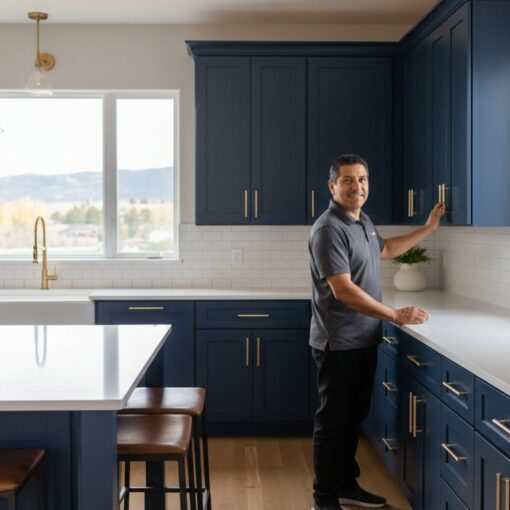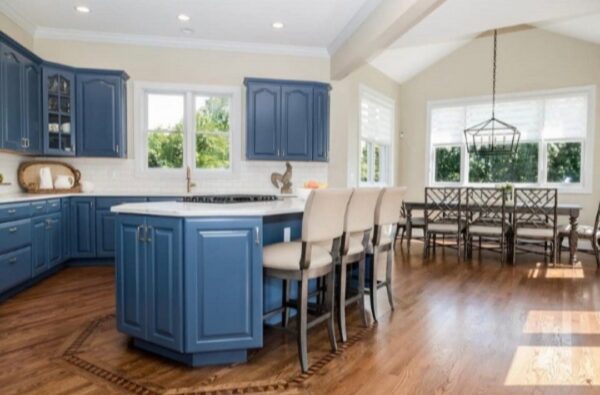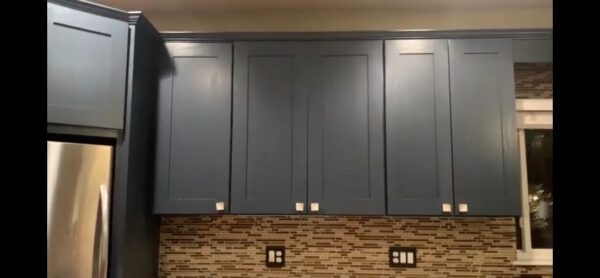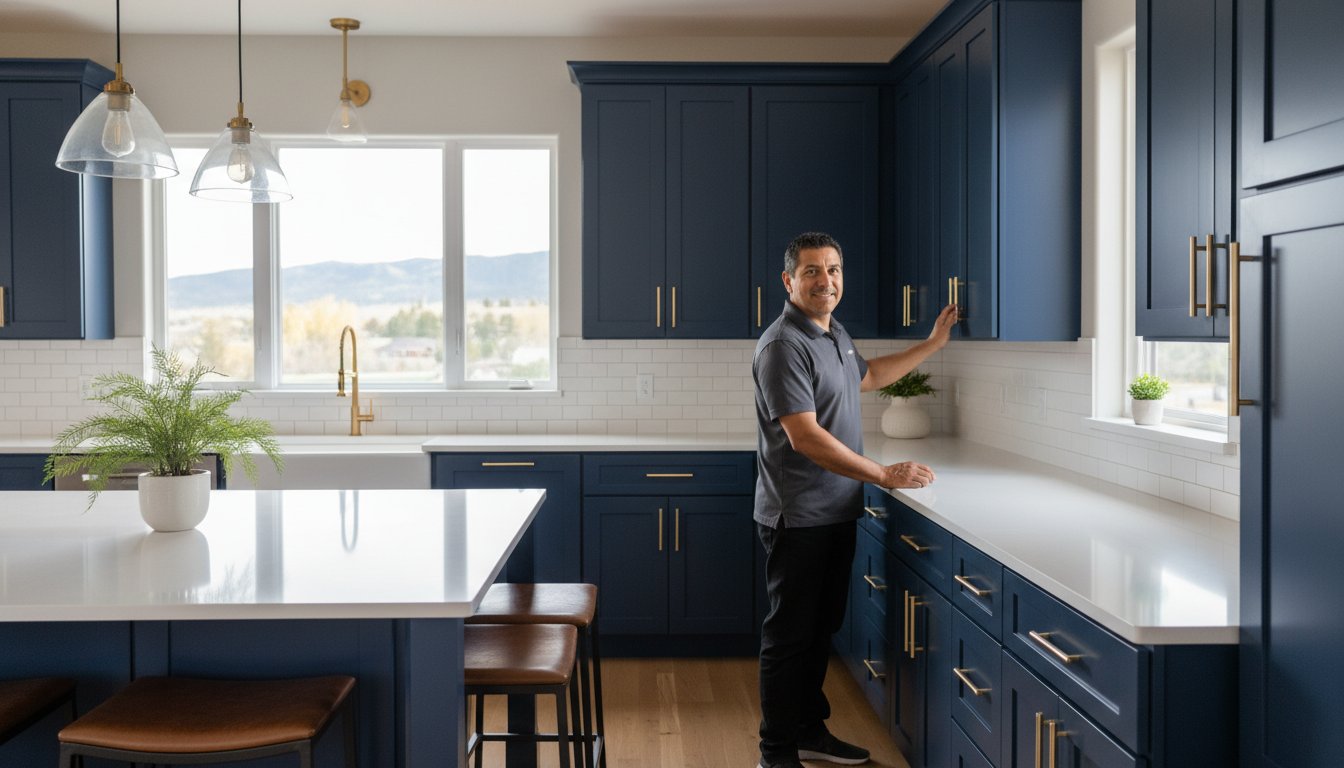
You walk into your kitchen every morning, and there they are: cabinets that looked fine a decade ago but now feel tired, dated, or simply wrong for the home you have built. Maybe they are the golden oak that was everywhere in the 1990s. Maybe they are white thermofoil doors that have started to peel at the edges. You want a change, but the thought of a full kitchen demolition makes your stomach tighten. The dust, the weeks without a sink, the contractor invoices that climb past $30,000 before you even pick out hardware. It feels like the only option, but it is not. A cabinet color change specialist with factory finish offers a third path, one that preserves your existing layout and boxes while delivering a surface so smooth and durable it looks like it came straight from a high-end mill. For homeowners in Castle Rock, Castle Pines, Highlands Ranch, and Parker, this approach has become the preferred upgrade in 2026, combining speed, value, and craftsmanship that standard painters simply cannot match.
Table of Contents
- What Is a Cabinet Color Change Specialist?
- The “Factory Finish” Difference vs. Standard Painting
- Why Replace When You Can Refinish? The Cost and Time Advantage
- How Much Does a Cabinet Color Change Cost in 2026?
- The Step-by-Step Process: How Specialists Achieve a Factory Finish
- Advanced Techniques: Glazed, Antiqued, and Torched Finishes
- Can You Paint Over Factory-Finished Cabinets?
- Why Local Matters: Serving Castle Rock, Castle Pines, Highlands Ranch, and Parker
- Your Next Step to a Factory-Fresh Kitchen
What Is a Cabinet Color Change Specialist?
A cabinet color change specialist is not a general house painter who also happens to own a brush. This professional focuses exclusively on transforming the color and finish of existing cabinetry, and the distinction matters more than most homeowners realize. A general painter works across surfaces: drywall, trim, exteriors, decks. A specialist lives in the world of cabinet boxes, door fronts, drawer faces, and the specific chemistry required to make a new finish bond permanently to an old one.
The primary differentiator is equipment and materials. Specialists use professional spray systems, either HVLP (high volume, low pressure) or airless rigs, that atomize the coating into a fine mist. This creates a uniform film without the brush marks, roller stipple, or uneven texture that hand application leaves behind. Just as important are the coatings themselves. Instead of standard latex wall paint, a specialist sprays catalyzed urethanes, conversion varnishes, or waterborne alkyds like the Sherwin-Williams Gallery Series. These products cure through a chemical reaction, not just evaporation, forming a harder, more durable film that resists scratching, moisture, and the oils from cooking.
Local conditions in Douglas County add another reason to choose a specialist. Colorado’s dry climate and seasonal temperature swings cause wood to expand and contract throughout the year. A specialist understands which primers and topcoats maintain enough flexibility to move with the wood without cracking or delaminating. A standard painter using off-the-shelf trim paint may deliver a cabinet that looks acceptable for six months, then begins to fail at the joints when winter heating drops indoor humidity into the single digits.
The scope of work a specialist provides goes beyond spraying color. It includes deep cleaning and degreasing to remove cooking residue, sanding to create a mechanical bond, grain filling for oak cabinets where the client wants a smooth, contemporary surface, and custom techniques like glazing or antiquing for a designer finish. The outcome is a surface that meets or exceeds the KCMA (Kitchen Cabinet Manufacturers Association) durability standards for scratch, chemical, and moisture resistance, the same benchmarks used to evaluate factory-built cabinetry.
The “Factory Finish” Difference vs. Standard Painting
The phrase “factory finish” gets used loosely in marketing, but it describes something specific and measurable. When cabinets leave a manufacturing plant, they have been sprayed in a dust-controlled booth with industrial coatings and cured under optimized conditions. The result is a surface that feels glass-smooth to the touch, with no visible texture, no drips, and no thin spots at the edges. Replicating that in an existing home requires technique and discipline that go well beyond what a brush and roller can achieve.
Standard painting, even when done carefully, leaves evidence. Brush marks create subtle ridges that catch light and collect grime. Roller covers, even the finest nap, deposit a faint stipple pattern. Latex wall paint dries relatively soft, meaning it can feel tacky to the touch in humid conditions and will chip or scratch when a pot or pan glances against a door edge. In a kitchen, where cabinets are touched dozens of times a day, these failures appear quickly. A latex-painted cabinet door might show wear around the handle within a year and require repainting within two.
A factory finish, applied by a specialist, eliminates these problems through three controls. First is the spray application itself, which lays down a continuous wet film that levels out before it begins to cure. Second is the environment: doors and drawer fronts are typically removed and sprayed in a contained area with dust control measures, preventing airborne particles from embedding in the wet finish. Third is the coating chemistry. Catalyzed finishes cross-link at the molecular level as they cure, creating a surface that resists moisture, heat, and abrasion far better than air-dry latex. The visual result is a mirror-smooth surface with no orange peel, no sags, and no brush strokes, just the clean, uniform look of a cabinet that could have been built yesterday.
Durability data supports the difference. A properly applied factory-style finish on kitchen cabinets can last five to ten years with normal care, sometimes longer in households without young children. Standard latex paint on cabinets often shows significant wear within one to two years, especially on lower doors and around frequently used drawers. The investment in a specialist pays for itself by avoiding the need to repaint every few years.
Why Replace When You Can Refinish? The Cost and Time Advantage
The financial case for cabinet color change over replacement is stark, and it is the first thing that surprises homeowners who have been bracing for a major renovation bill. Full custom cabinet replacement in the Castle Rock and Highlands Ranch market typically runs between $20,000 and $50,000 or more, depending on kitchen size, wood species, and door style. Even mid-range stock cabinets from a big-box retailer, once you factor in demolition, disposal, installation, and the inevitable plumbing and electrical adjustments, rarely come in under $15,000. Cabinet refacing, where the boxes stay but new doors and veneers are applied to the face frames, costs between $10,000 and $15,000.
A professional cabinet color change with a factory finish, by contrast, typically falls between $4,800 and $6,500 for an average kitchen. The exact figure depends on door count, cabinet style, wood type, and color complexity, but the savings relative to replacement are consistently dramatic. You keep your existing cabinet boxes, which in most homes built in the last thirty years are structurally sound plywood or MDF boxes that will last for decades more. You simply change the surface that you see and touch every day.
Time savings run parallel to cost savings. A full cabinet replacement project can render a kitchen unusable for three to six weeks. During that period, you are washing dishes in a bathroom sink, eating takeout for every meal, and living with construction dust that migrates to every room in the house. A cabinet color change performed by a specialist takes three to seven days from start to finish. The kitchen remains functional for most of that time, with only short periods where sink access or lower cabinets are unavailable. For families with children, busy work schedules, or simply a low tolerance for chaos, that compressed timeline is worth as much as the dollar savings.
There is also a sustainability argument that resonates with Colorado homeowners. Refinishing existing cabinets keeps hundreds of pounds of wood, MDF, and hardware out of landfills. The embodied energy in your current cabinets, the raw materials, manufacturing, and transportation that went into their original production, stays in place rather than being discarded and replaced. For homeowners who care about the environmental footprint of their renovation choices, refinishing is the clear winner.
How Much Does a Cabinet Color Change Cost in 2026?
Pricing for a cabinet color change in the Douglas County market has stabilized in 2026, but it still varies based on several project-specific factors. Understanding these variables helps homeowners evaluate quotes and understand what they are paying for.
The most significant cost driver is door and drawer count. A standard kitchen with 25 to 35 door and drawer fronts falls at the lower end of the pricing spectrum. Larger kitchens with islands, pantry banks, and 40 to 50 or more openings require more labor, more material, and more time, pushing the price toward the upper end. Cabinet style matters as well. Flat slab doors are the fastest to prep and spray. Raised panel and Shaker doors have more edges, recesses, and surface area that must be coated evenly, adding labor time.
Wood type is another variable that surprises some homeowners. Oak cabinets, particularly the red and golden oak common in homes built from the 1980s through early 2000s, have an open grain structure. If you want a completely smooth, contemporary finish, the grain must be filled before priming and painting. This grain-filling service typically adds $300 to $500 to the project cost. Maple and MDF cabinets have a naturally tight, smooth surface and do not require this step, making them slightly less expensive to refinish. Cherry cabinets fall somewhere in between, depending on the specific cut and grain pattern.
Color choice affects pricing at the margins. White and light neutrals typically cover well in two coats. Dark, saturated colors like navy, charcoal, or deep green may require a third coat for full, even coverage. Custom color matching to a specific paint brand or fabric swatch adds a small mixing fee but is otherwise included in most specialist quotes.
For a full kitchen in Castle Rock, Castle Pines, Highlands Ranch, or Parker, homeowners should expect a total project range of $4,500 to $7,500 in 2026. This includes all prep work, degreasing, sanding, priming, two to three coats of topcoat, and reinstallation of doors and hardware. Interior box painting, new soft-close hinges, or upgraded hardware are typically quoted as add-ons. Many specialists now offer text-based photo quoting, where you can send two or three photos of your cabinets and receive a preliminary estimate within minutes, a modern convenience that respects your time.
The Step-by-Step Process: How Specialists Achieve a Factory Finish
The difference between a paint job that lasts and one that fails lies in the preparation. A cabinet color change specialist follows a disciplined, multi-stage process that builds the finish from the substrate up.
Step one is protection and removal. Before any coating is sprayed, floors are covered with rosin paper and drop cloths, countertops are masked, and appliances are sealed off from the work area. Doors, drawer fronts, and hinges are labeled and removed. The doors are transported to a spray booth or a contained, ventilated area on-site where dust can be controlled.
Step two is deep cleaning and degreasing. Kitchen cabinets accumulate a film of cooking oils, airborne grease, and hand oils that is invisible to the eye but lethal to paint adhesion. Specialists use trisodium phosphate (TSP) or a commercial degreaser to strip this residue from every surface. Skipping this step is the single most common cause of peeling and delamination in cabinet paint jobs.
Step three is sanding and, where needed, grain filling. Every surface receives a light sanding to scuff the existing finish and create a mechanical bond for the primer. For oak cabinets where the client wants a smooth, contemporary look, a grain-filling compound is troweled into the open pores, allowed to dry, and sanded flat. The result is a surface as smooth as MDF, ready to accept a flawless topcoat.
Step four is primer application. A high-bonding primer, often tinted toward the final color, is sprayed in thin, even coats. The primer seals the wood, blocks any tannin bleed from species like oak or cherry, and provides a uniform base that the topcoat can grip. Cheap primer or rushed primer application leads to adhesion failures that may not appear for months but are irreversible once they do.
Step five is the color coat and topcoat. Two to three coats of a catalyzed urethane or waterborne alkyd are sprayed, with light sanding between coats to knock down any dust nibs and ensure intercoat adhesion. Each coat is applied thin and allowed to flash off before the next. The final coat is left to cure to full hardness.
Step six is curing and reinstallation. Doors cure for 24 to 48 hours before they are handled. Some specialists use UV-cure technology that accelerates this timeline dramatically, allowing same-day handling in certain conditions. Once cured, doors are rehung, drawers are reinstalled, and hardware is mounted. The kitchen is left clean, functional, and transformed.
Advanced Techniques: Glazed, Antiqued, and Torched Finishes
A factory finish does not have to mean a flat, uniform slab of color. The same specialists who deliver a smooth, modern look can also create layered, dimensional finishes that mimic the look of custom furniture or aged, artisanal cabinetry. These techniques add character and depth that elevate a kitchen beyond what even new stock cabinets can offer.
A glazed finish involves applying a darker tinted glaze over a base color, then wiping it back so it remains only in the recesses, corners, and profile details of the door. On a Shaker door, the glaze settles into the inner panel edges and along the frame joints, creating a soft shadow effect that adds depth. This look is popular in the modern farmhouse and cottage-style kitchens that dominate in Highlands Ranch and Parker.
An antiqued finish takes the effect further. After the base color is applied, edges and high points are lightly distressed by hand. A dark glaze is then applied and wiped back, settling into the distressed areas and creating the look of a cabinet that has aged gracefully over decades. The result is warm, inviting, and full of character, without the unpredictability of actual age.
A torched finish applies a darker shade selectively to recessed panel areas, creating a dramatic two-tone effect within a single door. The raised frame remains the base color while the inner panel reads as a deeper, shadowed tone. This technique works especially well on raised-panel doors in traditional or transitional kitchens.
Custom color matching ties these techniques together. Specialists can match any color from Sherwin-Williams, Benjamin Moore, or PPG, including the trending hues for 2026: warm greiges, muted sage greens, deep navy blues, and soft off-whites that replace the stark whites of the previous decade. If you can name the color, a specialist can mix and spray it.
Can You Paint Over Factory-Finished Cabinets?
Homeowners often ask this question because they have heard conflicting advice. The short answer is yes, you can paint over factory-finished cabinets, but only with proper preparation and the right materials. The long answer explains why so many DIY attempts end in disappointment.
Factory-finished cabinets typically leave the manufacturer with a catalyzed lacquer, conversion varnish, or UV-cured coating. These surfaces are hard, smooth, and designed to resist moisture and wear. Those same qualities make them resistant to paint adhesion. If you apply latex paint directly over a factory finish without preparation, the paint will sit on top of the surface rather than bonding to it. Within weeks, it will begin to peel, chip, and bubble, especially around handles and high-touch areas.
The critical step is creating a mechanical bond. The existing finish must be lightly sanded with a fine-grit abrasive to scuff the surface and give the new primer something to grip. After sanding, a high-adhesion bonding primer must be applied. Products like Stix or shellac-based primers are formulated specifically to adhere to slick, non-porous surfaces. Once the bonding primer has cured, the topcoat can be applied over it with confidence.
The reason to hire a specialist rather than attempt this yourself comes down to diagnosis and material selection. A specialist can evaluate the existing coating, whether it is lacquer, varnish, or something else, and choose the correct primer and topcoat system for that specific surface. They know which products are compatible and which will react, bubble, or fail. They also have the spray equipment to apply the finish evenly, avoiding the brush marks and texture that undermine the whole point of painting over a factory surface. DIY cabinet painting over factory finishes almost always fails within two years. A professional color change specialist guarantees adhesion and longevity.
Why Local Matters: Serving Castle Rock, Castle Pines, Highlands Ranch, and Parker
Choosing a local specialist who knows the Douglas County market brings advantages that a generic contractor or a franchise operation cannot replicate. The first is climate competence. Colorado’s high-altitude, low-humidity environment affects how coatings behave during application and curing. Products that work perfectly in humid southeastern states may flash off too quickly here, leading to dry spray or poor leveling. A local specialist adjusts their process and product selection for the specific conditions of the Front Range.
Local style knowledge matters as well. The communities of Castle Rock, Castle Pines, Highlands Ranch, and Parker have distinct architectural personalities. Modern farmhouse, with its white or navy Shaker cabinets, black hardware, and apron-front sinks, remains strong in newer developments. Contemporary styles with flat-slab doors in warm gray or greige tones are gaining ground in custom homes and remodels. A local specialist has seen hundreds of kitchens in these neighborhoods and can offer color and finish recommendations that align with what works in the local market and what future buyers will respond to.
Convenience is another factor. In-home estimates mean a specialist comes to your kitchen, evaluates your cabinets in person, and provides a detailed quote on the spot. For homeowners who prefer a faster path, text-based photo quoting lets you send two or three images of your cabinets and receive a preliminary estimate within minutes, no appointment necessary. This flexibility matters for busy families juggling work, school, and everything else.
Trust signals complete the picture. When evaluating a local specialist, look for a track record of five-star reviews, a substantial review count across Google and other platforms, and a craftsmanship warranty that backs the work. A three-year guarantee on labor and finish is a reasonable expectation in this market. Combined with years of experience serving Douglas County homeowners, these signals separate the true specialists from the painters who dabble in cabinets.
Your Next Step to a Factory-Fresh Kitchen
A cabinet color change specialist with factory finish delivers what most homeowners actually want: a kitchen that looks brand new, built to last, and achieved without the cost, time, and disruption of a full replacement. The process transforms the surface you see every day while preserving the solid cabinet boxes that are already in place. In a week or less, your kitchen moves from outdated to current, from worn to flawless, from a source of frustration to the room you want to show off.
If you are ready to explore what a color change could do for your Castle Rock, Castle Pines, Highlands Ranch, or Parker home, the next step is simple. Reach out for a free, no-obligation estimate. Send two or three photos of your cabinets by text and receive a preliminary quote within five minutes. Your kitchen will look brand new, built to last, and designed for your Colorado lifestyle.