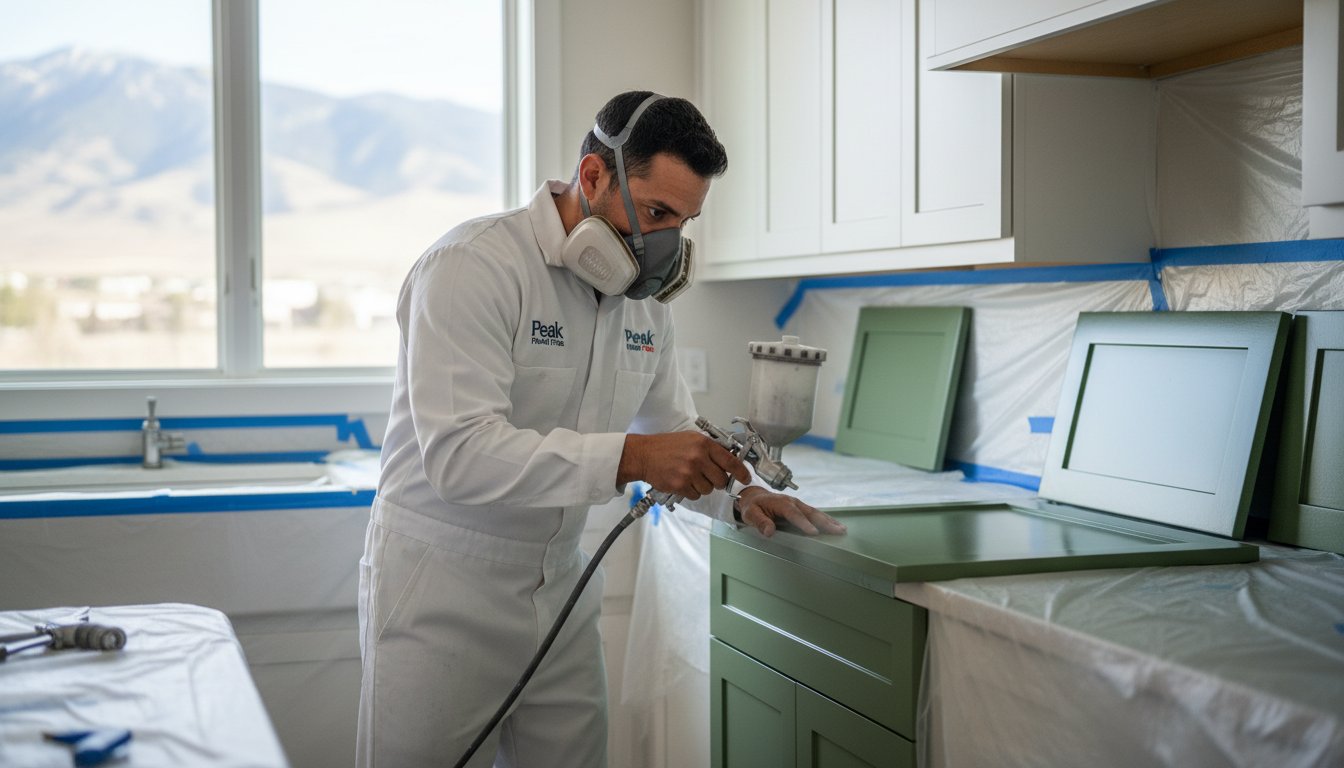
Hiring a standard house painter to refinish your kitchen is the fastest way to ensure your cabinets peel within 12 months. Most contractors use cheap latex products and wall paint that simply can’t stand up to daily kitchen grease or moisture. Knowing what to ask a cabinet painter before hiring is the only way to avoid a messy, low-quality result that chips before the year is over. You want a durable, factory finish that stays beautiful for a decade, not a temporary fix that feels sticky to the touch.
We’ve seen these failures firsthand over our 45 years of experience serving the Denver area. This guide provides the critical questions you need to separate real craftsmen from the amateur crews. You’ll learn why industrial strength precatalyzed primers are non-negotiable and how a labor intensive preparation process guarantees a smooth, easy to clean surface. We’re going to cover the technical requirements that protect your investment and ensure you get the high-end, factory-quality results your home deserves.
Key Takeaways
- Learn exactly what to ask a cabinet painter before hiring to distinguish between a temporary “cheap” fix and a durable, professional factory finish.
- Understand why preparation represents 75% of the labor and how to verify that your contractor uses exclusive spray application for a smooth result.
- Identify the specific industrial coatings required for kitchen cabinets to avoid the common mistake of using standard latex wall paint.
- Discover how to vet business credentials, including the importance of full liability insurance and decades of specialized trade experience.
- Learn to spot critical red flags like skipped de-greasing or suspiciously low quotes that often signal a lack of technical expertise.
Why Vetting Your Kitchen Cabinet Painter is Non-Negotiable
Kitchen cabinets are high-touch surfaces that endure constant contact, grease, and heat. They require a completely different chemistry than your bedroom walls. Most homeowners don’t realize that standard latex paint is designed for drywall, not the hard, non-porous surfaces of wood cabinetry. Knowing what to ask a cabinet painter before hiring is the only way to avoid a kitchen disaster that fails within six months. Amateur house painters often approach cabinets like they do siding, using brushes and rollers that leave visible textures and weak bonds.
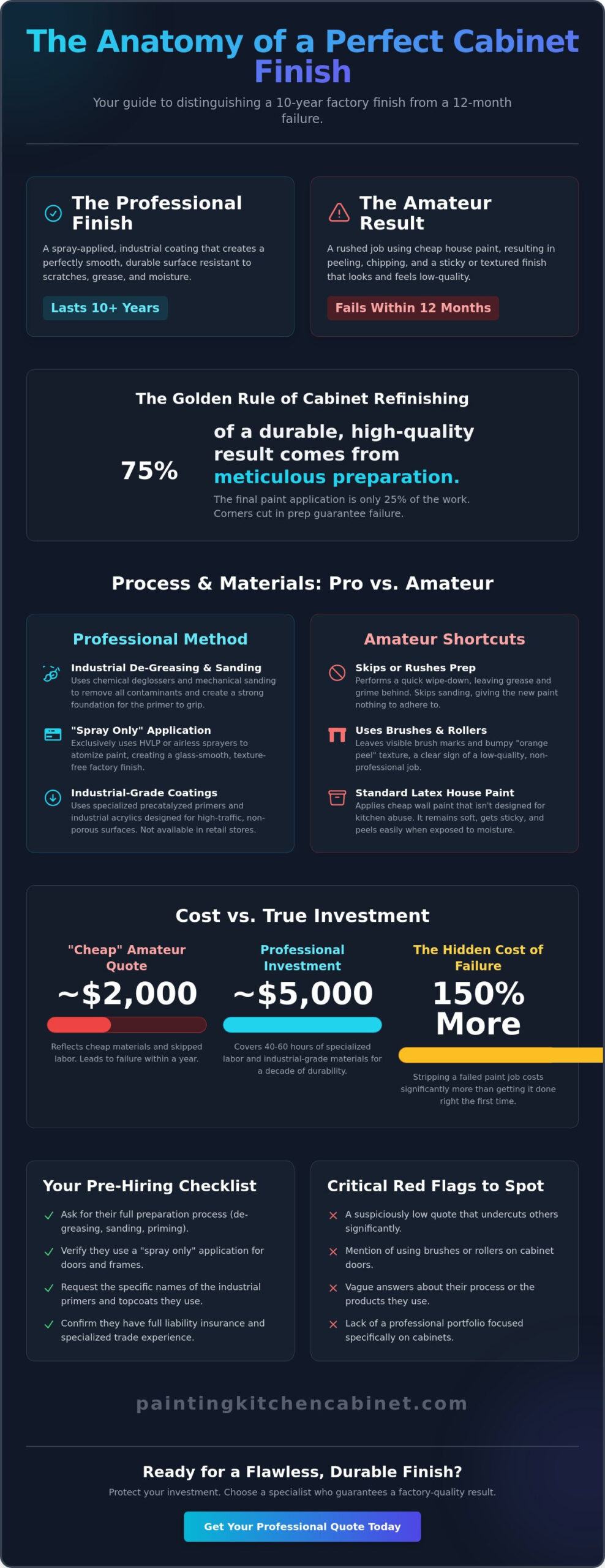
The market is flooded with “cheap” $2,000 quotes that usually involve a single person with a bucket of retail-grade paint. A professional refinishing job, often priced closer to $5,000, reflects the cost of industrial materials and 40 to 60 hours of specialized labor. Understanding the basics of paint composition reveals why binders and resins in industrial coatings are necessary to withstand the oils and acids found in a cooking environment. Without these specialized coatings, the finish will soften and peel under normal use.
The Risk of Hiring the Wrong Professional
The most common failures we see include peeling around handles, sticky surfaces that never fully cure, and ugly brush marks. When an amateur uses cheap latex caulking or skips the cleaning phase, the paint cannot grab the surface. The high cost of stripping a failed paint job is a harsh reality. Removing a botched finish often costs 150% more than doing the job right the first time because of the intensive chemical stripping required. The lowest bid is almost always the most expensive in the long run because it lacks the durability to last more than a single season.
Defining the Factory Finish Standard
A factory finish is a spray-applied coating that mimics original manufacturer quality. This means the surface is perfectly smooth, lacks any texture from a brush or roller, and is hard enough to resist fingernail scratches. Achieving this requires industrial-strength acrylics and precatalyzed primers that are not available at local big-box hardware stores. These coatings are designed for the high-traffic demands of a kitchen where 90% of the wear occurs on the edges of doors and drawers. You want a finish that is easy to wipe clean and remains rock-hard for years, which only comes from specialized equipment and professional-grade materials.
Before you sign a contract, you must verify the contractor’s process. Ask about their preparation steps and the specific brands of coatings they use. If they cannot explain why they use a specific primer for oak versus maple, they aren’t the right experts for your home. Getting it right involves more than just a color change; it involves a technical application that protects your biggest investment.
Crucial Technical Questions About Preparation and Spray Application
Preparation is 75% of the labor in any high-quality cabinet refinishing project. If a contractor spends more time painting than they do sanding and cleaning, the finish will likely peel within 12 months. When you are deciding what to ask a cabinet painter before hiring, you must focus on their technical execution and mechanical bonding process. Amateur house painters often try to cut corners by using cheap latex products, but those materials aren’t designed for the high-traffic environment of a kitchen.
You need to know the specific chemicals and tools they bring into your home. A professional result requires a deep understanding of architectural vs. industrial coatings because standard wall paint lacks the hardness required for cabinet doors. Ask them directly: “What is your specific cleaning and de-greasing process?” If they don’t mention industrial-strength deglossers or mechanical sanding, they aren’t prepared for the job.
The “Spray Only” Requirement
Professional cabinet painters never use brushes or rollers on your doors or drawer fronts. Brushes leave visible tracks and rollers create a bumpy “orange peel” texture that looks cheap. To get a true factory finish, the contractor must exclusively use high-volume, low-pressure (HVLP) or airless spray systems. These systems atomize the coating, allowing it to lay flat and create a glass-like surface. If a painter claims they can “back-roll” your cabinets for a better look, they are likely trying to hide a lack of spraying expertise. You want a level finish that looks like it came straight from a showroom floor, not a DIY project.
The Vital Importance of Prep Work
The durability of your kitchen depends on a 5-step prep process that cannot be rushed. This includes deep cleaning, mechanical sanding, grain filling, applying pre-catalyzed primers, and fine-sanding between every single coat. Ask how they handle the grain on oak or other porous wood types. Oak has deep “valleys” in the wood that require specific grain fillers to achieve a smooth look. Without this step, the paint will just sink into the pores and look unfinished.
- Cleaning: Removing 100% of cooking grease and skin oils.
- De-glossing: Removing the old shine so the new primer can bite into the wood.
- Dust Containment: Using HEPA filtration and plastic masking to protect your home.
- Priming: Using industrial-strength primers that prevent tannin bleed-through.
Skipping the de-glossing phase is the primary cause of immediate paint failure. Before signing any contract, verify their floor protection protocols and how they manage airborne dust. If you want to see the difference a professional prep sequence makes, you can view our cabinet refinishing gallery to see the level of detail we provide. Our 45 years of experience has proven that shortcuts always lead to a failing finish.
Evaluating Materials: Ask About Industrial Finishes vs. House Paint
The biggest red flag in the industry is a painter using standard latex wall paint on your cabinetry. Latex paint is designed to be flexible on drywall; it never truly hardens. In a kitchen environment, this leads to “blocking,” where doors stick to the frames in 70% humidity and peel within 12 months. When determining what to ask a cabinet painter before hiring, your first question must be: “What specific brand and line of coating do you use?”
Demand a specific product name. If they mention a “high-quality latex” or a “trim paint” from a local hardware store, they aren’t providing a professional cabinet service. You want to hear names associated with industrial-strength coatings. These products are formulated for the high-traffic demands of a kitchen and provide a hard, durable surface that resists moisture and physical impact.
Industrial-Strength Acrylics vs. Latex
Professionals use industrial-strength acrylics or 1K and 2K polyurethanes. These coatings offer superior chemical resistance against grease, skin oils, and harsh cleaning agents that quickly soften and destroy standard house paint. This is a core component of professional cabinet refinishing techniques that achieve a true factory finish. While big-box stores sell “cabinet paints,” these are often just modified latex products. They lack the cross-linking technology required for 20-year durability. Industrial coatings dry to a much harder film, ensuring your cabinets don’t feel “tacky” or soft to the touch.
Safety is also a material concern. If your home was built before 1978, you must verify the painter follows the EPA’s Lead Renovation, Repair and Painting (RRP) Rule. Sanding down old finishes without these strict protocols can release lead dust into your ventilation system, creating a health hazard for your family. A professional contractor will have the certification and equipment to handle this safely.
Primers and Adhesion Promoters
Standard primers fail on wood because they don’t create a chemical bond. Ask: “Do you use a pre-catalyzed primer?” High-build, pre-catalyzed primers are essential for hiding the deep grain found in oak or cherry cabinets. These primers act as a foundation, filling in pores and creating a smooth surface for the topcoat.
Effective primers must also be “stain-blocking.” Wood tannins are natural oils that will bleed through white paint, turning your new finish yellow or brown. When you’re deciding what to ask a cabinet painter before hiring, ensure they use a primer specifically designed for wood tannins. This is not a step where you can cut corners. A cheap primer results in a finish that flakes off with a fingernail. A professional-grade, high-adhesion primer ensures the paint stays bonded to the wood for decades, not just months.
- Industrial Coatings: Dry hard and resist household chemicals.
- Pre-catalyzed Primers: Block tannins and fill wood grain.
- Latex Paint: Stays soft, sticks to doors, and peels easily.
Business Logistics: Insurance, Experience, and the Denver Market
Experience is the most vital factor when deciding what to ask a cabinet painter before hiring for your home project. Painting Kitchen Cabinets Denver brings over 45 years of specialized experience to the trade. This history matters. Cabinet refinishing is a labor intensive process that requires technical mastery. A startup business might offer a lower price, but they lack the decades of testing required to ensure a factory finish that won’t fail. Ask: “How many years have you specifically spent painting kitchen cabinets?”
Insurance is another non-negotiable topic. Ask the contractor: “Are you fully insured with both general liability and workers compensation?” If a worker is injured in your kitchen and the company lacks workers comp, the financial liability could fall on you. Professional outfits will provide a certificate of insurance without hesitation. You should also confirm if the team is owner-operated. Avoid companies that use subcontracted labor. Subcontractors often cut corners on prep work to finish faster. An owner-involved team takes pride in every door and drawer.
Local Denver Expertise and Service Areas
The Colorado climate presents unique challenges for wood surfaces. Our extremely dry air causes wood to shrink and expand more aggressively than in other regions. A professional kitchen cabinet painter must understand these local conditions. We provide reliable service across the Denver metro area, from Arvada and Westminster to Highlands Ranch and Castle Rock. We know the specific architecture and wood types common in Denver homes, including the heavy-grain oak and maple cabinets that require industrial strength grain fillers and precatalyzed primers.
Warranty and Long-Term Durability
Before you sign a contract, your safety net is the warranty. Always determine what to ask a cabinet painter before hiring regarding their guarantee. Ask: “What is your specific warranty against peeling or cracking?” Be wary of “lifetime” promises; these are often empty marketing slogans. A realistic warranty from a reputable professional covers failure due to improper preparation or product application. With our industrial strength coatings, your cabinets should easily last 10 years or more. To maintain this finish, avoid harsh chemicals and stick to mild soap and water. If you want a quote from a team that stands behind their work, you can text us the number of doors and the number of drawers with pictures and we can get you an accurate price immediately at Painting Kitchen Cabinets Denver.
Spotting Red Flags and Securing Your Cabinet Refinishing Quote
Identifying a low-quality contractor is just as important as knowing what to ask a cabinet painter before hiring. The biggest red flag is a painter who skips over the details of prep work. If they don’t mention sanding every surface or using heavy-duty de-greasers to remove kitchen oils, your finish will fail. Many amateur house painters try to save time by painting over hidden grease, but this leads to peeling within 12 to 24 months. Another warning sign is a quote that sits 30% or 40% below the market average. Quality cabinet refinishing is labor intensive and requires expensive industrial strength materials. A cheap price usually means they’re using standard latex paint instead of a durable factory finish.
The Instant Quote Method
We provide a direct, no-fuss way to get an accurate price without waiting for a home visit. You can get an estimate for cabinet painting denver by texting us directly. This modern approach is the fastest way to start your project. For a precise quote, we need three pieces of information. First, count every individual door and drawer front. Second, take clear photos of each section of your kitchen so we can see the layout. Third, tell us the current finish, such as whether the wood is oak, maple, or already painted. This allows us to calculate the exact labor and materials needed for your specific cabinets immediately.
Making the Final Decision
When you review your options, make sure you’re comparing apples to apples. Ensure every quote includes the same level of cleaning, sanding, and the use of precatalyzed primers. Choosing a specialist over a general house painter is the only way to guarantee a long-lasting result. General painters often use cheap caulking and wall paint that can’t handle the daily wear of a kitchen. A specialist uses industrial coatings designed for wood. Use this final checklist before signing any contract or paying a deposit:
- Verify they use industrial strength products, not retail store house paint.
- Confirm the quote includes all prep work, including de-greasing and thorough sanding.
- Ensure they have a proven track record with decades of experience in the trade.
- Check that the timeline for completion is realistic for a high-quality, multi-step process.
Knowing what to ask a cabinet painter before hiring helps you avoid the “amateur” traps that lead to sticky doors and chipping paint. Always prioritize the quality of the prep work over the lowest price point.
Get Your Professional Cabinet Refinishing Quote Today
Don’t settle for amateur house painters who use cheap latex products on your expensive cabinetry. A durable factory finish requires industrial-strength acrylic coatings and a labor-intensive preparation process that most general contractors skip. With over 45 years of professional experience, we understand that the difference between a failed project and a lifetime result is the meticulous spray application of industrial finishes. Knowing what to ask a cabinet painter before hiring helps you avoid the red flags of low-quality work and ensures your kitchen stands the test of time. We focus exclusively on high-end cabinet refinishing across the Denver metro area, using precatalyzed primers that bond permanently to your wood surfaces. Our team delivers a smooth, factory-grade look that house paint simply cannot replicate. You deserve a kitchen that looks brand new without the massive cost of a full replacement. Stop guessing about your renovation and get a straight answer from the experts who have perfected this trade since 1979. We make the process simple and transparent for every homeowner.
Text us the number of doors and drawers with pictures to get an accurate price immediately!
Your dream kitchen is just a text away.
Frequently Asked Questions
Is it better to spray or brush kitchen cabinets?
Spraying is the only way to achieve a smooth factory finish without brush marks or roller texture. We use high volume low pressure (HVLP) sprayers on 100 percent of our projects to ensure a durable, industrial strength coating. Amateur house painters often use brushes, but this creates a thick, uneven surface that traps dirt and oils. Our spraying process provides a uniform layer that looks original to the cabinetry.
How long does a professional cabinet painting job typically take?
A professional cabinet painting job typically takes 3 to 5 business days from start to finish. Our 5 step process involves cleaning, sanding, priming, and applying two top coats. We spend 70 percent of that time on prep work because it’s the most vital factor for a long lasting result. This timeline ensures your kitchen remains functional while we work on your doors and drawers in our shop.
What kind of paint is most durable for kitchen cabinets?
Industrial strength precatalyzed primers and waterborne alkyd urethanes are the most durable options for kitchen cabinets. These coatings meet Kitchen Cabinet Manufacturers Association (KCMA) standards for chemical and moisture resistance. We avoid cheap latex paints because they remain soft and peel within 12 months. Using the right materials is a key thing to consider when deciding what to ask a cabinet painter before hiring.
Do I need to empty my cabinets before the painters arrive?
You must empty all items from your cabinets and clear your countertops before our crew arrives. Removing 100 percent of your dishes and cookware prevents dust contamination during the sanding phase. This also allows our technicians to mask off the interior boxes properly. We require a clear workspace to maintain our high standards of Cabinet Refinishing and efficiency while working in your home.
Can you paint over previously painted or laminate cabinets?
We can paint over previously painted or laminate surfaces if the preparation is handled correctly. Our team uses specialized bonding primers that adhere to non-porous laminate materials. With over 45 years of experience, we’ve developed a system that prevents delamination and peeling. Knowing if a contractor has the right primers for these surfaces is essential when you’re figuring out what to ask a cabinet painter before hiring.
How much should I expect to pay for professional cabinet refinishing in Denver?
Professional cabinet refinishing in Denver costs vary based on the size of your kitchen and the number of openings. According to 2024 industry data from HomeAdvisor, homeowners in the Denver metro area pay between 2,000 and 7,000 dollars for professional services. To get an exact quote for Painting Kitchen Cabinets Denver, you can text us the number of doors and drawers with pictures and we’ll send a price immediately.
Will the paint smell or be toxic for my family during the process?
Modern waterborne coatings have low odor and are safe for your family and pets. We use products with low Volatile Organic Compounds (VOCs) that dry quickly and don’t leave lingering fumes. Our team sets up containment zones and uses exhaust fans to remove 95 percent of airborne particles. You won’t need to leave your home during the process because we prioritize safety and proper ventilation on every job site.
What happens if my cabinets start peeling after the job is done?
If your cabinets start peeling, it usually indicates poor prep work or the use of cheap latex caulking. Painting Kitchen Cabinets Denver stands behind our work with a written quality guarantee. Our industrial strength finishes are designed to last for 10 to 15 years without failing. If a technical issue arises, our experienced team will return to fix the affected area at no additional cost to you.