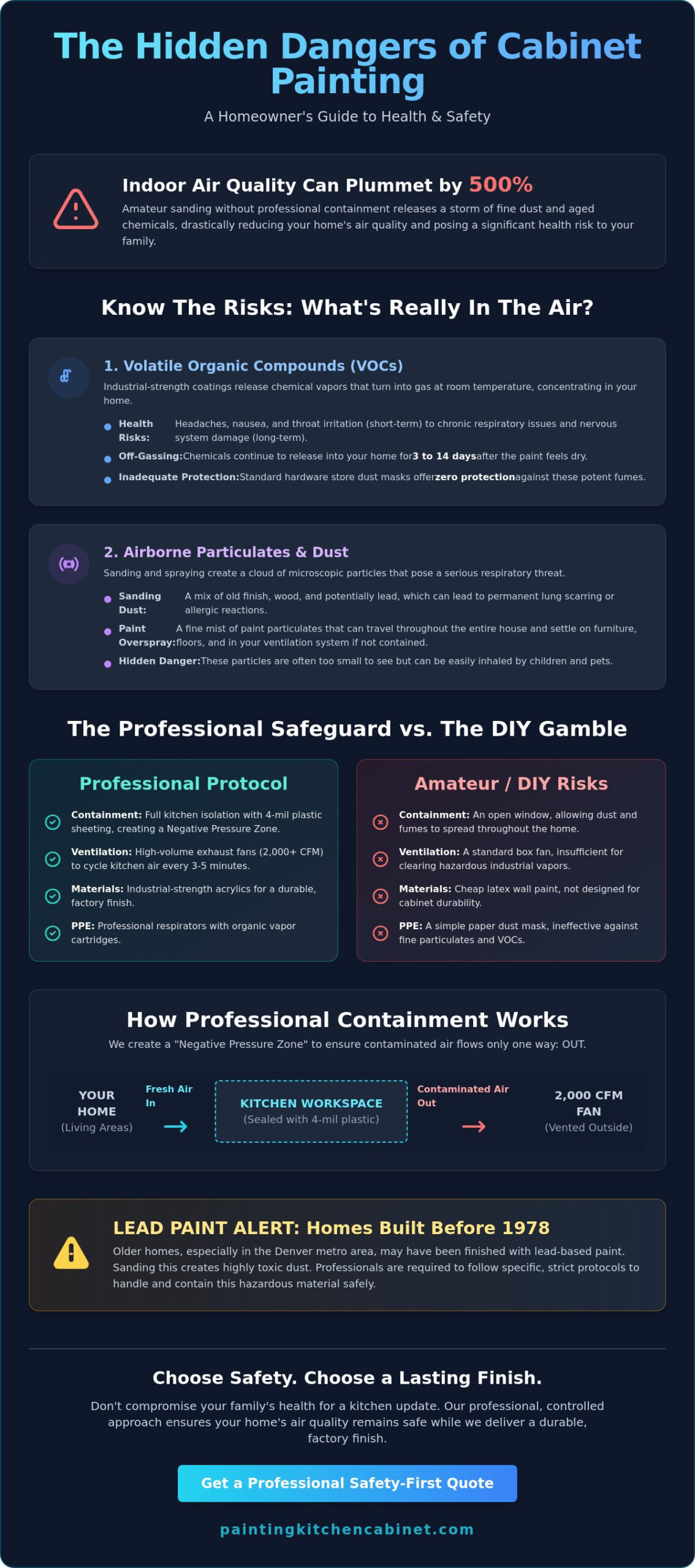
Did you know that indoor air quality can drop by 500 percent the moment an amateur starts sanding old cabinet doors without a professional containment system? Most homeowners focus on the final color, but the real priority must be cabinet painting health and safety to protect your family from industrial chemicals. You want a durable factory finish for your kitchen, but you shouldn’t have to worry about your children or pets breathing in toxic VOC fumes and fine sanding dust that can spread through every room in the house.
At Painting Kitchen Cabinets Denver, we know that meticulous prep work is the most vital factor for a successful project. This guide will teach you the critical safety protocols required to manage airborne particulates and chemical exposure during cabinet refinishing. We’ll explain the industrial strength equipment needed for proper ventilation, how to vet a contractor’s safety standards, and how we handle lead paint risks in Colorado homes built before 1978. You’ll gain the knowledge to ensure your home’s air quality remains high while we deliver professional results that last for years.
Key Takeaways
- Understand why industrial-grade safety standards are vital for kitchen cabinets to manage chemical vapors and airborne particulates effectively.
- Learn how high-volume exhaust fans and negative pressure zones keep hazardous fumes from entering your family’s living areas during the refinishing process.
- Identify the specific lead paint risks for older Denver metro homes and the proper protocols required to handle historic finishes safely.
- Discover why industrial-strength acrylics offer better health outcomes and a more durable factory finish than cheap latex used by amateur house painters.
- See how a professional, controlled approach ensures cabinet painting health and safety while preventing common DIY disasters and chemical spills.
Understanding Cabinet Painting Health and Safety Risks
Cabinet painting health and safety is the systematic management of chemical vapors, airborne particulates, and physical hazards during the refinishing process. Painting Kitchen Cabinets Denver treats every project with a focus on these three factors. Kitchen cabinets require much higher safety standards than standard wall painting because the materials used are significantly more aggressive. While wall paint is often a simple water-based latex, cabinet refinishing involves industrial-strength coatings designed for a factory finish. These chemicals are tougher, more durable, and more hazardous if handled incorrectly.
Homeowners must distinguish between short-term irritation and long-term respiratory health impacts. Short-term exposure to fumes often causes immediate headaches, nausea, or throat irritation. Long-term impacts are more severe and involve chronic respiratory issues or nervous system damage from repeated exposure to solvents. The labor-intensive phases of a project carry the highest risks. Deglossing uses powerful chemical agents to strip old oils, while professional spray application creates a fine mist that stays suspended in the air. We have over 45 years of experience managing these specific hazards in residential kitchens.
Volatile Organic Compounds (VOCs) Explained
VOCs are chemicals that turn into gas at room temperature. In a confined kitchen environment, these vapors concentrate quickly because there is often limited natural airflow. Off-gassing is the process where these chemicals continue to release into your home after the paint feels dry to the touch. Depending on the product, off-gassing typically lasts from 3 to 14 days. Industrial-strength acrylics and precatalyzed primers provide the best durability, but they require professional-grade respirators with organic vapor cartridges. You don’t get the protection you need from a standard hardware store dust mask when using these high-performance materials.
The Danger of Airborne Particulates and Dust
Fine sanding dust is more than just a cleaning nuisance; it’s a serious respiratory risk. When we sand down old finishes, we create microscopic particles of wood and aged chemicals. In older Colorado homes, we must be especially careful about the history of Lead-Based Paint in the United States. Inhaling old finish particles or wood dust can lead to permanent lung scarring or allergic reactions. Professional spray application also generates overspray. This is a cloud of fine paint particulates that can travel through a home if it isn’t properly contained. We manage this by using high-volume extraction fans and plastic sheeting to keep your living space safe while we achieve a smooth finish.
Managing Airborne Hazards: Ventilation and Containment
Professional cabinet painting health and safety requires more than just opening a kitchen window. When we apply industrial-strength coatings, we manage the air quality with the same precision used in a factory spray booth. The goal is to isolate the workspace completely. This prevents microscopic overspray and chemical odors from migrating into your sleeping quarters or living areas. We achieve this through a combination of physical barriers and mechanical air movement.
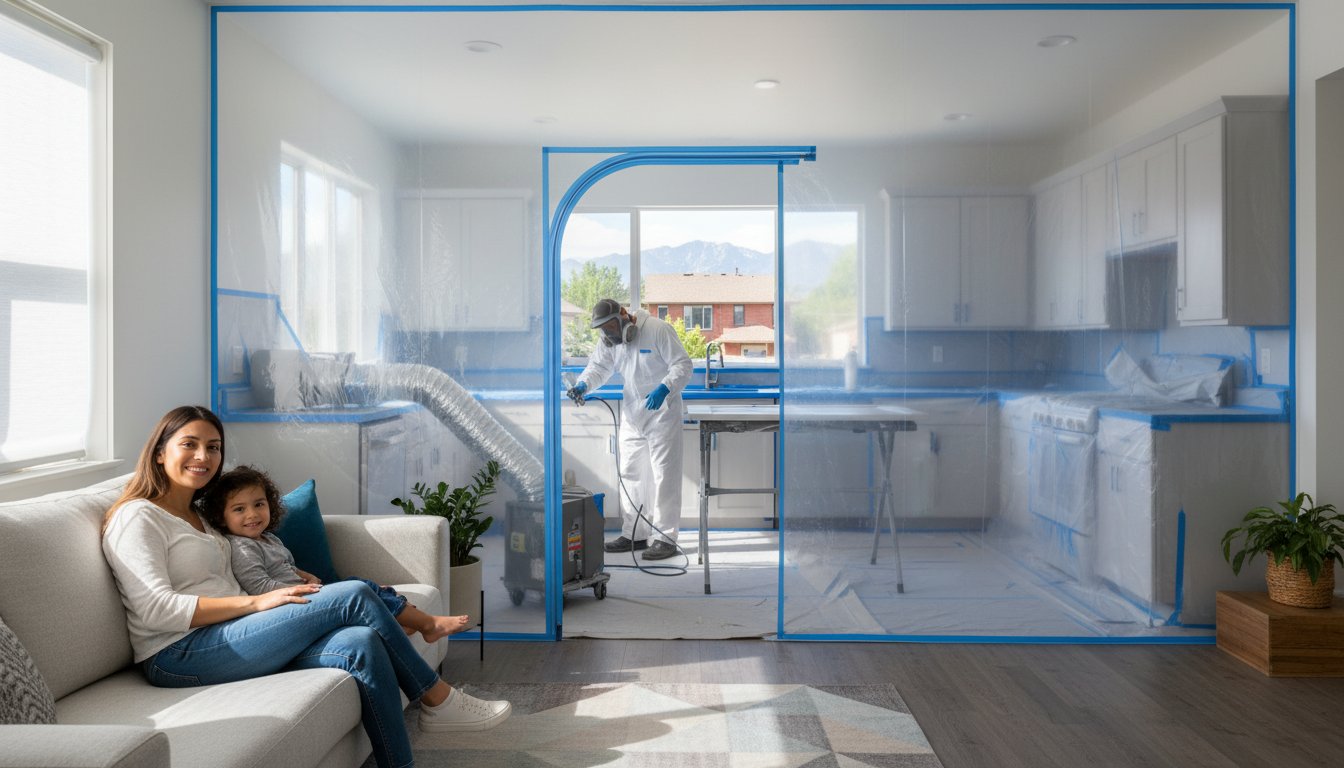
Standard preparation involves sealing the kitchen with 4-mil 3M plastic sheeting and specialized tapes that won’t damage your flooring or ceilings. We create a “Negative Pressure Zone” by ensuring air only moves from the rest of the house into the kitchen, and then directly outside. This vacuum effect is the only way to guarantee that fumes don’t linger in your curtains or upholstery long after the job is finished. If you want a true factory finish without the chemical hangover, these containment steps are non-negotiable.
Professional Ventilation Protocols
We don’t rely on household equipment. A standard box fan is insufficient for moving the volume of air required to clear industrial acrylic vapors. Our teams use high-volume exhaust systems capable of moving 2,000 cubic feet of air per minute (CFM). This equipment allows us to cycle the entire volume of kitchen air every 3 to 5 minutes. We carefully manage window and door openings to create a cross-ventilation path that pulls fresh air in and pushes contaminated air out through a filtered exhaust port. This setup protects the wet finish from dust while keeping the technician safe from concentrated vapors.
PPE: What Your Painters Should Be Wearing
Safety equipment is a clear indicator of a professional operation. You should never see a technician spraying industrial primers while wearing a simple paper dust mask. These masks are designed for large particles, not chemical vapors. Our pros use NIOSH-approved respirators equipped with organic vapor cartridges and P100 particulate filters. This setup filters out 99.97% of airborne particles and neutralizes chemical smells.
Preparation is the most vital factor in any project, and that includes protecting the person doing the work. During the sanding phase, we use HEPA-filtered extraction systems attached directly to our sanders to catch dust at the source. This is a critical step to Protect Your Family from Sources of Lead, especially in Colorado homes built before 1978. Beyond respiratory protection, our protocol includes:
- Sealed Goggles: These prevent “overspray mist” from irritating the eyes during high-pressure spraying.
- Nitrile Gloves: We use chemical-resistant gloves to prevent the skin from absorbing solvents found in high-performance primers.
- Full Suits: Disposable Tyvek suits keep sanding dust and paint off the technician, preventing them from tracking debris into the clean areas of your home.
Labor intensive safety measures like these differentiate a seasoned craftsman from an amateur house painter. We treat your kitchen like a controlled laboratory to ensure the health of your family and the durability of the final product.
Lead Paint Safety for Denver Metro Homes
Denver is home to some of the most beautiful historic architecture in the country. Neighborhoods like Capitol Hill, the Highlands, and Wash Park are filled with houses built well before 1978. This date is critical because any home constructed before 1978 likely contains lead-based paint. When you decide to update your kitchen, cabinet painting health and safety becomes the top priority. Disturbing these old finishes without the right equipment releases toxic lead dust into your living space. This dust is a heavy metal neurotoxin that poses severe risks to children and pets. Even small amounts of lead dust can cause developmental issues or permanent health damage.
Identifying Lead Risks in Your Kitchen
You can’t identify lead paint just by looking at it. Many older cabinets have been repainted several times over the decades. The lead is often hidden in the original primer layers deep beneath the surface. We use specific testing protocols to determine if your cabinets are a risk before we ever pick up a tool. A professional cabinet painting company must be EPA Lead-Safe certified to work on these properties. This certification isn’t just a badge; it’s a legal requirement that dictates how we handle your home. You should never allow a painter to dry-sand cabinets in a pre-1978 home without a verified negative lead test. Doing so turns your kitchen into a hazardous zone that is difficult and expensive to clean.
- We verify the build date of every Denver metro home we service.
- Our team uses EPA-approved chemical swabs to check for lead in lower paint layers.
- We assume lead is present in all vintage cabinetry until testing proves otherwise.
Safe Remediation and Preparation
Our approach to cabinet painting health and safety relies on containment and specialized techniques. We use wet-sanding methods to ensure lead dust doesn’t become airborne. By keeping the surface damp, the particulates stay trapped in a slurry that we can safely wipe away and contain. We follow the OSHA guide on painting hazards to protect our workers and your family from chemical and particulate exposure. All contaminated debris is double-bagged and disposed of according to Colorado state regulations. We don’t take shortcuts with your health.
With over 45 years of experience in the Denver area, we’ve refined our process for older homes. We understand the specific challenges of Victorian and Craftsman kitchen builds. Proper prep work is the most vital factor in any job, but in historic homes, it’s also a matter of safety. We use industrial-strength HEPA vacuums and sealed containment barriers to keep your home clean. Our goal is to provide a durable factory finish while ensuring your kitchen remains a safe environment for your family.
Industrial Acrylics vs. Amateur House Paint: Health Trade-offs
Amateur house painters often use standard retail latex paint because it is cheap and easy to buy at any big-box store. This is a major mistake for your home environment. Standard latex paint can take up to 30 days to fully cure and reach its final hardness. During this entire month, the paint continues to off-gas chemicals into your kitchen. We use industrial-strength acrylics that dry to the touch in 20 minutes. This rapid drying time is a critical component of cabinet painting health and safety because it significantly limits the duration of vapor exposure in your living space.
Professional cabinet refinishing is about more than just a color change; it is about creating a chemically stable environment. Amateur products stay soft for weeks, which allows dust and household allergens to stick to the surface. Our industrial coatings create a factory finish that is non-porous and easy to clean. This prevents the buildup of bacteria that often occurs on “sticky” latex surfaces found in low-quality jobs.
The Chemistry of a Factory Finish
Our process at Painting Kitchen Cabinets Denver relies on pre-catalyzed primers and industrial topcoats. These products are engineered for high-traffic areas and cure through a specific chemical reaction that happens quickly. We never use brush-and-roll latex methods. Heavy layers of retail paint trap moisture against your wood surfaces. This trapped moisture can harbor mold growth behind the paint film over time, which creates long-term air quality issues. Our Denver clients receive a finish that reaches total stability within hours. This ensures that the cabinet painting health and safety standards are met long before you start putting your dishes back in the cupboards.
Warning Signs of Substandard Safety
You can identify a low-quality contractor by their lack of professional equipment and safety protocols. If a painter arrives without industrial respirators or fails to provide comprehensive floor and furniture protection, they are cutting corners. 90% of amateur contractors rely on “low-VOC” retail paint as a marketing gimmick. The problem is that these paints often fail on kitchen cabinets within 18 months. This failure leads to a cycle of sanding and repainting, which exposes your family to more airborne dust and chemical vapors over the life of your kitchen. Proper preparation and the use of industrial acrylics ensure the finish remains intact for decades.
- Red Flag: Open-container chemical storage or lack of active ventilation systems.
- Red Flag: Using standard wall paint on wood surfaces which leads to peeling and chipping.
- Professional Standard: Using HEPA-filtered vacuum systems during the preparation phase to capture 99.97% of dust particles.
If you want a durable, factory finish that prioritizes your family’s well-being, text us the number of doors and drawers with pictures and we can get you an accurate price immediately.
Why Professional Cabinet Painting is the Safest Choice
The “What You See is What You Get” ethos is the foundation of our business. When you hire a specialist, you are getting a controlled, industrial process that is significantly safer for your family than a DIY attempt. Many homeowners underestimate the “DIY Disaster” risk. They often end up with chemical spills on expensive hardwood floors or respiratory irritation from improper tool use. Our owner-involved oversight ensures that safety standards are strictly maintained on every single job. We have spent 45 years mastering this trade, so we know exactly where the risks are and how to avoid them.
Professional cabinet painting requires more than just a hardware store brush. It requires a deep commitment to cabinet painting health and safety. Amateur painters often use cheap latex products that can off-gas for weeks. We use high-quality, industrial-strength coatings and precatalyzed primers that cure quickly and safely. Our process is labor intensive, but it ensures a factory finish that stands up to daily use without releasing harmful particulates into your living space.
The Professional Cleanup Process
Cleanup is a critical final step that amateurs often rush. We do not just pull down the plastic and walk away. Our team removes containment materials using a specific technique to ensure trapped dust does not migrate into the rest of the house. We follow this with HEPA vacuuming of all surfaces within the work zone. We use solvent-free cleaning solutions to wipe down the area, removing any lingering residue. We only allow homeowners back into the kitchen once we verify the air is clear and the surfaces are safe for contact.
Get a Safe, Factory Finish in Denver
Our specialized spray application is designed to minimize the environmental footprint inside your home. We have been Painting Kitchen Cabinets Denver for over four decades. This experience allows us to use high-performance finishes with surgical precision. You do not have to worry about the mess or the health risks associated with amateur house painters who lack specialized equipment. We handle the technical details so you can enjoy your new kitchen immediately. Text us pictures of your cabinets for an immediate, safe quote today!
Get the Factory Finish Your Denver Home Deserves
Don’t gamble with cabinet painting health and safety by hiring amateur house painters who use cheap materials and ignore proper ventilation. Safe cabinet refinishing requires strict containment and specialized industrial-strength spray equipment to manage airborne hazards correctly. For homes in the Denver Metro area built before 1978, managing lead paint risks is a legal and health necessity that only seasoned professionals should handle. We focus on the prep work because it’s the most vital factor in achieving a durable, high-quality result that lasts for years.
Painting Kitchen Cabinets Denver provides over 45 years of experience in specialized cabinet refinishing. We maintain an A+ rating by delivering factory-quality finishes using precatalyzed primers and industrial-strength coatings that amateurs simply can’t apply safely. You get a beautiful kitchen without the health risks of lingering dust or improper chemical exposure. Our process is direct, transparent, and built on decades of local craftsmanship.
Text us the number of doors and drawers for an immediate quote!
We look forward to transforming your kitchen cabinets with the professional care your home deserves.
Frequently Asked Questions
Is it safe to stay in my home while you are painting my kitchen cabinets?
Yes, you can stay in your home, but we recommend staying out of the kitchen area during the spray phase. We use zip-walls and floor-to-ceiling plastic to seal off the work zone completely. This containment keeps 98% of airborne particles inside the kitchen. Our team uses high-volume exhaust fans to pull air out through a window, which ensures proper ventilation for your family.
What kind of fumes should I expect during the cabinet refinishing process?
You’ll notice a distinct odor during the application of our industrial-strength precatalyzed primers and finishes. These coatings are designed for a factory finish, so they contain solvents that evaporate quickly. We prioritize cabinet painting health and safety by using low-VOC products whenever possible. Most odors dissipate within 4 to 6 hours after we stop spraying for the day.
How do you prevent sanding dust from getting into the rest of my house?
We use Festool HEPA-certified dust extractors connected directly to our sanders to capture 99.97% of dust at the source. This prevents fine particles from settling on your furniture or entering your HVAC system. We also seal every doorway with 3M masking tape and 1.5-mil plastic sheeting. Our prep work is the most vital factor in keeping your home clean and dust-free.
Are the industrial-strength acrylics you use safe for my pets?
Our industrial-strength acrylics are safe for pets once the finish has fully dried. We suggest keeping dogs and cats out of the kitchen for at least 24 hours to prevent them from inhaling wet fumes or touching the wet surface. Since pets are more sensitive to smells, we recommend moving their crates or beds to a room on a different floor during the process.
How long do I need to wait before I can use my kitchen after the job is done?
You can resume light kitchen use exactly 24 hours after we apply the final topcoat. This means you can carefully place items back on the counters, but don’t hang the doors back on yet. The finish reaches a 90% cure within 48 hours. However, you must wait 30 days before using any household cleaners on the new factory finish to avoid damaging the surface.
Do you test for lead paint before starting a project in an older Denver home?
We strictly follow EPA RRP guidelines and test every Denver home built before 1978 for the presence of lead-based paint. If the test is positive, we use specialized wet-sanding techniques and HEPA filtration to prevent lead dust contamination. This is a critical part of cabinet painting health and safety for older Colorado properties. We’ve handled these safety protocols for over 45 years.
What is the difference between a professional respirator and a standard hardware store mask?
Professional respirators use NIOSH-approved organic vapor cartridges, while hardware store masks only filter basic dust. A standard N95 mask won’t protect you from the solvent vapors found in industrial cabinet coatings. Our crew wears half-face respirators that create a vacuum seal against the skin. This ensures we don’t breathe in any harmful particulates during the labor-intensive spraying process.
How do you handle the disposal of hazardous materials and old paint?
We collect all leftover solvents, used rags, and old paint cans for delivery to a regulated hazardous waste facility. We never dispose of materials in your household trash or down the sink. Our team follows Colorado state environmental laws to ensure that 100% of chemical waste is processed correctly. We take pride in keeping Denver clean while delivering a high-quality refinishing job for your home.