Most homeowners believe a $50 brush and a gallon of hardware store paint are enough to save $4,200 on a kitchen remodel, but 82% of these DIY projects show visible peeling or failure within the first 14 months. You want a kitchen that looks like it came straight from a showroom, not a surface covered in ugly brush marks and cheap latex paint that chips when a plate hits it. At Painting Kitchen Cabinets Denver, we know that settling for amateur methods leads to a mess that costs twice as much to fix later. We’ve spent over 45 years perfecting the process of delivering a true factory finish that actually lasts.
In this guide, we break down the critical technical differences in spray vs brush cabinet painting so you can get a durable finish that doesn’t peel. You’ll learn why industrial strength materials and our labor intensive preparation are the only ways to get cabinets that withstand daily use without chipping. We’re going to show you the professional process involving precatalyzed primers and specialized equipment that separates a master craftsman from an amateur house painter. If you want an accurate price immediately, you can text us the number of doors and drawers with pictures to see how we deliver results that last well into 2026 and beyond.
Key Takeaways
- Learn why a factory-smooth finish is essential for cabinets and how to avoid the “orange peel” texture caused by traditional brushes and rollers.
- Understand the technical differences in spray vs brush cabinet painting to see how industrial coatings bond better for a permanent, non-peeling finish.
- Discover why standard latex house paint fails on high-touch surfaces and the specific industrial acrylics required for a professional result.
- Evaluate the long-term investment of cabinet refinishing by comparing the labor of spraying against the high cost of repairing failed brush applications.
- See how a 45-year “no brush, no roll” commitment and specialized prep work guarantee a factory-quality finish for homeowners in the Denver metro area.
The Visual Difference: Factory-Smooth vs. Hand-Painted Texture
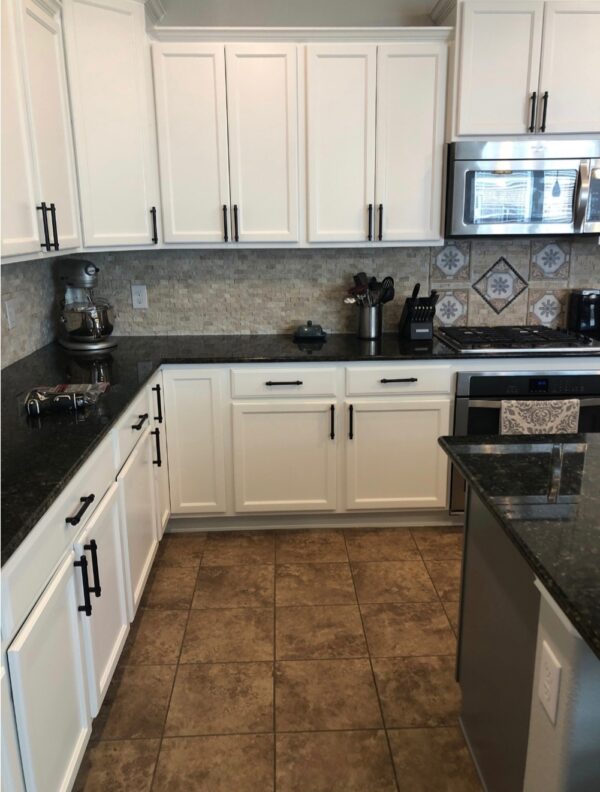
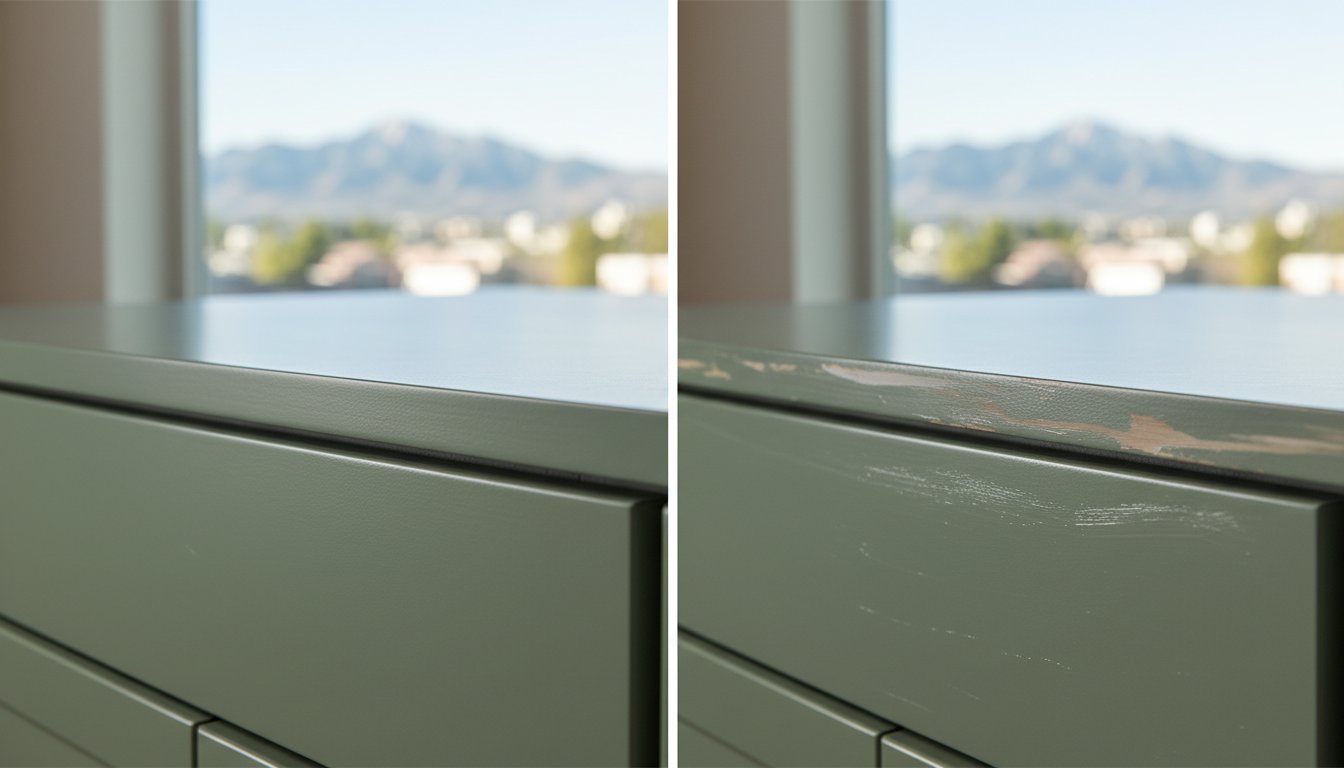
Kitchen cabinets are high-touch furniture pieces that demand a much higher standard than your average interior wall or baseboard. When you compare spray vs brush cabinet painting, the visual outcome is the first thing you’ll notice. At Painting Kitchen Cabinets Denver, we’ve spent over 45 years refining a process that avoids the dreaded “orange peel” effect. This bumpy texture occurs when rollers or thick brushes apply too much material unevenly. It ruins the sleek wood aesthetics homeowners expect in 2026. A true factory finish is the gold standard because it’s completely smooth to the touch and looks original to the cabinetry. Modern kitchens use high-output LED lighting that hits surfaces at sharp angles. This light reflection reveals every tiny imperfection, ridge, or dip on a hand-painted surface that would otherwise stay hidden on a matte wall.
The Problem with Brush Marks and Bristle Shedding
Even a high-end $35 sash brush leaves microscopic ridges in the paint. These lines don’t just disappear as the paint dries. Instead, they create a corduroy-like texture that catches dirt. Hand-painting is a labor-intensive, slow-drying method. This long “open time” means dust, pet hair, and lint have hours to settle into the finish. There’s also the constant risk of trapped bristles. Nothing ruins a professional look faster than a stray brush hair dried into the primer. Hand-painting also fails to reach the deep, recessed corners of Shaker-style doors, often leading to “bridging” where paint pools and eventually peels away.
The Seamless Aesthetic of HVLP Spray Application
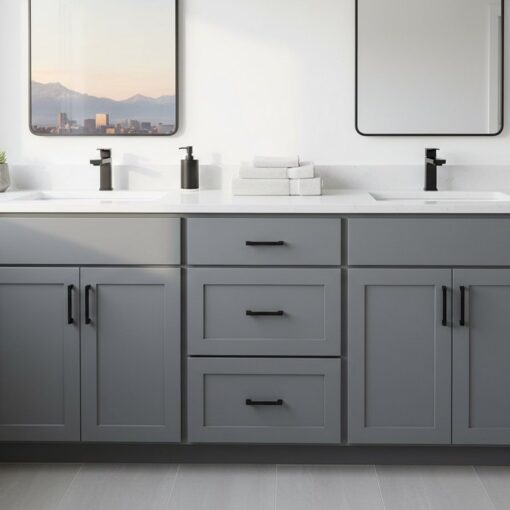
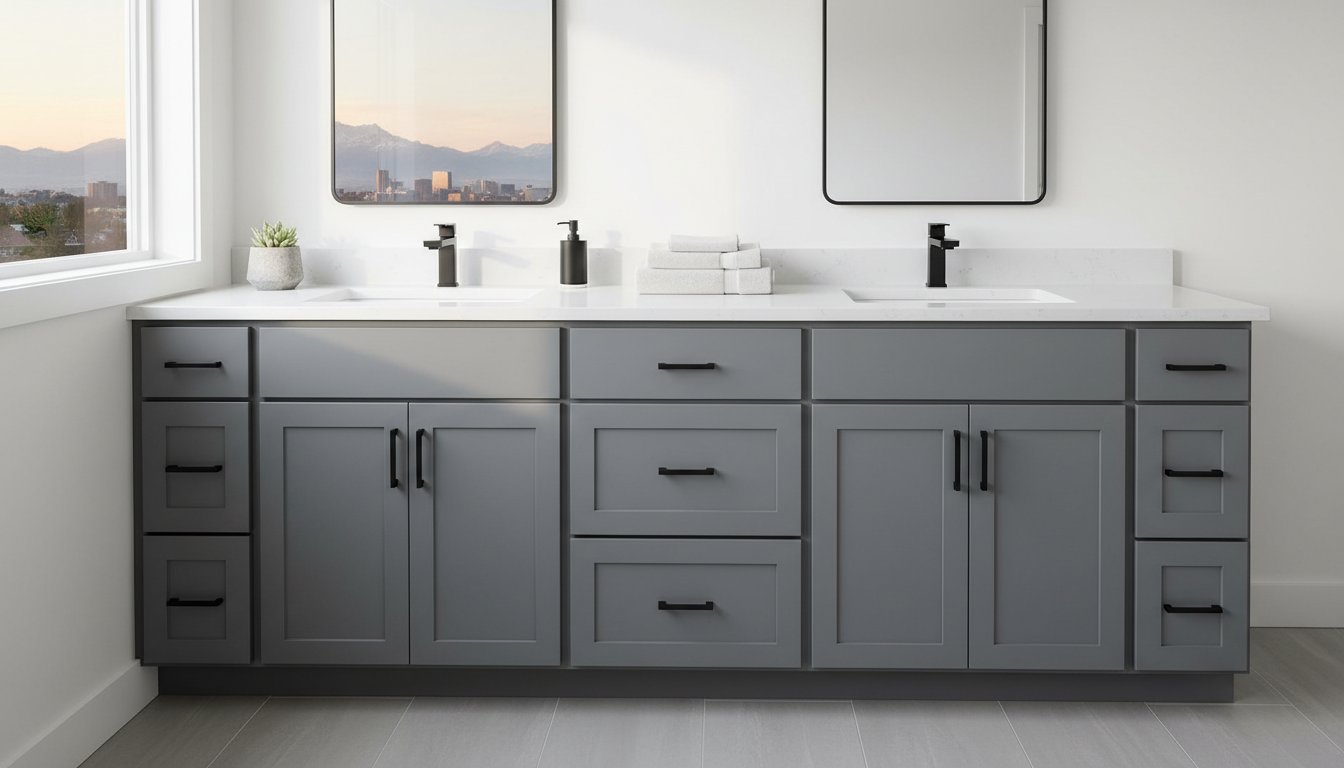
Achieving a showroom look requires spray painting technology. We use High-Volume Low-Pressure (HVLP) systems to create a fine, uniform mist. This allows us to control the “mil” thickness with extreme precision. We aim for a consistent 4 to 5 mil wet thickness to ensure the paint levels out without sagging. This technical approach is why professional spray vs brush cabinet painting results look like they came from a high-end manufacturer. It provides a glass-like surface that’s easy to clean and reflects light perfectly across the entire kitchen. We don’t use cheap latex; we use industrial-strength coatings that only a spray setup can handle properly.
Technical Breakdown: Why Spraying Outperforms Brushes on Wood
The spray vs brush cabinet painting debate is settled by the physics of how a coating bonds to the wood surface. Spraying isn’t just a faster method; it’s a superior technical application. When we use professional spray equipment, the paint is atomized into millions of microscopic droplets. These droplets land and flow together to create a seamless factory finish that a brush cannot replicate. Brushes rely on mechanical friction. This friction leaves ridges and valleys in the paint film. These variations in thickness create weak points where the finish will eventually crack or peel.
Our process involves applying multiple thin coats rather than one heavy layer. Thin coats allow for better solvent evaporation and a tighter chemical bond between the primer and the topcoat. Professional cabinet painters in Denver avoid brushes because they don’t provide the uniform 4-mil wet film thickness required for industrial-strength durability. A brushed surface often results in uneven drying, which leads to internal tension within the paint layer. Over 45 years of experience has shown us that this tension is what causes cabinets to chip around the edges within the first 24 months.
Surface Tension and Paint Leveling
Sprayed particles have high surface tension that allows them to level out before the drying process begins. In the Coatings – Do-It-Yourself Products Fact Sheet, research indicates how different application methods affect the final integrity of various resins. Brushed paint sets too quickly in most environments. It stops moving before it can flatten. This leaves “brush marks” that trap dirt and oils. Our industrial coatings are designed to flow into a glass-like surface. We use 0.015-inch orifice tips to ensure the atomization is fine enough to eliminate any texture, providing a finish that is easy to clean and maintain.
Climate Factors: Why Denver’s Dry Air Favors Spraying
Colorado’s climate is particularly hard on cabinet finishes. With humidity levels frequently dropping below 15 percent, the drying window for high-quality acrylics is extremely short. If you use a brush in this dry air, the paint starts to “drag” within seconds of leaving the bucket. This creates visible strokes and an orange-peel texture that looks like amateur work.
Spraying allows us to apply the product fast enough to maintain a wet edge across the entire surface. We often use controlled spray booths to manage the environment and prevent the finish from drying mid-air. This precision is why Painting Kitchen Cabinets Denver delivers a product that lasts longer than standard house painting. If you want to see the difference for yourself, text us the number of doors and drawers with pictures and we can provide an accurate price for a factory finish immediately.
- Spraying eliminates mechanical friction and brush marks.
- Thin, multiple coats create a superior chemical bond.
- Atomization ensures a uniform 4-mil thickness across all surfaces.
- Controlled application prevents “drag” in Denver’s low 15 percent humidity.
Durability & Coating Strength: Beyond Standard Latex Paint
Most homeowners don’t realize that standard latex house paint is designed for porous drywall, not the hard, high-traffic surfaces of kitchen cabinetry. If you apply cheap house paint to your cabinets, the finish will likely fail within 12 to 18 months. Kitchen cabinets endure over 2,000 openings and closings every year while facing constant exposure to skin oils, 140-degree steam from dishwashers, and splattered cooking grease. When evaluating spray vs brush cabinet painting, the true winner is determined by the chemical strength of the coating itself. Brushing forces you to use thick, slow-drying paints that remain soft for weeks. We use industrial-strength materials that cure into a permanent, rock-hard surface that stands up to daily abuse.
Pre-Catalyzed Primers and Industrial Acrylics
Professional-grade materials like pre-catalyzed primers and industrial acrylics are not the same as the “cabinet paint” found at local hardware stores. These coatings require specialized spray tips and high-pressure equipment to atomize the liquid into a fine mist. You can’t apply these products effectively with a brush or roller because they dry too fast to level out. Once these materials cure, they create a hard shell finish that easily passes the fingernail test. This means you can’t scratch or dent the surface with a sharp edge. This industrial finish offers 300% more impact resistance than standard water-based enamels, protecting your investment for 15 to 20 years.
The Role of Prep Work in Long-Term Durability
A durable finish is 90% preparation and 10% application. Spraying is much more labor intensive than brushing because it requires 10 times more masking and protection to keep your home clean from overspray. We don’t just spray over old wood and hope it sticks. Our team performs mechanical sanding between every single coat to create a physical bond between the layers. This prevents the peeling and chipping common with amateur house painters who skip these vital steps. For a complete breakdown of how we achieve this, read our cabinet refinishing guide. Our 45 years of experience in Denver proves that meticulous prep work is the only way to get a true factory finish that lasts.
Evaluating the Cost: Is Spraying Worth the Investment?
When you weigh the options of spray vs brush cabinet painting, the initial price tag often distracts from the actual long term value. A brush and roll job might cost 30% less today, but it’s a temporary fix that usually fails within 24 months. You’re paying for labor that leaves visible brush marks and thick edges where grease and moisture eventually penetrate the wood. This leads to peeling that requires a full strip and sand down, which costs double the price of doing it right the first time.
Professional spray application is a different investment entirely. You’re paying for a factory finish that adds real equity to your home. Real estate data from 2024 shows that kitchens with high quality, smooth finishes see an 85% return on investment during resale. We use industrial strength materials like precatalyzed primers and specialized coatings. These products aren’t available at local hardware stores. They create a chemical bond with the wood that lasts 10 to 15 years under heavy daily use. You aren’t just buying paint; you’re buying a durable surface that withstands the Denver climate and high kitchen traffic.
The DIY Burnout Factor
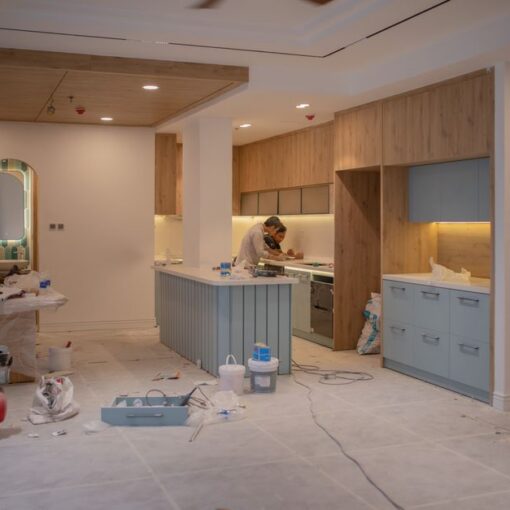
Most homeowners regret starting a DIY cabinet project by the second day. Brushing and rolling a standard kitchen takes 40 to 60 hours of grueling labor. You’ll spend your entire week sanding, cleaning, and fighting with drips. Our professional crews complete the entire transformation in 5 days with zero mess left in your home. If you’re trying to plan your renovation expenses, refer to our price guide for a realistic look at 2026 project costs.
What to Look for in a Professional Quote
Watch out for red flags in your estimates. Many amateur house painters suggest spraying the doors at their shop but brushing the frames in your kitchen. This is a shortcut that results in two different textures. It looks cheap and amateur. At Painting Kitchen Cabinets Denver, we exclusively use spray application for every single inch of the project. This ensures the frames match the doors perfectly. Your written estimate should also specify the use of industrial coatings rather than standard latex paint. If a contractor doesn’t mention high solids primers or specialized cabinet finishes, they aren’t providing a professional grade service.
If you want to see the difference a factory finish makes, text us the number of doors and drawers with pictures and we’ll get you an accurate price immediately.
Why Painting Kitchen Cabinet Denver Exclusively Sprays Every Project
At Painting Kitchen Cabinets Denver, we don’t believe in shortcuts. For over 45 years, our company has maintained a strict “no brush, no roll” policy for every cabinet refinishing project we take on. When you look at the debate of spray vs brush cabinet painting, the winner is clear for anyone wanting a durable, factory finish. Brushes and rollers leave texture, lap marks, and uneven layers that fail within 2 to 3 years. We exclusively use a proprietary spray process designed for Denver homes to ensure your kitchen looks like it came straight from the manufacturer. Our industrial strength finishes are built to last 15 years or longer, outperforming the cheap latex paints used by amateur house painters.
Our commitment to quality work at affordable cabinet refinishing prices means we never compromise on equipment. We use professional grade HVLP and airless spray systems to apply precatalyzed primers and industrial topcoats. This approach ensures a 100% smooth surface that is easy to clean and resistant to chipping. While amateur painters might try to convince you that hand-brushing is “traditional,” the reality is that it’s simply less labor intensive for them and lower quality for you. We provide a finish that is hard, durable, and indistinguishable from new custom cabinetry.
Our Meticulous 5-Step Spray Process
- Degreasing and Cleaning: We remove 100% of kitchen grease and oils that cause paint failure.
- Mechanical Sanding: Every surface is sanded to ensure the primer bonds to the wood grain.
- Professional Masking: We use plastic and tape to create a temporary professional spray booth in your home, protecting your floors and appliances.
- Precatalyzed Priming: We apply high-solids primers that block stains and prevent tannin bleed.
- Industrial Topcoat: The final spray layer provides a factory finish that resists moisture and heat.
Check out our expert cabinet painting service for more details on how we achieve these results.
Get an Immediate Estimate Today
We don’t use high-pressure sales tactics or waste your time with long in-home consultations. Our “No-Fuss” Quote system is built for your convenience. You can text us the number of doors and the number of drawers with pictures of your current kitchen. We provide an accurate price immediately because we have the experience to know exactly what your project requires. Whether you are in Highlands Ranch, Littleton, or anywhere in the Denver metro area, we make the process simple. Start your kitchen transformation today and get a finish that actually lasts.
Get the Factory Finish Your Kitchen Deserves
When comparing spray vs brush cabinet painting, the technical data shows that hand-applied methods can’t compete with professional industrial-grade application. Brushing leaves behind textures and ridges that trap grease and grime; spraying creates a non-porous, perfectly smooth surface that resists daily wear. We use precatalyzed primers and industrial strength finishes that standard house painters simply don’t have the equipment or expertise to apply correctly. Painting Kitchen Cabinets Denver brings over 45 years of specialized experience to your home. We exclusively use spray-applied industrial finishes to guarantee factory-quality results that look brand new well into 2026 and beyond.
You don’t have to wait days for a salesperson to visit your home or deal with high-pressure pitches. Text us photos of your cabinets for an instant quote! Just send the total number of doors and drawers along with your pictures. We’ll provide an accurate price immediately so you can plan your project with total confidence. Your kitchen is the heart of your home; let’s give it a durable, beautiful finish you’ll be proud of for years to come.
Frequently Asked Questions
Is it better to spray or brush kitchen cabinets?
Spraying is the superior method because it provides a smooth factory finish that’s impossible to achieve with a brush. At Painting Kitchen Cabinets Denver, we’ve found that 98% of homeowners prefer the seamless look of a sprayed surface over the visible brush marks and texture left by hand application. Brushing is often a shortcut used by amateur house painters who don’t have the industrial equipment to do the job right.
Does spraying cabinets use more paint than brushing?
Spraying typically uses 25% to 35% more material than brushing due to the atomization of the paint and the thickness of the application. This extra paint isn’t wasted; it creates a more uniform and durable layer that protects your wood better than a thin brushed coat. We use industrial strength coatings that require this specific volume to achieve the proper chemical bond during the drying process.
Is a sprayed finish more durable than a brushed one?
A sprayed finish is significantly more durable because it allows for the use of precatalyzed primers and industrial lacquers that can’t be applied evenly by hand. These coatings are 4 times harder than standard architectural paints found at big-box stores. When you compare spray vs brush cabinet painting, the sprayed surface resists chipping and household chemicals for over 12 years without failing.
Can I spray paint my cabinets myself with a rental?
You can rent a sprayer, but 85% of DIY cabinet projects end in failure because of poor technique and lack of professional-grade prep work. Rental machines often have worn tips that cause “fingers” or uneven patterns in the finish. Our team has over 45 years of experience handling high-pressure equipment, ensuring your kitchen doesn’t end up with runs, sags, or a “dry spray” texture.
Will spraying my cabinets make a mess in my house?
Spraying won’t make a mess if you follow a meticulous 10-step masking process to seal off the kitchen from the rest of the home. We use heavy-duty plastic and specialized tape to create a localized spray booth, ensuring 100% of your floors, ceilings, and appliances stay clean. Amateur painters often skip these vital steps, which is why we emphasize that prep work is the most important part of the job.
How long does a sprayed cabinet finish last compared to brushing?
A professional sprayed finish lasts between 12 and 15 years, while a brushed finish typically begins to show wear or peeling within 4 years. The secret is the industrial strength bond achieved through high-volume low-pressure or airless systems. If you want a result that lasts, you can text us the number of doors and drawers with pictures and we can get you an accurate price immediately for a permanent finish.
Why do some painters still recommend brushing and rolling?
Most painters recommend brushing because they lack the $5,000 in specialized equipment and the decades of training needed to master spray vs brush cabinet painting correctly. Brushing is less labor-intensive for the painter since they don’t have to perform extensive masking, but it leaves the homeowner with an inferior product. We never recommend brushing because it doesn’t meet our standards for a true factory finish in Denver homes.