Table of Contents
- Introduction
- Why Denver Homeowners Are Choosing Refinishing Over Replacement
- What "Factory Finish" Actually Means (And How to Spot the Difference)
- What Does Affordable Cabinet Refinishing Cost in Denver? (2026 Pricing Guide)
- Wood Types and Material Considerations for Denver-Area Kitchens
- Choosing the Right Denver-Area Cabinet Refinishing Provider
- Frequently Asked Questions About Cabinet Refinishing in Denver
- Case Study: A Castle Rock Kitchen Transformation
- Conclusion: Your Denver Kitchen Deserves a Factory Finish Without the Factory Price
Introduction
You love your kitchen layout. The workflow is perfect, the footprint makes sense, and the island is exactly where it should be. But those cabinets: honey oak from 2003, or maybe dark maple with worn edges and dated hardware. You called a contractor for a replacement quote and heard a number that made you sit down. Twenty-five thousand dollars. Thirty. Forty, if you want soft-close drawers and dovetail joinery. Affordable kitchen cabinet refinishing with factory finish in Denver isn't just possible: it is the smartest investment you can make in your kitchen's value, delivering a showroom-quality result at roughly 70 percent less than full replacement. This guide explains what a true factory finish means, what the process costs in the Denver metro, how professional shop-sprayed refinishing works, and how to choose a provider you can trust in Castle Rock, Castle Pines, Highlands Ranch, Parker, and across the Front Range.
Why Denver Homeowners Are Choosing Refinishing Over Replacement
The cost reality in the Denver metro is stark. A standard 10-by-10 kitchen replacement routinely lands between $25,000 and $40,000, and that figure climbs fast once you factor in countertop removal, backsplash replacement, plumbing adjustments, and drywall repair. Professional refinishing, by contrast, typically falls in the $4,000 to $10,000 range depending on kitchen size, door count, material condition, and finish complexity. That is not a small spread, but even the high end of refinishing sits well below the starting point of replacement.
The National Kitchen and Bath Association's 2026 report confirms that 76 percent of homeowners now choose some form of cabinet refresh over full replacement. That trend holds across Denver, Boulder, and the Colorado Springs corridor, where long-established refinishing shops have built multi-decade businesses on this exact value proposition. One local survey found 85 percent of Boulder-area homeowners consider painting or refinishing the more economical choice versus replacement.
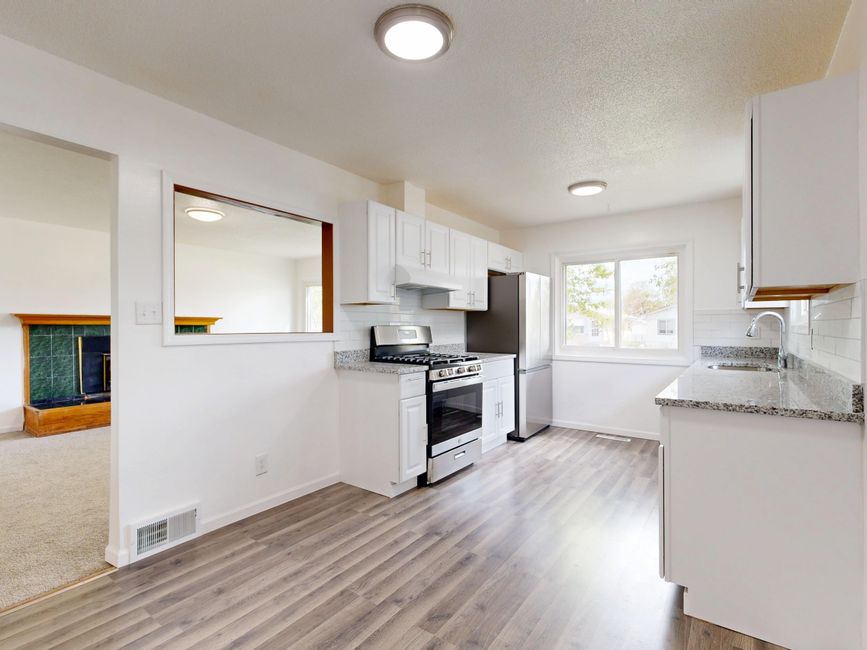
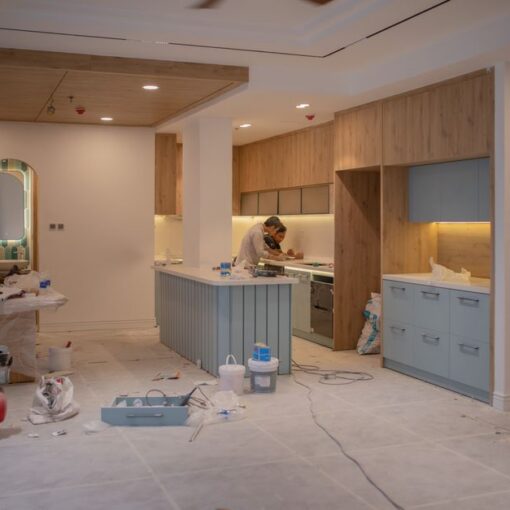
What you keep matters. Your existing cabinet boxes, layout, and footprint stay intact. No demolition. No drywall dust. No plumbing or electrical disruption. The result is a transformation of the most visible surface area in your kitchen, freeing budget for new countertops, a tile backsplash, or upgraded hardware while still coming in at a fraction of replacement cost.
Refinishing vs. Refacing vs. Replacement: Know the Difference
Refinishing means spray-applying a new finish to your existing cabinet boxes, doors, and drawer fronts. It is the most affordable option and preserves your current layout and door style. Refacing replaces only the doors and drawer fronts while keeping the cabinet boxes, which costs more than refinishing but allows a style change, such as switching from raised panel to Shaker. Replacement is complete removal and installation of new cabinetry, the most expensive route and one that often triggers a domino effect requiring new countertops, flooring, and backsplash. In terms of cost, timeline, disruption, and durability, refinishing consistently delivers the highest return on investment for cabinets that are structurally sound but visually dated.
What "Factory Finish" Actually Means (And How to Spot the Difference)
A factory finish is not a marketing phrase. It describes a spray-applied coating cured under controlled conditions, typically a precatalyzed primer followed by crosslinking urethane lacquer, applied with HVLP spray equipment. HVLP, or high-volume low-pressure, atomizes the coating into a fine mist that levels out to a glass-smooth surface impossible to achieve with a brush or roller.
Brush and roller application leaves brush marks, uneven film thickness, and a softer cure. The result always looks painted rather than manufactured. You can see it in the light: brush strokes catch the eye, roller stipple creates texture, and the finish lacks the depth and uniformity of a sprayed surface.
Denver's top providers remove doors and drawer fronts and spray them in a controlled shop environment. This eliminates overspray in your home, prevents dust contamination, and removes humidity variables that plague in-home application. Some providers, notably N-Hance, use proprietary UV light technology to instantly cure finishes, creating a rock-hard surface that is fully cured before the doors leave the shop.
Red flags to avoid include any provider who cannot explain their spray equipment, uses house paint instead of cabinet-grade lacquer or urethane, or cannot articulate their curing process. If the quote sounds like a house-painting estimate, it probably is.
The Multi-Step Process: How Denver Shops Deliver Factory Results
Step one is assessment and color consultation. A reputable provider offers a free in-home estimate, evaluates your door style and cabinet condition, and provides color matching, including matching to existing furniture pieces if desired.
Step two is removal and prep. Doors and drawer fronts are removed, labeled for exact reinstallation, and transported to the shop. Cabinet boxes are masked and protected in place.
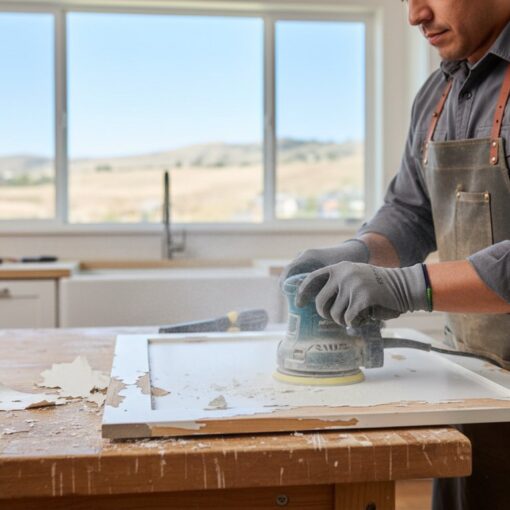
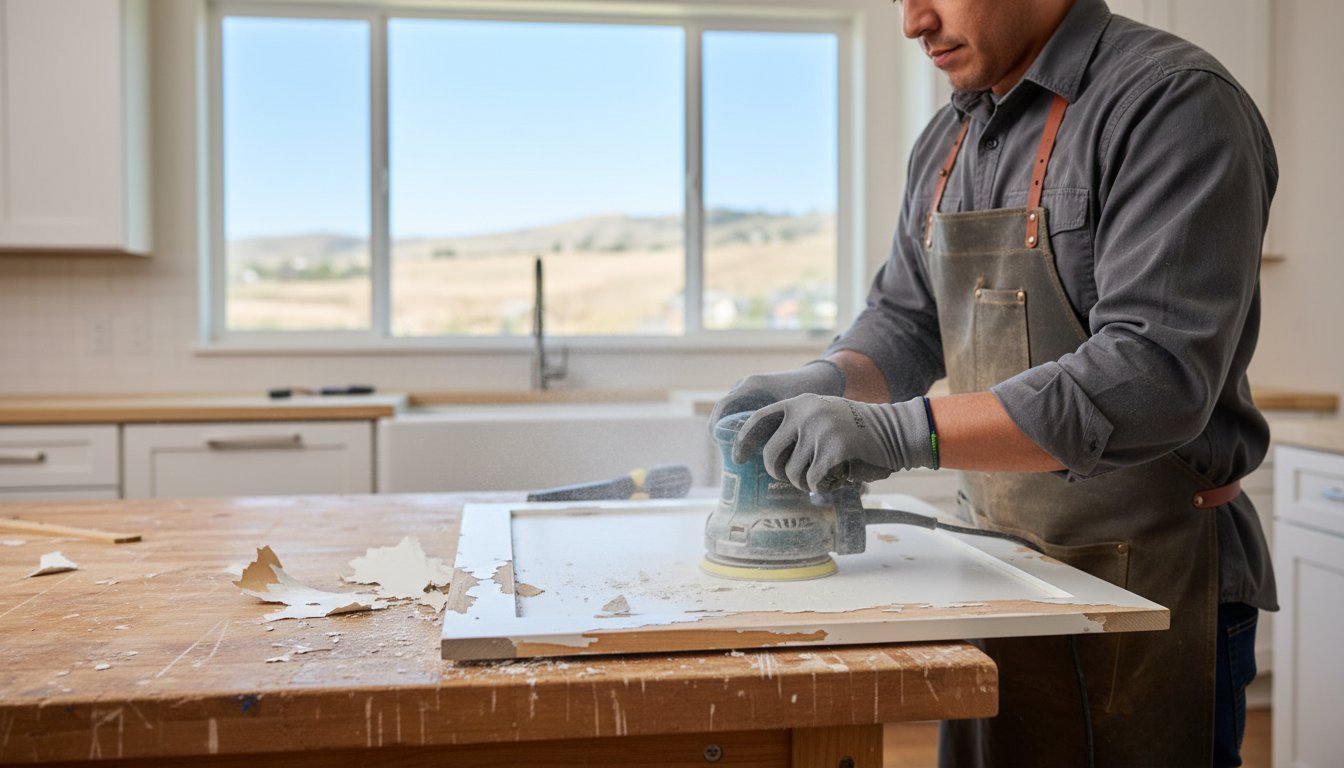
Step three is stripping and sanding. Old finish is removed or scuffed, and surfaces are sanded to create mechanical adhesion for the new coating. This step is critical: without proper prep, even the best lacquer will fail.
Step four is spray application. HVLP equipment applies precat primer followed by two to three coats of crosslinking urethane lacquer in a dust-free booth. The controlled environment ensures consistent film thickness and full cure.
Step five is curing and reinstallation. Finishes cure to a factory-hard surface, and doors are reinstalled with your choice of hardware, including soft-close hinges and dovetail drawer upgrades. Total turnaround typically runs two to five days.
What Does Affordable Cabinet Refinishing Cost in Denver? (2026 Pricing Guide)
Professional refinishing in the Denver metro runs $4,000 to $10,000 depending on kitchen size, door count, material condition, and finish complexity. Full replacement starts at $25,000 and climbs from there. That is not marketing math; it is the reality of labor, materials, and disruption costs in the Front Range market.
Several factors drive the final price. The number of doors and drawer fronts is the biggest variable. Cabinet box condition matters: boxes in good structural shape require less prep. Wood type plays a role, with oak and maple refinishing beautifully while thermofoil requires special adhesion promoters and handling. Upgrades like soft-close hardware, new hinges, or custom color matching add to the total but remain modest compared to replacement.
While most providers quote per project rather than per door, expect roughly $75 to $150 per door and drawer front for shop-sprayed factory finish work in the Denver market. A professional quote should include removal and reinstallation, all materials including primer and lacquer, hardware reattachment, and warranty coverage. Look for at least a three-year workmanship warranty. Denver's established shops, some operating since 1979 and others with 38-plus years of experience, back their work with warranties that reflect their confidence in the process.
DIY vs. Professional: The True Cost Comparison
DIY materials cost $200 to $600 in paint, primer, sandpaper, and equipment rental. That number looks attractive until you account for the learning curve. Cabinet refinishing is not wall painting. The surface preparation alone requires knowledge of wood species, existing finish chemistry, and adhesion principles.
The hidden costs of DIY include your time, typically two to four weeks of evenings and weekends, equipment rental, material waste from mistakes, and the high probability of a finish that shows brush marks, drips, or premature wear. Brush and roller application cannot achieve the film thickness, leveling, or cure of HVLP-sprayed urethane lacquer. The finish will look painted, not factory.
Resale value matters. A professional factory finish holds up for 10 to 15-plus years with normal use. A DIY job may need redoing in two to three years, negating any upfront savings and potentially devaluing your kitchen in the eyes of future buyers. Professional refinishing at $4,000 to $10,000 delivers a result that protects your home's value. DIY risks costing more in the long run.
Wood Types and Material Considerations for Denver-Area Kitchens
Oak, the staple of 1990s and early 2000s Denver-area homes, refinishes beautifully. Its open grain takes stain and lacquer well, and it is often the best candidate for transformation to white, gray, or modern neutral tones. The grain pattern adds texture that reads as intentional rather than dated once the honey tone is gone.
Maple and cherry feature smooth, tight grain that accepts factory finishes exceptionally well. These species are ideal for achieving that new-kitchen look because the surface levels to a near-perfect plane under sprayed lacquer.
Thermofoil and laminate require special consideration. Some providers can refinish them with proper adhesion promoters, but replacing the doors may be more cost-effective if the thermofoil is peeling or delaminated. MDF and particle board are generally poor candidates for refinishing. If your cabinet boxes are MDF, discuss options with your provider before committing.
Denver's dry climate actually favors lacquer curing. Low ambient humidity allows solvents to flash off at the ideal rate, reducing the risk of blushing or slow cure. Seasonal humidity swings mean late fall through early spring, when indoor humidity is lowest, is often ideal for refinishing work. Professional shops control their environment year-round, so the seasonal advantage is real but not a dealbreaker for summer projects.
Choosing the Right Denver-Area Cabinet Refinishing Provider
Longevity matters. Denver's most trusted refinishing shops have operated since 1979, 1992, and similar milestones, representing 30 to 45-plus years of local experience. A company that has survived Denver's economic cycles and earned repeat business across decades has proven its process and its customer care.
Verify the process directly. Ask about HVLP spray equipment, precat primer, crosslinking urethane lacquer, and whether doors are sprayed in-shop or in-home. A provider who hesitates or cannot explain these terms is likely using house paint and a brush. Confirm licensing and insurance before signing anything. A three-year workmanship warranty is the baseline expectation.
Read local reviews from your specific community. Testimonials from Castle Rock, Parker, Highlands Ranch, and Castle Pines give you neighborhood-level insight into a provider's reputation. Get multiple estimates, ideally three or more, and compare them on process, timeline, warranty, and price. Be wary of quotes significantly below the $4,000 to $10,000 market range. Quality materials and proper spray equipment cost money, and a lowball quote often signals shortcuts. Confirm that your provider serves your specific community. Most Denver shops cover the full metro area plus Castle Rock, Parker, Highlands Ranch, and the Denver-to-Colorado Springs corridor.
Frequently Asked Questions About Cabinet Refinishing in Denver
How long does the refinishing process take? Most Denver shop-based providers complete the job in two to five days, including removal, spraying, curing, and reinstallation. Your kitchen remains usable throughout. Cabinet boxes stay in place and are masked, so you have access to your kitchen while doors and drawers are off-site.
How long will a factory finish last? Professionally sprayed urethane lacquer finishes typically last 10 to 15-plus years with normal use. UV-cured finishes may last even longer, as the instant curing creates a harder, more crosslinked surface.
Can you match my existing furniture or trim? Yes. Denver providers offer custom color matching to existing tables, chairs, built-ins, and trim. This is especially useful in open-concept homes where kitchen cabinetry must coordinate with adjacent living and dining spaces.
Is refinishing safe for homes with children? Professional shops use low-VOC products and spray off-site, meaning minimal odor and no fumes in your living space. The process is inherently safer than in-home painting because the chemicals cure in a controlled shop environment.
What is the best time of year to refinish in Denver? Late fall through early spring offers the most stable indoor humidity, which aids curing. However, professional shops control their environment year-round, so seasonal timing is a minor consideration rather than a constraint.
Case Study: A Castle Rock Kitchen Transformation
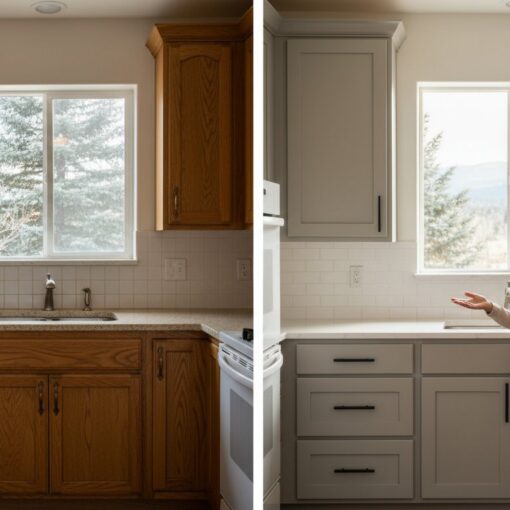
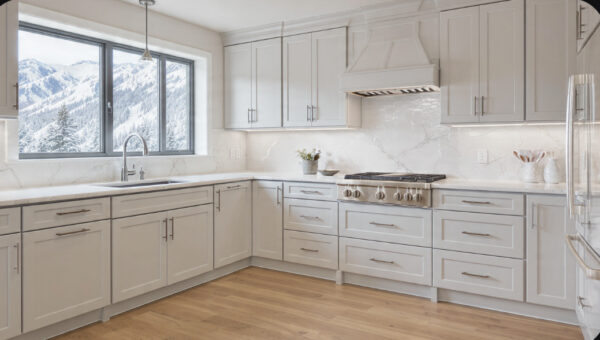
A 2004 Castle Rock home had the classic Front Range look: honey-oak cabinets with dated brass hardware. The homeowner loved the kitchen's layout but received a $28,000 replacement quote that far exceeded the budget. Professional shop-sprayed refinishing in a warm white finish, paired with soft-close hardware upgrades and new matte black pulls, transformed the space. The total investment came to $7,200, a savings of over 70 percent versus replacement. Doors were removed on a Monday, sprayed Tuesday and Wednesday, and reinstalled Thursday. The kitchen was fully functional by Friday. The result is a factory-finish transformation indistinguishable from new cabinetry, at less than a third of replacement cost.
Conclusion: Your Denver Kitchen Deserves a Factory Finish Without the Factory Price
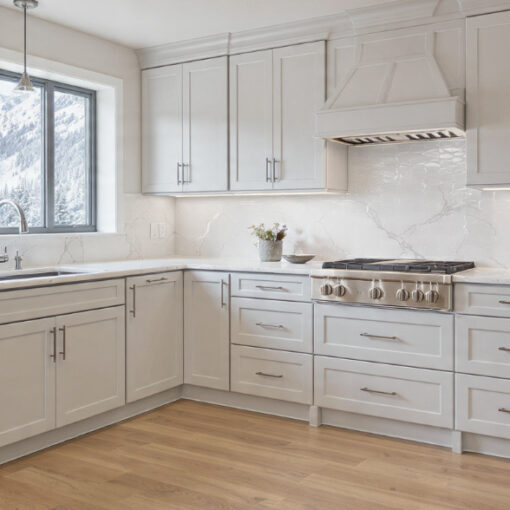
Affordable kitchen cabinet refinishing with factory finish in Denver delivers roughly 70 percent savings versus replacement, with a two-to-five-day turnaround and 10-to-15-plus-year durability. Shop-sprayed urethane lacquer finishes are indistinguishable from factory-new cabinets when applied by experienced Denver providers who use proper spray equipment, cabinet-grade coatings, and controlled curing environments. Contact two or three of Denver's established refinishing shops for free in-home estimates. Ask about their spray process, their warranty, and their recent work in your community. Your kitchen's transformation is closer and more affordable than you think.