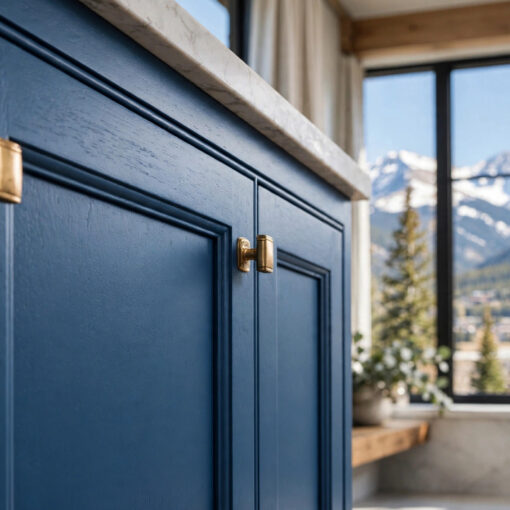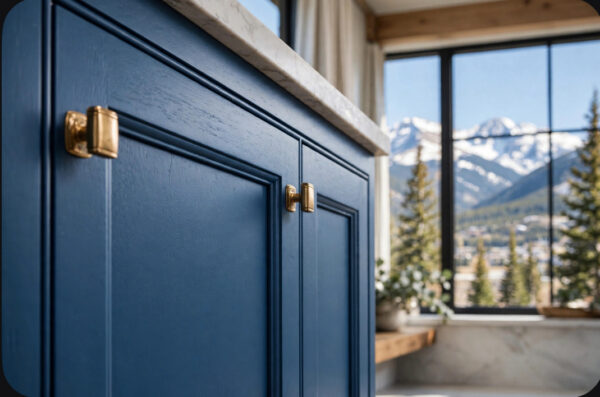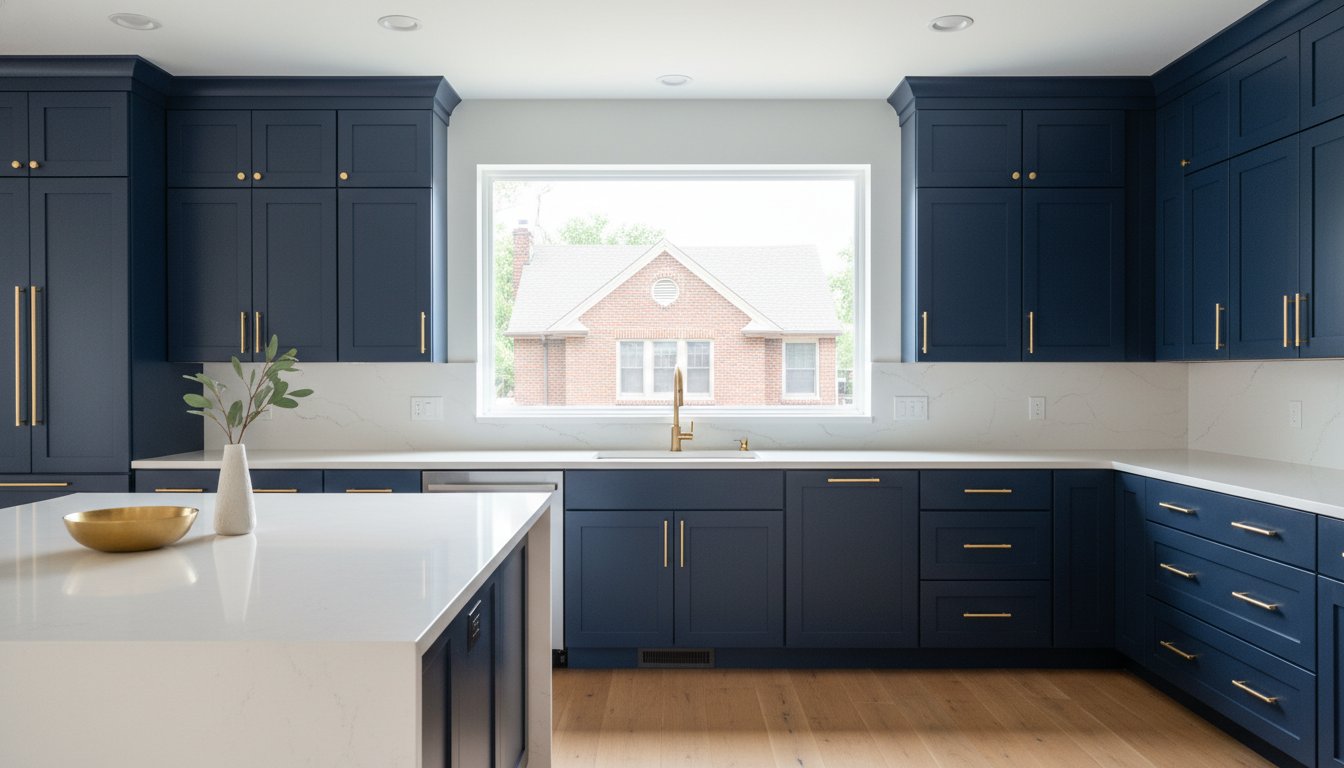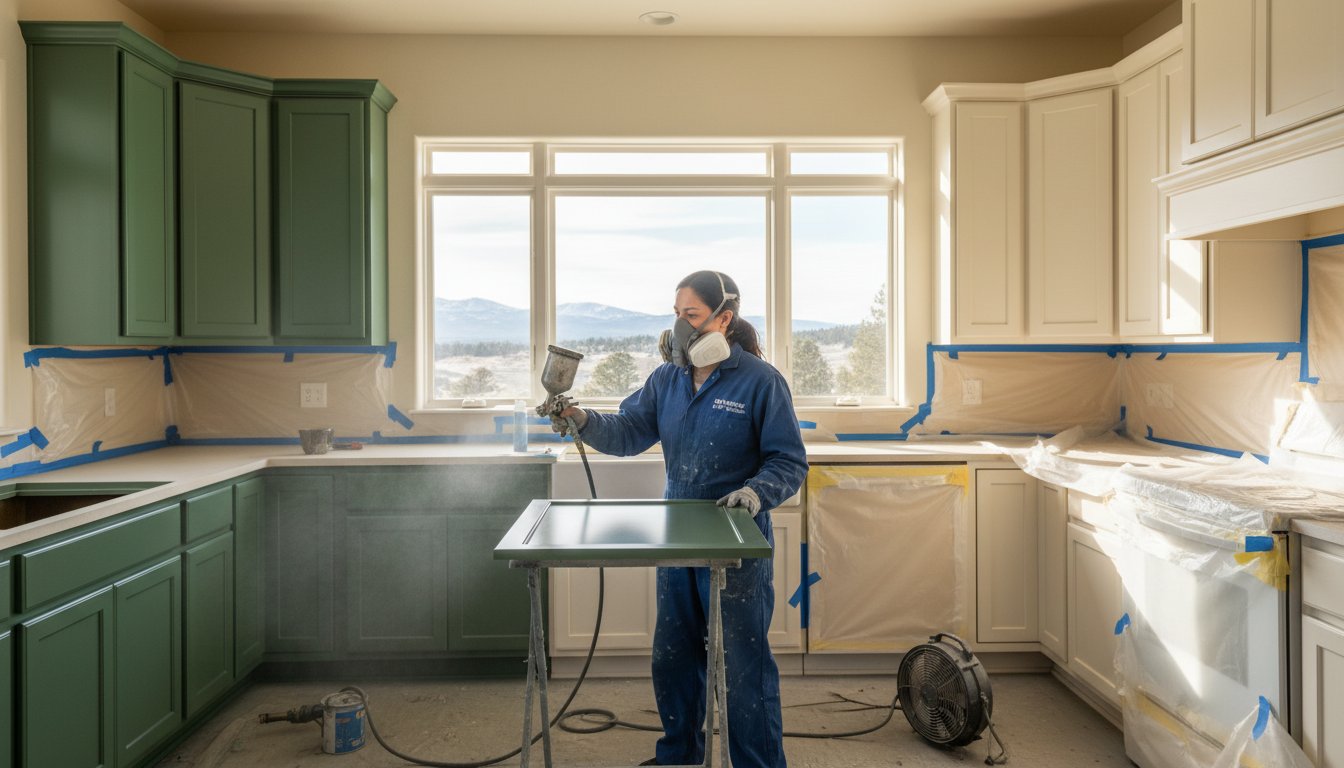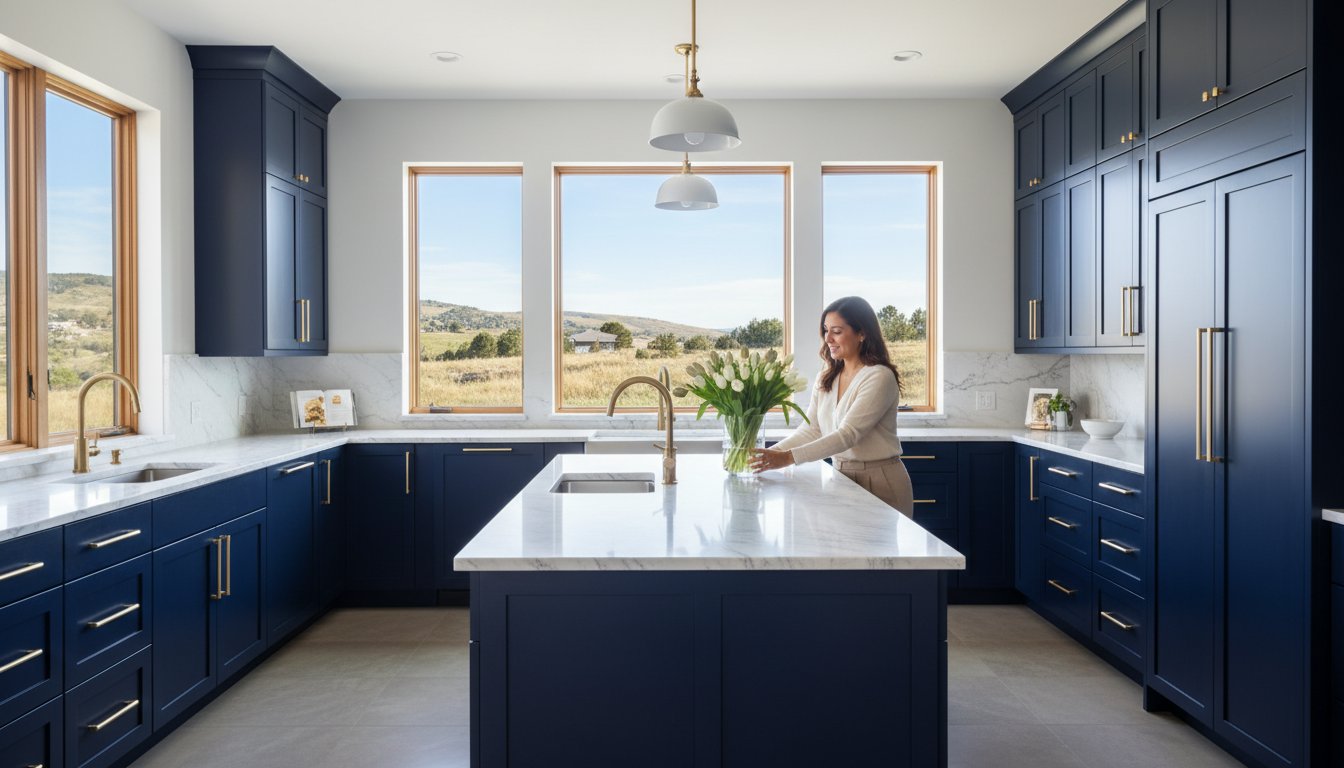
When your kitchen feels stuck in another decade but the thought of a $45,000 gut renovation makes your stomach turn, there is a better path. Expert kitchen cabinet refinishing near me – Denver CO factory finish services deliver the smooth, durable surface of factory-manufactured cabinetry at roughly 30 percent of replacement cost. The process transforms dated oak or worn laminate into a modern, hard-wearing kitchen centerpiece in about a week, not three months. For Denver metro homeowners from Castle Rock to Highlands Ranch, this approach preserves the solid bones of existing cabinetry while achieving a finish that looks like it came straight from a high-end millwork shop.
Table of Contents
- Why Denver Homeowners Are Choosing Cabinet Refinishing Over Full Remodels
- What "Factory Finish" Actually Means (And Why It Matters)
- Expert Kitchen Cabinet Refinishing Near Me: The Denver Process Explained
- How Much Does Cabinet Refinishing Cost in Denver? (2026 Price Guide)
- Can You Get a Factory Finish Yourself? The DIY Reality Check
- Cabinet Materials Matter: What Can (and Can't) Be Refinished
- 2026 Cabinet Color Trends for Denver Homes
- Why Denver's Climate Makes It Ideal for Cabinet Refinishing
- Health, Safety, and Environmental Considerations
- Choosing the Right Cabinet Refinishing Provider in Denver
- Serving the Entire Denver Metro: Local Expertise Where You Live
- Conclusion: Your Kitchen Transformation Starts Here
Why Denver Homeowners Are Choosing Cabinet Refinishing Over Full Remodels
A full kitchen remodel in the Denver area routinely exceeds $45,000, and that number climbs higher when you factor in custom cabinetry, countertop replacement, and the inevitable surprises lurking behind old drywall. Professional cabinet refinishing, by contrast, runs roughly 30 percent of replacement cost. For most homeowners, that translates to savings of $25,000 to $30,000 on the cabinet portion alone.
Timeline is the other major factor. A standard refinishing project wraps up in five to ten business days. A full remodel drags on for three months or longer, leaving you without a functioning kitchen for weeks. No takeout budget can absorb that comfortably.
The structural reality is even more compelling. Industry data shows that 85 percent of existing cabinet boxes are structurally sound enough to last another 25 years with professional industrial coating. Older custom boxes in neighborhoods like Highlands Ranch and Centennial are often solid maple or oak, materials far superior to the particle board found in many modern replacements. Tearing them out makes little sense when they can be restored to better-than-new condition.
The financial upside extends beyond immediate savings. Updated cabinetry adds $10,000 to $15,000 to a home's appraisal value. In competitive Denver markets like Washington Park and Cherry Hills, properties with updated neutral cabinetry sell 15 percent faster than those with dated wood tones. There is also an environmental dividend: each refinishing project keeps approximately 1,200 pounds of high-quality wood out of Colorado landfills.
What "Factory Finish" Actually Means (And Why It Matters)
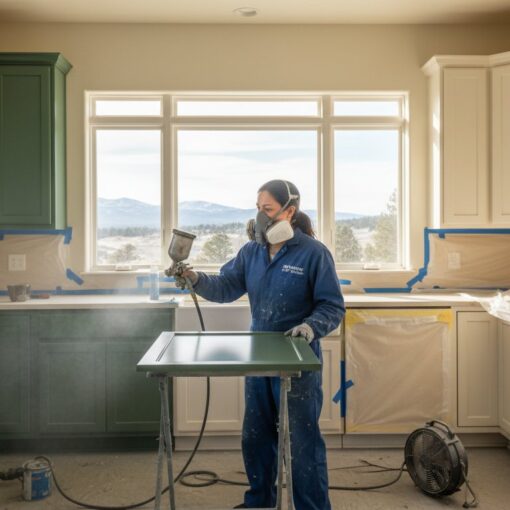
The phrase "factory finish" gets thrown around often in cabinet refinishing marketing, but it refers to something specific. A true factory finish is a spray-applied, industrial-grade coating cured under controlled conditions. It has nothing in common with brush-applied house paint from the local hardware store.
Professional refinishing uses pre-catalyzed primers and industrial lacquers that self-level as they dry. These materials flow into a continuous film that hardens into a surface far more durable than standard wall paint. The chemistry is designed for cabinetry: resistance to cooking oils, cleaning products, and the daily abrasion of hands on drawer fronts.
The single biggest factor separating a durable factory finish from a peeling failure within twelve months is preparation. Degreasing removes years of cooking residue that would otherwise prevent adhesion. Sanding creates a mechanical bond profile for the primer. Masking protects surrounding surfaces and ensures clean lines. Professional providers invest roughly 75 percent of total project time in these preparation steps before a single drop of color goes on.
Denver's climate provides an additional, often overlooked advantage. The city's average humidity hovers around 15 percent, among the lowest in the nation. Low humidity allows specialized coatings to cure into a harder, more scratch-resistant surface than is possible in damp coastal or southern markets. The finish film forms denser, with better cross-linking, and that translates directly to real-world durability.
Spray Application vs. Brush and Roller: The Technical Difference
Brushes and rollers leave texture behind. Even the finest bristle brush creates micro-ridges, and roller covers introduce stipple patterns that catch light unevenly. Spray application atomizes the finish into a fine mist that lands uniformly and flows together before setting. The result is a surface indistinguishable from factory-manufactured cabinetry.
Professional spray equipment also delivers consistent film thickness across every square inch. Thin spots from uneven brush loading lead to premature wear, especially around knobs and pulls where hands make constant contact. Factory-grade finishes cured to full hardness withstand this daily use without chalking, yellowing, or wearing through.
Expert Kitchen Cabinet Refinishing Near Me: The Denver Process Explained
Understanding what happens during a professional refinishing project helps set realistic expectations and reveals why quality work commands its price.
The process begins with assessment. A technician evaluates your cabinet material, whether solid wood, MDF, particle board, or thermofoil, and checks the existing finish condition and structural integrity. Not every cabinet is a refinishing candidate, and an honest provider will tell you upfront if your boxes have water damage, delamination, or structural issues that make replacement the wiser choice.
Preparation follows. Doors and drawer fronts are removed and labeled so every piece returns to its original opening. All surfaces undergo degreasing with industrial cleaners that dissolve cooking oils ordinary household products miss. Sanding creates the adhesion profile, and careful masking protects countertops, floors, and adjacent walls. This phase consumes the majority of project hours and is the foundation everything else rests on.
Priming and coating come next. A pre-catalyzed primer seals the prepared surface and blocks tannins and stains from bleeding through. Multiple spray-applied color coats build the finish, followed by a protective topcoat that locks in durability. Some Denver providers use UV light curing technology that instantly hardens each coat, creating a rock-hard surface without extended drying waits.
Curing takes advantage of Denver's arid climate. The low humidity accelerates solvent evaporation and produces a denser finish film. Once curing is complete, doors and drawers are remounted, hardware is installed, and the technician walks through the finished kitchen with the homeowner to confirm every detail meets expectations.
How Long Does Cabinet Refinishing Take in Denver?
Standard cabinet painting projects finish in five to seven business days. Complex refinishing jobs involving color changes, glaze effects, or specialty finishes take seven to ten business days. Kitchen size, number of cabinets, material condition, and whether doors require grain filling or repair all influence the timeline. Compared to the three months or longer a full remodel demands, with weeks of non-functional kitchen space, the difference is stark.
How Much Does Cabinet Refinishing Cost in Denver? (2026 Price Guide)
Professional cabinet refinishing in the Denver metro area typically lands between $4,500 and $9,000, depending on kitchen size and finish complexity. That range reflects the industry benchmark of roughly 30 percent of full replacement cost, with Denver remodels averaging $45,000 and above.
Several factors drive the final number. Linear footage of cabinets and the total count of doors and drawers establish the base scope. Material type matters: solid wood and MDF refinish straightforwardly, while laminate and thermofoil require specialized primers and additional labor. Finish selection plays a role too. A simple solid color costs less than a multi-step glaze or distressed finish.
Homeowners considering a middle-ground option should understand refinishing versus refacing. Refacing replaces doors and drawer fronts entirely while refinishing the existing cabinet boxes. It costs more than painting alone but substantially less than full replacement, and it offers a completely new door style without the expense of new boxes.
Most Denver providers offer free, no-obligation estimates. Some have introduced text-based quoting systems that deliver accurate pricing immediately, without requiring a high-pressure sales visit. Always ask about financing. While many companies do not advertise payment plans prominently, some offer them, and the question costs nothing.
Refinishing vs. Refacing vs. Replacement: What's the Difference?
Refinishing means resurfacing your existing cabinet boxes, doors, and drawer fronts with new color and protective coating. It is the most affordable option and preserves the original layout and door style. Refacing replaces only the doors and drawer fronts while refinishing the existing boxes, a hybrid approach for homeowners who want a completely new look without full replacement. Replacement tears everything out and installs entirely new cabinetry. It is the most expensive and disruptive path, and given that 85 percent of cabinet boxes are structurally sound, it is often unnecessary. Terminology can blur: "resurfacing" and "refinishing" are sometimes used interchangeably, so a professional consultation should clarify exactly what each provider includes.
Can You Get a Factory Finish Yourself? The DIY Reality Check
The internet is full of DIY cabinet painting tutorials, and they make the process look achievable over a long weekend. The reality is more complicated. DIY cabinet painting typically relies on brush or roller application with standard latex or enamel paints. The results rarely approach factory finish quality, and the durability gap is significant.
Common DIY failures appear within six to twelve months. Visible brush strokes remain no matter how carefully you work. Uneven coverage creates light and dark patches. Peeling begins around high-contact areas because household degreasers and hand sanding rarely match the adhesion preparation professionals achieve.
Equipment is another barrier. Professional spray rigs and industrial spray booths cost thousands of dollars. Rental sprayers are available, but operating one without producing runs, sags, and orange-peel texture requires practice most homeowners do not have. The hidden cost of DIY adds up: materials, tool rental, and your time often total $800 to $1,500. If the results fail, hiring a professional afterward costs the same as it would have upfront. DIY makes sense only for small kitchens where you accept a hand-painted aesthetic and do not need the durability of a factory finish.
Cabinet Materials Matter: What Can (and Can’t) Be Refinished
Not all cabinets respond equally to refinishing, and understanding your material helps set realistic expectations.
Solid wood species like maple, oak, and cherry are ideal candidates. Older custom homes in Highlands Ranch and Centennial frequently feature solid maple or oak cabinets that are superior to modern particle board and refinish beautifully. MDF, or medium-density fiberboard, also refinishes well with proper priming. Its smooth, grain-free surface accepts spray finishes exceptionally well.
Particle board is refinishable only if the surface is intact and free of swelling or delamination. Water damage around sinks and dishwashers often compromises particle board beyond repair. Thermofoil presents a challenge. The vinyl coating must be removed or specially primed, and some providers decline thermofoil projects entirely because adhesion is unpredictable. Laminate requires specialized adhesion promoters, and not all refinishing companies offer laminate services.
A professional assessment before any commitment will determine whether your specific cabinets are good candidates. No reputable provider should promise factory finish results on material that cannot support them.
2026 Cabinet Color Trends for Denver Homes
This year's color preferences reflect a decisive shift away from the all-white kitchens that dominated the past decade. Earthy green shades lead the market, with 76 percent of homeowners choosing sage, olive, and forest tones over traditional neutrals. These colors bring warmth and connection to Colorado's natural landscape without overwhelming the space.
Colors that read as dated in 2026 include honey oak, golden maple, and heavy cherry stains. Stark white is giving way to warm off-whites and greige tones that feel softer and more livable. Two-tone kitchens remain popular, with darker lower cabinets grounding the room and lighter uppers keeping it open. Island contrast colors add visual interest without committing the entire kitchen to a bold shade.
Finish sheen matters as much as color. Matte and satin finishes are trending over high-gloss, which shows fingerprints and imperfections more readily. Low-VOC lacquers deliver both the desired sheen and healthier indoor air quality during and after the project.
Why Denver’s Climate Makes It Ideal for Cabinet Refinishing
Denver's semi-arid climate is not just comfortable for people. It creates genuinely better conditions for cabinet coating chemistry. With average humidity around 15 percent, specialized lacquers and conversion varnishes cure into a harder, more durable surface than they can achieve in humid markets.
Low humidity accelerates solvent evaporation at a rate that produces a denser, more cross-linked finish film. That density translates to better scratch resistance, less chipping, and reduced yellowing over time compared to the same coatings applied in coastal or southern humidity. Colorado's dry climate also means less moisture-related wood movement, which reduces the risk of finish cracking as seasons change.
Seasonal considerations are minor but worth noting. Spring and fall offer moderate temperatures ideal for coating application, though winter projects proceed without issue in heated, ventilated spaces. The year-round low humidity remains the constant advantage.
Health, Safety, and Environmental Considerations
Professional cabinet refinishing providers increasingly use low-VOC lacquers that reduce indoor air pollution during application and afterward. Most professional finishes off-gas significantly within 24 to 48 hours, with full curing continuing over several days. Ask your provider for specific off-gassing timelines so you can plan around occupancy.
Homes built before 1978 may contain lead paint, and EPA-certified contractors follow lead-safe work practices for sanding and surface preparation. If your home falls into this age range, confirm your provider holds the appropriate certification.
The environmental benefit extends beyond air quality. Each refinishing project diverts roughly 1,200 pounds of cabinetry from Colorado landfills. That is wood, hardware, and composite material that would otherwise require disposal and replacement manufacturing. Ask potential providers about their VOC levels, disposal practices, and lead-safe certifications during the estimate process.
Choosing the Right Cabinet Refinishing Provider in Denver
Experience in the local market carries weight. Several Denver-area companies have served the metro for decades, with some claiming 38 to 45-plus years of cabinet refinishing experience. Longevity suggests consistent quality and familiarity with the specific housing stock found across the region.
Warranty protection separates serious providers from the rest. Top companies offer three-year warranties on their finishes, covering peeling, adhesion failure, and premature wear. Always ask about warranty terms, what they cover, and what voids them before signing a contract.
A reputable provider will explain their preparation steps, coating materials, and curing process in detail. Vagueness about degreasing methods, primer types, or topcoat chemistry is a red flag. Check reviews across Yelp, Google, and Thumbtack for consistent feedback about durability, cleanliness, and timeline adherence. Get at least three estimates and ask each provider about their specific factory finish process.
Service area coverage matters for logistics and local expertise. Confirm the provider serves your community, whether that is Castle Rock, Castle Pines, Highlands Ranch, Parker, or any Denver metro suburb. Providers familiar with your area understand the typical cabinet materials, architectural styles, and homeowner preferences you are working with.
Questions to Ask Before Hiring
What specific primers and topcoats do you use, and are they low-VOC? How much of the project time is spent on preparation? Do you remove doors and drawers, or spray in place? What warranty do you offer, and what does it cover? Can you provide local references and before-and-after photos of similar projects?
Serving the Entire Denver Metro: Local Expertise Where You Live
Denver metro cabinet refinishing coverage spans the full region, from Denver proper through Aurora, Lakewood, Wheat Ridge, Littleton, Centennial, and Broomfield. South metro communities including Castle Rock, Castle Pines, Highlands Ranch, Parker, and Lone Tree represent a significant portion of the market, each with distinct housing characteristics.
Older custom homes in Highlands Ranch and Centennial often feature solid maple or oak cabinets that are exceptional refinishing candidates. These boxes were built when material quality was prioritized over cost savings, and they respond beautifully to professional coating. Newer developments in Castle Rock and Parker may have MDF or thermofoil cabinets requiring different preparation approaches. Local providers understand these differences because they work with them daily.
That community-specific knowledge means your refinishing provider knows what to expect when they walk into your kitchen. They have likely worked on similar homes in your neighborhood and can show you relevant before-and-after examples from projects near you. When searching for cabinet refinishing Denver CO services, proximity and local experience ensure smoother logistics and faster response if any follow-up is needed.
Conclusion: Your Kitchen Transformation Starts Here
Expert kitchen cabinet refinishing near me – Denver CO factory finish services offer a combination that is hard to beat: the look and durability of factory-manufactured cabinetry at roughly 30 percent of replacement cost, completed in five to ten business days, with Denver's low humidity delivering a harder cure than is possible in most of the country.
The decision framework is straightforward. If your cabinet boxes are structurally sound, and 85 percent of them are, refinishing is the smart financial and practical choice. Replacement only becomes necessary when water damage, delamination, or structural failure has compromised the boxes beyond repair.
Take the next step by contacting a Denver-area provider for a free, no-obligation estimate. Ask about text-based quoting if you want immediate pricing without a sales visit. With decades of combined industry experience across top Denver providers and three-year warranties backing the work, professional cabinet refinishing is a low-risk, high-reward investment in your home's value and your daily quality of life.