Most DIY cabinet projects show significant peeling or visible brush marks within 180 days because they lack the industrial preparation required for a lasting result. You’re likely tired of reading conflicting online advice and worrying that a weekend of hard work will end in a sticky, ruined kitchen. At Painting Kitchen Cabinets Denver, we understand that fear because we’ve spent over 45 years fixing the mistakes of amateur house painters who use cheap latex products instead of industrial strength coatings. This guide explains the professional cabinet painting process step by step so you can see exactly how we achieve a durable factory finish that stands up to daily use. You’ll learn the importance of our labor intensive cleaning, the use of precatalyzed primers, and the specific technical steps required for a smooth surface. By the end, you’ll know exactly what to ask a contractor to ensure your kitchen looks brand new and stays that way for years.
Key Takeaways
- Understand why a professional factory finish is a multi-stage industrial protocol and why “painting” is a misnomer for the spray process used by experts.
- Learn the labor-intensive preparation steps, including industrial-strength degreasing, required to ensure your new finish never peels or chips.
- Follow the professional cabinet painting process step by step to see how pre-catalyzed primers create a permanent bond that DIY methods cannot match.
- Discover the critical difference between “dry to the touch” and “fully cured” coatings to ensure your kitchen remains durable for years to come.
- Identify the red flags of amateur house painters and learn why 45+ years of local Colorado experience is the most vital factor for a successful project.
The Foundation of a Factory Finish: Why Process Trumps Paint
Most homeowners think a new kitchen starts with a bucket of paint. It doesn’t. After 45 years in the trade, we know that successful cabinet refinishing is a multi-stage industrial protocol. Calling it “painting” is actually a mistake. It’s a factory-grade resurfacing process. If you use retail-grade latex paint from a big-box store, it will peel within 12 months. Kitchen cabinets face grease, heat, and constant handling. They need industrial-strength coatings, not standard wall paint. Our company has spent 45 years perfecting the cabinet painting process step by step to ensure results that last decades, not months.
Professional cabinet refinishing isn’t a simple color change. It’s a technical resurfacing protocol that requires industrial equipment and specialized coatings. Many homeowners make the mistake of buying retail-grade latex paint. This is a 100% guarantee of failure. Latex paint is soft. It stays tacky. In a kitchen environment, grease and heat will cause retail paint to gum up and peel within the first year. We don’t sell a dream lifestyle. We deliver a durable, hard-wearing surface that stands up to the reality of a busy Denver kitchen.
DIY Brush and Roll vs. Industrial Spraying
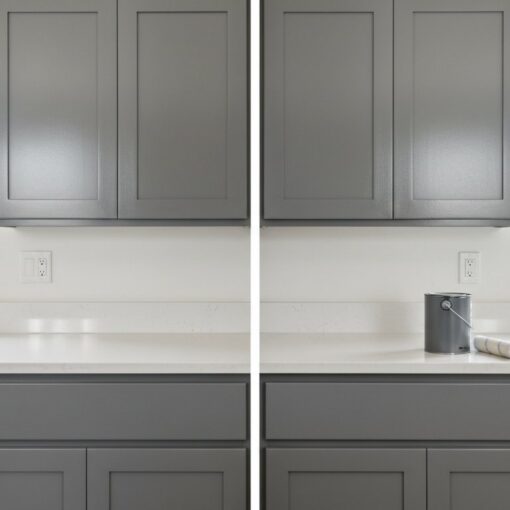
A brush or roller always leaves a texture. You’ll see brush marks or “orange peel” every time the light hits the doors. These are the hallmarks of an amateur job. We use high-volume, low-pressure (HVLP) or airless spray systems to create a smooth, glass-like surface. Industrial coatings are chemically different from house paint. They contain hardeners that resist skin oils and food acids. A sprayed finish is 3 times more durable than anything applied by hand. This industrial spray process ensures the coating bonds at a molecular level.
The 5-Stage Refinishing Protocol Overview
Our cabinet painting process step by step relies on a 5-stage protocol: Preparation, Surface Engineering, Priming, Spraying, and Reassembly. We spend 75% of our labor on the preparation and engineering phases before a single drop of paint is sprayed. If the surface isn’t engineered to accept the bond, the finish will fail. This labor-intensive method is the only way to achieve a true Factory Finish for Denver homeowners. We don’t take shortcuts. We follow the sequence because the process is what creates the quality.
Phase 1: Meticulous Preparation and Surface Engineering
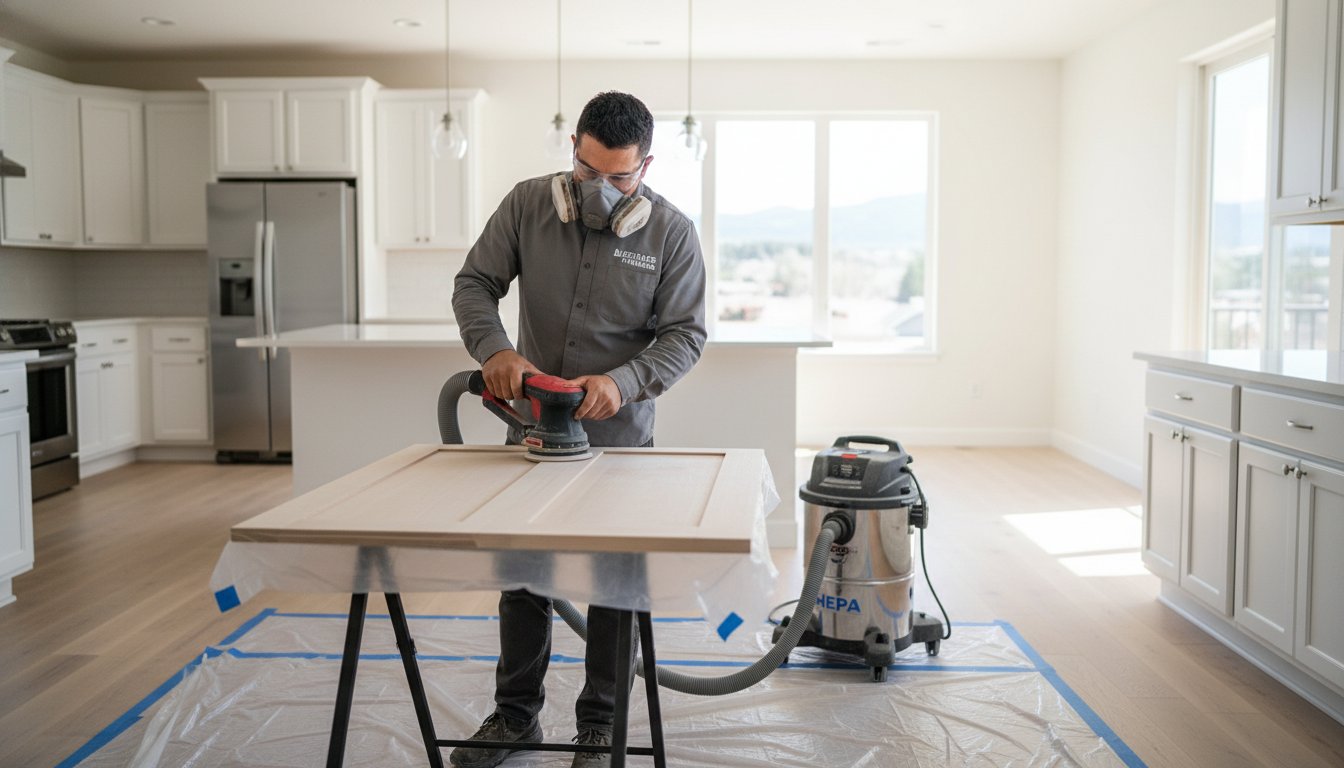
Prep work is the most vital factor in the cabinet painting process step by step. If you skip the foundation, the finish will fail within 12 months. We start by removing every door, drawer front, and piece of hardware. Every item is labeled with a specific numbering system to ensure a perfect fit during reinstallation. This isn’t a job for amateur house painters who paint around hinges. We take everything to our shop to achieve that true factory finish. Painting Kitchen Cabinets Denver focuses on the labor intensive details that others ignore.
Industrial Degreasing and De-glossing
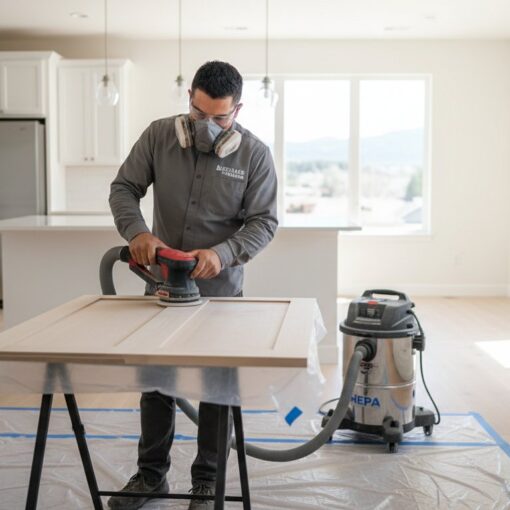
Kitchens are harsh environments. Cooking oils, steam, and skin oils build up on surfaces over 10 or 20 years. Simple soap and water won’t cut through these contaminants. We use industrial strength degreasers to strip the substrate clean. Without this, your new paint will simply peel off in sheets. After cleaning, we begin mechanical sanding. We use a sequence of 120 grit to 220 grit sandpaper to create a profile. This profile gives the primer a mechanical bond to the wood. It’s about engineering a surface that lasts for decades. You can text us the number of doors and drawers with pictures to get an accurate price immediately.
The Art of Professional Cabinet Repair
Most Denver homes have oak cabinets with heavy grain. We offer grain filling services to create a modern, smooth aesthetic. This involves applying high performance wood fillers to nicks, dings, and old hardware holes. We never use cheap latex caulking. Cheap caulk shrinks by 30 percent and discolors as it ages. We use professional grade, non shrinking sealants in every joint and gap. This prevents the spiderweb cracking often seen in DIY jobs. Our process ensures the wood looks like it came straight from the manufacturer. We’ve spent 45 years perfecting this specific preparation phase because we know it’s where the quality lives.
- Total removal of all 20 to 50 doors and drawers for off-site processing.
- Labeling of all hardware to ensure 100 percent alignment upon return.
- Mechanical sanding to remove 99 percent of existing gloss for maximum adhesion.
- Application of high performance fillers to eliminate 45 years of wear and tear.
Phase 2: Priming and Industrial Spray Application
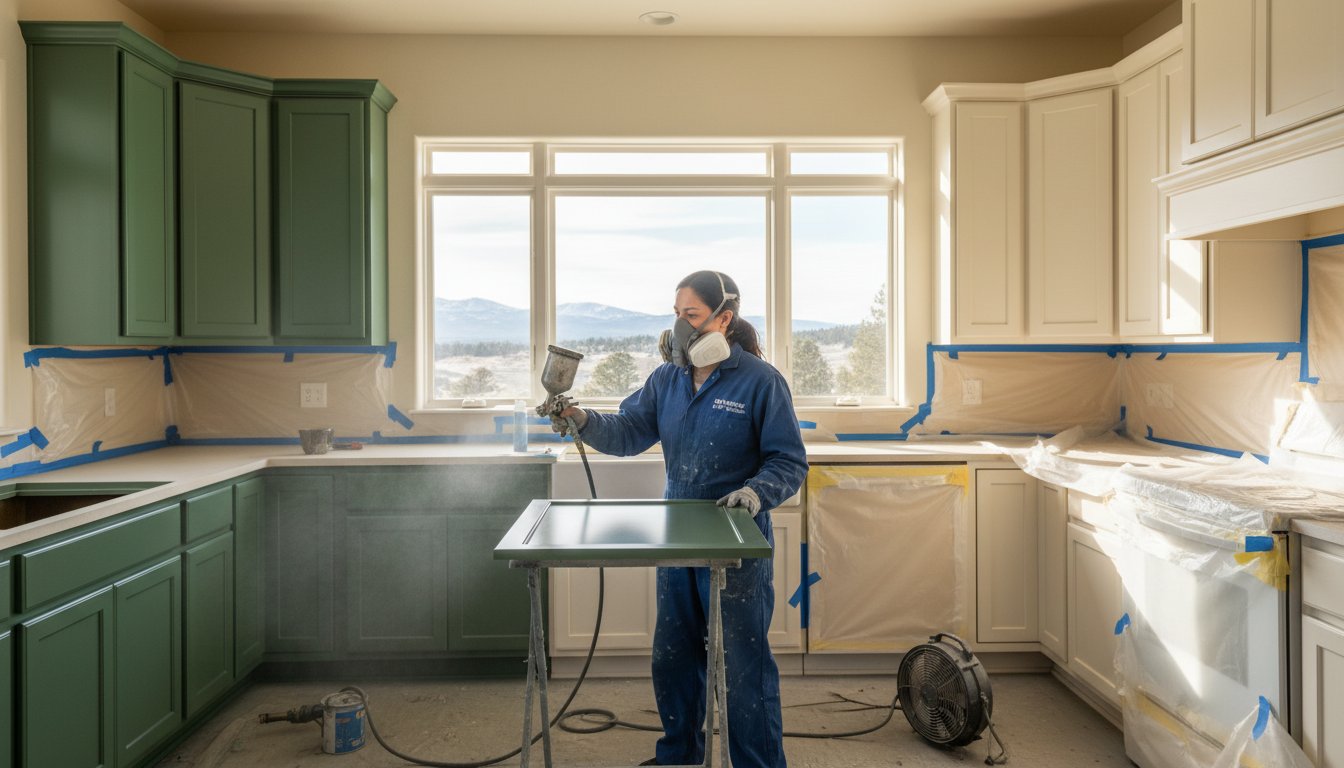
Painting Kitchen Cabinets Denver relies on industrial-grade materials that standard house painters simply cannot access. The cabinet painting process step by step moves from meticulous cleaning directly into the critical priming phase. We never use brushes or rollers on your cabinet doors or drawer fronts. Brushes leave unsightly marks and rollers leave a stippled texture that ruins the look of a professional kitchen. Our “spray-only” philosophy ensures a flat, smooth surface that mimics a factory-new product. We perform all spraying for removable pieces in a dedicated, environment-controlled spray booth to eliminate the risk of dust contamination.
The Role of Pre-catalyzed Primers
A pre-catalyzed bonding primer is the only way to guarantee a permanent bond that won’t peel or chip within the first year. This isn’t a standard latex primer from a big-box store. It’s a high-solids coating that creates a chemical bridge between the wood and the topcoat. This primer creates a moisture-resistant barrier that stops oils and tannins from bleeding through the finish. We apply two to three thin coats of primer rather than one heavy layer. This professional approach prevents runs and ensures a level foundation for the final color.
Achieving the Flawless Spray Finish
Precision is mandatory for a high-quality result. We use HVLP (High Volume Low Pressure) spray technology to maintain total control over the application. This equipment allows us to apply industrial-strength acrylics with surgical accuracy. Our technicians use a specific “wet-on-wet” technique to achieve a uniform 3.5 mil dry film thickness. This creates a consistent sheen and a rock-hard surface that stands up to daily kitchen use. Every door dries in a dust-free environment where we control the temperature and humidity. Our 45 years of experience proves that a controlled environment is the only way to get a finish that is perfectly smooth to the touch.
- Industrial Bonding: Pre-catalyzed primers lock onto the substrate to prevent future delamination.
- No Brush Marks: HVLP sprayers deliver a 100% smooth, factory-grade appearance.
- Controlled Environment: Spray booths eliminate 98% of airborne contaminants during the drying phase.
- Durability: We use industrial-strength acrylics designed specifically for high-traffic kitchen surfaces.
Following this cabinet painting process step by step is what separates a professional refinishing job from a temporary DIY fix. We focus on the chemistry of the paint to ensure your kitchen looks better and lasts longer. If you want to see the quality of our spray finish, you can text us pictures of your kitchen for an immediate estimate. We take pride in delivering a hard, durable finish that resists the grease and heat of a busy Colorado kitchen.
Phase 3: Curing, Detailing, and Final Reassembly
The final stage of the cabinet painting process step by step is where the hard work of preparation pays off. Once the industrial coatings are applied, we move into the critical phase of curing and precision detailing. Professional cabinet refinishing isn’t just about the color; it is about the mechanical function of your kitchen. We treat every door and drawer front like a piece of high-end furniture. Our team performs a 20 point inspection on every surface to ensure the factory finish is smooth and free of imperfections before it ever leaves our drying racks.
The Curing Timeline for Industrial Acrylics
There is a massive difference between a finish being dry and being cured. While our industrial acrylic coatings are dry to the touch within 60 to 90 minutes, they require a full 30 days to reach maximum chemical hardness. These coatings offer superior block resistance, which means your doors won’t stick to the frames in Denver’s humid or dry cycles. You can resume light use of your kitchen after 48 hours, but we advise against using cleaning chemicals or scrubbing the surfaces for the first month. This patience ensures the finish remains durable for decades. Amateur house painters using cheap latex will never achieve this level of hardness.
- 48 Hours: Reinstall doors and resume light kitchen use.
- 7-10 Days: Coating reaches 75% of its total durability.
- 30 Days: Full cure achieved; surfaces are now scrubbable and impact resistant.
Precision Reassembly and Hardware Alignment
Painting Kitchen Cabinets Denver focuses on the details that make a kitchen feel new. During reassembly, we align every door to within 1/16th of an inch. We don’t just put the screws back in; we calibrate the hinges to prevent sagging or rubbing that causes premature chipping. This is the perfect time to upgrade to soft-close hinges, a choice 85% of our clients make to increase the value of their cabinetry. We finish the job with a complete site cleanup, removing all masking tape and debris so you can enjoy the reveal of your transformed space. Our goal is a no-excuses finish that stands up to the closest inspection.
We take pride in our 45 years of experience delivering results that outlast the competition. If you want an accurate price immediately, text us the number of doors and the number of drawers with pictures of your current kitchen layout. This direct approach saves you time and gets your project moving forward without the fuss of a long sales pitch.
Choosing the Right Cabinet Painting Company in Denver
Hiring the wrong person for your kitchen renovation leads to a sticky, peeling mess within 12 months. Most “house painters” claim they can do cabinets, but they treat your expensive woodwork like standard drywall. This is a massive mistake. A true professional cabinet painting process step by step requires specialized equipment and industrial coatings that a standard painter simply does not carry in their van. If a contractor mentions using a brush or roller on your frames, turn them away immediately. Brushes leave ugly marks and rollers create a textured “orange peel” look that ruins the smooth factory finish you want.
Amateur painters often skip the labor intensive cleaning and degreasing phases. They use cheap latex caulking that shrinks and cracks when the Colorado air gets dry. Painting Kitchen Cabinets Denver relies on 45 years of experience to avoid these failures. We understand that prep work is the most vital factor in any project. We don’t use wall paint; we use industrial strength acrylics and precatalyzed primers designed for heavy daily use.
Questions to Ask Your Cabinet Painter
You must be direct when interviewing contractors. Ask if they spray or use brushes. The answer should always be that they spray every surface, including the stationary frames in your home. Ask what specific brand of coating they use. If they use retail paint from a local hardware store, the finish will not last. We use industrial grade materials that provide a hard, durable surface. Finally, ask for local Denver references and a portfolio. A reputable expert should provide 5 to 10 local references from the last 90 days without hesitation.
The Painting Kitchen Cabinets Denver Advantage
Painting Kitchen Cabinets Denver provides a level of mastery that general contractors cannot match. Our company is based on quality work at affordable Cabinet Refinishing prices. We follow a strict cabinet painting process step by step to ensure every door and drawer looks like it came straight from the manufacturer. We serve the entire region including Denver, Fort Collins, and Colorado Springs. Our process is transparent and built on four decades of Colorado craftsmanship. We make the estimation process simple for busy homeowners. Text us photos of your kitchen for an immediate quote! You can text us the number of doors and the number of drawers with pictures and we can get you an accurate price immediately.
Get the Factory Finish Your Denver Kitchen Deserves
A professional result depends on the foundation of the work. Our cabinet painting process step by step prioritizes labor intensive preparation and the use of industrial strength acrylics rather than cheap retail paints. We’ve spent over 45 years perfecting a system that includes precatalyzed primers and meticulous surface engineering to ensure your cabinets never peel. This isn’t just a quick coat of paint; it’s a complete restoration backed by our Red Dot factory-like finish guarantee. We focus on technical details so you don’t have to worry about the durability of your kitchen. You’ll see the difference that professional industrial spray equipment makes compared to standard house painting tools. If you’re ready to upgrade your home with a surface that feels as smooth as it looks, reach out to our team today.
Get an Accurate Price Immediately, Text Us Your Pictures!
We look forward to giving your cabinets the high quality treatment they need.
Frequently Asked Questions
How long does the professional cabinet painting process take from start to finish?
A standard project takes 7 to 10 business days to complete correctly. Our team spends the first 2 days on-site masking your kitchen and spraying the cabinet frames. The remaining 5 to 8 days are spent in our shop where we prep, prime, and spray your doors and drawer fronts to ensure a durable factory finish.
Will my kitchen be out of commission during the painting process?
You can use your kitchen for 85% of the project duration. We only require you to stay out of the kitchen for the 48 hours when we are actively masking and spraying the cabinet boxes. Your sink, stove, and refrigerator remain accessible during the rest of the week while we work on your doors at our facility.
Can you paint cabinets that have already been painted or stained?
Our professional cabinet painting process step by step is specifically designed to bond with both original stained wood and previously painted surfaces. We use industrial-strength deglossers to strip away old oils and waxes. This ensures 100% adhesion for our precatalyzed primers, so the new coating won’t peel or delaminate from the old finish.
What is the difference between cabinet painting and cabinet refinishing?
Cabinet painting involves applying an opaque, solid color coating that looks like a factory finish, while refinishing usually refers to restoring or changing the wood stain. We utilize a 4-coat industrial system that provides a smooth, solid surface. This process is much more labor intensive than a simple refinish because it requires multiple stages of sanding and high-build priming.
How do you prevent the paint from chipping or peeling around the handles?
We prevent chipping by focusing on prep work, which is the most vital factor in any project. Since 90% of coating failures happen because of skin oils, we sand every inch of the wood and apply two coats of specialized primer. These primers create a chemical bond that resists the moisture and oils that typically cause peeling around hardware.
Is it better to spray or brush kitchen cabinets for a long-lasting finish?
Spraying is the only way to achieve a true factory finish without the ridges and marks left by brushes. We use HVLP spray equipment to apply thin, even layers of industrial coatings. Brushed-on paint leaves thick edges that trap dirt and are 40% more likely to chip over time compared to a smooth, sprayed surface.
What kind of paint do professionals use for a factory-like finish?
Professionals don’t use standard latex house paint; we use industrial-grade waterborne alkyd urethanes or Italian lacquers like Renner. These products cure to a 2H hardness rating that resists scratches and household chemicals. Standard wall paint stays soft for weeks and will usually fail or stick to the cabinet frames within the first 12 months.
How much does the cabinet painting process cost for an average kitchen in Denver?
An average Denver kitchen with 30 openings typically costs between $3,500 and $5,500 for a full professional transformation. This price includes all labor, materials, and our specialized shop transition. To get an exact price immediately, you can text us the number of doors and drawers with pictures of your kitchen, and we will provide a quote within minutes.