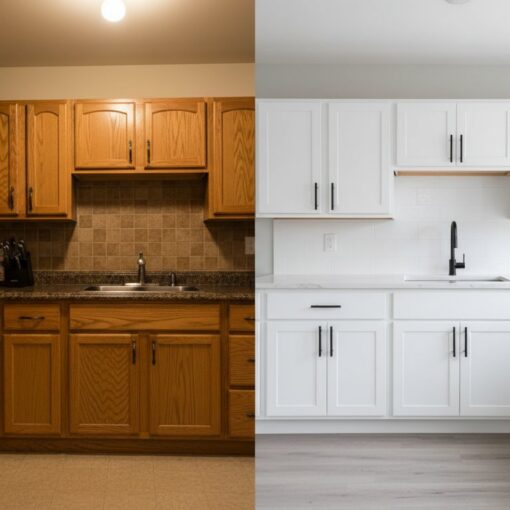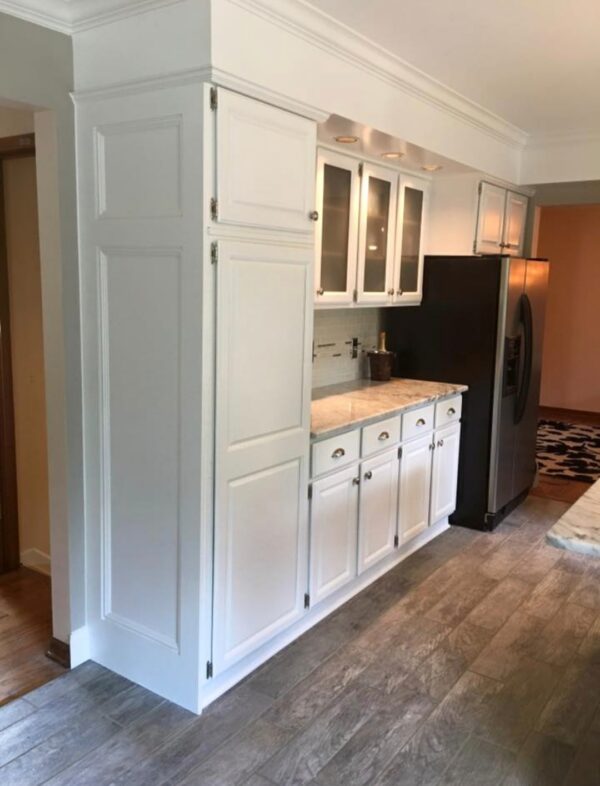

If you live in Castle Rock, Castle Pines, Highlands Ranch, or Parker, you know the look. The kitchen has solid bones, but the cabinets are stuck in a time warp of honey oak, dark cherry, or tired builder-grade white. You want a fresh kitchen, but the thought of a full tear-out makes you cringe: the dust, the weeks without a sink, the contractor invoices that climb higher by the day. There is a better path. Castle Rock Cabinet Refinishing Experts deliver a factory spray finish that transforms your kitchen at a fraction of replacement cost, in days rather than weeks, with a surface so smooth it looks like it came straight from a high-end manufacturer. This article explains what that finish actually is, why it outperforms every DIY attempt, and how it adds real value to your Douglas County home.
Table of Contents
- The Castle Rock Cabinet Dilemma: Refinish or Replace?
- What "Factory Spray Finish" Actually Means
- Why DIY Painting Fails to Deliver Factory Results
- The Professional Refinishing Process: Step by Step
- Cost and Timeline: What Castle Rock Homeowners Should Expect
- Durability and Longevity: How Long Will a Factory Spray Finish Last?
- Color Trends for 2026: What Castle Rock Buyers Want
- Why Castle Rock Homeowners Choose Professional Refinishing
- Maintenance and Care: Protecting Your Investment
- Frequently Asked Questions
- Your Castle Rock Kitchen Transformation Starts Here
The Castle Rock Cabinet Dilemma: Refinish or Replace?
Most Castle Rock homes built in the 1990s and 2000s feature cabinet boxes constructed from solid wood or plywood, materials that outperform today's big-box particleboard and MDF by a wide margin. The problem is purely cosmetic: dated stain colors and worn clear coats that drag down the entire kitchen's appearance. Tearing out those cabinets means discarding quality construction that would cost a fortune to replicate today.
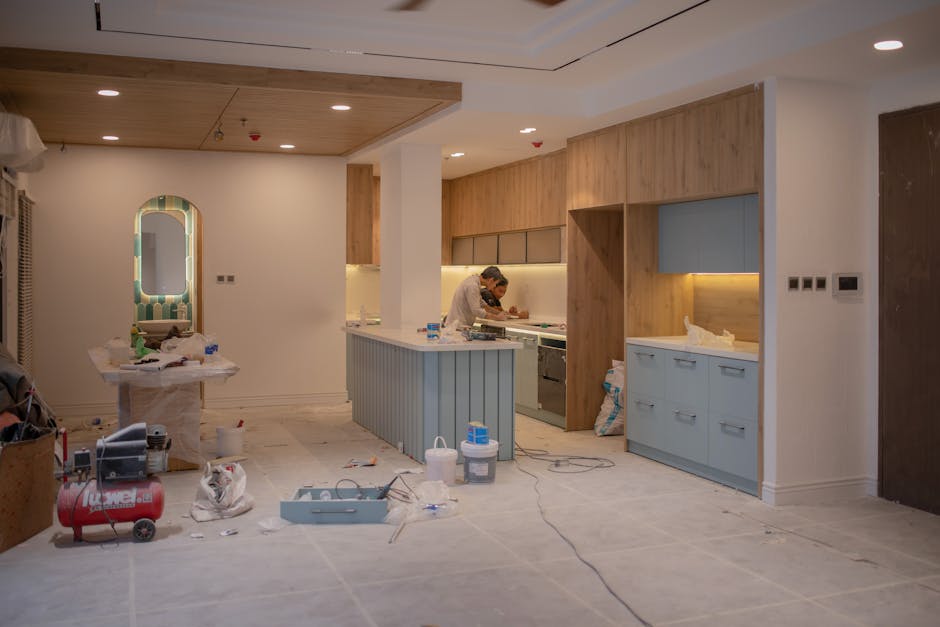
Full replacement carries hidden costs most homeowners never anticipate. New countertops, plumbing disconnects, electrical rework, flooring patches, and disposal fees routinely add 30 to 50 percent beyond the initial cabinet quote. What starts as a cabinet project becomes a full kitchen renovation, and the budget spirals accordingly.
The smarter calculus is this: if your cabinet boxes are structurally sound, you are throwing away quality by replacing them. Refinishing preserves what is good and transforms what is dated. In Douglas County's real estate market, a dated kitchen remains the number one turn-off for prospective buyers. A factory spray finish solves that problem without the demolition, the delays, or the five-figure price tag.
What "Factory Spray Finish" Actually Means
Factory spray finish is not a marketing phrase. It describes the same application method used by commercial cabinet manufacturers: paint is atomized through professional-grade spray equipment and applied in a controlled, even mist that bonds to the surface at a molecular level.
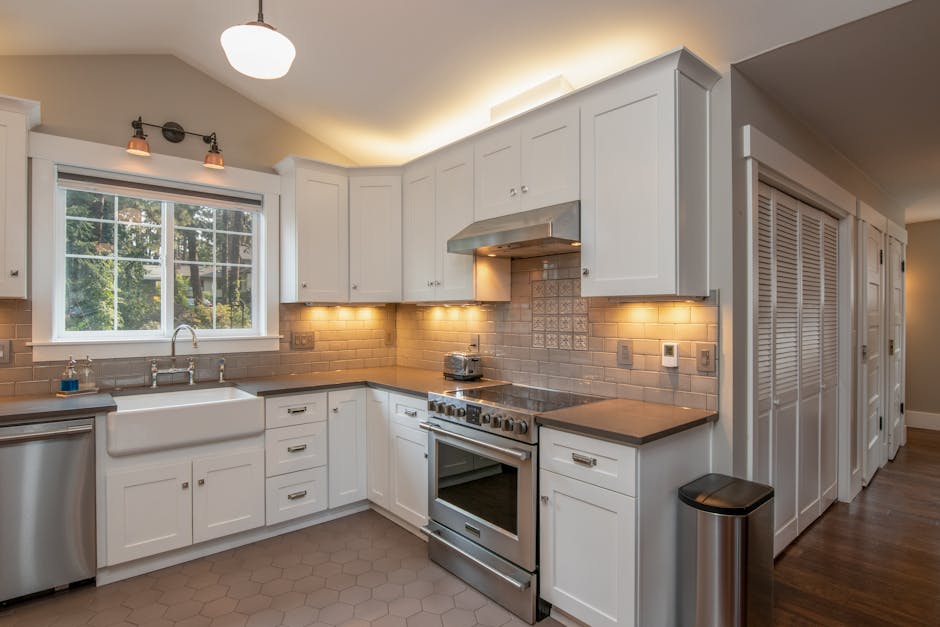
HVLP spraying, short for High Volume Low Pressure, achieves a Level 5 finish, the highest industry standard for smoothness. There are zero brush marks, zero roller stipple, and zero uneven texture. Hand-applied methods create a 15 to 20 percent thickness variance across the surface, which is visible to the eye and vulnerable to premature wear. Spray application eliminates that variance entirely, producing a uniform, glass-smooth coating that reflects light evenly across every door and drawer front.
The result mimics what you would get from a factory: consistent color depth, seamless edges, and a hard, durable surface that withstands daily use. This is not rattle-can spray paint from a hardware store. It requires commercial equipment, climate-controlled conditions, and trade-grade coatings formulated with catalyzed resins that cure to a hardness consumer paints cannot match.
Why DIY Painting Fails to Deliver Factory Results
Homeowners tempted by the DIY route quickly discover why professional refinishing exists as an industry. Brush-and-roller projects leave visible strokes, uneven coverage, and thin spots that fail within months, especially in high-use areas around handles and hinges where hands constantly touch the surface.
Consumer-grade paints lack the cross-linking chemistry of professional coatings. They never achieve the hardness or adhesion required for a surface that gets opened, closed, wiped, and bumped dozens of times per day. The finish stays soft, picks up dirt, and begins peeling at the edges.
Preparation is the hidden killer. DIYers typically skip or rush the cleaning, sanding, and priming stages, which are responsible for roughly 80 percent of finish durability. Cooking oils, hand oils, and years of grime sit invisibly on the surface and prevent even the best paint from adhering. A failed DIY paint job often requires expensive stripping or chemical removal before a professional can fix it, doubling the eventual cost. The cost gap between DIY and professional is narrower than most assume once you factor in materials, equipment rental, and the price of correcting mistakes.
The Professional Refinishing Process: Step by Step
Phase 1: Preparation and Protection
The project begins with complete kitchen protection. Floors, countertops, backsplashes, and appliances are covered with masking film and paper to prevent overspray drift. All cabinet doors, drawer fronts, and hardware are removed and cataloged so they return to their exact original locations, preserving the alignment and fit you are used to.
Every surface is thoroughly cleaned with a degreaser to remove cooking oils, grime, and residue that would prevent paint adhesion. Then comes sanding: every surface receives mechanical abrasion to create tooth for the primer. Damaged areas are filled with professional wood filler, repaired, and re-sanded to a smooth, uniform profile. This stage alone accounts for the majority of labor hours and is the single biggest reason professional results outlast DIY attempts by years.
Phase 2: Priming and Spray Application
A high-build primer is applied to seal the wood and create a uniform base. This critical step prevents tannin bleed-through from woods like oak and cherry, which would otherwise discolor the finish over time. The primer also ensures color consistency across different materials, such as solid wood door frames and plywood panels.
Multiple thin coats of premium paint are applied via HVLP spray equipment in a controlled environment to prevent dust contamination. Each coat is allowed to cure properly before the next is applied. Rushing this step is the most common cause of premature failure in lesser jobs. Doors and drawer fronts are typically sprayed off-site or in a dedicated spray booth for optimal results, then reinstalled after full cure.
Phase 3: Reassembly and Final Inspection
All hardware is reinstalled or replaced with new knobs, pulls, and hinges, a popular upgrade during the same project that modernizes the kitchen's look for a modest additional cost. Soft-close mechanisms can be added at this stage, delivering a high-perceived-value upgrade that buyers notice immediately during showings. A final walkthrough with the homeowner verifies finish quality, coverage, and clean-up before the project is signed off.
Cost and Timeline: What Castle Rock Homeowners Should Expect
Professional cabinet refinishing saves homeowners 70 to 80 percent compared to full replacement. A typical Castle Rock kitchen that would cost $15,000 to $25,000 to replace runs $3,000 to $6,000 to refinish with a factory spray finish. That figure includes professional prep, trade-grade materials, spray equipment, labor, and clean-up, with no hidden line items for sandpaper, primer, or paint.
The timeline tells an equally compelling story. A complete cabinet painting project takes 5 to 7 days from start to finish. Full replacement, by contrast, runs 4 to 6 weeks when you factor in countertop templating and fabrication, plumbing coordination, and electrical work. Your kitchen remains functional for most of the refinishing process, and there is no demolition dust migrating through your home.
Color choice affects cost modestly. Standard colors are typically included in the base price, while custom color matching or premium specialty finishes may carry a small upcharge. Financing options are available through most established providers, making the investment manageable whether you are preparing for sale or simply upgrading your daily living space.
Durability and Longevity: How Long Will a Factory Spray Finish Last?
Professionally sprayed cabinet finishes last 5 to 10 years or more when applied with proper preparation and trade-grade materials. The factory finish resists scratches, scuffs, heat, and daily wear far better than brush-applied consumer paint, which begins showing its age within 12 to 18 months in a busy kitchen.
Colorado's dry, high-altitude climate creates unique challenges for paint performance. Extreme temperature swings and low humidity cause inferior coatings to crack, peel, or separate from the substrate. Professional-grade coatings are formulated specifically to handle these conditions, maintaining flexibility and adhesion through seasonal changes that would destroy a hardware-store paint job.
Touch-up is simple when needed. A professional can spot-repair damaged areas without redoing the entire kitchen, and touch-up pens matched to your exact color are available for minor nicks. Regular maintenance, gentle cleaning with non-abrasive products and a soft cloth, extends the finish's life significantly.
Color Trends for 2026: What Castle Rock Buyers Want
The stark-white kitchen is fading from favor. Buyer preferences in 2026 are shifting toward warm greiges and deep charcoals that add sophistication and warmth without feeling dark or heavy. These colors photograph beautifully for real estate listings and appeal to the broadest pool of prospective buyers.
Popular choices for Castle Rock homes include warm greige, a gray-beige hybrid that works with both cool and warm accent colors; soft sage, which brings a subtle natural tone to the kitchen; navy, which adds depth and pairs well with brass or gold hardware; and deep charcoal, which creates a dramatic, high-end look on lower cabinets.
Two-tone kitchens remain a strong trend, with darker lowers and lighter uppers creating visual interest and a sense of height. Spray finishing makes this achievable with precision color transitions that would be nearly impossible to execute cleanly with a brush. Sheen options range from matte to high-gloss; satin and semi-gloss remain the most popular for their balance of durability and easy cleaning. A fresh, on-trend finish can increase a Castle Rock home's resale value by $15,000 to $20,000 and reduce time on market by 22 percent.
Why Castle Rock Homeowners Choose Professional Refinishing
Local expertise matters in a market as specific as Douglas County. Professionals who serve Castle Rock, Castle Pines, Highlands Ranch, and Parker understand the housing stock, the common cabinet materials, and the climate considerations that affect finish performance. A 45-year track record in factory-finish cabinet work means proven systems, established supplier relationships, and thousands of satisfied local homeowners.
Before-and-after photo galleries provide visual proof of transformation quality. Always ask to see recent local projects, ideally in homes similar to yours, to understand what is possible. Professional preparation and precision eliminate the risk of peeling, bubbling, or premature failure that plagues amateur work. The process is clean and low-disruption: no demolition dust, no weeks of unusable kitchen space, and no surprise costs appearing mid-project.
For homeowners across the Denver metro area, the same factory-finish expertise extends to cabinet refinishing Denver projects with the same attention to preparation and durable coatings that define the Castle Rock service.
Maintenance and Care: Protecting Your Investment
Clean cabinets with a soft, damp cloth and mild dish soap. Avoid abrasive pads, harsh chemicals, and solvent-based cleaners, which can dull the sheen or break down the finish over time. Wipe spills promptly, especially oils, wine, and acidic foods, to prevent staining or finish breakdown.
Avoid hanging wet dish towels over door fronts or placing hot items directly against cabinet surfaces. Periodically check and tighten hardware to prevent stress on door panels and hinge mounts. Most professional providers offer warranties on their workmanship; ask about terms and duration before committing so you understand exactly what is covered.
Frequently Asked Questions
How much should I pay to have kitchen cabinets sprayed? In Castle Rock, expect $3,000 to $6,000 for a typical kitchen depending on cabinet count, door style, and color choice. That is far less than the $15,000-plus replacement route, and the finished result is indistinguishable from factory-new cabinets.
How do I touch up factory-painted cabinets? Use a matched touch-up pen or small foam brush with light dabbing motion. For larger damage, call your refinishing provider for a professional spot repair that blends invisibly with the surrounding finish.
How long do spray-painted kitchen cabinets last? Five to ten-plus years with proper prep, professional application, and routine care. That is longer than most homeowners keep their current kitchen design before wanting a style update.
Can all cabinet materials be sprayed? Yes. Wood, laminate, veneer, MDF, plywood, melamine, and even metal cabinets can be professionally refinished with the right preparation and coatings. Each material requires specific primer and paint chemistry, which is why professional expertise matters.
Are low-VOC options available? Yes. Many professionals use water-based, low-VOC products that are family-safe and environmentally friendly, with minimal odor during and after the project. This is especially important in homes with children, pets, or anyone with respiratory sensitivities.
Your Castle Rock Kitchen Transformation Starts Here
Factory spray finish delivers replacement-level aesthetics at 70 to 80 percent savings, in days rather than weeks. Castle Rock homeowners deserve a provider who understands the region's homes, climate, and real estate market, someone who can look at your kitchen and tell you honestly whether your cabinets are candidates for refinishing or truly need replacement.
The confidence factor is real: professional preparation, trade-grade materials, and a proven process produce a finish that lasts. When you see the before-and-after transformation, the smooth, even color, the absence of brush marks, the way light moves across the surface, you will understand why this approach has become the standard for discerning Colorado homeowners.
Your kitchen is the heart of your Castle Rock home. A factory spray finish transforms it without the disruption or cost of replacement. Schedule a free in-home consultation and estimate, and ask to view before-and-after galleries of local projects. The kitchen you want is closer than you think.