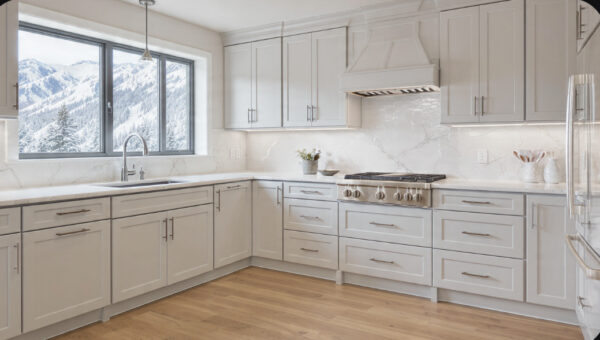

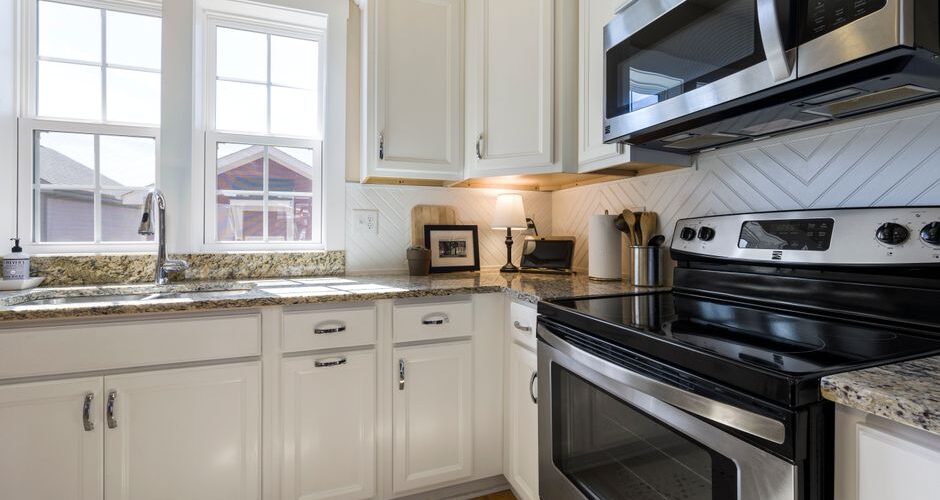
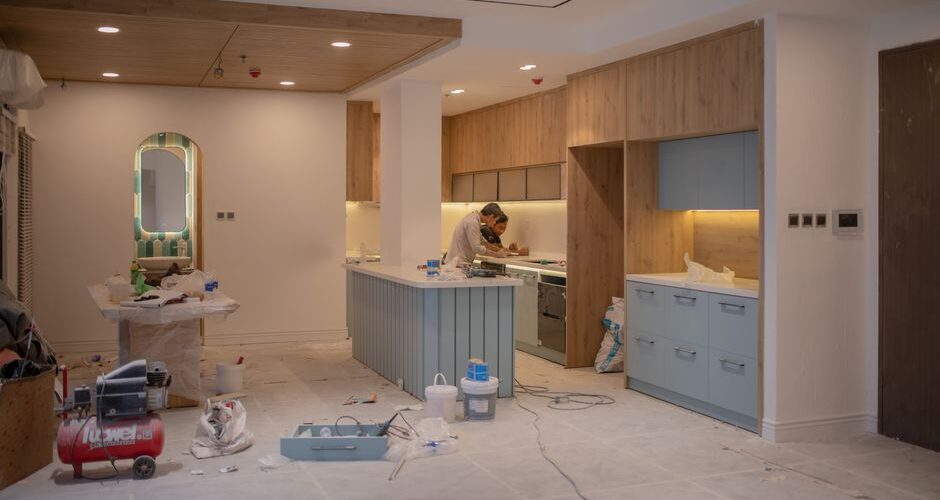
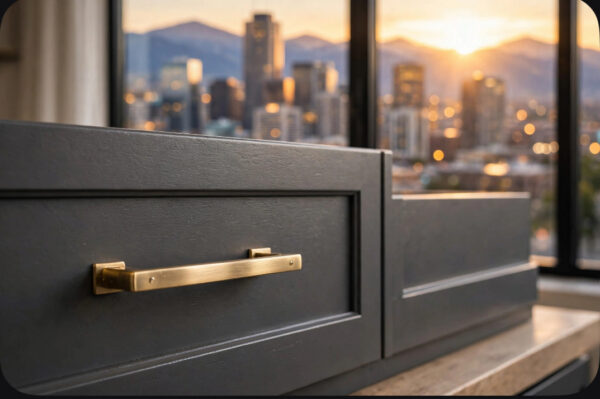
A full kitchen remodel in the Denver metro area can easily top $25,000, a number that stops many homeowners in their tracks. The cabinets alone, if replaced with custom or semi-custom units, often account for nearly half that budget. That reality has pushed thousands of Colorado families toward a smarter alternative: affordable cabinet refinishing services in Denver that deliver a flawless, factory-grade finish without the demolition, the dust, or the five-figure price tag. This article explains exactly what professional refinishing involves, how it stacks up against painting and refacing, and why homeowners in Castle Rock, Castle Pines, Highlands Ranch, and Parker are choosing it to transform their kitchens at 50 to 70 percent less than the cost of new cabinets.
Table of Contents
-
Why Denver Homeowners Are Choosing Cabinet Refinishing Over Full Replacement
-
What Is Cabinet Refinishing? (And How It Differs from Painting and Refacing)
-
What to Expect from Professional Cabinet Refinishing in Denver
-
Which Cabinet Colors Are Outdated in 2026? (And What to Choose Instead)
-
How to Choose the Right Affordable Cabinet Refinishing Service in Denver
-
Frequently Asked Questions About Cabinet Refinishing in Denver
-
Ready to Transform Your Kitchen? Get Your Free Estimate Today
Why Denver Homeowners Are Choosing Cabinet Refinishing Over Full Replacement
Full kitchen cabinet replacement in the Denver metro area typically ranges from $18,000 to $35,000, and that figure climbs higher when you factor in countertop removal, plumbing adjustments, and flooring repairs. For many families, that kind of expense simply is not in the cards, especially when the existing cabinet boxes are structurally sound and only the surfaces look tired.
Cabinet refinishing saves homeowners 50 to 70 percent compared to replacement, making it the most budget-friendly path to a kitchen upgrade in 2026. Instead of tearing out solid wood or plywood boxes that were built to last, refinishing restores what is already there. The savings are immediate and substantial, often freeing up funds for other updates like new countertops, a backsplash, or modern appliances.
Learn how to prep your cabinets
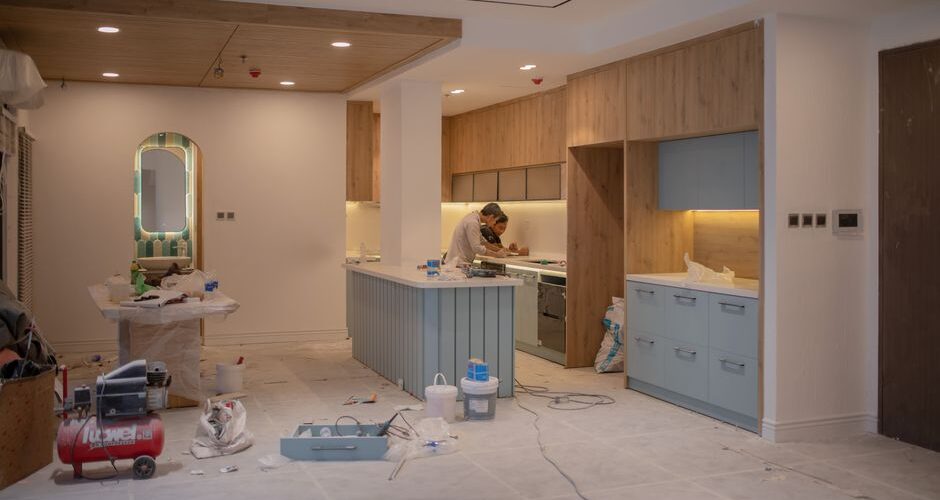
Refinishing is also significantly faster and less disruptive than demolition. There is no dust cloud spreading through the house, no drywall damage to patch, and no weeks spent washing dishes in the bathroom sink. Most professional crews complete the work in under a week, keeping your kitchen functional throughout most of the process.
My Review of Graco FFLP Tips for Spraying Cabinets
Choosing to refinish is an eco-friendly decision. Reusing existing cabinets keeps thousands of pounds of construction debris out of Colorado landfills. The wood, the hardware, and the box frames stay in place, eliminating the waste stream that accompanies a full tear-out.
Unlike basic painting, professional refinishing uses industrial-grade spray equipment and catalyzed finishes that bond to the wood at a molecular level. The result is a hard, smooth surface that resists chipping, peeling, and moisture far better than anything a brush or roller can produce. That factory finish is the standard homeowners should expect from any reputable Denver-area service.
What Is Cabinet Refinishing? (And How It Differs from Painting and Refacing)
The terminology around cabinet updates can get confusing, and many Denver homeowners use the words interchangeably when they actually refer to three distinct services with different price points and outcomes.
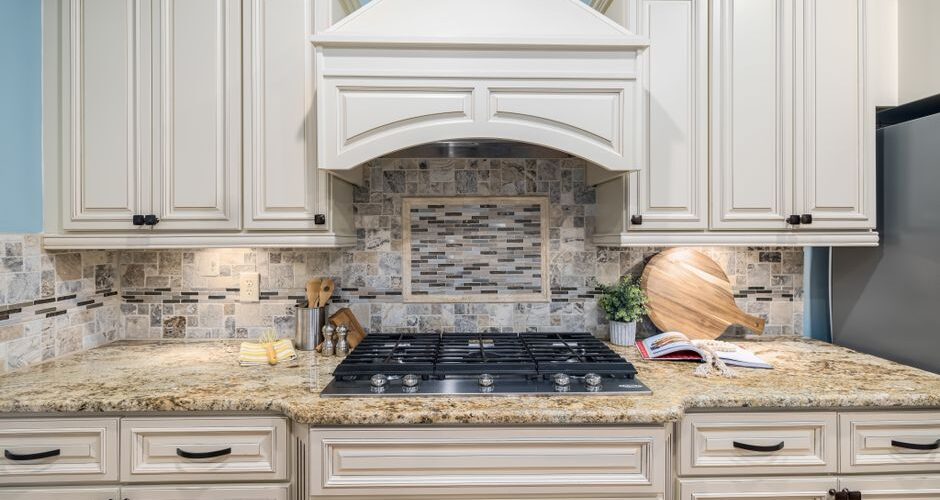
Cabinet refinishing means stripping the existing finish, sanding the wood down to a clean surface, and applying a new stain or lacquer. This process works best on solid wood cabinets with good bones, where the natural grain is worth preserving and enhancing. The original character of the wood remains visible, but the color and sheen are completely refreshed.
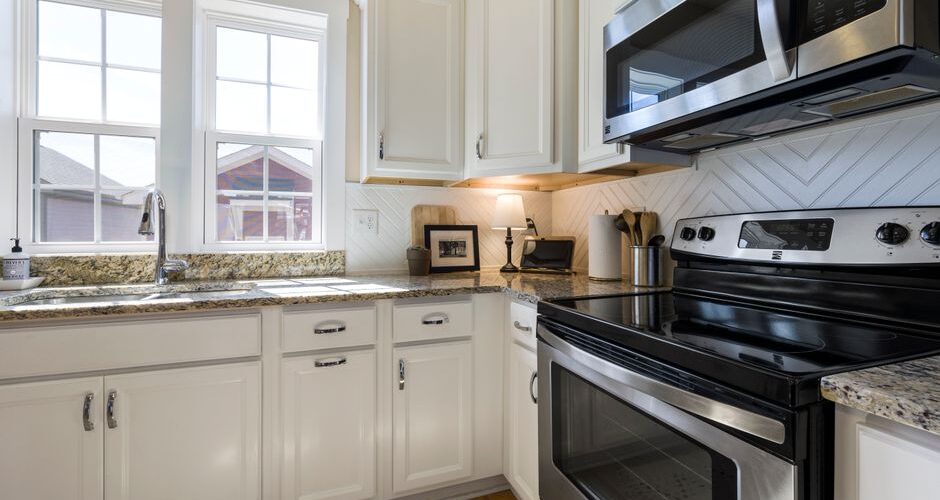
Cabinet painting involves applying a new color coat over the existing surface, often to dramatically change the look from a dated wood tone to a crisp white, navy, or gray. Proper primer and meticulous surface prep are non-negotiable here. Without them, paint will not adhere correctly, and chipping becomes inevitable within months.
Cabinet refacing replaces only the doors and drawer fronts while covering the existing box frames with a new veneer or thermofoil material. Dun-Rite Kitchens, for example, offers a proprietary Duraline thermofoil system that wraps the cabinet boxes in a durable, easy-to-clean surface. Refacing costs more than painting or refinishing but still runs well below full replacement.
Professional refinishing delivers a factory finish that DIY spray cans or brush-on paint simply cannot replicate. The evenness of the coat, the absence of brush marks, and the depth of the sheen all come from commercial spray equipment operated by trained hands in a controlled environment.
Is It Cheaper to Refinish Cabinets or Buy New Ones?
Refinishing is almost always cheaper, saving 50 to 70 percent versus buying new custom or semi-custom cabinets. The math is straightforward: new cabinets require not just the boxes and doors but also countertop removal and reinstallation, possible plumbing adjustments, flooring patches, and sometimes electrical work. Refinishing has none of those hidden costs. The price quoted is typically all-inclusive for labor and materials, with no surprise line items appearing mid-project. For Denver homeowners on a tight budget in 2026, refinishing is the least expensive way to redo kitchen cabinets without sacrificing quality or durability.
The Hidden Cost of DIY Cabinet Painting: A 60% Failure Rate
The internet is full of tutorials that make cabinet painting look like a weekend project. The reality, according to industry data, is that approximately 60 percent of DIY cabinet painting projects show visible signs of failure within one year. Chipping around handles, peeling near the stove, bubbling from trapped moisture: these are the calling cards of a job that skipped critical steps.
Common DIY mistakes include inadequate surface prep, using the wrong primer for the existing finish, applying paint too thick in an attempt to get one-coat coverage, and failing to account for Colorado’s humidity and temperature swings. Kitchen cabinets endure heat, steam, grease, and constant handling. A paint job that looks acceptable on day three can start breaking down by month six.
Professional refinishers use spray booths or dust-free containment systems, high-quality paints from brands like Sherwin-Williams and Benjamin Moore, and catalyzed topcoats that cure to a hard, scrubbable finish. These products are not available at big-box hardware stores, and they require specialized equipment to apply correctly.
The cost of DIY materials adds up fast. Paint, primer, sprayer rental, sandpaper, tack cloths, brushes, and degreaser often total between $500 and $1,000. Then there is the labor: a typical kitchen demands 40 to 60 hours of work for a first-timer, spread across multiple weekends. When you factor in the cost and frustration of re-doing a failed DIY job, hiring affordable cabinet refinishing services in Denver is actually the more economical choice. You pay once and get a surface that lasts.
What to Expect from Professional Cabinet Refinishing in Denver
Knowing the process ahead of time removes the anxiety that comes with any home improvement project. Here is how a typical refinishing job unfolds from start to finish.
Step one is a free in-home consultation. A technician inspects your cabinet material, measures the space, discusses finish options, and provides a no-obligation quote. This is the moment to ask about paint brands, warranties, and the specific timeline for your kitchen.
Step two covers preparation and protection. All hardware comes off, countertops and floors get masked, and every surface is degreased and sanded. Grease is the enemy of adhesion, and even cabinets that look clean often carry a thin film of cooking oil that will repel paint. Pros spend significant time on this stage because it determines everything that follows.
Step three is the spray application. Using HVLP or airless spray equipment, the professional applies primer followed by multiple thin coats of finish. The result is a smooth, even surface with no brush strokes, no roller stipple, and no drips. The factory finish look comes from this method, not from the product alone.
Step four is curing and reassembly. Cabinets are allowed to cure properly, typically 24 to 48 hours, before hardware is reinstalled and doors are hung. Rushing this stage compromises durability, so reputable crews build adequate drying time into the schedule.
Most Denver-area projects are completed in 3 to 5 days, compared to 2 to 4 weeks for a full replacement. The kitchen stays usable for much of that window, with only short periods where access is limited.
How Long Does Cabinet Refinishing Last?
A professionally refinished cabinet surface, when properly maintained, can last 8 to 15 years before needing a touch-up or recoat. Durability depends heavily on the finish type. Catalyzed lacquers and conversion varnishes are harder and more resistant to heat and moisture than standard latex paint. Brands like Sherwin-Williams and Benjamin Moore offer excellent durability, but the application method is the real differentiator. A sprayed catalyzed finish will outlast a brushed latex paint by years. Warranties vary by provider; look for companies that offer at least a 2 to 5 year satisfaction guarantee on labor and materials.
Which Cabinet Colors Are Outdated in 2026? (And What to Choose Instead)
Color choice can make or break a kitchen refresh. Pick a shade that already feels dated, and the whole project loses its impact before the paint fully cures.
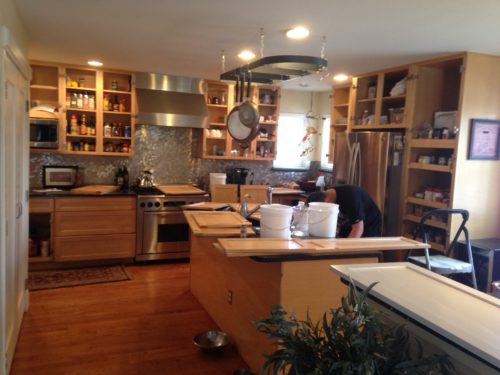
Colors that have fallen out of favor in 2026 include honey oak, golden oak, and heavily grained yellow-toned woods. Stark white with orange undertones reads as cheap and institutional, while busy, dark-stained knotty pine feels heavy and rustic in a way that no longer appeals to most Denver buyers. These finishes date a kitchen instantly, often to the late 1990s or early 2000s.
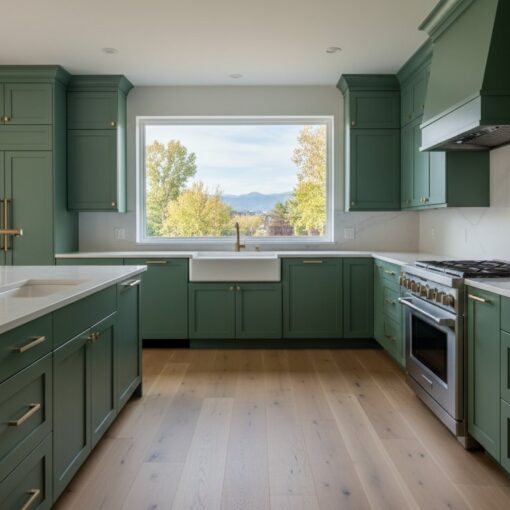
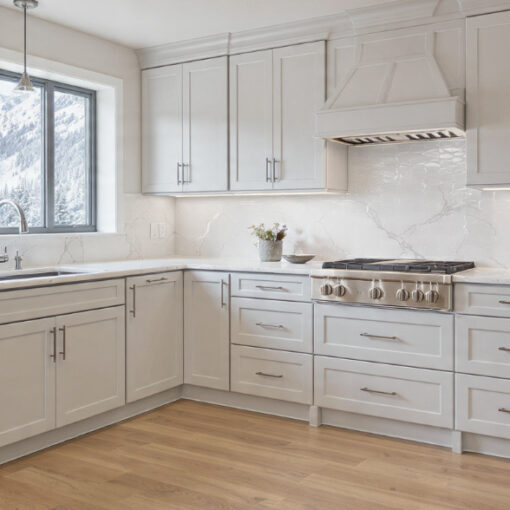
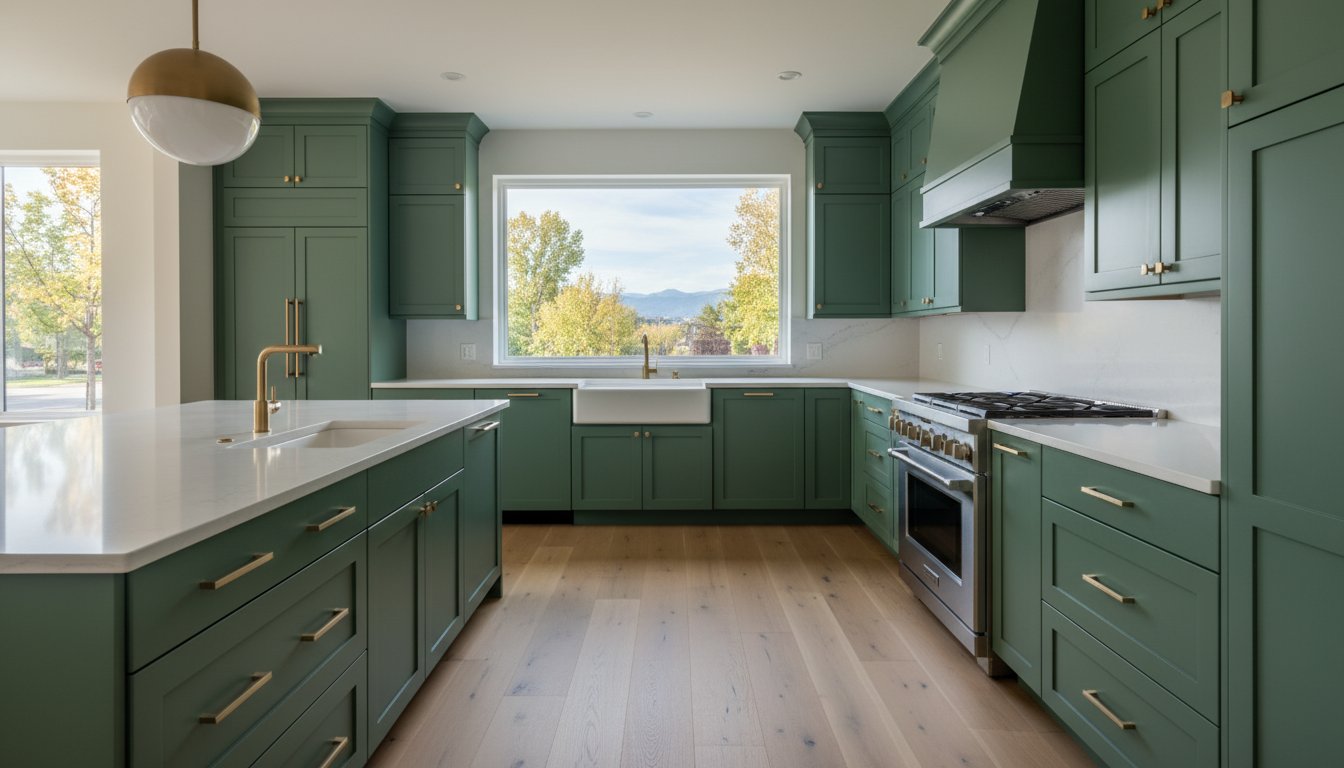
What is trending now leans toward warm neutrals: greige, creamy white, and soft taupe. Two-tone kitchens remain popular, with navy or charcoal on lower cabinets and white or light gray on uppers. Deep moody greens like sage and hunter are gaining ground, especially in homes with good natural light and brass or matte black hardware.
Timeless choices never go wrong. Pure white, soft gray, and classic navy blue hold strong resale value in the Denver market and work with nearly any countertop or backsplash combination. For oak cabinets specifically, a dark espresso stain or a solid-color paint applied over a grain-filling primer can modernize them instantly, hiding the heavy grain pattern that signals an outdated look.
Avoid choosing a color based purely on what is trending on social media. Consider your countertops, backsplash, flooring, and the amount of natural light your kitchen receives. A color that looks stunning in a sun-drenched showroom can feel cave-like in a north-facing Castle Pines kitchen.
How to Choose the Right Affordable Cabinet Refinishing Service in Denver
Not all refinishing services deliver the same quality. Separating the pros from the pretenders takes a little homework, but the payoff is a kitchen that looks new for a decade or more.
Look for local experience first. Companies that have served the Denver metro area for decades, like Dun-Rite Kitchens, which has operated since 1985, understand Colorado home styles and the specific challenges of our dry climate and temperature swings. Longevity in this market is a signal of consistent quality.
Check for a factory finish claim and ask how they achieve it. True professionals use spray equipment and dust-free environments. If a company shows up with brushes and rollers, they are painters, not refinishers, and the result will show it.
Read reviews and ask for photos. Before-and-after galleries on Google, Yelp, or Instagram tell the real story. A 3.9-star rating or higher with multiple reviews is a reasonable baseline, but pay attention to what reviewers say about durability months after the job, not just how things looked on day one.
Ask about paint brands and warranties. Services using Sherwin-Williams, Benjamin Moore, or proprietary products like Duraline thermofoil indicate a commitment to quality materials. A company that cannot name its finish products or offers no warranty is worth avoiding.
Get multiple free estimates. Most Denver-area companies offer free in-home consultations. Compare pricing, timelines, and scope of work before deciding. The lowest bid is rarely the best value, but the highest is not automatically the best quality either. Look for a detailed, transparent quote that explains exactly what is included.
Financing Options for Your Cabinet Refinishing Project
Some Denver providers offer bank financing, allowing you to spread the cost over several months rather than paying the full amount upfront. The average refinishing project in Denver costs between $3,000 and $8,000, depending on kitchen size and finish type, making it far more accessible than a $25,000 replacement. Financing can make the upgrade cash-flow neutral, especially if you are preparing the home for sale or updating a rental property where the improved kitchen will generate higher rent immediately.
Frequently Asked Questions About Cabinet Refinishing in Denver
What is the average cost to refinish cabinets in Denver? While exact pricing varies by kitchen size and finish complexity, most projects range from $3,000 to $8,000. The final number depends on cabinet count, material type, and whether you choose a stain, paint, or lacquer finish.
Is it cheaper to refinish cabinets or buy new ones? Refinishing saves 50 to 70 percent compared to full replacement and avoids additional costs like countertop removal, plumbing work, and flooring repairs. For structurally sound cabinets, refinishing is almost always the more affordable path.
What is the least expensive way to redo kitchen cabinets? Professional refinishing, not refacing, is typically the most affordable option, especially if your existing cabinet boxes are in good condition. Refinishing restores the surfaces you already have rather than replacing doors and applying new veneers.
What cabinet color is outdated in 2026? Honey oak and heavily grained yellow-toned woods are considered dated. Warm neutrals, two-tone schemes, and deep greens are currently preferred by Denver homeowners and buyers.
How long does the refinishing process take? Most projects are completed in 3 to 5 days, with minimal disruption to your daily routine. The kitchen remains usable for much of that time.
Ready to Transform Your Kitchen? Get Your Free Estimate Today
You can save thousands of dollars and get a beautiful, durable factory finish without the hassle, dust, and expense of a full remodel. Professional cabinet refinishing is the practical, proven alternative that Denver-area homeowners have trusted for decades.
If you live in Castle Rock, Castle Pines, Highlands Ranch, or Parker, our team is ready to provide a free, no-obligation in-home consultation. We specialize in cabinet painting and refinishing with a factory finish, using professional spray equipment and premium materials that stand up to daily kitchen life. With savings of 50 to 70 percent versus replacement and a 60 percent DIY failure rate that makes going pro the smarter financial move, there has never been a better time to give your kitchen the update it deserves. Call or schedule online to get your free estimate started.