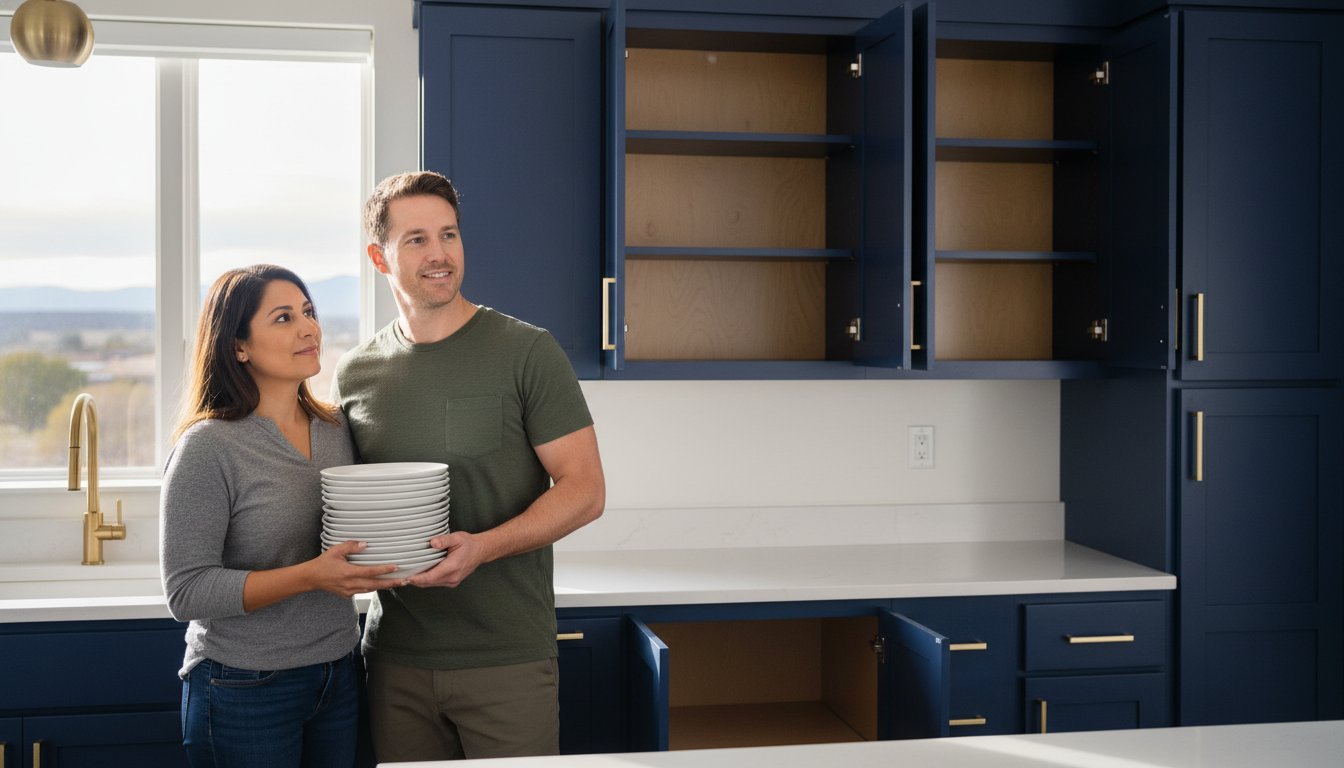
A dry cabinet door is not a finished cabinet door, and treating them the same is the fastest way to ruin a professional factory finish. Most homeowners make the mistake of reloading shelves as soon as the surface tackiness disappears, which often leads to immediate peeling in under 48 hours. It’s frustrating to live with a kitchen in total disarray, and we know you’re eager to get your house back in order. Understanding exactly when can I put things back in cabinets after painting is the only way to ensure your new coating doesn’t chip or stick to your dishes.
This guide provides the professional timeline you need to distinguish between the initial 24 hour drying phase and the full 30 day chemical curing cycle. We’ll show you how to safely navigate the first week of use so you don’t damage the intensive prep work that went into your project. We are laying out the clear rules for using your cabinets so you can stop guessing and start using your kitchen the right way. You’ll learn the exact steps to transition from a construction zone back to a functional, durable kitchen without compromising the industrial strength of your finish.
Key Takeaways
- Understand the critical difference between surface drying and chemical curing to prevent heavy plates from leaving permanent indentations in your finish.
- Discover the definitive timeline for when can I put things back in cabinets after painting based on your specific paint type and Denver’s unique dry climate.
- Learn how to avoid the “peel and stick” effect where doors bond permanently to the cabinet frame by following professional hardening schedules.
- Master the “thumbnail test” and environmental hacks to safely speed up the curing process without introducing dust or debris into the wet film.
- See why our professional spray-only method and industrial prep work create a durable factory finish that hardens faster than thick, brush-on DIY layers.
Understanding Dry Time vs. Cure Time for Kitchen Cabinets
Many homeowners ask when can I put things back in cabinets after painting because they are eager to use their kitchen again. At Painting Kitchen Cabinets Denver, we have over 45 years of experience, and we tell every client that “dry” and “cured” are two completely different states. Drying is the simple evaporation of solvents from the paint film. Curing is the actual chemical hardening of the material. If you ignore this distinction, you risk ruining a high quality factory finish within the first 24 hours of the job being completed. We focus on a labor intensive process that ensures the finish lasts for decades, not just a few months.
The phrase “dry to the touch” is the most dangerous phrase for a homeowner to hear. Just because the surface isn’t sticky doesn’t mean the paint is ready for the weight of stacks of ceramic plates or heavy glassware. Standard house paint used by amateur painters often relies on simple air drying and stays soft for weeks. Our process uses industrial strength acrylics and precatalyzed primers that are far superior to what you find at a local hardware store. These products have a specific molecular structure that creates a much tighter bond than typical latex. This professional approach is why we can guarantee a durable, long lasting result that resists the daily wear and tear of a busy kitchen.
What Exactly is Dry Time?
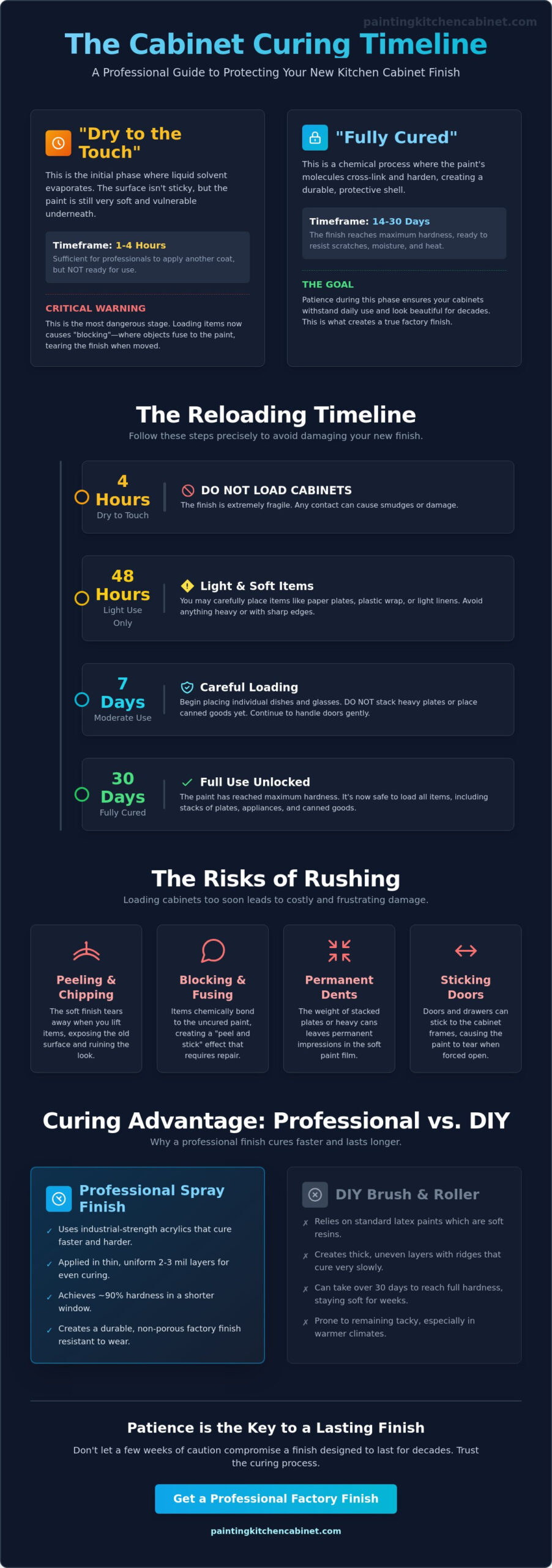
Dry time is the initial stage where the liquid solvent evaporates from the paint film. In a typical Colorado home, this timeline usually lasts 1 to 4 hours depending on the specific product and the application method. During this phase, the paint is stable enough for a professional to apply a second coat without lifting the first layer. However, the internal structure of the paint is still soft and vulnerable. You can touch the surface without leaving a fingerprint, but you cannot add weight or pressure. Putting items back too early causes “blocking,” which is when the item fuses to the paint and tears the finish when you try to move it later.
The Science of Curing
The curing phase is where the real durability happens. Curing is a chemical process where oxygen and time create a cross-linked bond within the finish. This molecular hardening is what allows the paint to resist scratches, moisture, and heat from kitchen appliances. While a surface might feel dry in 4 hours, it can take 14 to 30 days for standard retail paints to reach maximum hardness. Our industrial coatings cure significantly faster and reach 90 percent of their strength in a shorter window, but the final chemical reaction still requires patience to ensure the finish remains permanent and professional. This phase determines if your cabinets will stand up to the heat of a toaster or the grease of a stovetop without failing.
The Definitive Timeline: How Long to Wait by Paint Type
The biggest mistake homeowners make is rushing the reload. Knowing exactly when can I put things back in cabinets after painting depends on the chemical makeup of your coating and the application method. At Painting Kitchen Cabinets Denver, we see the results of impatience every week. If you put heavy dishes back too soon, they will fuse to the shelf. This is called blocking. It ruins a perfectly good finish and requires labor intensive repairs. Application method changes the drying trajectory significantly. A professional spray rig applies a uniform 2 to 3 mil thickness. Brushes and rollers leave ridges and thick spots that stay soft for much longer.
Denver’s unique dry climate plays a major role in how your cabinets dry. Our average humidity often sits at 15% or lower. This speeds up the initial evaporation of water or solvents from the surface. However, rapid surface drying can sometimes trap moisture underneath, which is why we still advise caution. High-traffic areas like the pantry or the spice cabinet require a more conservative waiting period. We recommend the 48-hour rule for light use, such as placing paper plates or light linens. For heavy items like stacks of ceramic plates, cookbooks, or canned goods, you must respect the 30-day rule to ensure the coating has reached maximum hardness.
DIY Latex and Water-Based Paints
Standard latex paint is a soft resin. It requires a full 30 days to reach a state of total cure. If you use cheap house paint on your cupboards, you are asking for failure. These paints remain tacky in the Colorado heat and will peel the moment a heavy dish is lifted. Amateur house painters often ignore the fact that how professionals test for a complete cure involves checking for hardness that latex simply cannot achieve quickly. While Denver’s dry air helps, it cannot overcome the chemical limitations of low-grade hardware store paint.
Industrial Acrylics and Professional Finishes
Painting Kitchen Cabinets Denver uses industrial-strength coatings and precatalyzed primers that cure through a chemical reaction, not just evaporation. This fast-track curing allows for a much shorter timeline. Because our professional spraying process creates a thinner, harder coat, it reaches a usable state faster than any DIY product. We recommend waiting 48 hours for light items with our factory-grade finishes. For heavy items, 7 to 10 days is usually sufficient. You can see the durability of our Cabinet Refinishing process in our project gallery. Our 45 years of experience proves that using the right industrial materials is the only way to get back into your kitchen quickly without risking the finish.
The Risks of Rushing: What Happens if You Load Too Soon?
Rushing the process is the most common reason for failure in Cabinet Refinishing. If you ask when can I put things back in cabinets after painting, the answer depends on your patience for expensive repairs. Putting items back within 24 to 48 hours often leads to the peel and stick effect. This happens when the paint on the door face bonds permanently to the paint on the cabinet frame. When you pull the door open, the paint tears off one of the surfaces. This leaves a jagged, ugly scar that requires sanding back to the wood and starting over. Repairing a smudged or torn finish is 3 times more labor intensive than the original application because the technician must feather out the damaged layers without affecting the surrounding factory finish.
You also risk permanent indentations from heavy items. A stack of 12 ceramic dinner plates weighs roughly 15 to 18 pounds. Placing that concentrated weight on an uncured film will cause the item to sink into the coating. This leaves a permanent ring or imprint that cannot be buffed out. This is why hardware installation should always be the very last step. Handling doors to install hinges and pulls before the 72 hour mark often results in oily fingerprints or tool marks being pressed into the soft paint. At Painting Kitchen Cabinets Denver, we tell clients that the finish might look dry, but it is still vulnerable at a molecular level for several days.
The Nightmare of Block Resistance
In the professional coating industry, blocking is the technical term for two surfaces sticking together when pressed against each other. This is a common failure when amateur house painters use standard wall paint on cabinetry. You can identify if your cabinets are still in the tacky phase by lightly pressing a clean finger on an inconspicuous area for 5 seconds. If you feel any resistance or a slight suction when pulling away, the block resistance has not yet developed. Our team uses industrial strength coatings with high block resistance, but even these professional products require specific windows of time to reach their full hardness.
Permanent Imprints and Surface Damage
The shelf paper mistake is a frequent issue we see in the field. Adding liners too early ruins the bond because the chemicals in the liner’s adhesive or rubberized backing react with the uncured paint. Heat from appliances like 1,200-watt toasters or high-end coffee makers can also re-soften the coating if it has not fully cross-linked. Thermal shock is the rapid expansion or contraction of a coating caused by sudden temperature spikes that leads to immediate delamination or cracking. To protect your investment, keep heat-generating appliances away from the surfaces for at least 10 days. If you want a durable result, you can text us the number of doors and the number of drawers with pictures and we can get you an accurate price immediately.
How to Safely Test and Speed Up the Curing Process
Determining exactly when can I put things back in cabinets after painting requires more than a visual check. Painting Kitchen Cabinets Denver uses industrial strength coatings that provide a factory finish, but these materials require a specific chemical reaction to reach full durability. While the paint might feel dry to the touch in 2 hours, the curing process takes much longer. Rushing this stage often results in items sticking to the shelves or peeling the finish you just paid to have perfected. We focus on a no-nonsense approach to curing that prioritizes the long-term integrity of your kitchen cabinets.
Environmental Controls in Denver
The Colorado climate presents unique challenges for Cabinet Refinishing. While our air is naturally dry, kitchen activities like running a dishwasher or boiling water for pasta can spike local humidity levels by 25% or more in minutes. To ensure a professional result, maintain a consistent 70-degree temperature in your home. This is the optimal baseline for the chemical bonding in our precatalyzed primers. Use a dehumidifier to keep your kitchen’s humidity between 30% and 40%. You should use fans to move air around the room, but never point them directly at the cabinet doors. Direct airflow can blow dust into the finish or cause the surface to dry faster than the base, leading to microscopic cracks. Avoid cooking high-moisture meals for at least the first 48 hours.
The Professional Thumbnail Test
Professional painters use a simple, reliable method to check for hardness before loading heavy items. Follow these steps to verify your cure depth:
- Select an inconspicuous area, such as the inside of a lower cabinet door or the back of a drawer front.
- Press your thumbnail firmly into the surface for 3 seconds.
- Listen for a “click” sound when your nail hits the surface. A click indicates a hard, glass-like finish.
- Look for a dent. If your nail leaves a visible impression, the paint is still soft and needs more time.
If the surface remains soft or feels “tacky” after 7 full days, it is time to call your kitchen cabinet painter to inspect the application. Our process relies on 45 years of experience to avoid these issues, but environmental factors can sometimes slow down the timeline.
Don’t try to speed up the process by “baking” your cabinets with space heaters. Excessive heat causes the top layer to skin over too quickly, which traps solvents underneath and prevents a full cure. This often leads to a finish that looks good but fails within 12 months. Instead, use a strategic loading plan. You can put lightweight plastic items back after 3 days. Wait a full 14 days before sliding heavy ceramic plates or cast iron pans across the new finish. To get started on a project that lasts, text us the number of doors and the number of drawers with pictures and we can get you an accurate price immediately.
Why a Professional Factory Finish Beats DIY Curing Times
A DIY paint job often results in a sticky mess that takes 30 days or more to dry. Professional results depend on the right equipment and industrial materials. Painting Kitchen Cabinet Denver uses a spray-only method. This avoids the thick, soft layers created by brushes and rollers. Thick paint traps moisture and stays soft for a long time; it often feels “tacky” even after a week. Our industrial-strength acrylics are designed for a factory finish. They cure into a hard, durable surface that resists chips and scratches. When you hire experts with 45 years of experience, you don’t have to guess when can I put things back in cabinets after painting. You get a clear timeline based on industrial standards and high-performance coatings.
Our spray method applies micro-thin layers that dry from the bottom up. This prevents the surface “skinning” that happens with store-bought latex paints. When paint skins over, the middle remains wet for weeks. This is why DIY doors often stick to the frames. Our process ensures the entire coating is stable and ready for use in a fraction of the time. We have spent four decades refining this process across Denver, Aurora, and the Front Range to ensure your kitchen is back in service quickly.
Preparation: The Most Vital Factor
Preparation is 75 percent of the work. It is a labor-intensive process that determines if the paint will peel or stay. We clean surfaces to remove every trace of kitchen grease and old oils. This allows the new paint to bond faster and stronger. We refuse to use cheap latex caulking that never fully hardens. Instead, we use professional-grade materials that support a long-lasting, rock-hard finish. You can see more about our 8-step process in this cabinet refinishing guide. Without this level of prep, even the best paint will fail to cure properly.
The Painting Kitchen Cabinet Denver Guarantee
Our company delivers a factory-like finish without the long DIY wait times. We’ve served Colorado homeowners for 45 years, providing a finish that lasts decades. We don’t use amateur house painters; we use seasoned craftsmen who understand the science of curing. To get started, text us pictures of your project. Include the door and drawer count for an immediate, accurate quote. Before you start reloading your kitchen, follow this final checklist:
- Verify that the surface is no longer cool to the touch.
- Install new clear bumper pads on all doors and drawer fronts.
- Place heavy stacks of plates or canned goods carefully without sliding them.
- Avoid using harsh cleaning chemicals on the new finish for the first 14 days.
By following our professional timeline, you ensure your investment stays beautiful. Our industrial coatings provide a level of durability that standard house paint simply cannot match. We take pride in our work and guarantee a finish that stands up to the daily wear and tear of a busy Denver kitchen.
Get a Factory Finish That Lasts
Waiting for your cabinets to fully cure is the most vital step in any refinishing project. Standard retail paints often take a full 30 days to reach maximum hardness, while our industrial-strength, spray-applied acrylics provide a factory-finish quality that amateur house painting simply can’t match. Rushing the process leads to permanent damage like sticking doors or chipped edges. Knowing when can I put things back in cabinets after painting is the difference between a professional result and a ruined investment. We have 45+ years of Denver cabinet refinishing experience and understand exactly how to deliver a durable, rock-hard surface.
Don’t risk your kitchen’s look with low-quality materials or rushed timelines. Our process ensures a level of craftsmanship that stands up to heavy daily use. To get started on your transformation, text us your cabinet door and drawer count for an immediate quote! You’re going to love your new kitchen.
Frequently Asked Questions
How long should I wait to put dishes back in painted cabinets?
Wait at least 48 hours for light items and 7 to 14 days for heavy stacks of ceramic plates or glass bowls. While the surface feels dry to the touch in 4 hours, when can I put things back in cabinets after painting depends on the 30 day full cure cycle required for industrial strength coatings. Placing heavy items on a soft finish causes permanent indentations or sticking that ruins the factory finish.
Can I use my kitchen at all while the cabinets are curing?
You can use your kitchen for light meal prep 24 hours after the final coat, but you must avoid high heat and steam for 14 days. Boiling water or high temperature dishwashers release moisture that softens the new coating. Keep appliances like coffee makers and air fryers at least 12 inches away from the cabinet faces during this critical two week window to protect the Cabinet Refinishing work.
What happens if I put my cabinet doors back on too early?
Reinstalling doors before the 24 hour mark leads to blocking, which is when the door literally glues itself to the cabinet frame. This ruins the finish and requires labor intensive sanding and repainting to fix. At Painting Kitchen Cabinets Denver, we ensure doors are dry, but we recommend waiting 48 hours before adding bumpers and closing them fully to prevent the paint from fusing together.
Is there a way to make cabinet paint cure faster?
Maintaining a consistent temperature of 70 degrees Fahrenheit and keeping humidity levels below 50 percent is the most effective way to speed up the process. Use a dehumidifier and keep air circulating with floor fans throughout the room. Don’t use heaters or hair dryers directly on the wood; excessive heat causes the paint to skin over too fast, which traps moisture underneath and leads to bubbles.
Why does my cabinet paint still feel sticky after 24 hours?
High humidity or applying coats too thick causes the paint to remain tacky long after the initial application. If you used cheap latex paint instead of a precatalyzed primer and industrial coating, the resins take much longer to harden. Amateur house painters often skip the necessary prep work, which prevents the paint from bonding and drying according to the standard 24 hour schedule.
Should I use shelf liners in freshly painted cabinets?
Don’t use adhesive or rubber shelf liners for at least 30 days after the job is finished. These materials often contain plasticizers that react with the paint, causing it to peel off in large chunks when you try to move the liner later. If you need to protect the shelves immediately, use plain white paper or wait the full month for the Cabinet Refinishing process to complete its hardening phase.
Does the color of the paint affect the curing time?
Darker colors with high pigment loads take up to 25 percent longer to cure than white or light gray shades. The extra tint used in deep blues, greens, or blacks slows down the chemical evaporation process. When considering when can I put things back in cabinets after painting, add an extra 48 hours to your wait time if you chose a dark, saturated color for your kitchen.
How do I clean my cabinets during the first 30 days of curing?
Use only a soft, dry microfiber cloth or a slightly damp rag with plain water to wipe away dust or light spills. Avoid all chemical cleaners, degreasers, or abrasive sponges for the first 30 days of the curing process. Using harsh soaps before the finish reaches its peak hardness can dull the sheen or leave permanent streaks in your new factory finish.