What if the outdated wood cabinets dragging down your kitchen’s style could become the sleek, modern centerpiece you’ve always wanted? Most homeowners in Denver assume they need expensive replacements, but painting wood cabinets to look modern is actually the most cost-effective transformation available. The right technique can deliver that coveted contemporary finish without the $15,000 to $25,000 price tag of new cabinetry.
We understand you’re tired of looking at those dated cabinets every day in your Denver home, and you’re probably worried about whether a paint job will actually last or just chip away in six months. You want that crisp, modern look but feel overwhelmed by the endless color choices and conflicting advice about primers, paints, and prep work. The truth is, most cabinet painting failures happen because people skip the labor-intensive preparation steps that separate amateur results from professional-grade finishes.
This comprehensive guide from Painting Kitchen Cabinet Denver will walk you through our proven process for achieving a durable, factory-quality finish that transforms tired wood cabinets into modern masterpieces. You’ll learn the exact preparation techniques, product selections, and application methods that ensure your painted cabinets look stunning and stand the test of time.
Key Takeaways
- Master the proper preparation techniques that separate professional results from amateur work – the foundation that determines whether your cabinet transformation lasts decades or fails within months.
- Discover the trending modern color palettes for 2026 and learn the proven method for selecting colors that complement your existing countertops and backsplashes.
- Follow our step-by-step process for painting wood cabinets to look modern, including the specific primer and paint application techniques that create a factory-quality finish.
- Avoid the common pitfalls that cause paint to chip, peel, or wear prematurely – mistakes that cost homeowners thousands in re-work.
- Learn how to integrate your newly painted cabinets with modern kitchen elements to create a cohesive, high-end design that increases your home’s value.
Understanding the Basics of Modern Cabinet Painting
Painting wood cabinets to look modern transforms outdated kitchens without the expense of full replacement. Modern cabinet painting goes beyond simply applying a fresh coat of color. It involves strategic design choices, professional-grade materials, and meticulous preparation work that creates a factory-quality finish capable of withstanding daily kitchen use.
The appeal lies in the dramatic transformation achievable at a fraction of replacement costs. While new cabinets can cost $15,000 to $25,000 for an average kitchen, professional cabinet painting typically runs $3,000 to $8,000. More importantly, painting allows complete customization of color and finish that perfectly matches your design vision.
What Makes a Cabinet Style ‘Modern’?
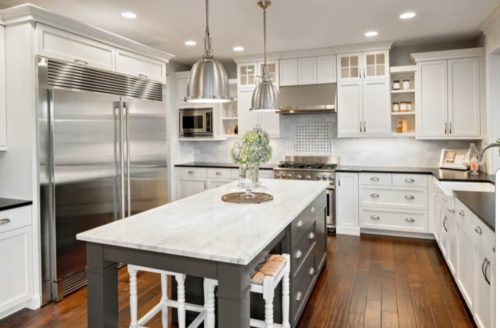
Modern cabinet design centers on clean lines, minimal hardware, and sophisticated color palettes. Traditional raised-panel doors give way to flat-panel or Shaker-style designs. The finish becomes crucial – contemporary kitchens favor matte or satin sheens over high-gloss surfaces that dominated previous decades.
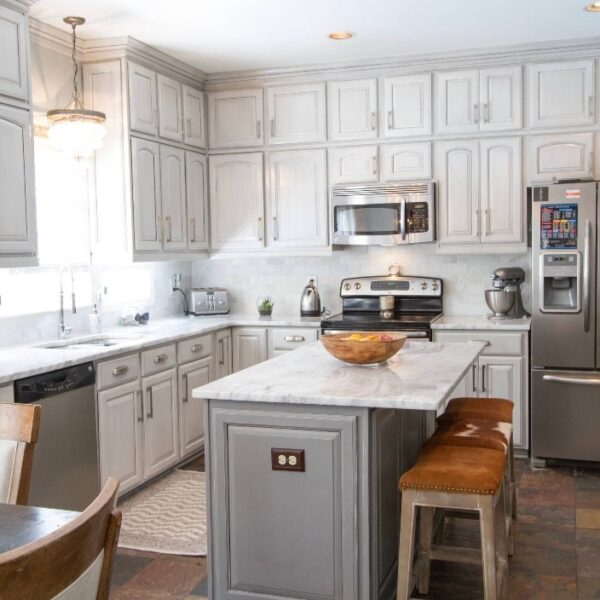
Color choices define modern aesthetics. Classic white remains popular, but sophisticated grays, deep navy blues, and even black create striking contemporary statements. Two-tone combinations – such as white upper cabinets with dark lower cabinets – add visual interest while maintaining clean simplicity.
Preparation Essentials for a Successful Project
Professional cabinet painting demands extensive preparation work. The process begins with thorough cleaning using degreasing agents to remove years of cooking residue. Next comes careful sanding to create proper adhesion surfaces, followed by filling any dents or scratches with wood filler.
Essential tools include:
- High-quality synthetic brushes and foam rollers
- Precatalyzed primers designed for wood surfaces
- Industrial-strength topcoats with superior durability
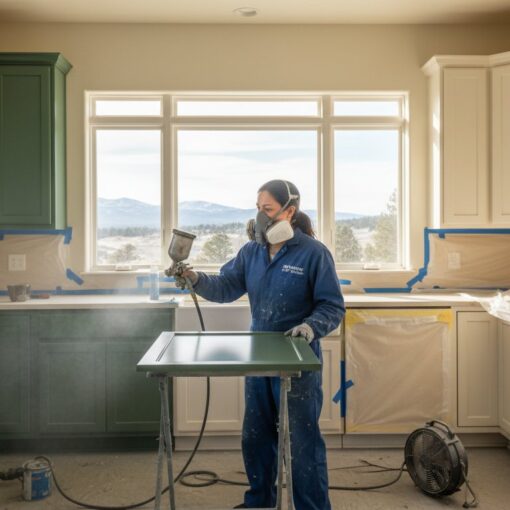
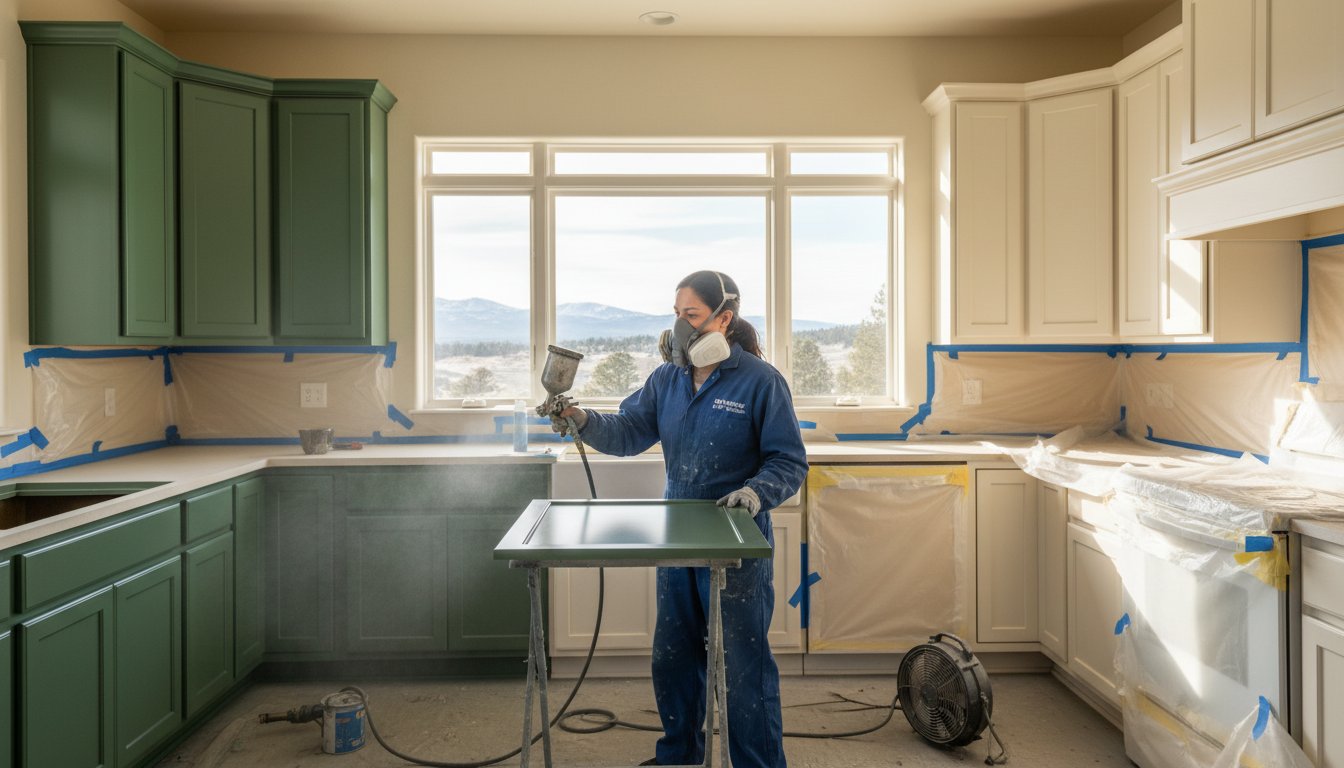
- Professional spray equipment for smooth finishes
- Proper ventilation and safety equipment
Understanding traditional wood finishing techniques provides the foundation for achieving professional results that rival factory-applied finishes.
Time commitment varies significantly. DIY projects typically require 3-5 days for proper drying between coats, while professional teams complete most kitchens in 2-3 days. The key difference lies in experience with spray application techniques and access to commercial-grade drying equipment.
Before starting, honestly assess your skill level. Cabinet painting requires patience, attention to detail, and proper technique. Poor preparation or application creates visible brush marks, uneven coverage, and premature wear that ultimately costs more to fix than professional work would have cost initially.
Choosing the Right Modern Colors and Finishes
The color and finish you select will determine whether painting wood cabinets to look modern achieves the sleek, contemporary aesthetic you’re after. Modern cabinet colors have evolved significantly since 2020, with neutral palettes dominating kitchen design trends through 2026. Professional preparation and color selection work hand in hand to create that factory-quality finish that lasts for decades.
Greys remain the top choice for modern kitchens, with warm greys like Benjamin Moore’s Classic Gray (OC-23) leading the pack. Pure whites like Sherwin Williams’ Pure White (SW-7005) continue strong, while soft pastels gained 23% popularity in 2024 according to the National Kitchen and Bath Association. These colors create clean lines and reflect light beautifully when applied with proper preparation techniques.
Top Modern Color Trends for Cabinets
Neutral colors offer the most versatility for modern kitchens. Light greys work exceptionally well in smaller spaces under 150 square feet, making them appear larger and brighter. Bold colors like navy blue or forest green can create stunning focal points in kitchens over 200 square feet, but require careful coordination with existing elements. As detailed in this comprehensive step-by-step cabinet painting guide, proper color testing prevents costly mistakes.
For 2026, expect to see more warm undertones in popular cabinet colors:
- Greige (grey-beige blends) for timeless appeal
- Soft sage greens for organic modern looks
- Warm whites with cream undertones
- Charcoal greys for dramatic contrast
Selecting the Perfect Finish for Your Cabinets
Finish selection impacts both durability and appearance. Semi-gloss finishes reflect 35-70% of light, making them ideal for high-traffic kitchens where easy cleaning matters most. Satin finishes offer moderate sheen with better hide imperfections, perfect for older wood cabinets. Matte finishes create sophisticated, contemporary looks but show fingerprints and require more maintenance.
Kitchen lighting directly affects how your chosen finish appears throughout the day. North-facing kitchens with limited natural light benefit from semi-gloss finishes that maximize light reflection. South-facing kitchens can handle matte finishes without appearing too dark.
Always test your selected color and finish combination on a sample door in different lighting conditions over 48 hours before committing to the full project. This simple step prevents the disappointment of colors that look different than expected once the entire kitchen is complete. Professional cabinet painting services typically include this testing phase as part of their preparation process.
Step-by-Step Guide to Painting Your Cabinets
Painting wood cabinets to look modern requires meticulous preparation and the right techniques. This labor-intensive process demands attention to detail at every stage. Skip a step, and you’ll see the difference in your final finish.
Start by removing all cabinet doors and drawers. Number each piece with painter’s tape so you can reinstall them in the correct locations. Remove all hardware including hinges, handles, and drawer slides. Store these components in labeled bags to prevent loss during the multi-day process.
Clean every surface with a degreasing solution. Kitchen cabinets accumulate years of cooking grease and grime that will prevent proper paint adhesion. Use trisodium phosphate (TSP) or a commercial degreaser, working in sections and allowing 15-20 minutes of contact time before wiping clean with a damp cloth.
Preparing and Priming Your Cabinets
Sand all surfaces with 150-grit sandpaper to create the proper tooth for primer adhesion. Don’t skip this step on previously painted cabinets. Focus on removing any gloss and smoothing out imperfections. Vacuum all dust and wipe surfaces with a tack cloth before priming.
Apply a high-quality bonding primer designed for cabinets. Precatalyzed primers offer superior adhesion compared to standard latex primers. Use a high-density foam roller for flat surfaces and a quality angled brush for detailed areas. Allow primer to cure for the full recommended time, typically 4-6 hours, before proceeding.
Painting Techniques for a Smooth Finish
Professional results come from proper paint application techniques. Use a spray system when possible for the smoothest finish. If brushing, choose a high-quality synthetic brush and work in long, steady strokes. Apply thin, even coats rather than trying to achieve full coverage in one pass.
For painting wood cabinets to look modern, maintain consistent technique across all pieces. Start with inside edges and detailed areas using your brush, then roll or spray the flat surfaces. Keep a wet edge to avoid lap marks, and never work on partially dried paint.
Allow each coat to dry completely before applying the next. Most cabinet paints require 2-3 coats for optimal coverage and durability. Sand lightly between coats with 220-grit paper if needed to smooth any imperfections.
Reinstall hardware using the original holes when possible. This maintains proper door alignment and saves time. Apply cabinet door bumpers to prevent damage and ensure smooth operation. The final result should deliver a factory-quality finish that transforms your kitchen’s appearance.
Ensuring Durability and a Professional Finish
The difference between a cabinet transformation that lasts 15 years and one that starts chipping after 18 months comes down to proper execution and quality materials. When painting wood cabinets to look modern, the preparation work determines 80% of your final result’s longevity. Professional-grade finishes require industrial-strength primers, precatalyzed paints, and meticulous attention to curing times.
Common Mistakes to Avoid
Skipping preparation work is the most expensive mistake homeowners make. Without proper sanding and priming, even premium paint will fail within 2-3 years. Wood tannins bleed through inadequate primer, creating permanent stains that require complete refinishing to fix.
Using standard latex paint instead of cabinet-specific coatings is another critical error. Kitchen environments demand paints that resist moisture, grease, and daily handling. Cheap latex caulking around joints will crack and yellow, destroying the clean lines essential for modern aesthetics.
Rushing between coats creates the most visible problems. Each primer coat needs 24 hours to cure properly. Paint applied over uncured primer will remain soft permanently, leading to scratches and wear patterns that expose the underlying wood.
Maintenance Tips for Painted Cabinets
Clean painted cabinets with mild soap and water only. Avoid ammonia-based cleaners, which break down paint bonds over time. Wipe spills immediately to prevent staining, especially around sink areas where moisture accumulates.
Inspect cabinet surfaces every 6 months for minor chips or scratches. Touch up small damage within 30 days to prevent moisture penetration. Sand lightly around the damaged area, apply primer if wood is exposed, then blend with matching paint using a small brush.
High-quality cabinet paint should maintain its finish for 10-12 years with proper care. Resealing isn’t necessary when premium precatalyzed primers and paints are used correctly during the initial application.
The key to achieving that factory finish quality lies in using professional-grade materials and following proven processes. Amateur house painters often cut corners on preparation time and material quality, resulting in finishes that fail prematurely. When painting wood cabinets to look modern, invest in proper primers, high-end paints, and adequate curing time between each step.
Ready to transform your kitchen with a professional-quality finish that lasts? Contact our experienced team for a detailed quote and timeline for your cabinet refinishing project.
Integrating Your Painted Cabinets into a Modern Kitchen Design
Successfully painting wood cabinets to look modern requires more than just choosing the right color and finish. The real transformation happens when your newly painted cabinets work seamlessly with every other element in your kitchen space. Professional cabinet painters understand that modern design relies on cohesive integration, not isolated updates.
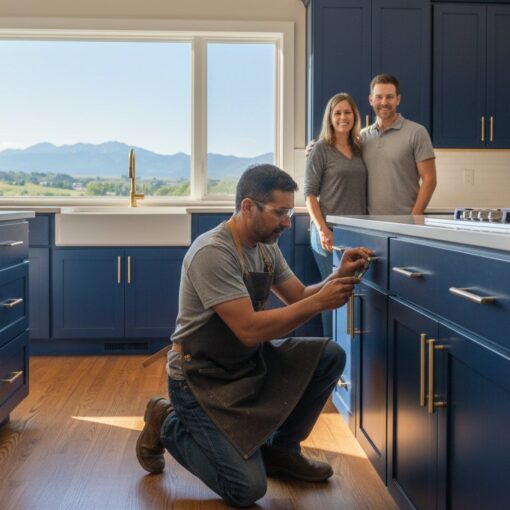
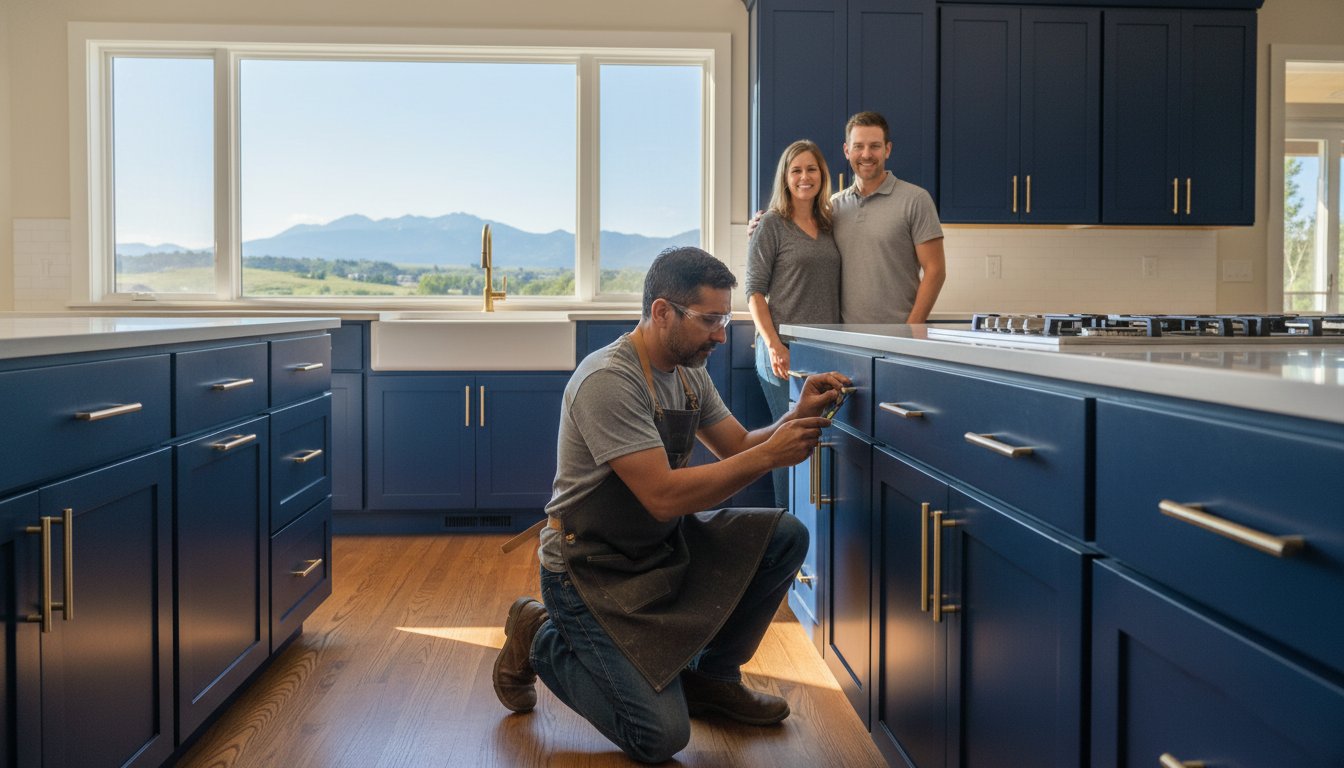
The key to achieving a truly modern aesthetic lies in creating visual harmony between your painted cabinets and the surrounding elements. This means considering how your cabinet color will interact with existing or planned countertops, backsplashes, and appliances. For example, crisp white painted cabinets pair exceptionally well with quartz countertops in subtle veining patterns, while deep navy cabinets create striking contrast against warm brass fixtures and natural stone surfaces.
Coordinating with Other Kitchen Elements
Modern hardware selection can make or break your cabinet transformation. Sleek bar pulls in brushed gold or matte black finishes complement painted surfaces beautifully, while traditional knobs can undermine the contemporary look you’re working to achieve. The hardware should feel substantial in your hand and maintain consistent proportions across all cabinet doors and drawers.
Backsplash integration requires careful planning. Subway tiles in large formats (3×12 inches rather than traditional 3×6) enhance the modern feel, especially when installed in horizontal stack patterns rather than traditional brick layouts. Natural stone slabs or large-format porcelain tiles create seamless backdrops that let your painted cabinets take center stage.
Lighting plays a crucial role in showcasing your cabinet work. Under-cabinet LED strips eliminate shadows and highlight the smooth, factory-quality finish that professional preparation and application techniques provide. Pendant lights over islands should complement your cabinet color while adding visual weight to balance the space.
Real-Life Transformations: Inspirations and Ideas
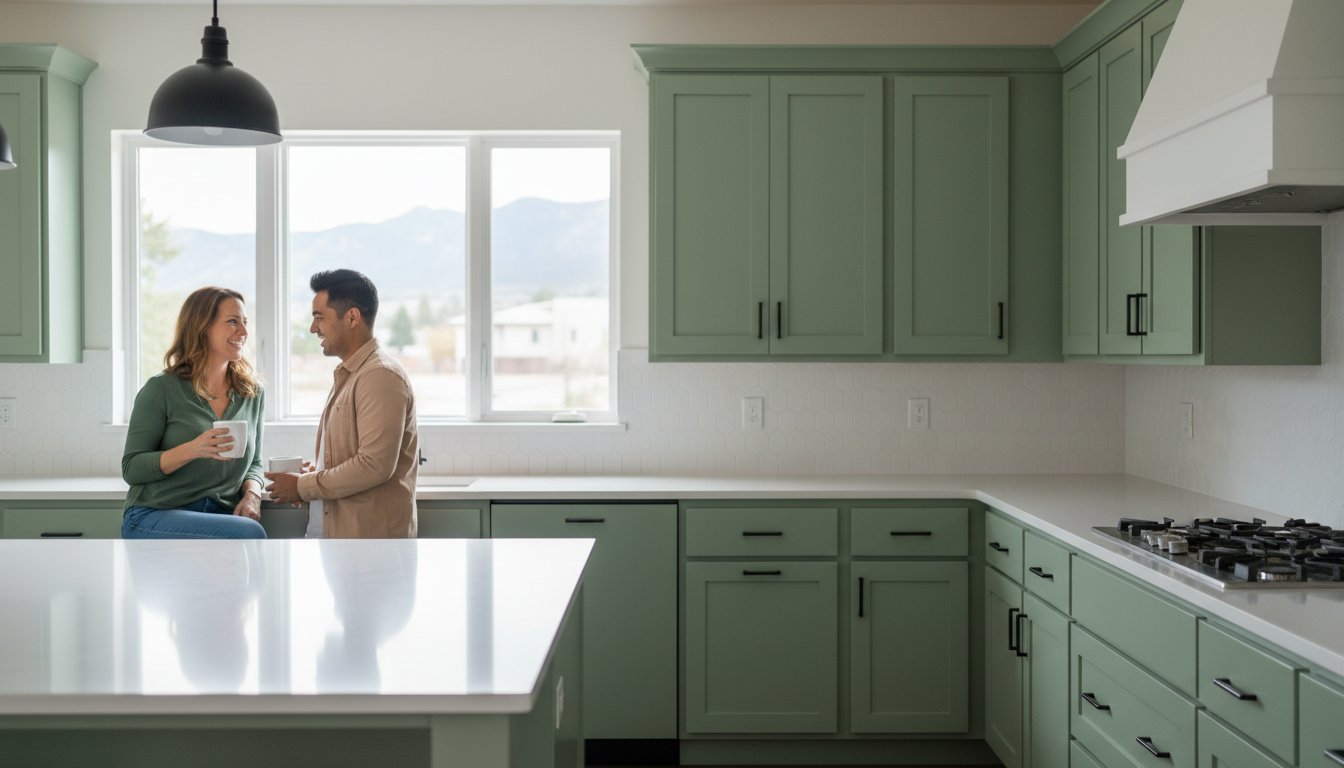
Recent cabinet painting projects in the Denver area demonstrate the dramatic impact of proper integration. One homeowner transformed their 1990s oak cabinets with a sophisticated sage green paint, pairing them with white quartz countertops and unlacquered brass hardware. The result was a kitchen that felt completely contemporary while maintaining warmth and character.
Another successful transformation involved painting wood cabinets to look modern using a two-tone approach. Lower cabinets received a deep charcoal treatment while uppers stayed crisp white, creating visual interest and making the 8-foot ceilings appear taller. The homeowner reported that guests consistently ask if they installed completely new cabinetry.
For expert guidance on achieving these professional results, consider consulting with specialists who understand the technical requirements of modern cabinet finishes. You can text the number of doors and drawers with pictures to get an accurate assessment of your project’s scope and requirements.
Transform Your Kitchen with Professional-Grade Results
Painting wood cabinets to look modern requires three critical elements: proper surface preparation, the right color selection, and professional-grade materials. The difference between a DIY disaster and a stunning transformation lies in understanding that prep work accounts for 80% of your final results. Modern cabinet finishes demand precision, from selecting contemporary colors like crisp whites and deep charcoals to applying durable topcoats that withstand daily kitchen use.
While this guide provides the roadmap for success, achieving that factory-like finish takes specialized equipment and 45 years of refinishing expertise. Amateur attempts often result in brush marks, uneven coverage, and premature wear that costs more to fix than doing it right the first time.
Ready to skip the learning curve and get professional results? Get a Professional Cabinet Painting Quote Today! Our factory-like spray finish and regional service throughout Denver and surrounding areas ensures your cabinets will look stunning and last for decades. Your modern kitchen transformation is just one text message away.
Frequently Asked Questions
What type of paint is best for modern wood cabinets?
Precatalyzed lacquer provides the most durable, factory-quality finish for painting wood cabinets to look modern. This industrial-strength coating creates a hard, smooth surface that resists chips, scratches, and daily kitchen wear better than standard latex paints. Professional cabinet painters apply this paint using spray equipment for an even, streak-free finish that mimics the original factory coating on new cabinets.
How long does it take to paint kitchen cabinets?
A complete cabinet painting project typically takes 5-7 business days for an average kitchen with 20-25 doors and drawers. The timeline includes 2-3 days for thorough preparation work, priming, and initial coats, followed by 2-3 days for final coats and curing time. Proper preparation accounts for 60% of the total project time and directly impacts the longevity of your new finish.
Can I paint over already painted cabinets?
Yes, you can paint over previously painted cabinets, but proper preparation is absolutely critical for adhesion and durability. The existing paint must be thoroughly cleaned, lightly sanded to create tooth for the new coating, and any loose or peeling areas must be scraped and filled. Professional painters use bonding primers specifically designed to adhere to existing painted surfaces before applying the topcoat.
Is it cheaper to paint cabinets or replace them?
Cabinet painting costs 70-80% less than full replacement according to 2024 home improvement industry data. While new custom cabinets can cost $15,000-$30,000 for an average kitchen, professional cabinet painting delivers a factory-quality finish at a fraction of that investment. The savings allow homeowners to allocate budget toward other kitchen upgrades like countertops or appliances.
How do I prepare my cabinets for painting?
Cabinet preparation starts with removing all doors, drawers, and hardware, followed by thorough cleaning with degreasing agents to remove kitchen oils and grime. Every surface must be lightly sanded to create proper adhesion, and all holes, dents, and imperfections need professional-grade wood filler. This prep work represents the most vital factor in achieving a durable, long-lasting finish that won’t chip or peel.
What are the most popular modern cabinet colors?
White remains the top choice for modern kitchens in 2024, followed by soft grays, navy blue, and sage green according to kitchen design trends. Two-tone combinations like white uppers with navy lowers create contemporary visual interest while maintaining timeless appeal. These neutral colors provide the clean, minimalist aesthetic that defines modern kitchen design and complement stainless steel appliances.
How can I ensure a durable finish on my painted cabinets?
A durable cabinet finish requires three key elements: meticulous surface preparation, high-quality primer designed for adhesion, and professional-grade topcoat application. The coating must cure for 30 days to reach full hardness, during which time you should avoid harsh cleaners and excessive moisture. Professional spray application creates the smoothest, most durable finish compared to brush or roller methods used by amateur painters.