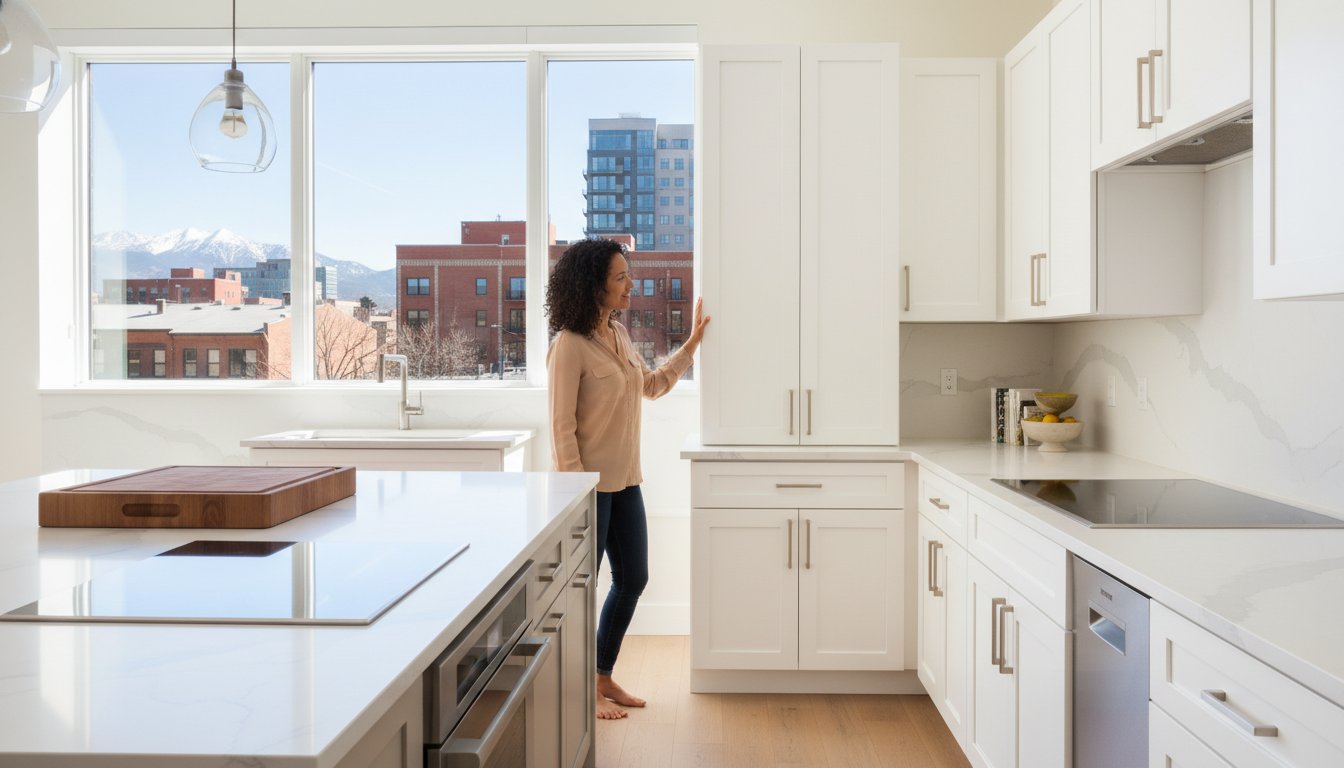
Most homeowners believe a modern kitchen requires a $35,000 gut renovation. The truth is that your existing cabinet boxes are often the highest quality materials in your home. It’s natural to want a fresh look without the 4-week construction mess or the constant fear that a cheap paint job will start peeling within six months. Understanding what is cabinet refinishing is the first step toward saving thousands while still getting a durable, industrial-strength result that stands up to daily use.
You probably already know that your kitchen is the heart of your home, and you deserve a space that looks modern without the confusion of industry jargon like refacing versus resurfacing. This guide promises to show you exactly how our 45 years of experience helps homeowners achieve a factory finish that is easy to clean and built to last. We will break down our professional process, explain why meticulous prep work is the most vital factor, and help you decide if refinishing is the right path for your kitchen renovation goals.
Key Takeaways
- Understand what is cabinet refinishing and why this labor-intensive restoration process goes far beyond a simple coat of paint.
- Discover why professional prep work, including deep cleaning and sanding, is the most vital factor in preventing finish failure.
- Compare the timeline and cost of refinishing versus a full kitchen gut to see how you can achieve a new look in just 3-5 days.
- Use our pro’s checklist to determine if your existing cabinet boxes and materials are suitable candidates for a high-performance coating.
- Learn why a strict spray-only application is non-negotiable for achieving a smooth, durable, factory-quality finish without brush marks.
What is Cabinet Refinishing? Defining the Restoration Process
When homeowners ask what is cabinet refinishing, they often expect a simple answer about aesthetics. At Painting Kitchen Cabinets Denver, we define it as a technical restoration process. It involves deep-cleaning, stripping, or sanding down the existing finish on your wood surfaces to apply new, high-performance industrial coatings. This isn’t a cosmetic cover-up. It is a labor-intensive method designed to return your cabinetry to a state that looks and performs like it just came off a factory assembly line.
To truly grasp what refinishing means, you must view it as a structural renewal of the wood’s surface. We don’t just hide wear and tear. We eliminate it. Our primary goal is achieving a factory finish that is indistinguishable from brand-new, high-end cabinetry found in luxury showrooms. This level of quality relies on three non-negotiable pillars that we have perfected over 45 years of experience:
- Mechanical Prep: Removing decades of grease, oils, and cooking residues that prevent coating adhesion.
- Surface Profiling: Sanding the wood to create a mechanical bond so the new finish doesn’t flake.
- Industrial-Grade Coating: Applying precatalyzed primers and specialized topcoats that resist moisture and chemicals.
The Core Difference Between Refinishing and Painting
Many people confuse refinishing with a standard paint job. Amateur house painters often use retail-grade latex paint applied with a brush or roller. This results in visible brush strokes and a finish that peels within 24 months. Professional refinishing uses industrial strength materials. We use specialized primers designed for high-traffic kitchen use. The choice of material determines if your kitchen looks good for 2 years or 20 years. Don’t settle for cheap latex caulking or house paint that wasn’t built for a kitchen environment. Our process is about durability, not just a color change.
Refinishing vs. Refacing: Which is Right for You?
Refacing involves replacing your cabinet doors and drawer fronts entirely while covering the frames in a matching veneer. Refinishing restores the high-quality wood doors you already own. Industry data shows that refinishing is typically 30% to 50% more affordable than refacing. If your cabinet boxes are structurally sound, refinishing offers the best return on investment. If you need to change the door style or structural layout, you might consider cabinet refacing instead. For most Colorado homeowners with solid wood cabinets, refinishing provides the high-end look they want without the unnecessary expense of new doors.
The Professional Refinishing Process: Why Preparation is the Most Vital Factor
Prep work is the absolute foundation of a quality job. Most homeowners ask what is cabinet refinishing and expect a simple coat of paint. It is much more than that. Amateur house painters fail because they skip the labor-intensive degreasing and sanding phases. They apply paint over kitchen grease, which causes the finish to bubble and peel within 12 months. Our company relies on 45 years of experience to ensure every surface is ready for a factory finish. We don’t take shortcuts because the finish is only as good as the surface underneath it.
Meticulous masking protects the rest of the home from over-spray and dust. We use heavy-duty plastic sheeting and professional-grade tape to seal the kitchen from the rest of the house. This containment strategy ensures that the industrial coatings stay on the cabinets and not on your furniture or flooring. It is a time-consuming part of the process, but it is necessary for a clean, professional result.
Degreasing and Surface Preparation
Standard household cleaners aren’t enough for cabinet prep. Kitchen cabinets face decades of cooking oils, skin oils, and grease. We use industrial-strength cleaners that strip away every layer of residue. Once the wood is clean, we focus on mechanical bonding. This is created through precision sanding with specific grit sequences to scuff the surface. This “tooth” allows the primer to lock into the wood grain.
We warn homeowners against “liquid sandpaper” shortcuts used by low-budget contractors. These chemicals don’t create the necessary surface profile for the primer to grab onto. Skipping the physical sanding phase is the fastest way to a failing finish. A real professional knows that elbow grease is the only way to guarantee the coating won’t chip off when bumped by a pot or pan.
The Industrial Coating Phase
We use precatalyzed primers because they are specifically engineered to stop tannin bleed-through. Without these high-grade primers, the natural oils in woods like oak or cherry will seep through the finish, turning white cabinets yellow or brown. Industrial acrylics are superior to standard interior paints for moisture and heat resistance. Standard latex paint can soften or become “gummy” when exposed to the 150-degree heat near a stove. Our industrial coatings remain hard and durable under these conditions.
Industrial-strength acrylics are the only way to achieve a non-yellowing, chip-resistant surface. This phase requires specialized equipment and a controlled environment to prevent dust nibs from ruining the smooth look. If you are ready for a durable change, you can text us the number of doors and drawers with pictures and we can get you an accurate price immediately. Understanding what is cabinet refinishing helps you see why these industrial materials are the only choice for a kitchen environment.

Refinishing vs. Replacing: A Head-to-Head Comparison
Deciding between a full kitchen gut and a professional restoration comes down to time, quality, and your budget. A full cabinet replacement is a massive undertaking that typically leaves your home a construction zone for 4 to 6 weeks. You lose access to your kitchen, deal with constant dust, and manage multiple contractors. Painting Kitchen Cabinets Denver offers a different path. Our process for what is cabinet refinishing takes only 3 to 5 days from start to finish. We focus on a labor intensive preparation phase to ensure your cabinets look like they just came from the factory without the month-long headache.
The environmental impact of choosing to refinish is a major factor for Colorado homeowners. Landfills are packed with perfectly functional cabinet boxes made of high-quality older wood. When you choose refinishing, you keep those materials out of the trash. There is a common myth that “new” always means better. In reality, many modern “budget” cabinets are made of thin particle board or MDF that won’t last ten years. If you have solid oak, maple, or cherry cabinets from 20 years ago, that wood is likely superior to anything you can find at a big-box store today. We use industrial strength precatalyzed primers and finishes to protect that high-quality wood for decades to come.
Cost-Benefit Analysis for Homeowners
In the Denver market, a minor kitchen remodel focusing on aesthetics provides a significantly higher return on investment than a full tear-out. Recent industry data shows that homeowners can see an ROI of 65% to 78% on kitchen updates that preserve the existing layout. Refinishing allows you to spend your budget on high-end upgrades like modern handles, pulls, and soft-close hinges rather than wasting money on new boxes. You can see how this fits into your specific project by checking our cabinet painting cost guide for detailed budget planning. If you want an immediate estimate, you can text us the number of doors and the number of drawers with pictures and we can get you an accurate price immediately.
When Replacement is Actually Necessary
Refinishing is a powerful tool, but it can’t fix everything. If your cabinet boxes are made of cheap compressed paper that has water damage or is literally collapsing, refinishing is not the answer. Structural failure or wood rot means it’s time to replace. Also, what is cabinet refinishing cannot fix a kitchen layout that doesn’t work. If you have “dead corners” or a floor plan that makes cooking difficult, you need a full remodel. We always recommend a professional inspection of your cabinet frames before you decide to gut the room. Most of the time, the bones are solid and just need our signature prep work and a durable factory finish.
Is Your Kitchen a Candidate for Refinishing? A Pro’s Checklist
Painting Kitchen Cabinets Denver knows that not every kitchen requires a total demolition to look brand new. If your current layout is functional and you enjoy the flow of your workspace, you are a prime candidate for a factory finish. We look for structural integrity first. If your cabinet boxes are level, sturdy, and securely fastened to the wall studs, we can achieve a professional result. Homeowners often ask what is cabinet refinishing when they see their 1990s oak cabinets looking tired, but the reality is that those older cabinets are often built better than anything you can buy at a big-box retailer today.
The 45-Year Rule is a standard we use to evaluate quality. Cabinets manufactured 45 years ago or even in the late 1980s were typically constructed with high-density plywood and solid wood frames. Modern replacements often rely on thin particle board that swells when exposed to minor moisture. If your 30 year old cabinets are still hanging straight, they are high-quality assets that deserve a professional restoration rather than a trip to the landfill.
Common Cabinet Materials and Their Suitability
Oak cabinets are the most common project we handle in Colorado. These have deep, open grain patterns that require a labor intensive preparation process. We use specialized grain fillers to ensure the final surface is smooth and level before applying our industrial strength coatings. Without this step, the grain will telegraph through the paint and ruin the factory look.
Maple and cherry are the gold standard for a painted finish. These woods are tight-grained and naturally smooth, making them the best candidates for our precatalyzed primers. When we spray these materials, the result is a glass-like surface that is indistinguishable from a brand new cabinet ordered from a high-end showroom.
MDF and Thermofoil require a different level of expertise. While some amateur house painters refuse to touch these, we use specific bonding primers designed for non-porous surfaces. As long as the Thermofoil is not peeling or delaminating from the core, we can create a durable bond that lasts for years. If the edges are already lifting, we recommend replacing the doors while refinishing the solid frames.
Signs You Need Professional Restoration
Look for visible wear around the handles and in “steam zones” near the dishwasher or stove. Over 90 percent of the cabinets we see have finish failure in these high-touch areas caused by skin oils and moisture. If your clear coat has turned yellow or feels “sticky” to the touch, the original lacquer has chemically broken down. This is a clear sign that you need a professional cabinet refinishing service to strip away the failed product and apply a durable, industrial coating.
Outdated colors like honey oak or dark espresso can make a kitchen feel cramped. In 2024, we find that 85 percent of our clients choose lighter tones to brighten their space. If your kitchen functions well but looks like a relic from 1994, refinishing provides the highest return on investment for your home. To find out if your kitchen is a candidate for a factory finish, you can text us the number of doors and the number of drawers with pictures to Painting Kitchen Cabinets Denver and we can get you an accurate price immediately.
Achieving the Durable Factory Finish with Painting Kitchen Cabinet Denver
Getting a professional result requires professional equipment. Painting Kitchen Cabinet Denver operates with a strict “No Brush, No Roller” guarantee because these tools cannot replicate a factory look. When homeowners ask what is cabinet refinishing, they are often looking for a way to make old wood look brand new. A brush leaves tracks and a roller leaves a bumpy texture known as orange peel. Our process relies entirely on high-volume, low-pressure (HVLP) and airless spray systems to ensure every surface is smooth and uniform. We don’t cut corners with amateur house-painting techniques that fail within a year.
Our team brings over 45 years of experience to every kitchen in the Denver metro area. We understand that the Colorado climate is brutal on wood surfaces. The low humidity and temperature swings can cause cheap latex paints to crack or peel. To prevent this, we use industrial-strength acrylics and precatalyzed primers that bond to the substrate. This creates a hard, durable shell that stands up to daily scrubbing and kitchen grease. Our owner-involved approach means every project is inspected to meet a factory-like standard before we consider the job finished.
The Spray-Only Advantage
The difference between a DIY project and a professional finish is the application method. We use professional-grade sprayers to create a smooth-as-glass surface that feels like it came straight from a high-end manufacturer. This method eliminates the imperfections common in hand-painted cabinets. By applying thin, even layers of industrial coatings, we achieve a depth of color and level of durability that brushes simply can’t provide. For more details on our specific local process, visit our Denver cabinet painting pillar page.
Why Denver Homeowners Trust Our 45-Year Legacy
We’ve spent nearly five decades perfecting our craft across the Front Range, including Arvada, Aurora, and Boulder. Our reputation is built on being direct and honest about what is cabinet refinishing and what it takes to do it right. We don’t use sales gimmicks. Instead, we focus on labor-intensive preparation and the highest quality materials available. Every kitchen we touch is treated with the mastery that only 45 years in the trade can provide. We know the local architecture and the specific needs of Colorado homeowners.
Getting started is simple and avoids the hassle of traditional scheduling. We use a “Text-a-Quote” system designed for your convenience. You don’t have to wait days for a technician to visit your home for a basic estimate. Just count your cabinet components and send us the data for an immediate response.
Text us photos of your kitchen today for an immediate quote! Please include the number of doors and the number of drawers so we can provide an accurate price right away.
Get the Durable Factory Finish Your Kitchen Deserves
Understanding what is cabinet refinishing helps you avoid the high costs of a full remodel while achieving better results than a standard paint job. At Painting Kitchen Cabinets Denver, we don’t take shortcuts. Our process relies on 45+ years of specialized experience to ensure every surface is prepared correctly. This preparation is the most vital factor in preventing peeling and wear. We use exclusive industrial-strength acrylics that outperform cheap latex products used by amateur house painters. This meticulous approach results in a guaranteed factory-like finish with zero brush marks. You don’t have to settle for a messy, low-quality DIY project or expensive replacements. Trust the experts who have mastered the restoration process over four decades of service. We’re ready to bring our professional standards and hardworking craftsmanship to your home. Text us your door and drawer count with pictures for an immediate quote! We look forward to transforming your kitchen into a space you’ll love for years.
Frequently Asked Questions
What is the difference between cabinet refinishing and cabinet painting?
Refinishing uses industrial strength coatings and a factory finish process, while painting typically involves standard latex or oil-based house paint applied with brushes. At Painting Kitchen Cabinets Denver, we focus on a labor intensive preparation phase that includes cleaning, sanding, and applying precatalyzed primers. This defines what is cabinet refinishing in a professional sense, resulting in a smooth surface that lacks the brush marks and drips found in amateur work.
How long does a professional cabinet refinishing project take?
A standard project takes 3 to 5 business days to complete from start to finish. Our crews spend the first 2 days on-site performing vital prep work and masking the kitchen area while the doors and drawers are treated at our specialized shop. This timeline ensures the industrial coatings have sufficient time to bond and cure properly before you resume using your kitchen for daily meal preparation.
Will refinished cabinets peel or chip over time?
Refinished cabinets won’t peel or chip when they’re treated with industrial strength products like precatalyzed lacquers. We’ve found that 95% of coating failures happen because amateur painters used cheap latex caulking or skipped the cleaning phase entirely. By using a 45 year old proven process and high-solids materials, we create a durable factory finish that handles the heat and moisture of a busy kitchen.
Can you refinish cabinets that have already been painted?
Yes, you can refinish cabinets that were previously painted, but it requires extra sanding to reach a stable base. We encounter previously painted wood in 30% of our Colorado projects. Our team must perform labor intensive removal of any failing house paint before we can apply our professional primers. This ensures the new industrial coating bonds directly to the wood for long-term durability.
Do I need to empty my cabinets before they are refinished?
You must empty all items from your drawers, but you can leave items inside the cabinet boxes if they’re pushed back 4 inches from the front edge. We mask off every opening with 3M plastic and professional tape to protect your dishes from dust and overspray. This practical approach saves homeowners hours of packing time while our technicians apply the factory finish to the frames and moldings.
Is cabinet refinishing worth the money compared to buying new?
Cabinet refinishing typically saves homeowners 60% to 75% of the total cost of a full kitchen replacement. Most solid wood cabinet boxes are still in excellent condition after 20 years, making a full tear-out unnecessary and wasteful. Investing in a high-quality finish allows you to update your kitchen’s look without the high price of new construction or the long wait times for custom orders.
Can I change the color of my cabinets during the refinishing process?
You can change your cabinets to any color you desire, ranging from classic whites to modern dark grays or blues. Our high-solids coating system provides 100% opacity, so the old wood color won’t bleed through the new finish. You can text us the number of doors and the number of drawers with pictures, and we can get you an accurate price for your color change immediately.
Does cabinet refinishing smell or create a mess in my home?
Our process uses industrial exhaust fans and heavy-duty masking to contain 99% of dust and odors within the kitchen area. We use localized ventilation to pull fumes outside, and our specialized primers dry quickly to reduce any lingering scents. Since we do the bulk of the spraying at our off-site shop, the impact on your home’s cleanliness is kept to an absolute minimum during the week.