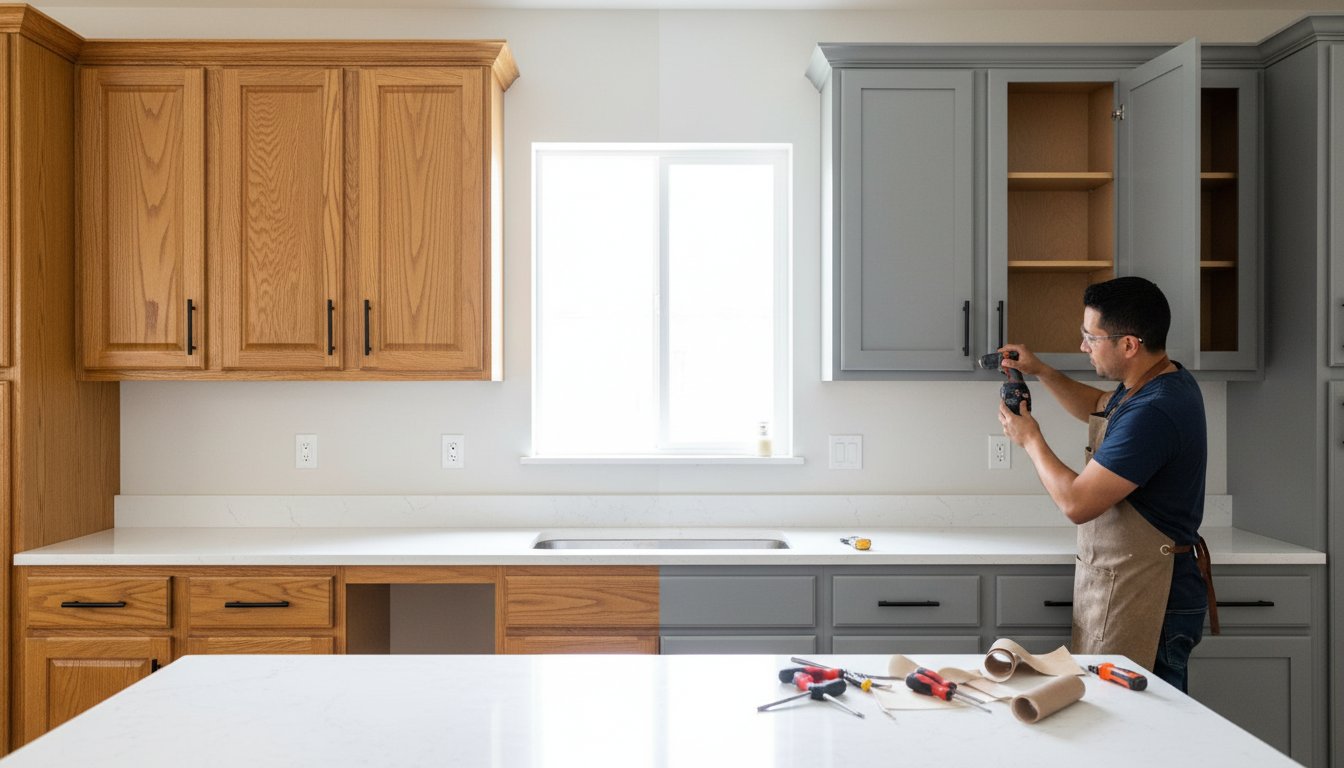
If your kitchen looks tired but the cabinet boxes are still solid, a total tear-out is an expensive and unnecessary disruption. Homeowners often believe a full gut renovation is their only option, but the high cost and weeks of construction are a major roadblock. There is a more practical, high-impact solution that delivers a factory-finish look for a fraction of the price. Professional cabinet refacing provides a complete transformation by replacing your old doors and drawer fronts and applying a durable, new veneer to the existing cabinet boxes, giving you a brand-new kitchen without the brand-new cost.
However, understanding the difference between refacing, refinishing, and a full replacement is critical to making a smart investment. Choosing the wrong process for your specific cabinets can lead to poor results and wasted money. In this guide, we break down the facts. You will learn exactly what each option entails, see a direct cost and durability comparison, and gain the confidence to determine which path is the right one for your home, your budget, and your long-term satisfaction.
Key Takeaways
- Discover what cabinet refacing truly involves-it’s far more than a paint job-and why professional installation is critical for a durable, factory-like finish.
- Get a clear cost breakdown comparing refacing to a full replacement or simple refinishing to determine the most practical investment for your budget.
- Learn the key conditions your existing cabinet boxes must meet to be a good candidate for a successful cabinet refacing project.
- Follow our craftsman’s decision guide to confidently choose the right cabinet solution based on your kitchen’s layout, your goals, and your timeline.
What is Cabinet Refacing? (And What It’s Not)
Cabinet refacing is a kitchen renovation method where you replace the “skins” of your cabinets without tearing out the entire structure. Think of it as giving your kitchen a comprehensive facelift. All your cabinet doors and drawer fronts are removed and replaced with brand-new, custom-made ones. The structural integrity of your existing Kitchen cabinet boxes must be sound, but their external appearance is completely transformed. A matching veneer-made of real wood, durable laminate, or thermofoil-is professionally applied over the visible surfaces of your cabinet frames.
This process is a substantial upgrade from simple painting (refinishing) but is far less invasive and costly than a full tear-out (replacement). It provides the look of a brand-new kitchen while keeping your existing layout and cabinet boxes intact.
The Key Components of a Refacing Project
A professional refacing project involves several key new elements that work together to create a completely new look. The quality of these components is critical to a long-lasting, durable result.
- Cabinet Doors & Drawer Fronts: These are completely new, allowing you to change the style, wood species, and profile of your cabinetry. This is the primary visual change.
- Veneers: A thin, industrial-strength layer of real wood, laminate, or thermofoil is professionally applied to the exterior of your existing cabinet boxes to perfectly match your new doors.
- New Hardware: A refacing project is almost always completed with new hinges, handles, and pulls to match the new style and ensure proper function for years to come.
Cabinet Refacing vs. Cabinet Refinishing (Painting)
Many homeowners confuse refacing with refinishing, but they are fundamentally different jobs. Refinishing, or professional cabinet painting, involves a labor-intensive preparation process to apply a durable, factory-grade finish to your existing doors and cabinet boxes. It changes the color but preserves the original cabinet style. In contrast, cabinet refacing replaces the doors and drawer fronts entirely, offering a complete style overhaul. While refinishing demands a blemish-free surface, refacing can cover up existing imperfections on the cabinet boxes with a new veneer.
Cabinet Refacing vs. Full Replacement
A full replacement is a complete demolition project. It involves tearing out all cabinet boxes, countertops, and often disrupting plumbing and electrical. This is the only option if your cabinet boxes are structurally damaged, warped by water, or if you want to change the fundamental layout of your kitchen. Refacing is a practical alternative only when you are satisfied with your kitchen’s current footprint and the cabinet boxes are in good condition. It provides the look of brand-new cabinets without the cost, time, and disruption of a full remodel.
The Professional Cabinet Refacing Process: Step-by-Step
Unlike a simple paint job, professional cabinet refacing is a systematic, labor-intensive process that transforms your kitchen with minimal disruption. This is not a weekend DIY project; it requires skilled installers to achieve a true factory-quality result. The entire on-site installation is typically completed in just 3 to 5 days, a timeline made possible because your new doors and drawer fronts are fabricated off-site to precise specifications while the on-site prep work begins.
Phase 1: Measurement and Preparation
The success of the entire project hinges on this first phase. An experienced technician takes meticulous measurements for every new component. On-site, our crew begins the most vital factor of the job: preparation. We remove all existing doors, drawer fronts, and hardware. The cabinet boxes and face frames are then thoroughly cleaned, degreased, and scuffed to create an ideal surface for the new veneer to permanently adhere to, ensuring a durable, long-lasting bond.
Phase 2: Veneer Application and Installation
This is where the visual transformation takes shape. Our installers expertly cut and apply a real wood or laminate veneer to all visible surfaces of your cabinet boxes. While many online guides explain how to reface your cabinets, a professional’s skill is most evident here, ensuring the veneer bonds permanently and corners are perfectly aligned for a seamless look. Once the boxes are resurfaced, we install your brand-new, factory-finished doors and drawer fronts, mounting them with high-quality, soft-close hinges and your chosen handles and pulls.
Phase 3: Finishing Touches and Cleanup
To complete the custom look, we can install new matching crown molding, light rail, or trim pieces. Our commitment to quality work extends to the final moments of the job. The entire work area is thoroughly cleaned, leaving your kitchen ready to use. We then conduct a final walkthrough with you to inspect every detail, guaranteeing the finished product meets our high standards and your complete satisfaction.
Cost Analysis: Cabinet Refacing vs. Refinishing vs. Replacing
When updating your kitchen, the budget is often the deciding factor. The cost hierarchy is straightforward: professional refinishing is the most affordable, followed by cabinet refacing, with a full replacement being the most expensive. The key difference is what you’re investing in-refinishing pays for expert labor and a flawless finish, refacing pays for new materials, and replacement pays for entirely new cabinet boxes and installation. The best way to compare is with a real number. Get a fast, accurate quote for cabinet refinishing.
Average Cost of Cabinet Refacing
Typically, cabinet refacing costs between $7,000 and $15,000 for an average-sized kitchen. This price is driven almost entirely by the cost of new materials. You are paying for new cabinet doors, drawer fronts, and the veneer or laminate used to cover your existing cabinet boxes. The final price depends heavily on your choice of materials (wood veneer is more expensive than thermofoil) and the size of your kitchen. While this is often 40-50% less than a full replacement, understanding how to reface kitchen cabinets properly highlights why the material and installation costs add up so significantly.
Average Cost of Professional Cabinet Refinishing
Professional cabinet refinishing is the most cost-effective way to achieve a dramatic transformation, with prices for a standard kitchen typically ranging from $3,000 to $8,000. Unlike other options, you are not paying for expensive new materials. Instead, your investment goes directly into the meticulous, labor-intensive process of preparation and application. This is about craftsmanship-transforming your existing solid wood cabinets to look brand new with a durable, factory-grade finish that lasts.
Average Cost of Cabinet Replacement
A full cabinet replacement is the most expensive route, with costs starting at $15,000 and easily exceeding $30,000. This price tag covers new cabinet boxes, doors, and hardware. Crucially, this figure often does not include the significant additional costs for new countertops, backsplash, plumbing, and electrical work that a full tear-out requires. It is the most disruptive and costly kitchen renovation project you can undertake.

Pros and Cons: Making an Honest Assessment
Choosing between kitchen cabinet updates is a practical decision, not an emotional one. The right answer for your home depends entirely on three factors: your budget, the existing quality and layout of your kitchen, and your desired final outcome. Here is a direct, honest assessment to help you evaluate your options without any sales fluff.
Advantages of Cabinet Refacing
For homeowners seeking a dramatic change without the chaos of a full demolition, cabinet refacing presents some clear benefits. It’s a middle-ground solution that delivers significant visual impact.
- Complete Aesthetic Overhaul: You can change the entire style and color of your cabinets, moving from a dated oak to a modern shaker style, for example. This is its primary advantage over refinishing.
- Faster and Less Disruptive: The process is much quicker than a full cabinet replacement. Your kitchen remains functional for most of the project, which is a major benefit for busy households.
- Eco-Friendly Choice: By keeping your existing cabinet boxes, you are preventing a significant amount of material from ending up in a landfill.
- A ‘New Kitchen’ Feel for Less: While not cheap, it is typically more cost-effective than a complete tear-out and replacement with new custom or semi-custom cabinets.
Disadvantages and Limitations of Cabinet Refacing
Before committing, it is vital to understand the limitations. The quality of the job is entirely dependent on the materials used and the skill of the installer, and it doesn’t solve every kitchen problem.
- Doesn’t Fix a Bad Layout: If you dislike the flow of your kitchen or need more storage, refacing does nothing to solve these foundational issues. You are stuck with the same footprint.
- Old Interiors Remain: While the outside looks new, the inside of your cabinet boxes-including any old shelving, stains, or wear-remains unchanged.
- Veneer Quality Varies: The durability of the final product is a major concern. Low-quality thermofoil or veneer materials are prone to peeling, chipping, and water damage, especially around sinks and cooktops.
- Significant Cost Over Refinishing: For a purely aesthetic upgrade, the cost of cabinet refacing can be two to three times more than a professional, high-quality refinishing service that delivers a durable, factory-grade finish.
Which is Right for You? A Craftsman’s Decision Guide
Making the right choice comes down to three factors: the condition of your cabinets, your desired final look, and your budget. There is no single “best” answer, only the right answer for your specific kitchen. Ask yourself these direct questions: Are your cabinet boxes structurally sound? Do you like your kitchen’s current layout? Is the door style the main problem, or is it the finish?
An honest assessment is the first step. Below is a straightforward guide to help you decide between cabinet refacing, professional refinishing, and a full replacement.
Choose Refacing If…
Cabinet refacing involves replacing your doors and drawer fronts and applying a new veneer to the cabinet boxes. This is your path if:
- Your cabinet boxes are in excellent structural condition, but you cannot stand the outdated door style (e.g., arched cathedral doors).
- You want to completely change the look of the wood, such as covering a heavy oak grain with a smooth, modern laminate or thermofoil finish.
- Your budget is in the mid-range-more than a professional refinishing job but significantly less than a full tear-out and replacement.
Choose Professional Refinishing If…
This is our specialty at Painting Kitchen Cabinet Denver, and for good reason. It offers the best value for homeowners with quality existing cabinets. This is the correct choice if:
- You have high-quality wood cabinets and you are happy with their classic style, but the finish is worn, dated, or the wrong color.
- Your primary goal is a flawless, durable, factory-like finish in any color you can imagine, from classic white to a bold custom shade.
- You want the best possible result for the most affordable price, maximizing your return on investment.
- You understand that meticulous prep work is non-negotiable for a finish that will not chip, peel, or fail.
Choose Full Replacement If…
Sometimes, starting from scratch is the only logical solution. No amount of finishing or refacing can fix fundamental problems. You need a full replacement if:
- Your cabinet boxes are failing due to water damage, warping, mold, or simply falling apart from age and poor construction.
- You need to change the entire layout of your kitchen, such as moving appliances, removing a wall, or adding a new island.
- You have a substantial budget allocated for a complete kitchen renovation and want all-new materials from the ground up.
For homeowners with solid cabinets who demand a superior, long-lasting finish, our professional refinishing process is the clear winner. We provide the craftsmanship and industrial-strength materials necessary to transform your kitchen correctly. If that sounds like the solution for you, contact us for a direct quote.
Your Path to a Flawless Kitchen Transformation
Choosing between a full remodel and updating your existing cabinets is a major decision. We’ve shown how professional cabinet refacing can deliver a stunning, brand-new look at a fraction of the cost and time of a complete tear-out. The key takeaway is that the quality of the final product is directly tied to the skill of the craftsman and the quality of the materials used. A durable, beautiful finish is never an accident; it’s the result of a meticulous, proven process.
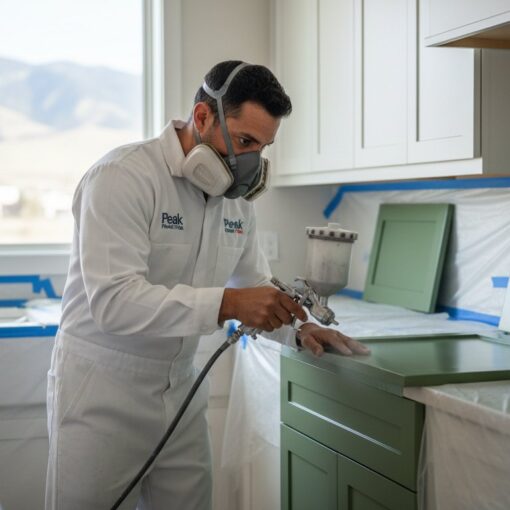
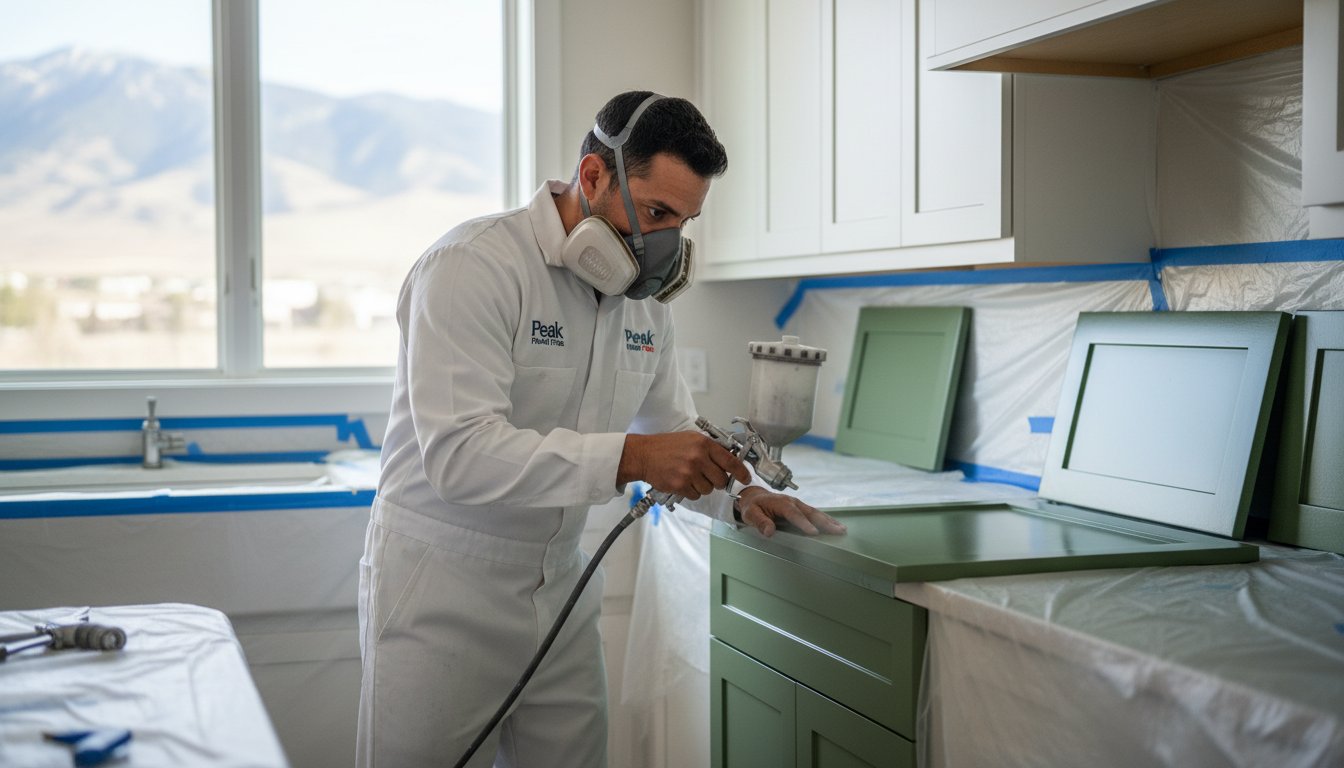
If you’re ready to invest in a transformation that lasts, trust the experts. With over 45 years of experience in the Denver area, we don’t take shortcuts. Our exclusive use of an industrial-strength spray application ensures a guaranteed flawless, factory-like finish that stands up to daily life. Don’t settle for less than the best for your home. Think professional refinishing is the right choice? Text us pictures for a fast, no-obligation quote!
Frequently Asked Questions About Cabinet Refacing
How long does cabinet refacing last?
Professionally installed cabinet refacing using high-quality materials like solid wood veneers or rigid thermofoil (RTF) will last 10 to 15 years, often longer. The durability depends entirely on the quality of the materials and, most importantly, the skill of the installation. Proper preparation and the use of industrial-strength adhesives are critical. Cheaper DIY materials will often fail and peel within a few years, especially in high-moisture areas like kitchens, which is why professional work is essential for a lasting finish.
Can I reface my kitchen cabinets myself (DIY)?
While DIY refacing kits are available, we strongly advise against them for achieving a quality result. Proper cabinet refacing is a labor-intensive process that demands precision tools and extensive experience to apply veneers without bubbles or seams. Amateur work often leads to peeling edges, misaligned doors, and a finish that looks cheap. To achieve a durable, factory-like transformation that truly lasts, the job must be handled by seasoned professionals who understand the critical prep work involved.
What kind of materials are used for refacing veneers and doors?
For veneers, professionals use high-quality materials such as real wood veneer, durable plastic laminate, or rigid thermofoil (RTF). New doors and drawer fronts are available in a wide range of options, including solid wood, medium-density fiberboard (MDF) which is excellent for painting, or RTF over MDF for a seamless and highly durable finish. The material choice depends on your desired style and budget, but we only use materials designed to withstand years of kitchen use.
Does refacing add value to my home?
Yes, a professional refacing project is a smart investment that adds significant value to your home. It provides the high-impact visual of a full kitchen remodel at a fraction of the cost, offering a strong return on investment. An updated, modern kitchen is a major selling point for potential buyers. A quality job looks identical to a brand-new cabinet installation, boosting your home’s appeal and resale value whether you plan to sell soon or enjoy the results yourself.
Can you paint over refaced cabinets later on?
This depends entirely on the material used for the refacing. If your cabinets were refaced with real wood veneers and solid wood doors, they can be properly prepped and painted in the future. However, if the surface is laminate or thermofoil (RTF), painting is not a viable option. These non-porous, plastic-like surfaces are not designed to hold paint, and any coating applied will inevitably chip and peel, leading to a failed finish that is difficult to fix.
What if my cabinet boxes are made of particle board?
Particle board cabinet boxes can absolutely be refaced, as long as they are structurally sound. The critical factor is their condition; they must be free from any significant water damage, crumbling, or swelling. A professional will first inspect the integrity of the boxes. If they are solid, a thorough preparation process of cleaning and scuff-sanding will ensure that the new veneer and industrial-strength adhesive form a permanent, lasting bond directly to the particle board surface.