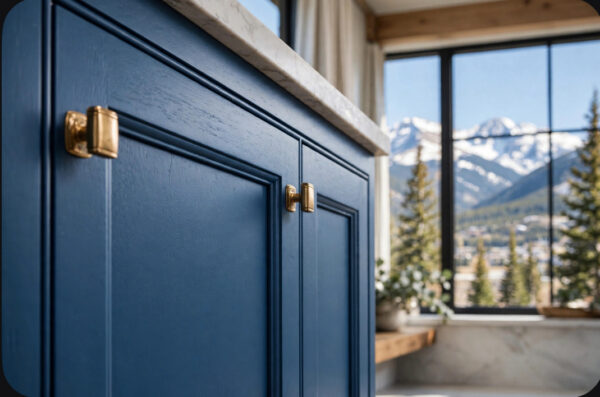
When homeowners in Castle Rock, Castle Pines, Highlands Ranch, and Parker begin searching for a way to transform their kitchens without the six-figure price tag of a full remodel, they quickly discover a crowded field of contractors promising beautiful results. Yet discerning clients soon realize that not all refinishing services are created equal. A true luxury cabinet refinishing company in Denver Metro delivers something far beyond a coat of paint: it provides a factory-quality finish that rivals the sheen, durability, and precision of brand-new custom cabinetry. This guide cuts through the marketing noise to explain exactly what separates premium refinishing from commodity painting, why the investment matters, and how to choose a service that will leave your kitchen looking like it belongs in a design magazine.
Table of Contents
- Why “Luxury” Matters: The Difference Between Painting and a Factory-Quality Finish
- The Cost of Luxury vs. The Cost of Cutting Corners
- Our Luxury Process: From Consultation to Factory-Finish Installation
- Luxury Cabinet Refinishing vs. Refacing vs. Replacement: The Denver Metro Verdict
- Frequently Asked Questions About Luxury Cabinet Refinishing in Denver
- Serving the Denver Metro’s Finest Homes: Castle Rock, Parker, Highlands Ranch and Castle Pines
Why “Luxury” Matters: The Difference Between Painting and a Factory-Quality Finish
The word “luxury” gets thrown around loosely in home services, but in cabinet refinishing it carries a specific technical meaning. It is not about charging more for the same work. It is about a fundamentally different process, one that prioritizes material science, controlled application environments, and long-term durability over speed and convenience. A standard cabinet painter arrives at your home with brushes, rollers, and a few gallons of off-the-shelf paint. They tape off the kitchen, sand the surfaces lightly, and apply two or three coats over the course of several days. The result can look acceptable from a distance, but up close you will often find brush strokes, dust nibs embedded in the finish, and uneven sheen where the paint was applied too thin or too thick.
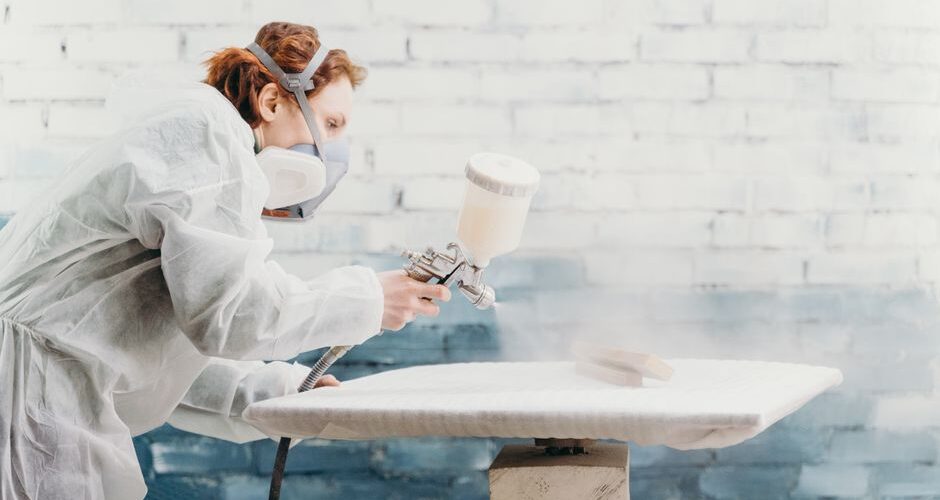
A luxury refinishing service operates more like a high-end automotive paint shop than a residential painting crew. The defining characteristic is the factory finish, a term that refers to a catalyzed coating system applied in a dust-free, climate-controlled spray booth. Unlike air-dried latex paint, which remains relatively soft and thermoplastic for its entire life, a catalyzed urethane or conversion varnish undergoes a chemical cross-linking reaction during curing. This reaction creates a molecular bond that is exponentially harder, more scratch-resistant, and more impervious to moisture and household chemicals. Products like Sherwin-Williams Emerald Urethane Trim Enamel or commercial-grade conversion varnishes are not simply “better paint.” They are a different category of coating altogether, designed for millwork and cabinetry rather than drywall.
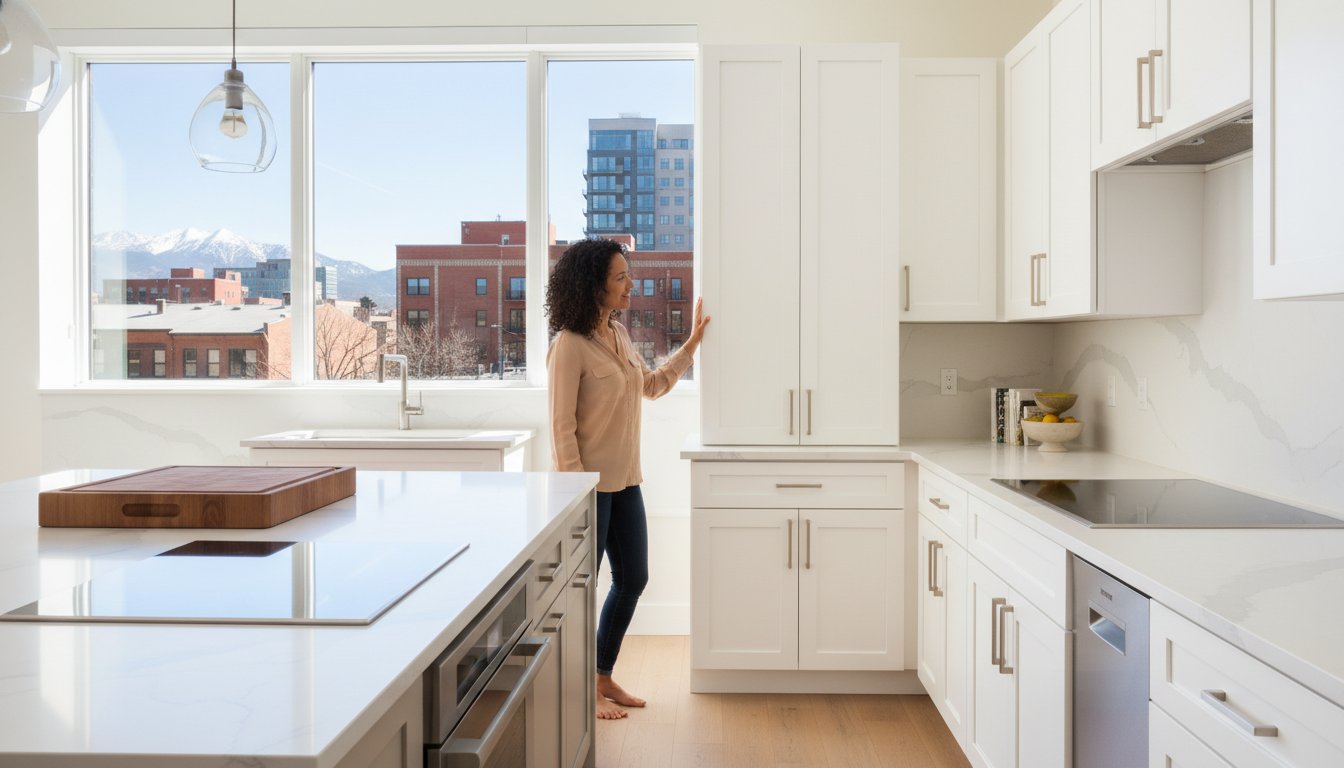
The application environment matters just as much as the chemistry. When doors and drawer fronts are sprayed in a dedicated facility equipped with negative air scrubbers, the finish cures in an atmosphere free of airborne dust, pet hair, and the humidity fluctuations common in a lived-in home. This is the same standard applied by custom cabinet manufacturers. The result is a glass-smooth surface with uniform sheen across every square inch, no orange peel texture, and no brush marks. For homeowners who have invested in high-end appliances, stone countertops, and designer lighting, this level of finish is the only one that holds its own against those elements. Anything less looks out of place.
The Cost of Luxury vs. The Cost of Cutting Corners
One of the most frustrating gaps in the Denver cabinet refinishing market is the near-total absence of transparent pricing. Homeowners routinely ask, “How much does it cost to pay someone to refinish cabinets?” and receive vague answers or pressure to schedule an in-home estimate before any numbers are discussed. Here is a straightforward breakdown based on current 2026 market conditions in the Denver Metro area.
My Review of Graco FFLP Tips for Spraying Cabinets
For a typical kitchen with 20 to 30 doors and drawer fronts, a luxury refinishing project using catalyzed urethane and off-site spray application typically falls in the range of $4,500 to $8,500, depending on cabinet complexity, finish selection, and whether glazing or two-tone effects are included. Standard cabinet painting, performed on-site with premium latex paint and brush-and-roller application, generally runs between $2,000 and $4,500 for the same kitchen. Full cabinet replacement with mid-grade custom or semi-custom cabinetry starts around $15,000 and can easily exceed $30,000 for larger kitchens with premium wood species and soft-close hardware.
The upfront cost difference between luxury refinishing and standard painting is real, but so is the gap in longevity and appearance. A latex-painted cabinet surface in a busy kitchen typically begins showing wear at the corners, around knobs, and near the sink within three to five years. Chipping, staining, and peeling are common failure modes. A properly applied factory finish, by contrast, routinely lasts ten to fifteen years with normal use. When you amortize the cost over the lifespan of the finish, luxury refinishing often proves less expensive per year of service than the cheaper alternative, and it looks better the entire time.
Compared to full replacement, luxury refinishing still delivers the 40 to 60 percent savings that competitors tout, but the value proposition is not just about spending less. It is about getting a finish quality that matches or exceeds what you would receive from a cabinet factory, while preserving the existing cabinet boxes that were likely built from superior materials than what is available today at mid-grade price points. Many homes in Castle Pines and Highlands Ranch were constructed with plywood boxes and solid wood face frames that would cost a fortune to replicate now. Refinishing honors that original craftsmanship while updating the aesthetic.
For homeowners who prefer to spread the investment over time, financing options are available through third-party lenders, making a luxury refinish accessible without compromising on quality. When viewed through the lens of home equity, a kitchen that looks custom and contemporary adds measurable value at resale, often recovering the entire project cost and then some.
How Long Does a Luxury Refinish Last?
The question “How long does cabinet resurfacing last?” is one of the most searched and least answered queries in this industry. The honest answer depends entirely on the coating system used and the conditions it endures. A luxury factory finish, specifically a two-component catalyzed urethane or conversion varnish, should deliver ten to fifteen years of daily service in a residential kitchen before showing meaningful signs of age. This assumes normal cleaning practices and reasonable care. Standard water-based latex paints, even premium lines marketed for cabinetry, typically last three to five years before chipping, peeling, or staining becomes noticeable enough to warrant attention.
The reason for this dramatic difference lies in the chemistry. Catalyzed finishes cross-link as they cure, forming a three-dimensional polymer network that resists moisture penetration, UV yellowing, and the softening effect of cooking oils and household cleaners. They achieve pencil hardness ratings several points higher than single-component paints. In practical terms, this means a fingernail will not leave a mark, a dropped pot lid is less likely to chip the surface, and a splash of tomato sauce wipes away without staining. Latex paints, by comparison, remain thermoplastic: they soften with heat, swell with moisture, and never achieve the same surface hardness.
To extend the life of any cabinet finish, avoid ammonia-based cleaners and abrasive scrub pads. A damp microfiber cloth with a mild soap solution is sufficient for daily cleaning. Periodic inspection of hinges and hardware prevents mechanical wear that can compromise the finish around contact points. These small habits, combined with a quality finish applied correctly, keep a kitchen looking new for well over a decade.
Our Luxury Process: From Consultation to Factory-Finish Installation
Understanding the steps involved in a luxury refinishing project helps homeowners appreciate what they are paying for and why the timeline and cost differ from a standard paint job. The process unfolds in four distinct phases, each with its own quality control standards.
The first phase is an in-home design consultation. A finish and color specialist visits the home in Castle Rock, Parker, Highlands Ranch, or Castle Pines to evaluate the existing cabinetry. This is not a five-minute measurement exercise. It is a detailed assessment of wood species, box construction, hinge condition, and current finish adhesion. The specialist discusses the homeowner’s vision: solid colors, two-tone schemes, glazing, or specialty finishes that mimic the look of stained wood over paint. Physical samples are provided so the color reads accurately under the kitchen’s actual lighting conditions. A precise, line-item quote follows within 24 hours, with no hidden fees or surprise upcharges.
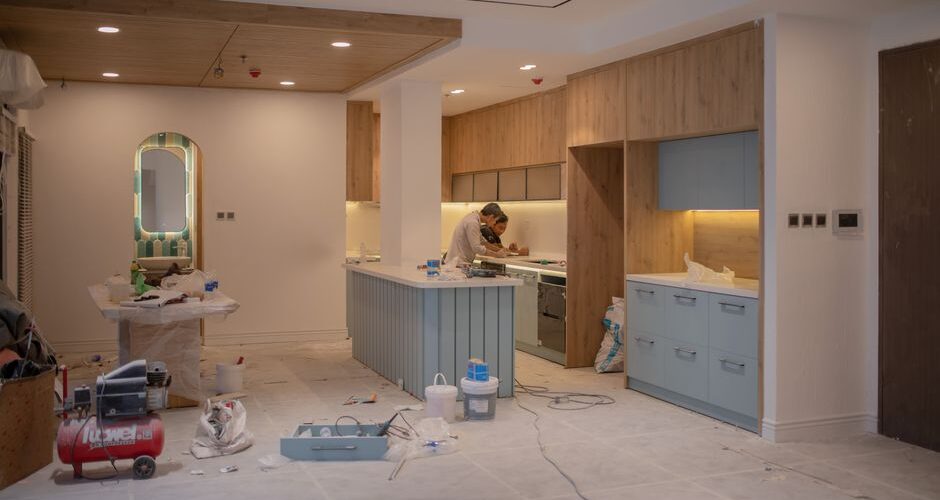
The second phase is precision removal and preparation. Every door, drawer front, and hinge is labeled and carefully removed. The cabinet boxes are masked, sanded, and primed on-site using low-VOC products that minimize odor in the home. The removed components are transported to the finishing facility, where they undergo a far more rigorous preparation process than is possible in a residential setting. Surfaces are sanded to a uniform profile, grain is filled where necessary, and any imperfections are addressed with professional-grade fillers. This prep work is tedious and unglamorous, but it is the foundation upon which the entire finish depends. Skipping steps here is the most common reason painted cabinets fail prematurely.
The third phase is the factory finish application. Inside a climate-controlled spray booth, each component receives a high-build primer coat, which is sanded smooth once cured. Multiple topcoats of catalyzed urethane or conversion varnish follow, with light sanding between coats to ensure mechanical adhesion and a flawless final surface. The spray environment is filtered and pressurized to eliminate dust contamination. Temperature and humidity are held within a narrow range to optimize flow-out and curing. This is the same process used by high-end cabinet manufacturers, and it is simply not replicable in a kitchen with plastic sheeting taped over the doorways.
The fourth phase is reinstallation and final walkthrough. The finished doors and drawer fronts are returned to the home, reinstalled on their original boxes, and adjusted for perfect alignment. New soft-close hardware is installed if desired. The kitchen is cleaned thoroughly, and the project manager walks the homeowner through every cabinet, drawer, and finish detail to ensure complete satisfaction. The result is a kitchen that looks factory-new, with the kind of depth, clarity, and uniformity that signals genuine craftsmanship.
Luxury Cabinet Refinishing vs. Refacing vs. Replacement: The Denver Metro Verdict
Homeowners researching their options often encounter three distinct services and struggle to determine which one fits their situation. Each has its place, but they serve different needs and produce different outcomes.
Luxury refinishing is the ideal choice for kitchens with solid wood or plywood cabinet boxes that are structurally sound and well-built. The existing layout remains unchanged, which preserves the functional flow of the kitchen while completely transforming its appearance. Because the original doors and drawer fronts are reused, the grain pattern and construction quality remain consistent with the boxes. The color palette is virtually unlimited, and specialty techniques like glazing, distressing, or two-tone finishes are fully achievable. This is the most cost-effective route to a true luxury result.
Refacing involves applying a thin veneer, typically 1/4-inch wood or thermofoil, over the existing cabinet boxes and replacing the doors and drawer fronts entirely. This approach makes sense when the original doors are damaged, warped, or made from a material that cannot be refinished effectively, such as peeling thermofoil. However, refacing adds material thickness to the boxes, which can create a slightly bulky appearance around hinges and openings. The veneer itself may delaminate over time if exposed to steam or moisture. Refacing also costs significantly more than refinishing because of the new doors and the labor involved in veneering every visible surface.
Full replacement is the only option when the cabinet boxes are failing, when the layout is fundamentally dysfunctional, or when the homeowner wants to change the kitchen footprint entirely. It is also the most expensive and disruptive choice, typically requiring four to eight weeks of construction during which the kitchen is unusable. For the majority of Denver Metro homeowners whose cabinets were built with quality materials and simply look dated, replacement is overkill.
The verdict is straightforward. If your cabinet boxes are solid and you like your kitchen’s layout, luxury refinishing delivers the best combination of cost, durability, and aesthetic transformation. It occupies the sweet spot between a cheap paint job that will disappoint in three years and a full remodel that will disrupt your life for two months. For roughly 90 percent of the kitchens in Castle Rock, Parker, Highlands Ranch, and Castle Pines, this is the smartest investment.
Frequently Asked Questions About Luxury Cabinet Refinishing in Denver
What is the highest quality cabinet paint?
The highest quality cabinet coatings are not conventional paints at all. They are catalyzed finishes, specifically two-component urethanes and conversion varnishes. In the professional refinishing world, products like Sherwin-Williams Emerald Urethane Trim Enamel and Benjamin Moore Advance represent the top tier of single-component options, but even these cannot match the hardness and chemical resistance of a true catalyzed system. The application method is equally critical. A premium coating applied with a brush in a dusty kitchen will never achieve the same result as the same product sprayed in a controlled booth and allowed to cure under ideal conditions. When evaluating a refinishing company, ask not only what product they use but where and how they apply it.
How do I make my cabinets look expensive?
Five design strategies consistently elevate the look of refinished cabinets. First, swap the hardware. Brushed brass, matte black, and polished nickel pulls and knobs instantly update the kitchen’s style language. Second, add crown molding to the cabinet tops. This closes the gap between the cabinets and the ceiling, creating a built-in, custom appearance. Third, consider a two-tone color scheme. A darker color on the island or lower cabinets with a lighter shade on the uppers adds depth and visual interest without overwhelming the space. Fourth, install under-cabinet lighting. LED strip lights eliminate shadows on the countertop and highlight the finish quality. Fifth, replace a few solid upper doors with glass-front inserts. This breaks up the wall of cabinetry and provides an opportunity to display glassware or decorative pieces. A luxury refinishing service can execute all five of these enhancements as part of the project, ensuring a cohesive, high-end result.
Is cabinet refinishing messy?
Compared to a full kitchen remodel, refinishing is remarkably clean. Because the doors and drawer fronts are finished off-site in a dedicated facility, the majority of sanding dust, spray mist, and curing odors never enter the home. The on-site portion of the work involves sanding and priming the cabinet boxes, which is contained with proper masking and ventilation. Homeowners can typically use their kitchen throughout most of the project, with only brief periods of limited access during active spraying of the boxes. The minimal disruption is one of the primary reasons clients choose refinishing over replacement.
Serving the Denver Metro’s Finest Homes: Castle Rock, Parker, Highlands Ranch and Castle Pines
The communities south of Denver represent some of the most beautiful residential architecture in Colorado. From the custom builds in The Meadows of Castle Rock to the equestrian estates of Castle Pines, from the family-friendly neighborhoods of Highlands Ranch to the growing subdivisions of Parker, these homes deserve finishes that match their quality. A luxury cabinet refinishing company in Denver Metro understands that homeowners in these areas are not looking for the cheapest option. They are looking for the best value: a service that respects their time, protects their home during the project, and delivers a result that their neighbors will admire.
This is not production-line painting. It is a specialized craft that combines old-world preparation standards with modern coating technology. The difference is visible in the depth of the finish, the crispness of the edges, and the way the cabinets feel to the touch. For those ready to transform their kitchen without the cost and chaos of a full remodel, the next step is simple. Schedule an in-home consultation to receive a detailed proposal tailored to your home, your style, and your expectations. The kitchen you want is already in your home. It just needs the right finish.