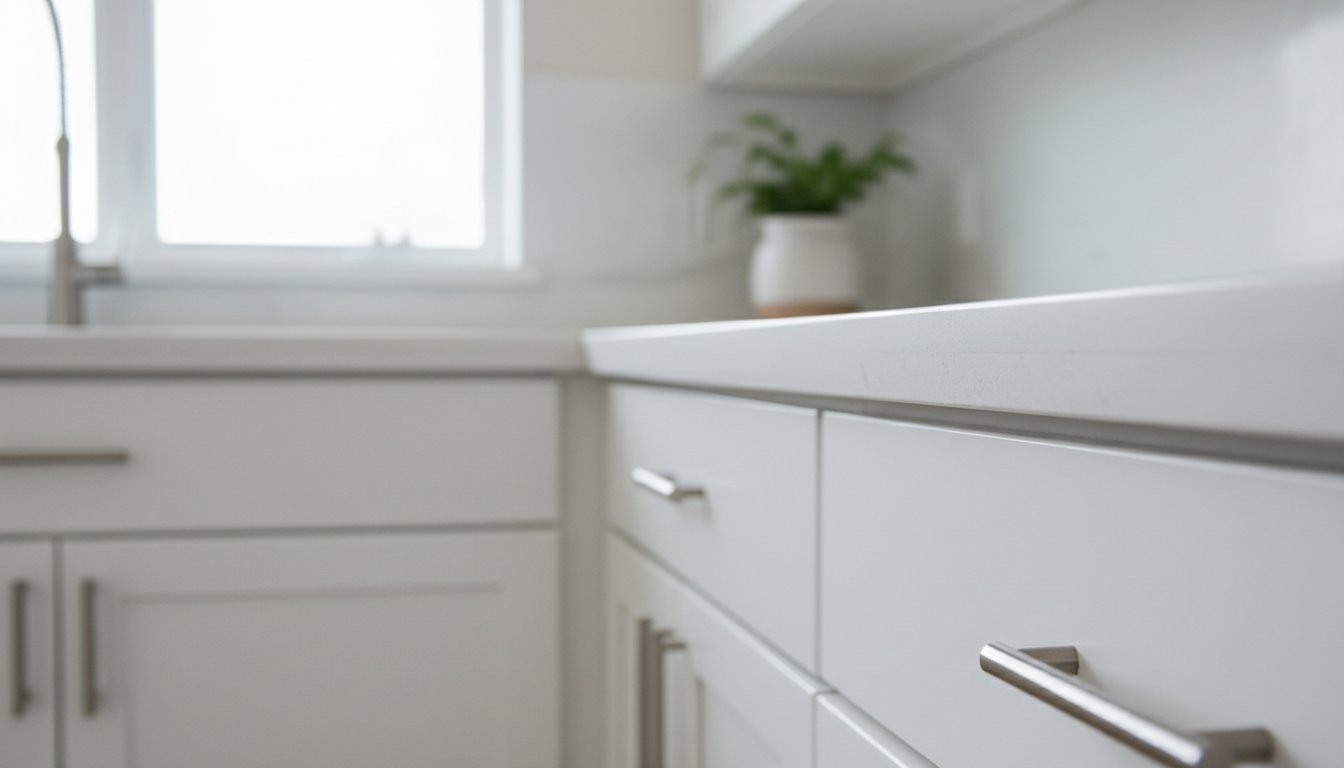
You invested in a clean, timeless look for your kitchen, but now you’re seeing fine lines and fractures appear on your cabinet doors and frames. This is a common issue, especially at the seams, and it raises serious questions about the long-term durability of your finish. The problem of white painted cabinets cracking is not a sign of poor paint quality; it is a direct result of wood’s natural movement combined with improper preparation and finishing techniques often used by amateur painters. Many homeowners are told these cracks are unavoidable, but with over 45 years of experience, we know a durable, seamless factory finish is achievable when the job is done the right way.
In this guide, we will break down the real reasons your cabinets are cracking. We’ll explain the critical role of preparation, the right materials to use, and the professional techniques required to prevent this issue from happening. You will learn how to maintain a smooth, lasting finish and understand what it takes to fix existing cracks for good, ensuring your cabinets look flawless for years to come.
Key Takeaways
- Understand how natural wood movement, not poor paint quality, is the main reason for white painted cabinets cracking at the joints.
- Learn the critical preparation techniques and the right type of primer and paint that create a flexible, durable finish.
- Follow a straightforward guide to properly repair unsightly cracks and restore a smooth, professional look to your cabinets.
- Discover why the choice of cabinet material and professional application methods are your best defense against future damage.
Why Do White Painted Cabinets Crack?
The number one reason for the issue of white painted cabinets cracking isn’t poor paint quality-it’s the natural behavior of wood. Wood is a natural material that expands, contracts, and moves with environmental changes. The paint finish must be durable and flexible enough to move with it. When an amateur painter applies a thick, rigid layer of house paint, it’s only a matter of time before cracks appear, especially at the joints and seams where movement is most concentrated.
Humidity and Temperature Changes
Wood is porous and reacts directly to the air around it. In Colorado, the drastic shifts from dry winter air (when heating systems are running) to more humid summer conditions cause wood to swell and shrink. This constant movement puts immense stress on the paint finish. A rigid paint film simply cannot stretch, so it fractures under the pressure. While our industrial-strength coatings are designed to handle this, homeowners can help by maintaining a stable indoor humidity level year-round, ideally between 35-55%.
Wood Movement and Paint Layers
Even with stable humidity, cabinet doors and frames are constructed from multiple pieces of wood. Each piece moves independently, creating stress points. A professional wood finishing process accounts for this by using flexible, high-solids primers and topcoats. Cheap latex paints and caulks used by many house painters become brittle over time and cannot handle this movement, which is why hairline cracks are almost guaranteed at every joint and seam.
You will almost always see these failures first in predictable areas. The most common weak points are:
- The joints where the vertical stiles and horizontal rails of a cabinet door meet.
- Seams between the cabinet box face frames.
- Anywhere two separate pieces of wood are joined together.
Understanding these root causes is the foundation of our entire cabinet refinishing process. It’s why our labor-intensive prep work and use of precatalyzed, industrial-strength materials are not optional-they are essential for a durable, factory finish that resists cracking and stands the test of time.
Preventing Cracks in Painted Cabinets
The key to a durable, long-lasting finish is not a secret-it is a direct result of a meticulous, professional process. Preventing cracks before they ever start comes down to two critical factors: the initial application process and controlling the environment inside your home. When done correctly, your cabinets will resist the natural stresses that cause failure in lesser-quality paint jobs.
Preparation and Painting Techniques
The single most vital factor in our entire process is preparation. A flawless finish is impossible without a perfectly prepared surface. Our labor-intensive prep work ensures the paint bonds permanently to the wood, creating a flexible yet hard shell that moves with the cabinet instead of cracking under pressure.
- Surface Preparation: Every surface is thoroughly degreased and cleaned to remove contaminants. We then sand all surfaces to de-gloss the old finish and create a profile for the new primer and paint to grip onto, ensuring maximum adhesion.
- Primer Selection: We do not use standard latex primers. Our process uses industrial-strength, precatalyzed primers designed specifically for cabinetry. These products are more flexible and bond aggressively to the wood, which is essential for preventing the topcoat from becoming brittle and cracking at the joints.
- Painting Application: Applying several thin, even coats of paint in a controlled spray environment is far superior to one or two thick, heavy coats. Thick paint applications are a primary cause of white painted cabinets cracking because they cannot flex properly when the wood expands and contracts.
Environmental Control
Wood is a natural material that responds to its environment. It expands in high humidity and contracts in low humidity. This movement is what places stress on the joints of your cabinet doors and frames. While our professional finish is designed to be flexible, managing your home’s environment is a crucial step in preventing issues.
In Colorado, the dry winter air from heating systems can cause wood to shrink significantly. These drastic shifts in moisture are one of the leading causes of premature paint failure and can put immense strain on cabinet joints. We strongly recommend homeowners use a whole-house humidifier during the winter months to maintain a stable indoor humidity level. Avoiding extreme temperature shifts by keeping your thermostat at a consistent setting will also minimize the wood movement that leads to white painted cabinets cracking and ensures the longevity of your factory finish.
Fixing Cracks in Existing Cabinets
Even with a high-quality paint job, hairline cracks can sometimes appear, especially at the joints of cabinet doors and frames. This is a common issue that stems from the natural behavior of wood. When you see signs of cracking, addressing it with the correct materials and methods is the only way to ensure a lasting repair. A quick patch job done with the wrong products is a temporary fix that is guaranteed to fail.
DIY Crack Repair Steps
For very minor, isolated hairline cracks, a DIY repair is possible if you are meticulous. The primary cause of these cracks, particularly at joints, is the wood’s natural response to humidity fluctuations. This causes subtle dimensional changes in wood that can stress and break a rigid paint film. A proper repair must use materials that can accommodate this movement.
- Identify and Clean: Thoroughly clean the cracked area with a degreasing agent to remove any oils or contaminants. Once dry, lightly sand the crack and the immediate surrounding area with fine-grit sandpaper to create a smooth surface for the filler.
- Fill with Quality Materials: Do not use cheap latex caulking from a hardware store-it will shrink and crack again. Use a high-quality, flexible wood filler or spackle designed for cabinetry. Apply a thin layer, pressing it firmly into the crack.
- Sand, Prime, and Repaint: After the filler has completely dried, sand it perfectly smooth so it is flush with the cabinet surface. Apply a high-adhesion primer over the repair, then carefully repaint. Achieving a seamless color and sheen match is the most difficult part of a DIY repair.
Professional Repair Solutions
While DIY can patch a tiny blemish, widespread or recurring white painted cabinets cracking requires professional intervention. Amateur repairs almost always fail because they do not address the root cause or use materials strong enough to withstand constant wood movement. This is not a job for a standard house painter; it demands the expertise of a cabinet refinishing specialist.
At Painting Kitchen Cabinet Denver, we provide a permanent solution. Our process involves meticulous prep work, sanding the surface, and applying industrial-strength, flexible primers and topcoats that move with the wood, not against it. We use professional HVLP spray equipment to apply these coatings, which creates the seamless, durable factory finish that you cannot achieve with a brush. This is how we ensure your cabinets look flawless for years to come. A professional repair is an investment in longevity, backed by our quality guarantee. To get an accurate price, text us pictures of your cabinets and we can provide a quote immediately.

Choosing the Right Materials for Durability
A flawless factory finish is not just the result of a great process; it begins with the right materials. The substrate of your cabinet doors and the chemical composition of the paint are the foundation of a long-lasting job. Using inferior products is the fastest way to guarantee failure. At Painting Kitchen Cabinets Denver, we only use materials we trust to perform for years, because our reputation is built on durability, not quick fixes.
Wood vs. MDF for Painted Cabinets
The debate between solid wood and MDF is critical when discussing painted cabinets. While both have their place, their properties directly impact the potential for cracking. Solid wood naturally expands and contracts with changes in humidity and temperature. This movement is a primary cause of hairline cracks in the paint, especially at the joints of a five-piece cabinet door. MDF, on the other hand, is a stable, engineered product that does not move, making it an ideal surface for a smooth, seamless paint finish. The expansion and contraction of solid wood is a leading contributor to white painted cabinets cracking at the joints.
- Solid Wood: Strong and traditional, but its natural movement will inevitably stress paint at the joints over time.
- MDF (Medium-Density Fiberboard): Exceptionally stable and smooth. It will not expand or contract, making it the superior choice for painted cabinet door center panels to prevent joint fractures.
Paint and Finish Selection
The paint you see in a big-box store is not what should be used on your kitchen cabinets. We avoid standard latex or acrylic house paints entirely. These products remain too soft and are not designed to withstand the high-touch, high-use environment of a kitchen. Using the wrong products is a surefire way to see your white painted cabinets cracking and peeling within a year.
We exclusively use industrial-strength, precatalyzed lacquers and conversion varnishes. These are professional-grade coatings that undergo a chemical reaction to cure into a hard, non-porous shell. This finish is far more durable, easier to clean, and resistant to chipping and chemical damage than any standard paint. It’s not just about color; it’s about creating a protective armor for your cabinetry. We know which products deliver a true factory finish because we have over 45 years of experience testing them. For a finish built to last, trust the experts at Painting Kitchen Cabinets Denver.
How Painting Kitchen Cabinet Denver Can Help
With over 45 years of experience, Painting Kitchen Cabinets Denver provides a professional, long-lasting solution to transform your kitchen. We understand that the biggest concern for homeowners is durability. Our entire process is built from the ground up to deliver a “factory finish” that resists chipping, peeling, and, most importantly, cracking. We are not amateur house painters; we are cabinet refinishing specialists who do the job right the first time, ensuring the problem of white painted cabinets cracking is a thing of the past.
Our Preventative Techniques
Our method is labor-intensive and meticulous because we know that preparation is the most vital factor in a durable finish. We go beyond simple sanding and painting by implementing a proven system designed for maximum adhesion and flexibility.
- Industrial-Strength Materials: We use high-quality, precatalyzed primers and industrial-strength acrylic coatings, not cheap latex paint. These professional-grade materials are designed to withstand the daily use of a busy kitchen and flex with the wood’s natural movement.
- Flawless Spray Application: All coatings are applied using professional HVLP spray equipment. This technique creates a perfectly smooth, even layer without brush strokes or roller marks, resulting in a seamless, hard-wearing surface that looks and feels like it came directly from the manufacturer.
- Comprehensive Preparation Process: Every project begins with a deep cleaning and degreasing, followed by extensive sanding and caulking. We address every joint and seam with high-quality, flexible materials to prevent future separation and cracking at the seams.
Client Success Stories
The proof of our quality is in the results we deliver across Denver and the surrounding areas. We have successfully refinished cabinets in hundreds of homes, from historic properties to modern constructions.
Case Study: Preventing Cracks in a Historic Denver Home
A client in a Wash Park home had original 1920s cabinetry. The wood’s age and seasonal expansion made it extremely prone to paint failure. Our team used a specialized flexible primer and topcoat system specifically to accommodate the wood’s movement, resulting in a beautiful, crack-free finish that preserved the historic character while providing modern durability.
“I was so worried about my new white painted cabinets cracking after a bad experience with a previous painter. Painting Kitchen Cabinets Denver was different. Their process was incredibly thorough, and two years later, my cabinets still look flawless. No cracks, no chips. Just a perfect finish.” – Sarah K., Highlands Ranch
If you want a guaranteed, high-quality finish that lasts, trust the experts at Painting Kitchen Cabinets Denver. For a fast, accurate quote, you can text us the number of doors and the number of drawers with pictures and we can get you an accurate price immediately. Visit our website at paintingkitchencabinet.com to see more of our work.
Achieve a Flawless, Crack-Free Finish That Lasts
Ultimately, preventing white painted cabinets cracking boils down to professional expertise. While wood will always expand and contract with changes in humidity, the quality of the prep work and the durability of the materials used are what determine if your finish will fail or last for years. A proper, labor-intensive process using industrial-strength primers and topcoats is not a luxury-it is the only way to achieve a beautiful, long-term result that resists damage.
At Painting Kitchen Cabinets Denver, we have built our reputation on doing the job right. With over 45 years of experience, our local Denver team understands exactly what it takes to deliver a true, factory-like finish that stands up to daily use. We don’t take shortcuts because we know that meticulous preparation is the only path to perfection. Don’t settle for a finish that will disappoint you in a year.
Invest in a kitchen you can be proud of. Get a Quote for Professional Cabinet Painting today and let our craftsmanship protect your investment.
Frequently Asked Questions
What causes white painted cabinets to crack, and how can I prevent it?
Cracks are caused by the natural expansion and contraction of wood due to temperature and humidity changes. This movement stresses the paint, especially at the joints. Inferior prep work and low-quality materials make it worse. The only prevention is a professional, labor-intensive process using industrial-strength primers and flexible topcoats that can withstand wood movement. Proper preparation is not a shortcut; it is the entire foundation for a lasting finish.
Are cracks in painted cabinets inevitable, or can they be avoided?
Widespread white painted cabinets cracking is not inevitable; it is a sign of a failed process. While minor hairline cracks at joints can occur with extreme humidity shifts, they can be largely avoided with superior materials and expert application. Our meticulous preparation and use of high-performance coatings create a durable, factory-like finish designed to flex with the wood. We build our finishes to last, not to fail after a few seasons.
What is the best way to repair cracks in my painted cabinets?
A proper repair is not a simple touch-up. The failed paint and filler must be completely removed, the area sanded smooth, and the joint properly primed with a high-adhesion product. Only then can it be repainted with a matching industrial-strength topcoat. Attempting to just paint over a crack is a temporary fix that will fail again quickly. The job must be done right from the substrate up to ensure a permanent, invisible repair.
How does humidity affect painted cabinets, and what can I do about it?
Wood naturally absorbs and releases moisture, causing it to swell in high humidity and shrink in dry conditions. This constant movement is the primary cause of stress on the paint film. In Colorado’s climate, it is critical to maintain stable indoor humidity levels, ideally between 35% and 55%. Using a whole-home humidifier in the winter and your air conditioner in the summer will minimize wood movement and help preserve the integrity of your cabinet finish.
Why should I choose Painting Kitchen Cabinet Denver for my cabinet painting needs?
With over 45 years of experience, we know that preparation is everything. Unlike house painters who use cheap latex caulk that is guaranteed to crack, we use a proven, labor-intensive system. Our process involves industrial-strength, precatalyzed primers and topcoats that deliver a true factory finish. We do the job the right way to ensure your investment provides a durable, beautiful result that resists cracking and chipping for years to come.