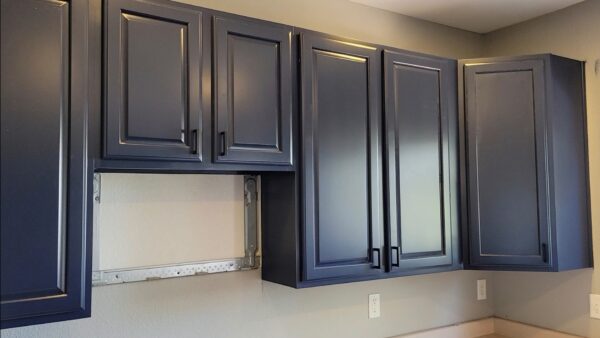
That yellowish tint on your kitchen cabinets isn’t actually dirt; it’s a chemical failure that no amount of scrubbing will ever remove. It’s incredibly frustrating to spend hours cleaning only to have your kitchen still look aged and dingy when guests arrive. You might fear that a full replacement is your only option, especially since the average kitchen remodel can cost over $26,000 according to 2023 industry reports. At Painting Kitchen Cabinet Denver, we’ve encountered this issue constantly throughout our 45 years of experience. Fixing yellowed painted cabinets doesn’t require a total tear out if you use the right industrial strength materials and professional techniques.
We understand that you want a kitchen you can be proud of without the massive price tag of new boxes. You’re going to learn exactly why your white cabinets are turning yellow and the specific professional methods we use to restore a bright, factory-like finish that lasts. This guide breaks down the vital prep work and the importance of precatalyzed primers in achieving a durable result. We’ll show you how to move from a dated, amber mess to a crisp, professional finish that stands up to daily use.
Key Takeaways
- Understand the science behind the “amber effect” and why older oil-based paints are chemically guaranteed to yellow over time.
- Learn why standard household cleaners fail to remove chemical yellowing and how to evaluate the need for industrial-strength refinishing.
- Discover the essential professional steps for fixing yellowed painted cabinets, including total decontamination and precision sanding for a permanent bond.
- Identify the specific non-yellowing coatings and waterborne polyurethanes required to prevent future discoloration and maintain a bright white finish.
- See how a “spray-only” application method by seasoned experts delivers a durable, factory-grade result that amateur brushes and rollers cannot achieve.
Why White Cabinets Turn Yellow: The Science of Finish Failure
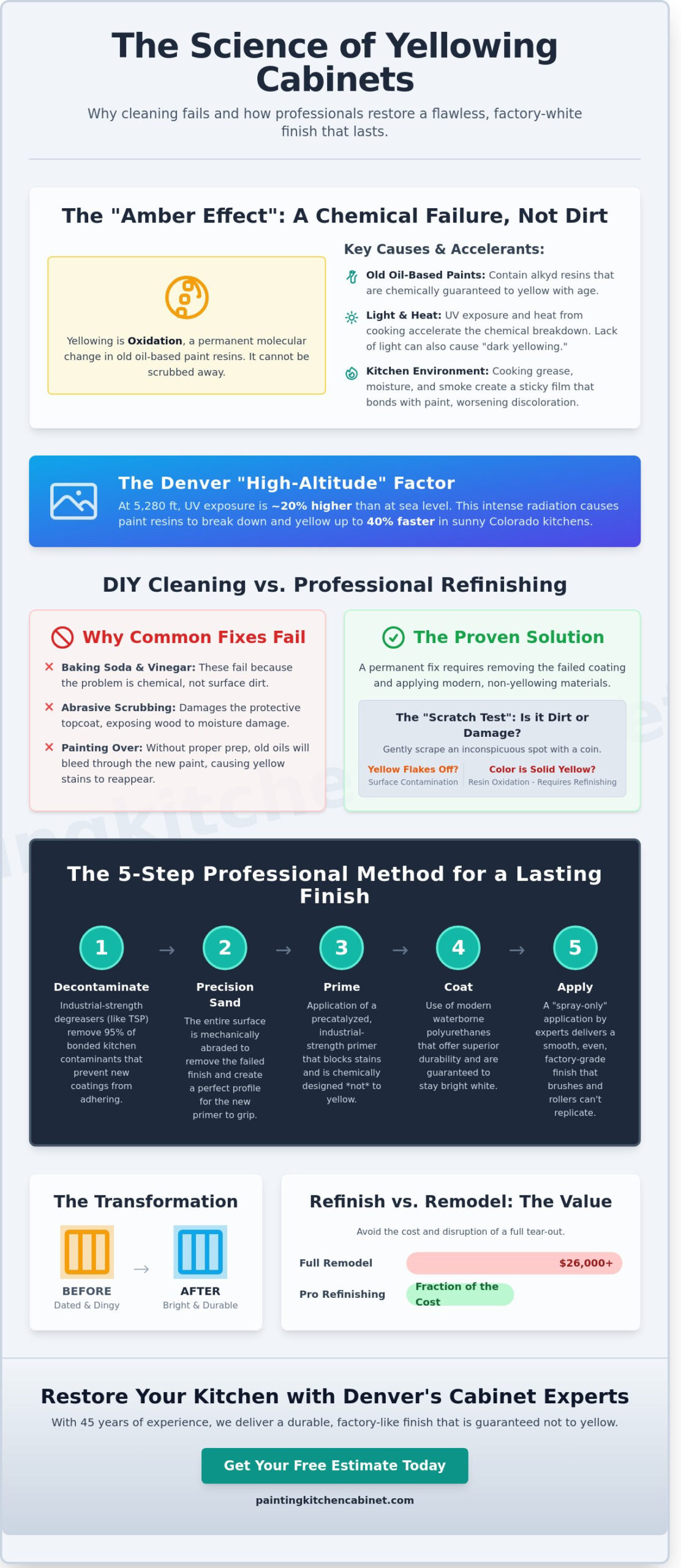
Cabinet yellowing is a chemical reaction called oxidation or photodegradation occurring within the paint resins. It is not just dirt on the surface. Oxidation is a molecular change in the paint binder that alters how light reflects off the finish. Our team at Painting Kitchen Cabinets Denver has seen this failure in thousands of homes over 45 years of experience. When you are fixing yellowed painted cabinets, you must understand that the amber hue is often embedded deep in the dried film of the paint itself.
The “Amber Effect” is most common in older oil-based paints. These traditional coatings contain alkyd resins that naturally turn yellow as they age and cure. This process happens regardless of how clean you keep your kitchen. Environmental triggers like cooking grease, high moisture from dishwashers, and tobacco smoke accelerate this dingy appearance. Grease acts as a magnet for dust and creates a sticky film that eventually bonds with the paint topcoat, making the yellowing look even worse.
The Colorado Factor plays a massive role in finish degradation for local homeowners. In Denver, our UV exposure at an elevation of 5,280 feet is roughly 20 percent higher than at sea level. This intense radiation can bleach some low-quality paints while causing others to undergo rapid photodegradation. We often see cabinets in sunny South Denver kitchens yellowing 40 percent faster than those in shaded areas because the high-altitude sun breaks down the chemical bonds in the paint resins.
Oxidation vs. Surface Staining
You must determine if your cabinets are dirty or if the finish is failing. Surface staining from grease buildup is cleanable with industrial strength degreasers. Resin yellowing is a permanent chemical shift and is unfixable through cleaning alone. Oxidation is a molecular change in the paint binder. To test your cabinets, perform a “scratch test” by using a coin to gently scrape a small, inconspicuous area. If the yellow layer flakes off to reveal white underneath, it is surface contamination. If the color is yellow all the way through to the wood, the resin has oxidized.
The Role of Light and Ventilation
Cabinets in dark corners often yellow faster than those in direct sunlight. This is known as “dark yellowing,” a phenomenon where oil-based paints require light to stay white. Without light exposure, the chromophores in the paint resins multiply and create a deep yellow tint. Poor ventilation also traps chemicals from household cleaners and ammonia near the cabinet surfaces. These fumes react with the topcoats and cause immediate discoloration. Off-gassing from new vinyl flooring or plastic products can also trigger a reaction in white paint, turning a factory finish into an unattractive cream color within 12 months of installation.
Fixing Yellowed Painted Cabinets: Cleaning vs. Refinishing
Homeowners often try to use baking soda or vinegar when they notice their kitchen looks dingy. These natural solutions fail for fixing yellowed painted cabinets because the discoloration usually isn’t on the surface. If your cabinets were painted 15 to 20 years ago with oil-based enamels, the yellowing is an inorganic chemical change. It happens because of a lack of UV light or the natural aging of the resin. Scrubbing these surfaces with abrasive cleaners like Comet or stiff sponges is a mistake. This aggressive scrubbing ruins the remaining protective clear coat and exposes the porous wood underneath to moisture damage.
Cleaning only works when the yellowing is caused by organic grease and cooking oils. In a busy kitchen, a thin layer of amber-colored grease can coat everything. If the yellow wipes off with a degreaser, you have a cleaning problem. If the color remains after a thorough wipe-down, the paint itself has failed. At this stage, you are no longer looking for a cleaner; you are looking for a structural finish solution.
Common DIY Fixes That Actually Work (Temporarily)
- TSP (Trisodium Phosphate): This is an industrial-strength cleaner used to remove heavy grease layers. It’s the only way to see if your cabinets are truly yellowed or just dirty. It removes 95% of kitchen contaminants but won’t change the color of aged lacquer.
- The “Whitening” Myth: Products marketed to “whiten” wood often contain bleach or harsh chemicals that can cause the old paint to bubble or peel. These provide a temporary bright look that fades within months.
- Avoid Painting Over Yellowing: Many DIYers try to slap a new coat of latex paint over old yellowed cabinets. Without labor intensive prep work, the old oils will bleed through the new layer in weeks. This leads to a sticky, peeling mess that is harder to fix later.
The Case for Professional Cabinet Refinishing
Professional refinishing is the only way to guarantee a permanent, non-yellowing white finish. We use industrial-strength acrylics and precatalyzed primers that are chemically stable. These products don’t amber over time like the cheap oil-based paints used by amateur house painters. When you look at the kitchen cabinet refacing costs, you’ll see that professional refinishing provides a factory finish for a fraction of the price of replacement.
Our process at Painting Kitchen Cabinets Denver relies on 45 years of experience to stop “bleed-through.” We use specific primers that seal the old yellow oils deep inside the wood. This ensures the new topcoat stays crisp and bright for years. If you want to know exactly what your project requires, you can text us the number of doors and the number of drawers with pictures and we can get you an accurate price immediately. Real prep work is the most vital factor in a durable kitchen. Don’t settle for a temporary fix when you can have a permanent factory finish.
The Professional Method for Fixing Yellowed Cabinets
Fixing yellowed painted cabinets is a labor intensive process that requires industrial grade materials and decades of experience. At Painting Kitchen Cabinets Denver, we’ve spent 45 years refining a system that restores cabinets to a factory finish. We don’t use standard house paint methods because they don’t last in a harsh kitchen environment. Our process follows four critical steps to ensure your kitchen looks new again.
- Step 1: Total Decontamination. We use industrial strength degreasers to remove 100% of the cooking oils and grease. This is the most vital factor in the entire process. If even a small trace of residue remains, the new coating will fail to adhere properly.
- Step 2: Precision Sanding. We sand every surface using 220-grit to 320-grit sandpaper. This removes the failed, yellowed topcoat and creates a mechanical bond. This ensures the new primer has a perfectly flat and porous surface to bite into.
- Step 3: High-Solids Primers. We apply specialized, stain-blocking primers that are designed for Cabinet Refinishing. These seal in old tannins and resins that cause bleed-through and discoloration.
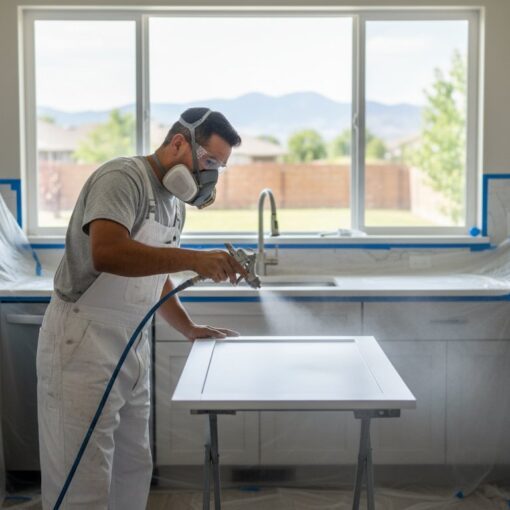
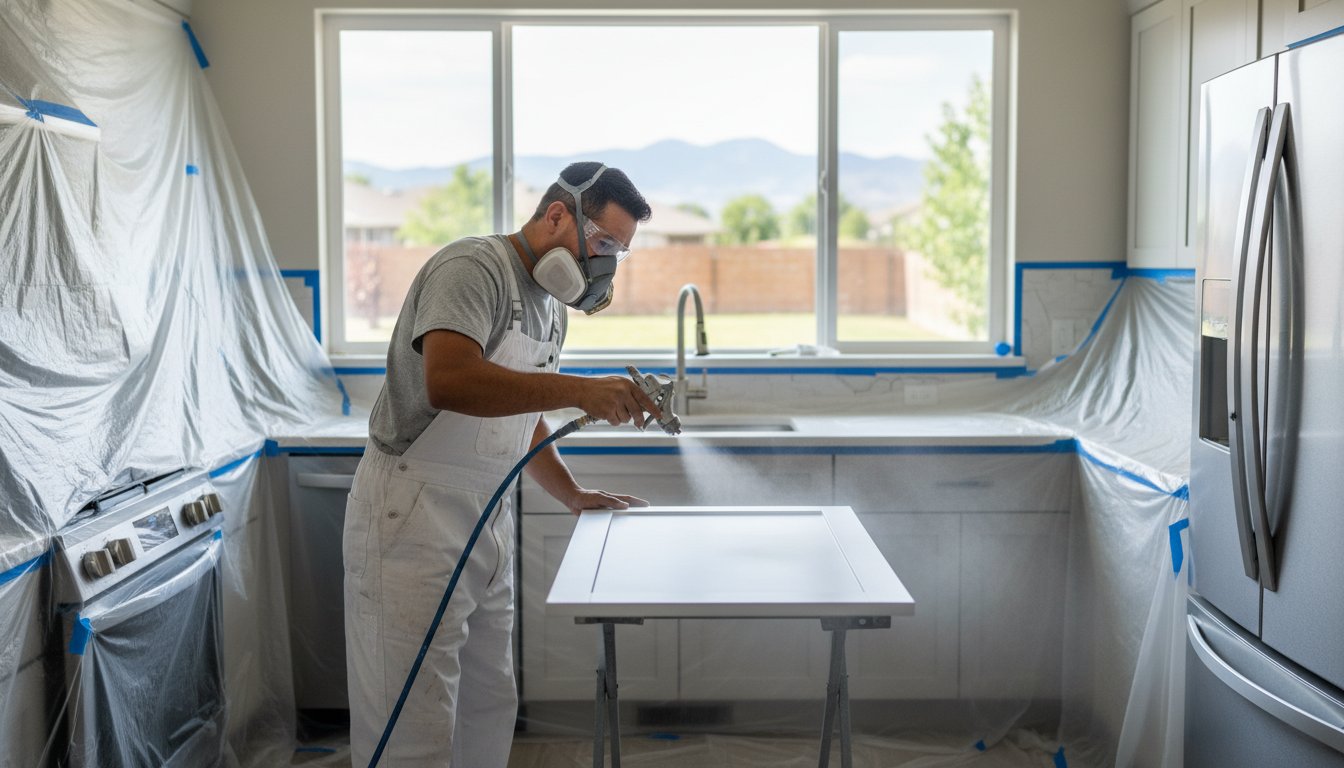
- Step 4: Industrial Spray Application. We apply industrial acrylics using a professional spray system. This creates a seamless finish that is much harder and more durable than any paint found at a retail hardware store.
Why We Never Use Brushes or Rollers
Amateur house painters often use brushes or rollers, but we never do. Brushes leave behind microscopic valleys in the paint surface. These valleys trap grease, moisture, and dust, which leads to yellowing and peeling 50% faster than a smooth surface. Our 100% spray-applied finish is completely smooth and level. This factory finish is much easier to clean and provides a durability that matches brand new cabinetry. We focus on Cabinet Refinishing that looks like it came from a high-end manufacturer, not a DIY project.
The Importance of Specialized Primers
Standard house paint primers are too soft and porous for kitchen use. We use precatalyzed primers that create a permanent chemical barrier against oxidation. This is vital when fixing yellowed painted cabinets because it prevents the wood species underneath from affecting the topcoat. Whether you have oak, maple, or cherry, our priming process ensures the white stays bright for years. We’ve seen hundreds of jobs where cheap primers failed within 12 months. Our prep work is the most vital factor in ensuring a long-lasting result for homeowners across the Denver metro area.
Preventing Future Yellowing: What to Look for in New Paint
Don’t use oil-based or alkyd paints. These products contain resins that naturally oxidize over time. This chemical reaction is the primary reason whites turn amber. If you want a permanent white finish, you must choose high-quality, non-yellowing acrylic or waterborne polyurethane coatings. These modern materials don’t have the oils that trigger discoloration. When fixing yellowed painted cabinets, the choice of material determines whether the kitchen stays bright for two years or twenty.
In Denver, the environment is harsh on finishes. The intense sunlight at 5,280 feet provides high UV exposure that can degrade cheap paint in less than 24 months. You need to look for coatings with specific UV-resistant additives. These blockers protect the chemical bonds in the paint from breaking down under the Colorado sun. Maintaining a consistent cleaning schedule is also vital. Use only non-abrasive, pH-neutral soaps to avoid stripping the protective topcoat.
The Superiority of Industrial Acrylics
Most “premium” paints sold at big-box stores are designed for walls, not high-traffic kitchen surfaces. Industrial-grade coatings are different. They offer superior resistance to moisture, heat, and chemical exposure from household cleaners. A professional cabinet refinishing using these industrial materials is a 20-year solution. These products dry harder and faster than standard latex. They create a factory finish that stands up to daily scrubbing and kitchen grease. Painting Kitchen Cabinets Denver uses these industrial strength materials to ensure the finish doesn’t fail or change color over time.
Best Practices for Homeowners
Practical daily habits are essential for fixing yellowed painted cabinets and keeping them white. Grease from cooking is a major culprit for surface yellowing. Always turn on your range hood when the stove is on. This prevents airborne oils from settling on the paint. Lighting also plays a role in how you perceive color. If your cabinets look yellow, check your light bulbs. “Warm” LEDs often have a yellow tint that makes white paint look aged. Switch to bulbs in the 3500K to 4000K range to keep whites looking crisp.
- Maintain humidity levels between 30% and 50% to prevent wood expansion.
- Clean spills immediately with a soft microfiber cloth.
- Avoid using wax-based cleaners that build up and attract yellow dust.
If you’re ready for a factory finish that won’t change color, text us the number of doors and drawers with pictures for an immediate price.
Restore Your Kitchen with Denver’s Cabinet Experts
Painting Kitchen Cabinets Denver provides a level of professional expertise you will not find with amateur house painters or general contractors. We have over 45 years of experience specifically fixing yellowed painted cabinets across the entire state of Colorado. Our company is based on quality work at affordable Cabinet Refinishing prices, and we take great pride in our specialized craft. We offer a “Spray Only” guarantee on every project we touch. This means we never use brushes and we never use rollers because those tools leave behind textures and marks that look amateur. Our goal is always to provide a durable, industrial strength factory finish that makes your kitchen look brand new again.
Choosing our industrial strength process saves you thousands of dollars when you compare it to the massive expense of total cabinet replacement. We use precatalyzed primers and high quality coatings that are designed to last for years without failing. Direct owner involvement is a core part of our business model. This ensures every single door and drawer meets our strict factory finish standards before the job is considered done. We don’t just paint cabinets; we restore the heart of your home using methods that have been perfected over four decades of hard work.
The Painting Kitchen Cabinet Denver Difference
Local expertise is vital because the Colorado climate is very hard on wood surfaces. The extreme dryness and temperature swings can cause inferior paints to crack or peel, but our process is designed for these specific conditions. Our meticulous preparation process is the most vital factor in any job we perform. We focus on labor intensive degreasing, sanding, and cleaning because the finish is only as good as the prep work underneath it. We handle all the logistics of the project to minimize disruption in your home. Our team works efficiently to ensure your kitchen is back in service as quickly as possible without ever cutting corners on quality.
Get an Immediate Quote Today
We make the bidding process as simple and direct as possible for our customers. You can text us the number of doors and the number of drawers with pictures and we can get you an accurate price immediately. This no fuss approach is why we are the most affordable cabinet painting option for homeowners who demand high end results. We serve Denver, Aurora, Lakewood, and all surrounding areas with the same dedication to excellence. Don’t settle for a yellowed, failing kitchen when a factory finish is just a text away. Contact us today to start your kitchen transformation!
Get a Durable Factory Finish for Your Denver Kitchen
Yellowed cabinets are usually the result of chemical failure in outdated oil-based paints or a lack of UV protection. Fixing yellowed painted cabinets requires a professional approach because simple cleaning cannot reverse the oxidation of the finish. You need a solution that involves thorough preparation and the application of industrial-strength acrylics designed to resist ambering over time. Painting Kitchen Cabinets Denver brings over 45 years of local experience to every project. We don’t use brushes or rollers that leave textures behind. Instead, we provide a smooth, factory-like spray finish that restores the original look of your woodwork.
Our process focuses on technical precision and high-quality materials that amateur house painters often skip. We guarantee a durable result that stands up to the heavy use of a busy kitchen. You can see the difference that 45 years of trade mastery makes in the final product. Stop looking at dingy, aged surfaces and start enjoying a bright, clean space again. Our team is ready to deliver the high-end results your home deserves.
Text us photos of your cabinets for an immediate, accurate quote!
We’re ready to help you transform your kitchen with a finish that’s built to last.
Frequently Asked Questions
Can I just paint over my yellowed cabinets?
You cannot simply paint over yellowed cabinets without risking total finish failure within 12 months. If you don’t remove the grease and old oil-based residue first, the new topcoat won’t bond. Fixing yellowed painted cabinets requires a labor intensive process including cleaning with TSP and using industrial strength precatalyzed primers. Amateur house painters often skip these steps, which leads to peeling and chipping in high-use areas.
Why did my white cabinets turn yellow so fast?
Most cabinets turn yellow because the previous painter used oil-based alkyd paints or the surfaces were exposed to high levels of cooking grease. Oil-based paints contain resins that naturally amber over 2 to 3 years. According to the Painting and Decorating Contractors of America, 90 percent of yellowing in white kitchens is caused by lack of natural light or chemical reactions from ammonia-based cleaners. We use non-yellowing waterborne acrylics to prevent this.
Does baking soda and vinegar really whiten yellowed paint?
Baking soda and vinegar won’t whiten yellowed paint because the discoloration is a chemical change within the paint film itself. While these household items can remove surface grease, they won’t reverse the oxidation of oil-based resins. Our experience over 45 years shows that once the finish has ambered, the only solution is a professional Cabinet Refinishing process. You need a factory finish that resists chemicals and stains rather than a temporary cleaning hack.
Is it worth refinishing yellowed cabinets or should I just reface them?
Refinishing is almost always the better value because it costs 50 percent less than refacing while providing the same durable factory finish. Refacing involves applying a thin veneer that often peels at the edges after 5 years of kitchen heat. Painting Kitchen Cabinets Denver focuses on an industrial strength coating that bonds to your existing wood. This method keeps your high-quality wood doors and saves thousands of dollars compared to total replacement.
How long does a professional non-yellowing finish last?
A professional finish using high-quality waterborne coatings lasts 15 to 20 years with proper care. We use industrial strength products that don’t amber over time like cheap latex or oil-based paints do. Our process includes extensive prep work to ensure the bond lasts through daily kitchen use. You can expect the color to remain crisp and white for over a decade without the need for major touch-ups or repairs.
What is the best white paint that won’t turn yellow?
The best white paint is a waterborne acrylic or a polyurethane finish that contains zero oil-based resins. Products like Benjamin Moore Advance are popular, but we prefer industrial strength precatalyzed primers and finishes for a true factory finish. These coatings provide a hard surface that won’t yellow even in dark corners. Fixing yellowed painted cabinets starts with choosing a product specifically designed for the high-traffic environment of a kitchen.
How much does it cost to fix yellowed cabinets in Denver?
Costs vary based on the size of your kitchen and the current condition of the wood, but you can text us the number of doors and the number of drawers with pictures and we can get you an accurate price immediately. We provide affordable Cabinet Refinishing prices across Denver, Aurora, and Lakewood. Every job is different, so we don’t give flat estimates. Texting us photos is the fastest way to get your specific project cost today.