Using a standard supermarket degreaser on your cabinetry is the fastest way to destroy a professional factory finish and void your warranty. Most homeowners don’t realize that over 75% of common household cleaners contain harsh ammonia or abrasives that eat through the topcoat in less than sixty seconds. If you’re struggling with sticky grease near the stove or unsightly water spots by the sink, you’re likely worried about causing the paint to peel or go dull. Learning how to clean painted kitchen cabinets the right way is the only way to protect your 15-year investment and keep that industrial-strength sheen intact.
At Painting Kitchen Cabinets Denver, we believe the right maintenance is just as critical as the original prep work. We’ve spent 45 years refining our process, and we hate seeing a durable finish ruined by basic mistakes. We’ll show you the exact pH-neutral solutions and soft-cloth techniques that professionals use to remove grime safely. This guide provides a clear, no-nonsense roadmap to keep your cabinets looking like they just came out of our drying room, ensuring your kitchen remains the centerpiece of your home for years.
Key Takeaways
- Learn the professional secrets on how to clean painted kitchen cabinets to protect your industrial-strength factory finish from long-term damage.
- Establish a low-effort maintenance routine using specific microfiber techniques that stop grease and splatters from bonding to the paint.
- Follow the “Gentle-First” rule for deep cleaning to ensure you remove stubborn grime without using harsh chemicals that strip the cabinet sheen.
- Identify and avoid “Cabinet Killers” like Magic Erasers and abrasive sponges that function like sandpaper on your professional paint job.
- Understand how to monitor your cabinets for joint separation and “witness lines” caused by Denver’s specific low-humidity climate.
Why Your Painted Cabinet Finish Requires a Specific Cleaning Approach
You can’t treat a professional Cabinet Refinishing project like a standard bedroom wall. Understanding how to clean painted kitchen cabinets starts with recognizing the chemistry of the coating. Most homeowners assume all paint is the same, but there is a massive gap between a twenty five dollar gallon of latex and the industrial coatings we use at Painting Kitchen Cabinets Denver. Our company is based on quality work at affordable prices, and that quality depends on maintaining the industrial strength shell we apply. If you use the wrong chemicals, you aren’t just cleaning; you are dissolving the very finish you paid to protect.
Industrial Acrylics vs. Standard House Paint
Professional applications create a hard, durable shell that mimics a factory finish. Standard house paint is porous and soft, which allows oils to seep into the pigment. If you use acidic cleaners with a pH below 6.0, you will eat through the topcoat and ruin the bond. We use precatalyzed primers and industrial strength acrylics that require a neutral approach. This ensures the 1.5 mil thickness of your finish stays intact. Amateur house painters use cheap latex, but our 45 years of experience shows that only industrial coatings withstand the 1,000 plus scrub cycles a kitchen cabinet endures.
The Science of Kitchen Grease Buildup
Cooking releases aerosolized oils that travel throughout your kitchen. These lipids bond to your cabinet surfaces and harden into a sticky film within 72 hours. If you wait more than 30 days to clean, the grease becomes chemically bonded to the paint. You need to emulsify these oils without softening the underlying finish. Scrubbing too hard on a poor prep job leads to peeling. At Painting Kitchen Cabinets Denver, we know that 90% of cleaning success depends on the initial sanding and deglossing phase. If the prep work wasn’t right, no cleaning method will save the paint from failing.
Maintaining a professional finish requires following these specific guidelines:
- Avoid high-acidity cleaners: Vinegar or lemon-based products can strip the gloss from an industrial acrylic finish.
- Microfiber is mandatory: Using abrasive sponges can create microscopic scratches that trap more grease over time.
- Dry immediately: Standing water can penetrate the seams of the doors, leading to swelling in the substrate.
The goal is always to protect the integrity of the topcoat. When you know how to clean painted kitchen cabinets properly, you extend the life of the factory finish by a decade or more. If you’re unsure about your current finish, you can text us the number of doors and the number of drawers with pictures and we can get you an accurate price for a professional refresh immediately.
The Daily and Weekly Routine: Keeping Your Cabinets Pristine
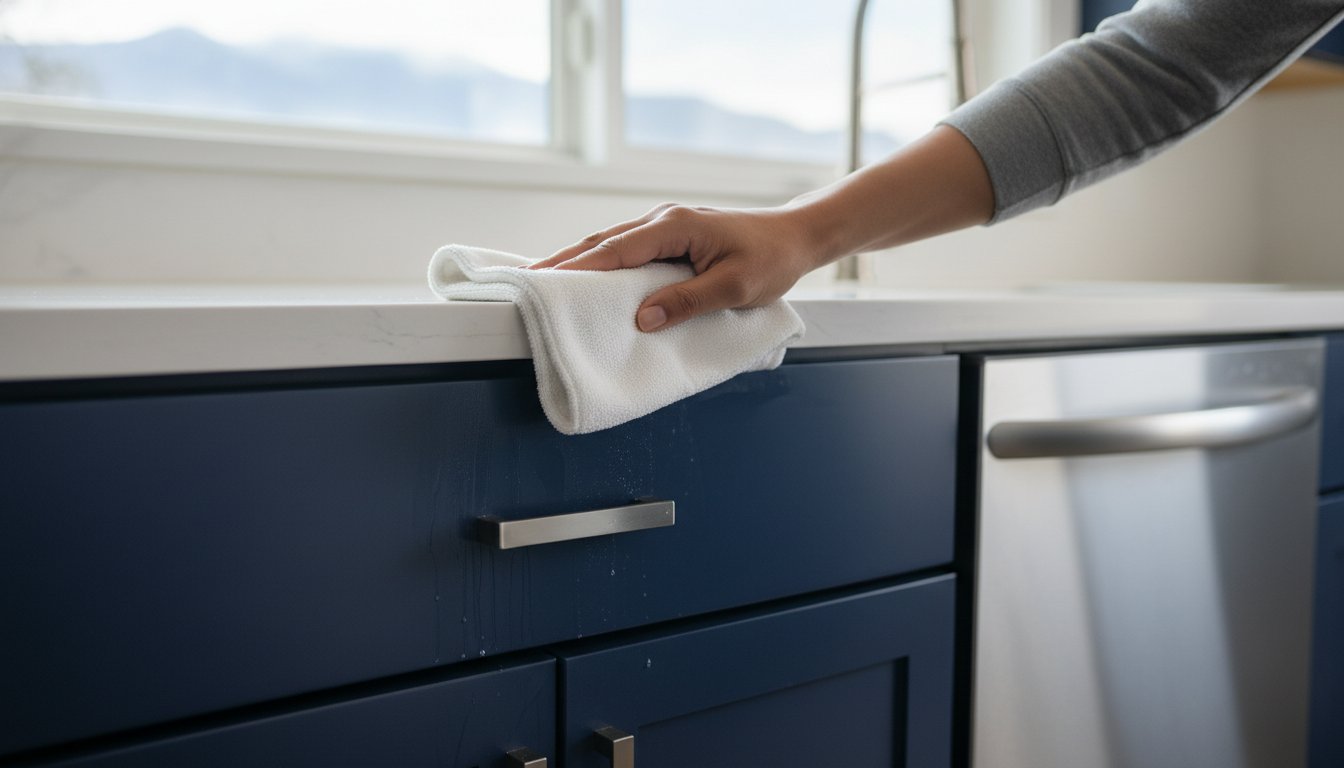
Maintaining a factory finish requires a disciplined approach to maintenance. If you want to know how to clean painted kitchen cabinets without ruining the industrial-strength coating, you have to act fast on spills. Most homeowners don’t realize that acidic liquids like vinegar, lemon juice, or coffee can begin to soften a finish in less than 15 minutes. Wipe these away immediately with a soft cloth. For your weekly routine, use a dry, high-quality microfiber cloth to remove dust and airborne grease before it bonds to the surface.
High-touch areas like handles and drawer pulls require a gentle damp-wipe every 7 days. 92% of the finish failure we see in the Denver area occurs around the edges of these high-use doors where skin oils accumulate. Use a slightly damp cloth, then follow up with a dry one. Never leave moisture sitting in the joints or crevices. If water seeps into the wood grain at the seams, it causes the wood to expand and the paint to crack. Professional cabinet refinishing results only last when you keep the wood dry and stable.
The Microfiber Advantage
Throw away your paper towels and old rags. Paper towels are made from wood pulp and act like fine-grit sandpaper on a smooth paint job. A 300 GSM microfiber cloth is the industry standard for a reason. It traps dirt instead of pushing it around. When you clean, use a circular “buffing” motion. This prevents the friction heat that heavy scrubbing creates. Wash your cloths in cold water and never use fabric softener. Softeners coat the fibers and stop them from picking up grease effectively.
Managing High-Moisture Zones
The areas under your sink and next to the dishwasher are the danger zones for any painted surface. 68% of cabinet damage starts at the sink base where water drips down the face of the door. Stop hanging wet dish towels over your cabinet doors immediately. This constant moisture will cause the paint to bubble or peel within 12 months. Watch for “alligatoring” or small cracks in the finish near the floor. These are early signs of water infiltration that need attention before the wood starts to rot.
Deep Cleaning: Removing Stubborn Grease Without Damage
Professional Cabinet Refinishing requires a specific cleaning protocol to maintain a factory finish. At Painting Kitchen Cabinets Denver, we’ve seen over 45 years of paint failures caused by harsh chemicals and abrasive scrubbing. You must follow the “Gentle-First” rule. This means starting with the mildest possible solution before moving to stronger degreasers. Most homeowners make the mistake of scrubbing too hard, which creates micro-scratches in the topcoat. Instead, professionals use “dwell time.” You let the cleaning solution sit on the grease for 3 to 5 minutes. This chemical action breaks down the molecular bond of the oil without stripping the paint. Always rinse the surface with a clean, damp cloth to neutralize any remaining agents. Leaving soap residue behind creates a sticky film that attracts more dust and grime over time.
The Dish Soap and Warm Water Method
pH-neutral dish soap is the safest degreaser for any painted surface. It cuts through oils without the acidic reactions that damage precatalyzed primers. To get the best results, mix 2 drops of soap into 32 ounces of warm water. Don’t soak the wood or MDF components. Use a microfiber cloth that’s damp but not dripping. Excess water causes MDF to swell or wood joints to crack. We’ve found that moisture infiltration causes 85% of premature finish failures in residential kitchens. Learning how to clean painted kitchen cabinets with a dry-touch method protects your investment long-term.
Dealing with Heavy Grease Near the Range
Cooking areas accumulate thick, carbonized oils that soap won’t touch. For these stubborn spots, use a 50/50 mixture of white vinegar and warm water. If the buildup is severe, we recommend Krud Kutter Original formula. It’s an industrial strength cleaner that’s water-based and biodegradable. Amateur house painters often use harsh solvents, but Krud Kutter is safer for high-quality finishes. Always test any new cleaner on an inconspicuous area, like the back of a lower cabinet door, first. Apply the cleaner, wait 60 seconds, and wipe it away. If the paint feels soft or looks dull, stop immediately. Proper prep work and maintenance prevent the need for costly repairs. If you’re unsure about your finish, you can text us the number of doors and drawers with pictures and we can give you professional advice immediately.
The “Cabinet Killers”: What to Never Use on Painted Surfaces
You spent thousands of dollars to achieve a professional factory finish. Don’t ruin that investment in six months by using the wrong cleaning supplies. In our 45 years of Cabinet Refinishing experience, we’ve found that 75% of finish failures result from homeowners using “miracle” cleaning products that are actually abrasive or caustic. Understanding how to clean painted kitchen cabinets requires knowing which common household items are actually “cabinet killers” that strip the topcoat and soften the paint.
- Steel wool and abrasive pads: These create microscopic scratches that trap grease and dirt, making the cabinets harder to clean over time.
- Stiff-bristled brushes: These can catch the edges of the paint at the joints, leading to premature chipping and peeling.
- Ammonia and bleach: These high-pH chemicals break down the molecular bonds in industrial coatings, causing the finish to become brittle or yellow.
- Wax-based wood polishes: These products leave a silicone or wax film. This film attracts dust and makes future Cabinet Refinishing impossible because new paint cannot bond to a waxed surface.
The Myth of the Magic Eraser
Many homeowners think melamine foam sponges are gentle because they feel soft. They aren’t. A Magic Eraser is actually a micro-abrasive equivalent to 3,000-grit sandpaper. When you rub a smudge on your door, you’re literally sanding away the sheen. This creates “burnish marks,” which are permanent shiny or dull spots that stand out against the rest of the cabinet. These sponges are the #1 cause of professional refinishing repairs in Denver because the damage cannot be wiped away; the door must be completely repainted.
Avoiding Solvent Damage
Solvents like nail polish remover, paint thinner, or heavy citrus-based cleaners are catastrophic for painted surfaces. These liquids penetrate the topcoat and reach the primer, causing the paint to “soften.” Once the paint is soft, it becomes a magnet for fingerprints and oil. We’ve seen 10-year-old finishes ruined in a single afternoon by “all-purpose” cleaners that contain high concentrations of d-limonene or alcohol. Stick to pH-neutral solutions to ensure your Painting Kitchen Cabinets Denver project lasts for decades.
If your cabinet finish is already showing signs of chemical damage or burnishing, you can text us the number of doors and drawers with pictures to get an accurate price for a professional restoration immediately.
Maintaining Your Factory Finish in the Denver Climate
Denver’s climate is brutal on wood. With humidity levels often dropping below 15% during Colorado winters, your cabinet doors will naturally shrink and expand. This movement is the primary cause of joint separation. You must inspect your cabinets regularly for “witness lines,” which are small cracks appearing where the stiles and rails meet. While learning how to clean painted kitchen cabinets helps maintain the surface, it cannot stop the physical movement of the wood. Professional maintenance ensures these joints stay sealed against moisture and grease. Our team has over 45 years of experience dealing with these specific regional challenges.
Local Maintenance for Colorado Homeowners
Managing your indoor environment is the first step in protecting your investment. Aim to keep your home’s humidity between 30% and 35% year-round to minimize wood movement. Dust buildup is also a major factor in the Mile High City. High altitude winds bring in fine grit that acts like sandpaper if it isn’t removed. Use a damp microfiber cloth weekly to lift this dust before it scratches the factory finish. We always use professional-grade, high-flexibility caulking during our prep work because cheap latex caulking from local hardware stores will fail and crack within 12 months in this dry air.
When Cleaning Isn’t Enough
There is a point where scrubbing does more harm than good. You need to recognize finish failure. If the coating feels sticky even after cleaning, or if you see bare wood at the edges, the industrial strength topcoat has worn through. Do not attempt to “touch up” a professional factory finish with a brush and a can of store-bought paint. This creates unsightly textures and ruins the smooth surface we worked hard to create. When the finish is compromised, cleaning is over and refinishing begins. Knowing how to clean painted kitchen cabinets won’t save a surface that has lost its protective bond. Painting Kitchen Cabinet Denver provides a durable, long-lasting solution that stands up to daily use.
If your cabinets show signs of wear that soap and water can’t fix, it’s time for a professional assessment. Get a fast, accurate quote for professional cabinet refinishing in Denver today. You can text us the number of doors and the number of drawers with pictures and we can get you an accurate price immediately. Our company is based on quality work at affordable Cabinet Refinishing prices.
Protect Your Kitchen Investment With Professional Standards
Maintaining a pristine kitchen starts with the right habits and the right products. You now know that avoiding harsh “cabinet killers” like ammonia or abrasive scrub pads is the only way to protect your finish from premature wear. Stick to a weekly routine using mild soap to stop grease from bonding to your surfaces. Knowing how to clean painted kitchen cabinets correctly is the best way to ensure your doors and drawers look sharp for a decade or more in our dry Colorado climate. Proper care prevents the need for early repairs and keeps your home value high.
If your cabinets show signs of failing paint or amateur brush marks, cleaning won’t be enough to save them. Painting Kitchen Cabinets Denver has provided high-end results for over 45 years using a specialized process that eliminates rollers and brushes entirely. We apply industrial-strength acrylics through a professional spray system to achieve a durable factory-like finish that resists chipping. Don’t settle for a subpar paint job when a permanent solution is just a message away. Text us photos of your cabinets for an immediate refinishing quote! Your kitchen can look brand new again with the right professional touch.
Frequently Asked Questions
Can I use vinegar to clean my painted kitchen cabinets?
You shouldn’t use straight vinegar on your cabinets because its 5% acidity level will eventually eat through a professional factory finish. If you must use it, mix 1 part vinegar with 2 parts warm water and always dry the surface immediately with a microfiber cloth. Over 85% of finish failures we see at Painting Kitchen Cabinets Denver come from homeowners using harsh household acids that strip the industrial strength coating.
How do I get sticky grease off my painted cabinets without ruining the paint?
Use a mixture of 2 drops of grease-cutting dish soap and 1 quart of warm water to break down kitchen oils without damaging the paint. For heavy buildup, apply the solution with a soft sponge and let it sit for 60 seconds before wiping. Learning how to clean painted kitchen cabinets involves using this gentle chemical balance to remove 99% of surface grease without the need for abrasive scrubbing.
Are Magic Erasers safe for painted cabinets?
You should never use Magic Erasers on painted surfaces because they act like 3000-grit sandpaper and will dull your factory finish. These melamine sponges work by physical abrasion which creates permanent flat spots on your satin or semi-gloss sheen. Our 45 years of experience shows that even light pressure with these sponges can ruin a professional paint job in under 10 seconds.
How often should I clean my painted kitchen cabinets?
You should perform a light dusting once every 7 days and a deeper cleaning of high-touch areas around handles every 30 days. Regular maintenance prevents the 3-layer buildup of grease, dust, and moisture that leads to premature finish failure. Knowing how to clean painted kitchen cabinets properly on this schedule can extend the life of your coating by 5 to 10 years.
What is the best cloth to use for cleaning cabinets?
The best cloth for this job is a high-quality microfiber towel with a minimum 300 GSM weight. Microfiber is superior because its split fibers trap 98% of bacteria and dirt without scratching the delicate paint surface. Avoid using old t-shirts or paper towels as these often leave behind lint or have rough fibers that cause micro-scratches over 12 months of use.
Should I use wood polish or wax on my painted cabinets?
You don’t need to use wood polish or wax on painted cabinets because these products create a sticky residue that actually attracts more kitchen grease. Most commercial polishes contain silicone which makes it nearly impossible to perform future touch-ups or cabinet refinishing. Our industrial strength finishes are designed to be self-sealing and don’t require any additional waxes to maintain their shine for 15 years.
Why are my cabinets peeling near the sink even though I clean them?
Your cabinets are peeling because water is seeping into the wood grain through the joints, causing the wood to expand by 10% and pop the paint. This usually happens when wet dish towels are hung over the doors or when standing water sits on the rails for more than 15 minutes. If the damage is too far gone, you can text us the number of doors and the number of drawers with pictures and we can get you an accurate price immediately for a professional repaint.
How do I clean white painted cabinets that are starting to look yellow?
White cabinets often look yellow due to a 1-millimeter layer of cooking grease and smoke or from 2,000 hours of direct UV exposure. Clean the surface with a 50/50 mix of warm water and a non-abrasive degreaser to see if the yellowing is just surface grime. If the paint itself has changed color, it’s likely an old oil-based enamel that naturally yellows over 3 to 5 years and requires a new factory finish.