
The line between a flawless, factory-like finish and a peeling, amateur paint job is drawn during the hiring process. When you search for cabinet painting near me, it’s easy to feel overwhelmed by the options and the very real fear of choosing the wrong company. Hiring an amateur who cuts corners on the vital prep work can leave you with a finish that chips and fails in months, turning your investment into a costly mistake. It’s a common story, but it doesn’t have to be yours.
This guide is designed to eliminate that risk. We are giving you our professional, no-nonsense checklist built from decades of hands-on experience. You will learn the exact questions to ask, the red flags to watch for, and how to identify a true craftsman who can deliver an industrial-strength, durable finish. Stop guessing and start vetting. Follow these steps to confidently find and hire a painter who will get the job done right the first time, giving you a beautiful kitchen and peace of mind.
Key Takeaways
- Start your search for cabinet painting near me with specific, local online queries to find true specialists, not just general house painters.
- Learn the critical vetting questions that will instantly reveal a contractor’s process, experience, and commitment to a durable, factory-like finish.
- Understand how to decode a professional estimate by focusing on the preparation steps and materials listed, not just the final price.
- Know what to expect from a professional crew’s on-site process to ensure your home is respected and the job is done right.
Step 1: Where to Start Your Search for Local Cabinet Painters
Beginning your search for cabinet painting near me requires a direct and methodical approach. The goal is not just to find any painter, but to identify a true craftsman who specializes in the labor-intensive process of cabinet refinishing. A company’s visibility and reputation-both online and in your community-are the first indicators of their professionalism. While digital tools provide a wide net, they must be balanced with trusted, real-world recommendations. A serious business invests in a professional presence because they stand behind their work and want to be found by discerning clients.
Using Digital Tools to Find Pros
Your initial search should be highly specific to get the best results. A professional cabinet painter’s digital footprint is a direct reflection of their business. Look for evidence of expertise, not just a basic listing. A true professional house painter specializing in factory-finish results will have a detailed portfolio demonstrating their process. Vague websites or a lack of reviews are red flags.
- Google & Google Maps: Start with searches like “kitchen cabinet painters in [Your City].” Pay close attention to businesses on Google Maps that have a high volume of recent, consistently positive reviews. Read what past customers say about the process and the durability of the finish.
- Industry Platforms: Websites like Houzz and Yelp are valuable for viewing project portfolios and reading detailed customer testimonials. Look for high-resolution photos that show close-up details of the finish.
- Company Website: A professional, informative website is a strong signal. It should clearly explain their preparation process, the types of products they use (like industrial-strength, precatalyzed primers and lacquers), and show galleries of their work.
The Power of Local Referrals
Do not underestimate the value of a trusted recommendation. A word-of-mouth referral comes from a source with firsthand experience, which is more reliable than any online advertisement. This is often the most effective way to find a reliable contractor for cabinet painting near me, as it filters out companies that don’t deliver on their promises.
- Community Network: Ask neighbors, friends, or family members who have had their cabinets painted for a direct recommendation.
- Online Community Groups: Inquire in local Facebook or Nextdoor groups. You will often receive honest, unfiltered feedback from people in your immediate area.
- Paint Supply Stores: Visit professional paint stores (not big-box retailers) and ask the staff who they recommend. They know which contractors buy high-quality materials and are respected in the trade.
Step 2: The Vetting Checklist: 4 Critical Questions to Ask Before Hiring
When you begin your search for cabinet painting near me, the initial consultation is your first and best line of defense against a bad hire. A true professional can answer these questions with confidence and detail. These questions are designed to separate dedicated cabinet specialists from general house painters, revealing the quality of their process and the long-term durability of their work. Use this checklist during your first phone call.
1. What is your exact preparation process?
This is the most vital factor for a lasting finish. A perfect paint job is built on meticulous prep work; a failing one is always the result of shortcuts. A professional process is labor-intensive and should always include:
- Cleaning and Degreasing: Removing years of built-up grease, oils, and contaminants.
- Sanding: Scuff-sanding all surfaces to de-gloss the old finish and create a profile for the primer to grip.
- Repair and Caulking: Filling dents, dings, and recaulking seams for a seamless look.
Ask specifically if they fill the grain on woods like oak for a smoother, less textured result. Proper sanding is critical, and if your home was built before 1978, your painter must be lead-safe certified to handle potential hazards correctly.
2. Do you spray, brush, or roll the cabinets?
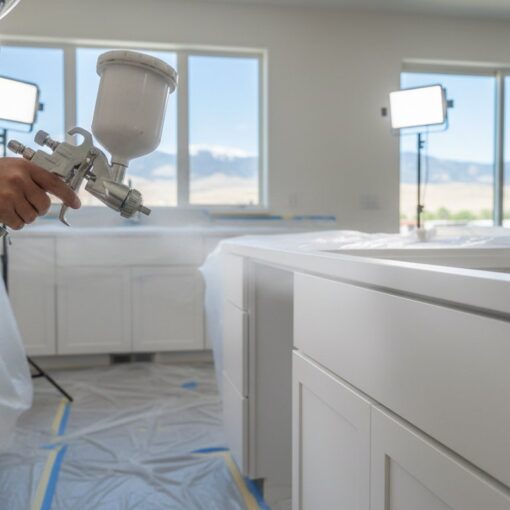
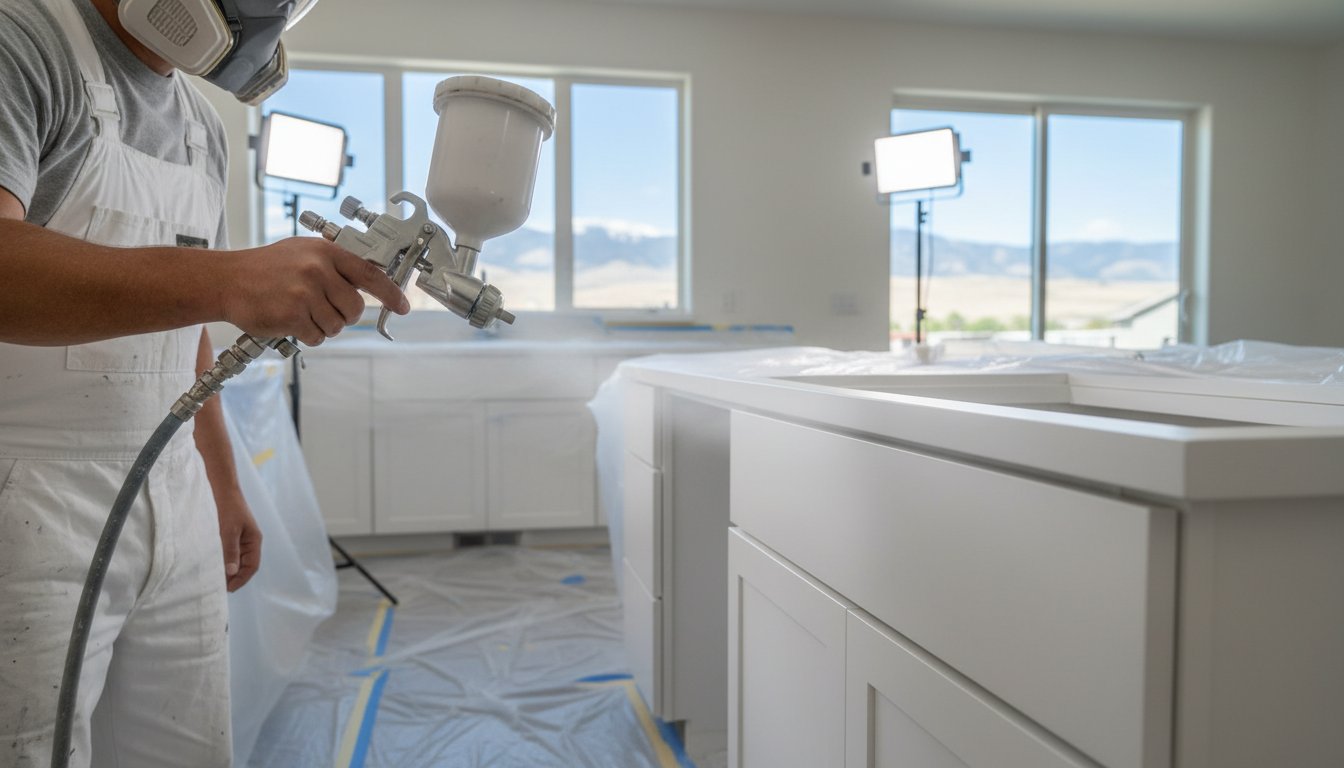
The answer should be spraying. Professionals spray cabinet doors and drawer fronts-typically off-site in a controlled environment-to achieve a flawless, factory-like finish. This method lays the paint down in thin, even coats that cure into a hard, durable shell. Brushing and rolling methods are for walls, not fine-finish woodwork. They inevitably leave behind brush strokes and roller texture (stipple), which not only look amateurish but also create a weaker finish that is harder to clean.
3. What specific primers and paints do you use?
The type of product used is non-negotiable. If a company plans to use standard latex wall paint, end the conversation. That paint is not designed for the high-touch, high-abuse environment of a kitchen. True professionals use industrial-strength products like solvent-based, pre-catalyzed lacquers or waterborne acrylic-urethane enamels. These coatings are chemically engineered to cure to a hard, non-porous surface that resists chipping and staining. The primer is equally important; it must be a high-adhesion bonding primer designed specifically for slick surfaces.
4. Can I see your portfolio and speak to recent clients?
A confident craftsman is proud of their work and will eagerly provide proof. A portfolio should showcase clear, high-quality before-and-after photos of actual jobs, not stock images. Ask for references from projects completed within the last year to ensure their quality is consistent. Any legitimate business specializing in cabinet painting near me will have a list of satisfied clients who can vouch for their process, professionalism, and the durability of the final product.

Step 3: Decoding the Quote: What a Professional Estimate Includes
Once you’ve shortlisted a few companies, the next critical step is reviewing their estimates. A professional quote is not just a number; it’s a detailed blueprint of the entire job. Many homeowners make the mistake of choosing the lowest price, only to discover it comes at the cost of durability and craftsmanship. The real value in any cabinet painting near me service is found in the process and materials, not the final price tag. Always insist on a written, itemized estimate before committing to any work.
Key Components of a Detailed Quote
A transparent, professional quote protects both you and the painter. It demonstrates a commitment to quality and leaves no room for misunderstanding. Your estimate should clearly outline the following, without vague language:
- A Line-by-Line Preparation Process: This is the most vital factor for a lasting finish. The quote must detail every step, including degreasing, sanding, caulking repairs, and priming. If the prep work isn’t detailed, it’s likely being skipped.
- Specific Brand and Type of Materials: The document should name the exact industrial-strength primer and precatalyzed lacquer or urethane trim enamel to be used. “High-quality paint” is not a specific enough term.
- Clear Scope of Work: A proper estimate defines exactly what is being painted (e.g., cabinet boxes, doors, drawer fronts) and what is not (e.g., cabinet interiors, undersides of upper cabinets).
- Projected Timeline and Payment Schedule: You need a clear start date, an estimated completion date, and a fair payment schedule. A professional will never demand full payment upfront.
Red Flags to Watch For in an Estimate
An unprofessional quote is often a warning of poor-quality work to come. Be cautious if you see any of these red flags:
- A Significantly Lower Price: An estimate that drastically undercuts all others almost always means corners are being cut. This could be rushed prep work or cheap latex paint that will peel and chip within a year.
- Vague Descriptions: A quote that simply says “paint kitchen cabinets” for a lump sum offers zero accountability. You have no guarantee of the process or the quality of materials.
- High-Pressure Sales Tactics: Be wary of demands for a large cash deposit or pressure to sign a contract on the spot. A true craftsman stands by their price and process.
A detailed estimate reflects a contractor’s professionalism and commitment to delivering a durable, factory-like finish. It’s your best tool for vetting their expertise. Don’t settle for ambiguity. Get a detailed, no-nonsense quote from our experts.
Step 4: The On-Site Process: What to Expect When the Work Begins
You have vetted the companies, checked their work, and signed a contract. Now, the real transformation begins. A true professional’s process is vastly different from that of an amateur house painter. It is a system built on meticulous preparation, respect for your home, and clear communication. Your contractor should provide a clear timeline for the project, which typically spans 5 to 7 days, and keep you informed of progress from start to finish. This is the standard for any quality company providing cabinet painting near me.
Protecting Your Home and Kitchen
The first sign of a professional crew is how they prepare your kitchen. This isn’t just about laying down a few drop cloths; it’s about creating a completely contained and protected work environment. The prep work is the most vital factor for success. Expect to see:
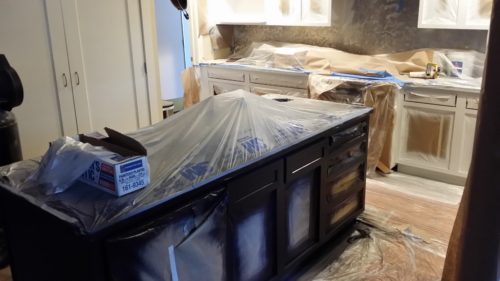
- Thorough Masking: All surfaces not being painted-countertops, floors, backsplash, appliances-will be completely covered with heavy-duty paper and securely taped.
- Containment Barriers: Plastic sheeting will be used to seal off the kitchen from the rest of your home, preventing any dust or overspray from escaping the work area.
- Professional Ventilation: A proper ventilation system will be installed to exhaust fumes and airborne particles directly outside, ensuring the air quality in your home remains clean.
On-Site vs. Off-Site Painting
To achieve a genuine, durable factory finish, the work must be split between your home and a dedicated workshop. This hybrid approach is a hallmark of a high-end cabinet refinisher.
The cabinet boxes (or frames) are the only parts that are prepped, primed, and painted on-site. This is a labor-intensive process that must be done correctly in your kitchen. However, all your cabinet doors and drawer fronts should be carefully removed, labeled, and transported to an off-site spray shop. Finishing them in a controlled spray booth is the only way to guarantee a flawless, glass-smooth surface free from dust, drips, and imperfections.
The Final Walk-Through and Curing
On the final day, the crew will return with your perfectly finished doors and drawer fronts. They will meticulously re-install everything, including any new hardware you’ve selected. Before making the final payment, you must conduct a detailed walk-through with the project lead to inspect every detail and confirm your satisfaction. Finally, understand that while the paint is dry to the touch, the industrial-strength coating requires time to fully cure-often 2 to 4 weeks-to reach maximum hardness. Being gentle during this period ensures a finish that will last for years.
Understanding this professional process is the final step in your search. A company that follows these steps, like the work shown at paintingkitchencabinet.com, is one you can trust to deliver exceptional results.
From Checklist to Completion: Your Path to a Factory Finish
Finding the right professional for cabinet painting near me is no longer a mystery. By following this guide, you now know the critical importance of vetting your painter, asking about their preparation process, and understanding what a true professional quote includes. These steps are the difference between a peeling, amateur job and a durable, long-lasting finish that completely transforms your kitchen.
At Painting Kitchen Cabinet Denver, we believe in doing the job the right way. With over 45 years of experience serving Denver and all surrounding cities, our process is built on meticulous prep work and an exclusive spray-application that delivers a true factory finish. We don’t cut corners. If you’re ready for a professional result without the guesswork, we make getting started simple.
Get an accurate price immediately. Text pictures of your cabinets to us.
Your dream kitchen is closer than you think, and now you have the knowledge to choose a contractor with confidence.
Frequently Asked Questions About Cabinet Painting
How much does it cost to have kitchen cabinets professionally painted near me?
The cost for professional cabinet painting near me depends heavily on your kitchen’s size, the total number of doors and drawers, and their current condition. On average, homeowners can expect to invest between $2,500 and $7,000. Projects that require extensive prep work, such as stripping a previous failed paint job, will be at the higher end of that range. For a precise and accurate price, it is best to get a quote based on your specific kitchen.
Is it worth it to hire a professional to paint my kitchen cabinets?
Absolutely. Hiring a professional is an investment in a durable, long-lasting finish that DIY methods cannot achieve. A professional process involves meticulous prep work, specialized equipment, and industrial-strength coatings that cure to a hard, factory-finish surface. This is an extremely labor-intensive job, and skipping any step, as amateurs often do, will lead to chipping and peeling. A professional job is done right the first time, saving you money and frustration in the long run.
How long does the cabinet painting process typically take from start to finish?
A standard-sized kitchen cabinet painting project typically takes between 5 and 7 business days. The first day is dedicated to on-site prep of your kitchen and cabinet boxes. We then remove the doors and drawers to be finished at our shop in a controlled environment. This off-site work is the most time-consuming part. The final day involves reinstallation of all components, leaving you with a fully transformed and functional kitchen with minimal household disruption.
How durable is a professional cabinet paint finish?
A professional cabinet finish is exceptionally durable and designed to withstand the daily wear and tear of a busy kitchen. We use industrial-grade, precatalyzed lacquers and conversion varnishes, not regular house paint. These products cure to a hard, non-porous finish that is highly resistant to chipping, staining, grease, and moisture. The key to this durability is our extensive preparation process, which ensures maximum adhesion between the coating and the cabinet surface.
Can you paint laminate or thermofoil cabinets?
Yes, laminate and thermofoil cabinets can be successfully painted, but it demands a very specific and critical process. These non-porous surfaces require aggressive cleaning and scuff-sanding to create a surface profile for adhesion. We then apply a specialized, high-adhesion bonding primer designed for slick materials. Without this exact preparation and the correct industrial primer, any topcoat is guaranteed to fail, peel, and chip. It is not a job for standard painters.
What’s the difference between cabinet painting and cabinet refinishing?
While often used interchangeably, these terms can have different meanings. Cabinet refinishing traditionally means stripping an existing finish to bare wood and applying a new stain and clear coat. Cabinet painting is the application of an opaque, solid-color coating over a thoroughly prepared existing surface. For most homeowners seeking a modern kitchen update, professional cabinet painting is the most popular, cost-effective, and transformative option, delivering a completely new look without the cost of replacement.