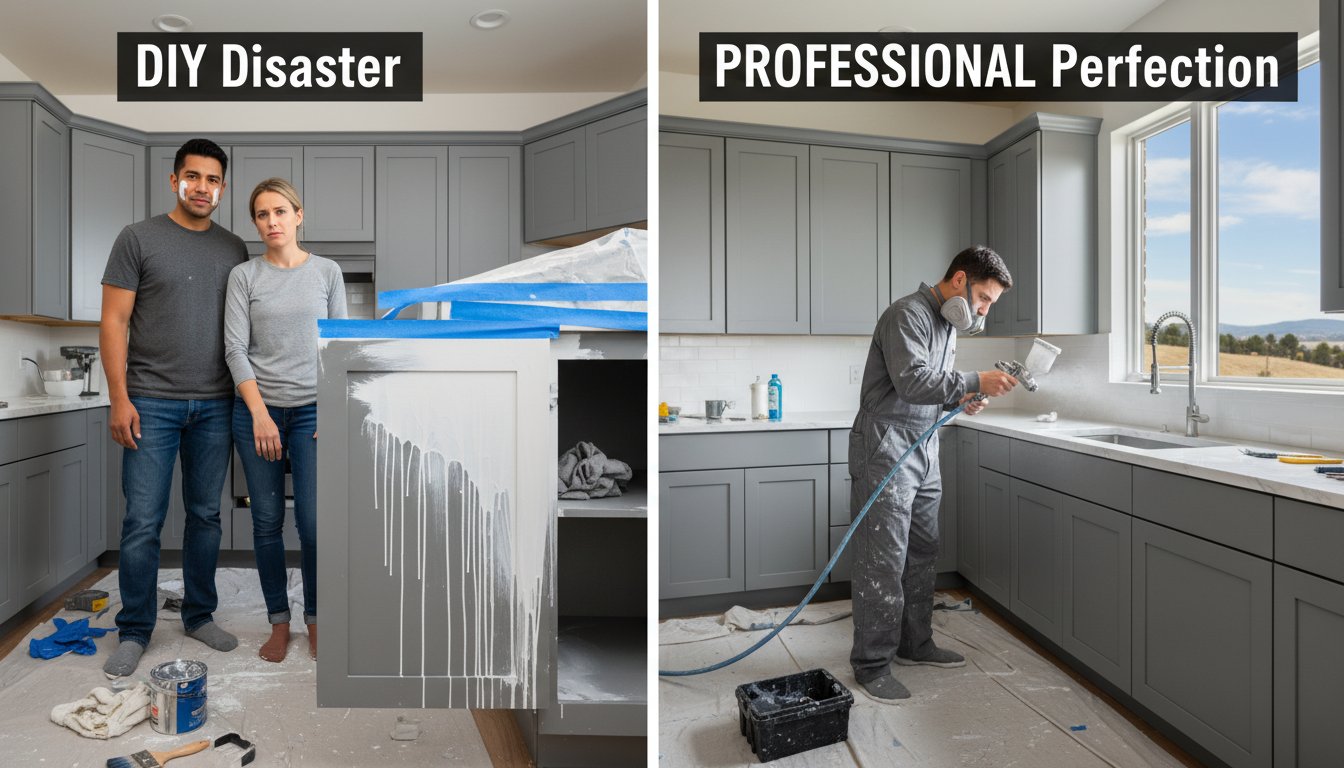
What if the 40 hours you spend scrubbing and sanding your kitchen actually results in a finish that chips before the next holiday season? It’s a common frustration for homeowners who want a fresh look but don’t want to waste money on a temporary fix. You likely believe that a few coats of hardware store paint will hold up under daily use, but the reality of DIY cabinet painting vs professional refinishing is often found in the durability of the chemicals used.
At Painting Kitchen Cabinets Denver, we’ve seen hundreds of DIY projects fail within six months because retail latex paint simply cannot bond to wood like industrial-strength precatalyzed primers. This 2026 guide reveals why our professional spray application provides a smooth, factory finish that increases home resale value while keeping your kitchen out of commission for only three to five days. We’ll examine the technical differences in prep work and industrial coatings so you can avoid the labor-intensive mistakes of amateur house painters who use cheap materials.
Key Takeaways
- Understand the fundamental differences between hand-applied retail coatings and industrial-grade spray finishes to avoid a short-lived cosmetic update.
- Learn why professional prep work accounts for 75% of a successful transformation and why most “clean and paint” kits fail to deliver long-term durability.
- Evaluate the true cost of DIY cabinet painting vs professional refinishing by calculating hidden expenses like high-end sprayers, industrial PPE, and the 60+ hours of labor required.
- Identify the “Point of No Return” for high-quality wood cabinets and discover which low-use areas of your home are actually safe for a DIY approach.
- Discover the Painting Kitchen Cabinet Denver “spray-only” methodology that ensures a permanent, factory-level finish backed by 45 years of local expertise.
The Allure of DIY vs. The Reality of Professional Results
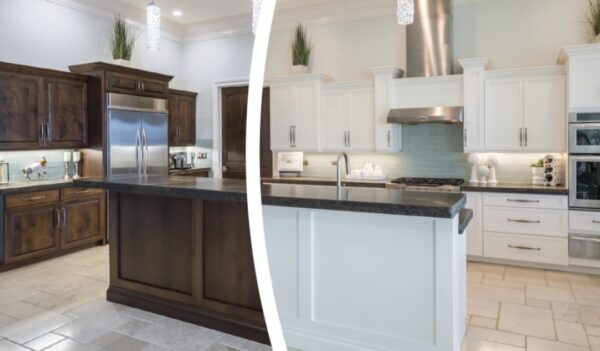
Choosing between DIY cabinet painting vs professional refinishing is the difference between a temporary cosmetic fix and a permanent industrial upgrade. DIY cabinet painting is a hand-applied update where homeowners use retail-grade latex or acrylic paints with brushes and rollers. It often looks acceptable from a distance for the first few weeks. Professional Cabinet Refinishing is a complex, multi-step industrial process. At Painting Kitchen Cabinets Denver, we use spray-applied coatings and specialized equipment to deliver a finish that retail products simply cannot achieve. The “YouTube Effect” is a major hurdle for homeowners. These 10-minute tutorials hide the 40 to 60 hours of grueling, labor intensive work required for a successful job. This includes deep degreasing, mechanical sanding, and meticulous masking of the entire kitchen area.
A deep understanding of cabinet materials and construction is necessary before starting. Different wood species like oak, maple, or cherry react differently to moisture and chemical cleaners. If you use an inferior primer on open-grain wood, tannins will bleed through the surface within 6 months. Many homeowners fall into an emotional trap. You might save $2,000 on labor costs today by handling the project yourself. However, when that retail paint starts peeling or gumming up in 18 months, the cost to chemically strip the failure and perform a proper restoration often exceeds $5,000. True Cabinet Refinishing relies on industrial strength materials that are not available at local hardware stores.
The Aesthetic Gap: Brush Marks vs. Factory Finish
Brushes and rollers inevitably leave a texture known as stipple on smooth wood surfaces. Even paints marketed as “self-leveling” show visible marks under standard kitchen lighting. A professional factory finish is seamless and glass-like. This is only achievable through high-volume, low-pressure (HVLP) spray systems. We maintain a controlled, dust-free environment during the application process. A single speck of household dust landing in wet DIY paint creates a permanent blemish. Our professional process involves exhaust systems and clean-room protocols to ensure the surface remains pristine and smooth to the touch.
The Longevity Factor: How Long Does Each Actually Last?
The lifespan of a DIY cabinet project is usually 1 to 3 years before significant wear appears. You will likely see chipping around handles, hinges, and the dishwasher area by the 12-month mark. Professional refinishing is designed to last 10 to 15 years under daily use. We use precatalyzed primers and industrial coatings that resist moisture and household chemicals. Retail paint remains soft and eventually absorbs oils from skin contact, leading to a sticky finish. Our industrial-grade finishes cure to a hard, durable shell. When comparing DIY cabinet painting vs professional results, the durability of the finish is the most vital factor for your long-term investment.
The Hidden Complexity: Why Prep Work is the Most Vital Factor
Prep work is 75% of a successful cabinet transformation. This is a hard rule we follow at Painting Kitchen Cabinets Denver. Many homeowners weigh the choice of DIY cabinet painting vs professional refinishing based on initial cost, but they often overlook the labor intensive reality of preparation. A factory finish isn’t created by the topcoat. It’s earned through hours of industrial cleaning and mechanical sanding. DIY kits fail because their simple deglossers can’t cut through 20 years of accumulated cooking oils, grease, and steam. If the surface isn’t chemically and mechanically prepared, the new finish will peel within 12 months.
Adhesion requires more than just a clean surface. We focus on mechanical bonding, which involves detailed sanding to create a profile for the primer to bite into. Chemical bonding agents found in retail kits are rarely sufficient for the high-traffic environment of a kitchen. While working with these chemicals, it’s vital to understand the dangers of VOCs in paint and industrial solvents. Professionals use specialized equipment and ventilation to manage these fumes, ensuring the safety of your family and your Denver home.
The Professional Prep Sequence
Our sanding protocols go far beyond a simple scuffing. We use specific grit sequences, starting with 120-grit and moving to finer abrasives, to ensure industrial primers bond permanently to the wood fibers. We also address the gaps and cracks that DIYers often ignore. Using high-quality, non-shrinking caulking prevents that amateur look where dark lines appear at every joint once the paint dries. Finally, we implement strict masking and containment protocols. Protecting your home from overspray requires professional grade tapes and zip-wall systems that most homeowners don’t have in their garage.
Coating Chemistry: Industrial Acrylics vs. Retail Latex
The “Cabinet Paint” you find at a local hardware store is usually just modified house paint. It lacks the chemical cross-linking needed for daily kitchen use. We use precatalyzed primers and industrial strength coatings that are engineered to level out as they dry. This leveling science is what creates a smooth surface without brush marks or roller stipple. These industrial acrylics dry 4 times faster and significantly harder than any retail latex product. The difference in DIY cabinet painting vs professional outcomes is most visible in the long-term durability of the finish. If you want a quote for a factory-grade result, you can text us the number of doors and drawers with pictures and we’ll provide an accurate price immediately.

Analyzing the True Cost: DIY Cabinet Painting vs Professional Investment
Homeowners often underestimate the financial commitment required to achieve a durable, high-quality result. While the initial price of a few gallons of paint seems low, the gap between DIY cabinet painting vs professional refinishing narrows quickly once you factor in industrial-grade equipment and specialized materials. Achieving a factory finish requires more than a brush and a roller; it demands a significant investment in tools that most people don’t have in their garage.
DIY Expense Breakdown
To produce a smooth surface without brush marks, you need a high-quality HVLP (High Volume Low Pressure) sprayer. In 2026, a reliable turbine system costs between $600 and $1,200. You also need professional ventilation and high-end PPE, including respirators rated for organic vapors, which add another $150 to your budget.
Material costs have risen significantly. Premium coatings, specifically the precatalyzed primers and industrial-strength topcoats used by Painting Kitchen Cabinets Denver, often exceed $100 per gallon in today’s market. You must also account for consumables:
- High-grade masking tape and plastic sheeting for full kitchen containment.
- Assorted grits of sandpaper for rigorous prep work.
- Tack cloths and de-greasing agents to ensure proper adhesion.
- Professional-grade wood fillers for grain filling and repair.
For those looking at budget context, understanding the kitchen cabinet refacing cost helps clarify why professional refinishing is often the most cost-effective way to get a new look without the high price of replacement.
The ROI of Professional Refinishing
The real value of hiring an expert lies in the longevity of the product. Professional cabinet refinishing provides a finish that can last 10 to 15 years, whereas a DIY job using standard retail paint often begins to peel or chip within 12 months. This durability directly impacts home appraisal values. Real estate data shows that a professionally updated kitchen can provide a 65% to 80% return on investment during a home sale.
Time is your most expensive asset. A standard kitchen takes an experienced pro about 3 to 5 days to complete. A homeowner typically spends 60 hours or more across 4 consecutive weekends to achieve a similar, though usually inferior, result. If you value your time at $50 per hour, you’ve spent $3,000 in “sweat equity” before buying a single drop of paint.
Don’t ignore the “Botched Job” penalty. If a DIY project fails because of poor prep work or the wrong chemicals, a professional must strip the cabinets back to bare wood to fix it. This labor-intensive restoration often costs 40% more than the original professional quote would have been. Doing it the right way the first time is always the cheaper option.
When to DIY and When to Call the Experts
Deciding between DIY cabinet painting vs professional refinishing depends on the location and the quality of your wood. You don’t always need a professional for every room. A laundry room or a basement bar is a “safe” DIY project because these are low-use areas where minor mistakes or brush marks won’t hurt your home value. If you mess up a utility room cabinet, it’s not a disaster. But your kitchen is the “Point of No Return.” High-quality wood cabinets are a major investment. If you apply the wrong product or skip prep work in the kitchen, you risk ruining the most valuable room in your house.
Before you start, run through this checklist to see if you’re ready for the labor intensive reality of this job:
- Do you have the physical stamina for 20+ hours of sanding and cleaning?
- Do you have a dust-free environment to dry 30 or 40 doors at once?
- Are you comfortable working with industrial strength cleaners and precatalyzed primers?
- Can you afford to have your kitchen out of commission for 7 to 10 days while you struggle through the learning curve?
Most homeowners realize that the cost of buying professional spray equipment and high-end materials equals the price of hiring a specialist. If you want a durable factory finish that lasts for 15 years, you should research hiring a kitchen cabinet painter who understands the chemistry of wood coatings.
Signs Your Project Requires a Pro
If your cabinets have complex door styles like raised panels or intricate miter joints, DIY methods will fail. Brushes and rollers cannot reach into deep grooves without leaving ugly drips. You also need a professional if your existing finishes are failing. If your cabinets feel sticky, are peeling, or show cracked lacquer, you can’t just paint over the mess. High-end wood species like cherry or oak also require specialized grain filling. We use specific techniques to level out the wood so the final result looks like smooth furniture rather than painted lumber.
The Risks of “Amateur” Professional Painters
Don’t be fooled by “cheap” quotes from house painters who usually work on drywall. A traditional house painter will use brushes and rollers on your cabinets. This is the biggest mistake you can make. They often use cheap latex caulking and water-based house paint that will peel off within 12 months. Our process is different. We’ve spent over 45 years perfecting cabinet refinishing using industrial strength products and professional spray systems. A low price usually means the painter is skipping the vital prep work steps that ensure the paint actually bonds to the wood. Experience matters more than a low bid when it comes to the heart of your home.
The Denver Standard: Achieving a Factory Finish with Our Team
Painting Kitchen Cabinet Denver stands on a 45-year legacy of excellence in Colorado. We serve the entire Denver metro area with a commitment to quality that amateur painters cannot match. Our team uses a spray-only application method for every project. We never use brushes. We never use rollers. This is the only way to achieve a true factory finish that feels smooth and looks brand new. Many homeowners find that the choice between DIY cabinet painting vs professional refinishing comes down to the final texture. A hand-painted cabinet will always show brush strokes, but our spray process creates a glass-like surface.
Our company is based on quality work at affordable cabinet refinishing prices. We don’t take shortcuts because we know that kitchen cabinets are the most used furniture in your home. The durability of our work comes from decades of experience and a refusal to use sub-par materials. When you choose our professional team, you are investing in a finish that lasts for years without peeling or chipping.
Our Industrial-Strength Process
The secret to a long-lasting finish is the preparation phase. We start with a meticulous cleaning and degreasing process to remove years of kitchen oils and grime. Our team considers this the most vital factor of the entire job. If a surface isn’t perfectly clean, the paint won’t stick. We use industrial-strength precatalyzed primers specifically formulated for the dry Colorado climate. These primers bond deeply to the wood and provide a stable foundation for the topcoat. Amateur house painters often use cheap latex caulking or standard house paint, but we use industrial coatings designed for cabinetry. Every door and drawer goes through a final inspection to ensure it meets our factory-finish standards before we reinstall them in your home.
Serving the Entire Denver Metro Area
Our local expertise covers the entire Denver metro area, including Aurora, Lakewood, Littleton, Centennial, Arvada, and Highlands Ranch. We understand how Colorado’s dry air affects paint curing times and material stability. This local knowledge allows us to deliver better results than national franchises. You don’t have to wait days for a salesperson to visit your home for a quote. Text us the number of doors and the number of drawers along with pictures of your kitchen. We provide an immediate, accurate price through this simple text-for-quote system. It’s a practical shortcut that fits your busy schedule.
Deciding between DIY cabinet painting vs professional service is about more than just the immediate cost. It’s about the value of your time and the longevity of the result. Our 45 years of experience ensure your kitchen looks professional and stays that way. Contact us today to see why we are the trusted choice for cabinet painting denver and surrounding Colorado cities.
Upgrade Your Kitchen with a Lasting Factory Finish
Deciding between DIY cabinet painting vs professional refinishing comes down to the durability you expect from your home investment. While a weekend project seems affordable, it can’t replicate the industrial strength acrylics we use that outlast retail store paint by a full 10 years. Our process focuses on the most vital factor: intensive prep work combined with a 100% spray application. This ensures your cabinets don’t just look new but stay that way without peeling or chipping like amateur brush and roller jobs.
Painting Kitchen Cabinets Denver brings over 45 years of specialized experience to every project. We don’t cut corners with cheap latex products. Instead, we deliver a hard, smooth surface that stands up to daily kitchen use. It’s time to stop worrying about brush marks and start enjoying a professional result that adds real value to your property.
Text us your door and drawer count with pictures for an immediate quote!
We’re ready to help you transform your kitchen into the centerpiece of your home.
Frequently Asked Questions
Is it cheaper to paint cabinets yourself or hire a pro?
It’s cheaper to paint cabinets yourself when looking only at the 15% to 20% of the budget spent on materials like brushes and paint. However, DIY cabinet painting vs professional results often leads to a shorter lifespan for the finish. You’ll save money on labor, but you’ll spend 40 to 60 hours of your own time on a project that a professional crew completes with industrial strength coatings.
How long does professional cabinet painting actually take compared to DIY?
A professional crew typically finishes a kitchen in 3 to 5 business days from start to finish. DIY projects frequently stretch over 3 weekends or 14 to 21 days because homeowners lack the high volume spray equipment and drying racks we use. We follow a strict schedule of cleaning, sanding, and priming that ensures your kitchen is back in service quickly without cutting corners on the prep work.
What is the most common mistake made in DIY cabinet painting?
The most common mistake is failing to remove 100% of the grease and oils before applying the first coat of primer. Even small amounts of cooking residue cause paint to peel within 6 to 12 months of application. Professional refinishers spend 70% of the project time on prep work, using industrial deglossers and cleaners that standard hardware store soaps cannot match.
Do I need to sand my cabinets if I use a “no-sand” primer?
You must sand your cabinets regardless of what a product label claims about “no-sand” properties. Proper mechanical bonding requires a scuffed surface so the primer can bite into the wood or existing finish. Skipping this step is why 90% of DIY failures occur. We use 220 grit sandpaper to ensure every square inch is ready for our precatalyzed primers and industrial strength topcoats.
Can you fix cabinets that I tried to paint myself and messed up?
We can fix cabinets with failed DIY finishes, but the process requires removing the existing layers of paint to reach the original wood. This restoration work is more labor intensive than starting with fresh cabinets because we have to use chemical strippers or heavy sanding to undo the previous mistakes. Most homeowners find that DIY cabinet painting vs professional correction costs more in the long run because of this extra labor.
What kind of paint do professionals use that I can’t buy at a hardware store?
Professionals use industrial strength coatings like precatalyzed lacquers and 2K polyurethanes that aren’t sold at local hardware stores. These products contain chemical hardeners that create a factory finish capable of withstanding 10,000 scrub cycles. Standard latex or oil based paints from a retail store stay soft for 30 days, while our industrial coatings cure to full hardness in just 24 hours.
Will my cabinets smell like paint for weeks if I hire a professional?
Your cabinets won’t smell for weeks because we use high volume exhaust fans and fast drying industrial coatings that off-gas quickly. Most of the odor dissipates within 4 to 6 hours after we finish spraying the final coat. Because we use precatalyzed primers and specialized finishes, the smell is significantly less persistent than the lingering odors found with traditional oil based paints sold to DIYers.