You love your home. The floor plan works, the neighborhood is perfect, and the views of the Front Range still take your breath away. But every time you walk into the kitchen, your eyes land on cabinets that feel stuck in another decade. The wood is tired, the finish is worn around the handles, and the color has nothing to do with the style you have curated in the rest of the house. Tearing everything out and starting over sounds expensive, messy, and overwhelming.
My Review of Graco FFLP Tips for Spraying Cabinets
There is a better path, one that preserves the quality construction of your existing cabinetry while giving you a completely transformed space. Homeowners across Castle Rock, Castle Pines, Highlands Ranch, and Parker are turning to custom cabinet painting and refinishing specialists to get that high-end, factory-finish look without the six-figure price tag of a full remodel. This article explains why hiring a specialist is the smartest investment you can make for a kitchen refresh in 2026.
Table of Contents
- The Real Cost of a Kitchen Refresh in 2026: Paint vs. Replace
- Why "Factory Finish" Matters: The Difference Between a Paint Job and a Refinish
- Is Professional Cabinet Painting Worth It? The DIY vs. Pro Breakdown
- What Cabinet Color Is Outdated in 2026? And What's Trending in Douglas County
- Serving Your Neighborhood: Castle Rock, Castle Pines, Highlands Ranch and Parker
- Frequently Asked Questions About Cabinet Refinishing
The Real Cost of a Kitchen Refresh in 2026: Paint vs. Replace
The numbers tell a compelling story before you even pick up a paint chip. Nationally, professional cabinet refinishing runs between $1,800 and $4,320, while painting projects range from $1,200 to $7,000 depending on kitchen size and complexity. In the Denver metro area, where labor rates run higher than the national average, Douglas County homeowners should expect to invest somewhere in the middle to upper end of those ranges for quality work that lasts.
Consider a standard 10-door kitchen in a Castle Rock home. A full custom cabinet replacement for that space, using mid-grade materials, starts around $12,000 and climbs quickly past $20,000 when you factor in soft-close hardware, custom sizing, and installation. That same kitchen, refinished by a skilled professional, lands between $3,500 and $6,000. The math is straightforward: you keep the solid wood boxes and face frames that were built to last, and you redirect thousands of dollars toward other priorities.
Replacement also carries hidden costs that most estimates do not include. Demolition generates debris that requires disposal, often with associated fees. Removing old cabinets can damage drywall, flooring, and countertops, triggering repair work you never planned for. In older homes, moving electrical outlets or adjusting plumbing to accommodate new cabinet dimensions adds hundreds or even thousands to the final bill. Custom cabinet painting and refinishing specialists eliminate those variables entirely. The cabinets stay in place, the kitchen remains functional, and the transformation happens on a predictable timeline with a predictable price. For 50 to 70 percent less than new cabinetry, you get a result that looks and feels like a brand-new kitchen.
Why "Factory Finish" Matters: The Difference Between a Paint Job and a Refinish
Not all cabinet updates are created equal. Cabinet painting applies a new color over the existing surface, refreshing the look while keeping the underlying finish intact. Cabinet refinishing goes deeper, involving stripping, sanding, and either re-staining or painting to create a like-new substrate. Both approaches have their place, and the right choice depends on the condition of your cabinets and the result you want.
The phrase "factory finish" gets thrown around loosely, but it means something specific. In a manufacturing setting, cabinets are sprayed in dust-controlled environments with equipment that atomizes the coating into a fine, even mist. The result is a glass-smooth surface with no brush strokes, no roller stipple, and no orange peel texture. When custom cabinet painting and refinishing specialists bring that standard into your home, they replicate the process using HVLP spray systems, portable containment, and premium catalyzed coatings that cure harder than anything available at a retail paint counter.
Durability matters especially in Colorado kitchens, where humidity swings from dry winter air to steam-filled summer cooking sessions. A professional catalyzed finish, properly cured, resists moisture, grease, and daily wear for a decade or more. Budget jobs and DIY attempts that skip critical prep steps or use off-the-shelf latex paint often show peeling, chipping, and yellowing within the first year. The specialist also understands what they are working with: solid maple, red oak, birch veneer, and thermofoil all demand different primers and techniques. That material knowledge prevents adhesion failures that a general painter might not anticipate.
The Process: Step-by-Step for a Flawless Result
A professional cabinet transformation follows a disciplined sequence. Cutting corners at any stage compromises the final result, and specialists know exactly where precision matters most.
Step 1 is assessment and color consultation. The specialist evaluates the existing cabinet condition, identifying the wood species, the current finish type, and any damage that needs repair before work begins. This is also the moment for color guidance. In 2026, the trends in Douglas County lean toward warm neutrals like Swiss Coffee and Alabaster, deep moody tones such as Forest Green and Charcoal Blue, and two-tone designs that pair a darker island with a lighter perimeter. A trained eye helps you avoid a color that looks great on a swatch but clashes with your countertops, flooring, and natural light.
Step 2 is preparation and protection. Every door, drawer front, and piece of hardware comes off and gets labeled with a system that guarantees everything returns to its exact original position. Floors, countertops, and appliances receive full covering. The cabinet boxes get cleaned with a TSP substitute to remove years of cooking grease and grime that would repel paint.
Step 3 moves into stripping and sanding. If the existing finish is thick, glossy, or damaged, a chemical stripper cuts through the old coating. Progressive sanding follows, starting at 80 grit to level the surface and moving through 120, 180, and 220 grit to create a smooth, scratch-free substrate. This mechanical bond is what makes the new finish grip for the long haul.
Step 4 is priming and spraying. A high-build primer fills wood grain and creates a uniform base, especially important on oak where open grain can telegraph through the paint. After the primer cures, two to three coats of a premium urethane or enamel go on via HVLP sprayer. Products like Sherwin-Williams Emerald Urethane and Benjamin Moore Advance are industry standards because they level beautifully, cure hard, and resist yellowing. Each coat receives light sanding between applications for maximum adhesion.
Step 5 is curing and reassembly. Even though the coating feels dry to the touch within hours, full chemical cure takes 24 to 72 hours. Rushing this stage leads to dings, scratches, and hardware that bonds to soft paint. Once cured, the doors and drawers come back from the spray area, hardware goes on, and soft-close hinges get adjusted for perfect alignment. The kitchen is ready for use, looking like it came straight from a high-end cabinet shop.
Paint vs. Stain: Which Finish Lasts Longer in a Colorado Kitchen?
Both paint and stain have loyal followings, and each performs differently under real-world conditions. Paint hides imperfections, creates a uniform modern look, and cleans easily with a damp cloth. It works beautifully on maple, MDF, and previously painted surfaces. The tradeoff is that paint sits on top of the wood, so a sharp impact can chip the coating if the underlying prep was not thorough. For high-traffic family kitchens where cabinets take a beating, a properly primed and catalyzed paint finish holds up remarkably well.
Stain penetrates the wood fibers rather than sitting on top, which means it shows the natural grain and hides minor scratches more effectively. Solid wood species like oak and cherry take stain beautifully and develop a rich, dimensional look that paint cannot replicate. Stain does require more maintenance over time; re-oiling every few years keeps the wood from drying out and losing its luster. In traditional, rustic, or craftsman-style homes common throughout Castle Pines and Parker, stained cabinets feel authentic and timeless.
Colorado's dry climate creates a specific consideration. Wood expands and contracts with seasonal humidity changes, and in an environment where indoor air stays dry most of the year, that movement is less dramatic than in coastal regions. Paint adhesion is generally excellent here, but if a painter uses the wrong primer on a species prone to movement, hairline cracks can appear at the joints over time. Custom cabinet painting and refinishing specialists understand these material dynamics and select primers with the flexibility to move with the wood. For maple and birch, paint is an outstanding choice. For oak with prominent grain, stain often makes more sense unless you specifically want the painted look and accept the extra grain-filling steps required. For thermofoil or laminate, paint is the only viable option, and it demands a specialty bonding primer to stick.
Is Professional Cabinet Painting Worth It? The DIY vs. Pro Breakdown
The internet is full of tutorials showing weekend warriors transforming their kitchens with a brush and a can of paint. The before-and-after photos look impressive on a phone screen. What those posts rarely show is the same kitchen six months later, when edges start peeling and the finish feels tacky to the touch.
Time is the first reality check. A DIY cabinet project, done properly with sanding, priming, multiple coats, and curing, takes two to four weeks for a single kitchen. During that time, your kitchen is a construction zone. Doors are laid out in the garage or basement, dust settles everywhere, and every meal requires improvisation. A professional team completes the same scope in three to five days, with the kitchen fully usable by the end of the week.
Equipment costs add up fast. A quality HVLP sprayer starts at $300, and the learning curve is steep. Premium paint runs over $100 per gallon, and a full kitchen needs several gallons plus primer, sandpaper, tack cloths, respirators, and plastic sheeting. When you total the materials and the value of your time, the gap between DIY and professional pricing shrinks considerably. What you are really paying for with a specialist is the elimination of risk. Common DIY failures include drips on vertical surfaces, dust nibs embedded in the finish, uneven sheen from inconsistent application, and peeling that starts within six months because the surface was not properly cleaned or sanded.
The "white glove" standard that top-tier providers offer goes beyond the finish itself. A specialist handles every logistical detail: removing doors and hardware with a labeling system that guarantees perfect reassembly, containing all dust and fumes, disposing of waste, and leaving the kitchen cleaner than they found it. You experience zero downtime in your own home beyond the few days the team is actively working. That convenience, combined with a warranty-backed finish that lasts a decade or more, answers the question clearly. Professional cabinet painting is worth it when the alternative is a kitchen that looks homemade.
What Cabinet Color Is Outdated in 2026? And What’s Trending in Douglas County
Color trends cycle faster than cabinets wear out, which creates a dilemma. You want a kitchen that feels current today but will not look dated when you consider selling in five years. Knowing what to avoid is just as valuable as knowing what to choose.
Honey oak and its orange-gold undertones dominated the 1990s and early 2000s, and in 2026, it reads as the single most dated finish in Douglas County homes. Builder-grade beige, often paired with that same oak, has the same effect. Stark white cabinets with heavy glazing, a look that peaked around 2015, now feels overworked and artificial. The biggest shift, however, is the retirement of cool, flat gray, often called "millennial gray." That color swept through flips and new builds for a decade, and in 2026 it signals a house that has not been updated.
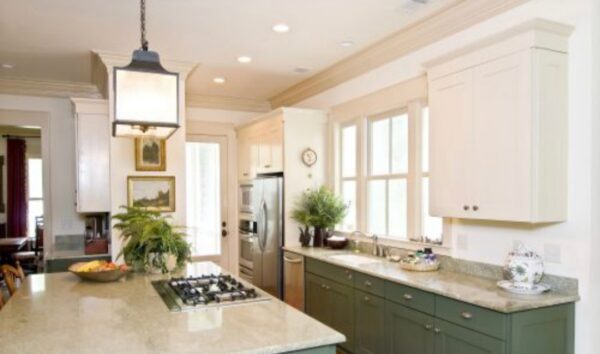
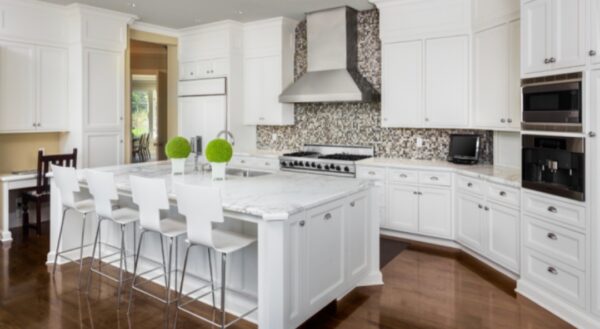
What is replacing it? Warm whites lead the pack. Colors like Swiss Coffee, Alabaster, and Simply White have creamy undertones that soften the room and pair effortlessly with natural stone, wood floors, and brushed brass or matte black hardware. Deep moody tones are gaining ground in homes that want more personality. Forest Green, Charcoal Blue, and even aubergine on an island create a focal point without overwhelming the space. Two-tone kitchens remain strong, with a darker color on the island or lower cabinets and a lighter shade on the uppers, a combination that adds depth and keeps the room feeling open.
A color consultation with custom cabinet painting and refinishing specialists helps you navigate these choices with confidence. The right specialist will look at your countertops, backsplash, flooring, and natural light before recommending a palette. They understand the "timeless" rule that serves homeowners well in the Castle Rock and Parker resale market: neutrals with warm undertones hold their value best, while trend-driven colors work better as accents than as the main event.
Serving Your Neighborhood: Castle Rock, Castle Pines, Highlands Ranch and Parker
The communities south of Denver have their own character, their own architectural styles, and their own expectations for quality. A company that serves Castle Rock, Castle Pines, Highlands Ranch, and Parker understands the HOA guidelines that govern exterior color palettes and the interior design sensibilities that dominate each neighborhood. From the farmhouse-inspired homes in The Meadows to the transitional styles in Castle Pines Village and the modern builds in Highlands Ranch, the cabinet finish that looks right varies by home and by homeowner.
Consider a real example. A 1980s oak kitchen in Highlands Ranch, with arched raised-panel doors and brass hardware, felt dark and closed off. The homeowners loved the layout but wanted a lighter, more contemporary space. The solution was not a gut renovation. The team removed the doors and drawer fronts, filled the oak grain with a high-build primer, and sprayed everything in a warm Alabaster white. New soft-close hinges and matte black pulls completed the transformation. The kitchen now reads as a modern Shaker-style space, and the total investment was a fraction of what new cabinets would have cost.
Convenience matters when you are living through a project. In-home estimates mean you get an accurate price without guesswork. A local team shows up on time, respects your property, and works efficiently so your family routine stays intact. Ready to see what custom cabinet painting and refinishing specialists can do for your Castle Rock home? Contact us for a free, no-obligation estimate and take the first step toward the kitchen you have been imagining.
Frequently Asked Questions About Cabinet Refinishing
How much does it cost to paint kitchen cabinets? In Douglas County, a typical kitchen project ranges from $2,500 to $6,000, depending on the number of doors and drawers, the condition of the existing finish, and the complexity of the color change. Larger kitchens with islands and extensive trim work fall toward the upper end of that range.
Is it cheaper to paint cabinets or get new ones? Painting is significantly cheaper, typically 50 to 70 percent less than replacement. You also keep the quality box construction that was built for your home, which is often superior to mid-grade stock cabinets available today.
How long does the finish last? With proper preparation and premium catalyzed coatings, a professional cabinet finish lasts 8 to 12 years before needing a touch-up. Kitchens that see heavy daily use may show wear at the edges sooner, but the overall finish remains intact far longer than a DIY job.
Do you remove the cabinets to paint them? The cabinet boxes are painted in place. All doors, drawers, and hardware are removed and transported to a controlled spray area where they receive the factory-quality finish. This approach minimizes disruption and ensures a flawless result on every surface.