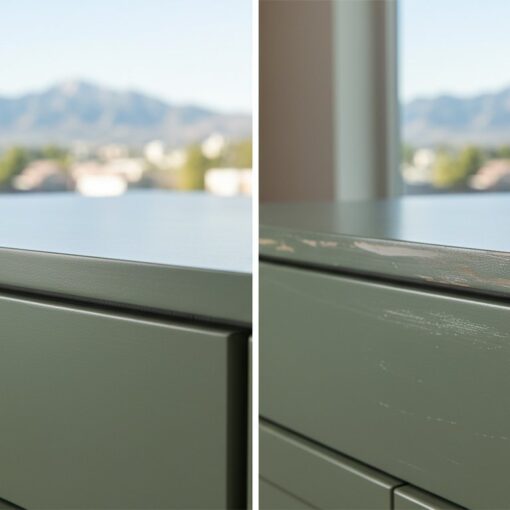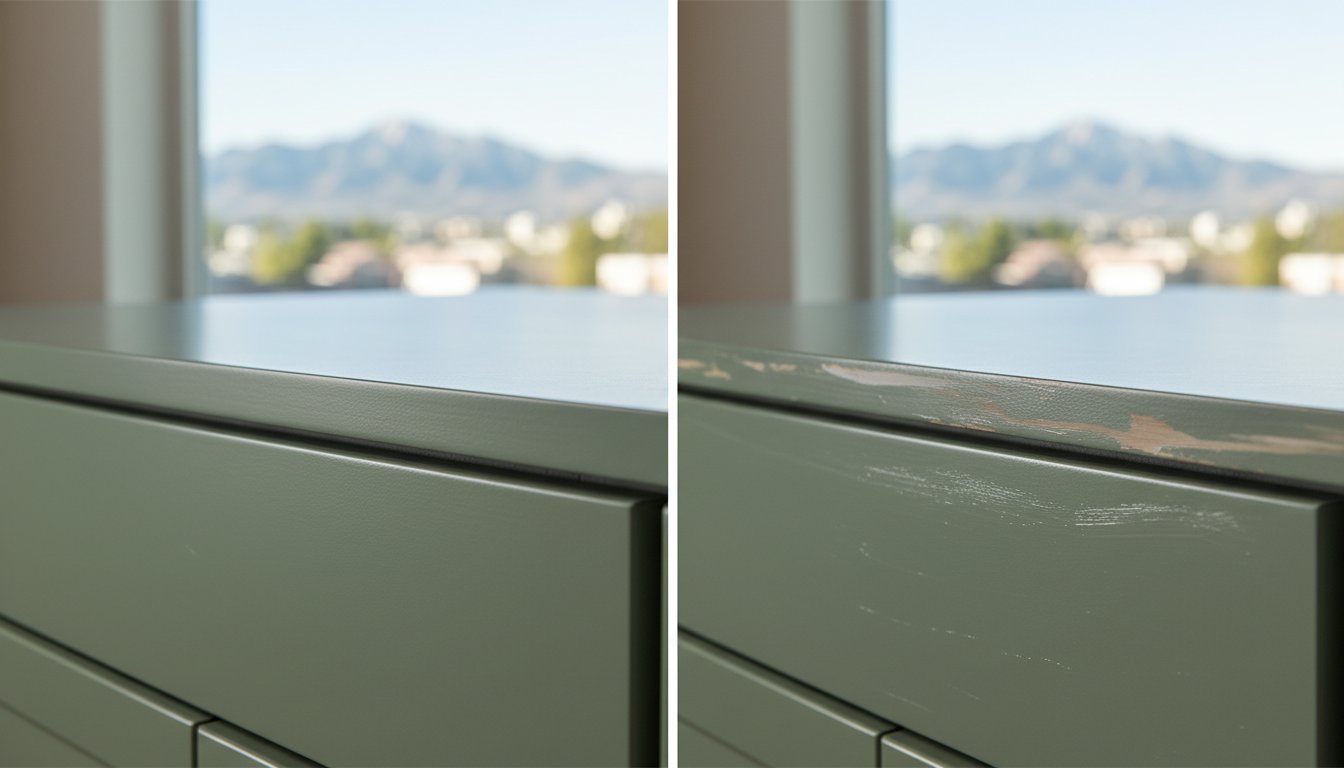
If your Highlands Ranch kitchen still has the original oak or maple cabinets from when your home was built, you are not alone. Thousands of homes across Douglas County, from Castle Pines to Parker, feature solid, well-constructed cabinetry that has simply lost its luster after two or three decades of daily use. The doors still close squarely. The drawers still glide. The layout still works. What has changed is the finish: yellowed lacquer, worn edges, scratches near the hardware, and a color palette that feels frozen in the early 2000s. Cabinet refinishing Highlands Ranch CO offers a practical path forward, restoring those tired cabinets to a factory-quality finish at roughly 70 percent less than full replacement. This guide walks through what refinishing actually involves, what it costs, and how to decide whether it is the right move for your kitchen.
Table of Contents
- Why Highlands Ranch Homeowners Are Choosing Cabinet Refinishing Over Replacement
- Cabinet Refinishing vs. Painting vs. Refacing vs. Replacement: What's the Right Call for Your Kitchen?
- The Factory Finish Difference: What Professional-Grade Refinishing Actually Means
- What Cabinet Refinishing Costs in Highlands Ranch (And What Drives the Price)
- The Refinishing Process: What Highlands Ranch Homeowners Should Expect
- Popular Cabinet Colors and Finishes for Highlands Ranch Homes
- DIY vs. Professional Cabinet Refinishing: The Honest Trade-Offs
- Choosing the Right Cabinet Refinishing Provider in Highlands Ranch
- Serving Highlands Ranch and Neighboring Douglas County Communities
- Frequently Asked Questions About Cabinet Refinishing in Highlands Ranch
- Ready to Transform Your Highlands Ranch Kitchen?
Why Highlands Ranch Homeowners Are Choosing Cabinet Refinishing Over Replacement
Highlands Ranch housing stock skews heavily toward established suburban homes built from the 1980s through the early 2000s. Many of those kitchens feature original or lightly updated cabinets that are structurally sound but aesthetically dated. The boxes are solid. The face frames are intact. The problem is purely cosmetic, and replacing perfectly functional cabinetry simply because the finish looks tired is an expensive way to solve a surface-level issue.
Full cabinet replacement in the Denver metro area typically runs $15,000 to $30,000 or more, depending on cabinet grade, countertop changes, and labor. Refinishing delivers a comparable visual transformation for a fraction of that cost. The 70 percent savings figure is not marketing hyperbole; it reflects the fundamental difference between rebuilding an entire kitchen and renewing what already exists.
Refinishing also preserves the existing cabinet footprint, which matters in Highlands Ranch's many open-concept floor plans. Changing cabinet dimensions or moving an island triggers additional drywall, flooring, and electrical work. Keeping the layout intact avoids those cascading costs entirely. The process is also far less disruptive than a full remodel. Most refinishing projects complete in three to seven days, compared to three to six weeks for replacement. Families can stay in their homes with minimal lifestyle disruption, setting up a temporary kitchen in the garage or basement rather than relocating entirely.
There is also a sustainability angle that resonates with many Colorado homeowners. Reusing existing cabinetry keeps hundreds of pounds of wood and MDF out of landfills. For a community that values environmental responsibility, refinishing aligns home improvement goals with broader values.
Cabinet Refinishing vs. Painting vs. Refacing vs. Replacement: What’s the Right Call for Your Kitchen?
The terminology around cabinet updates can be confusing, and many Highlands Ranch homeowners are not entirely sure which service they actually need. Understanding the distinctions is the first step toward making a confident decision.
Cabinet refinishing restores the existing finish. This is the right choice for cabinets with good bones but worn, scratched, or yellowed factory lacquer. Refinishing preserves the original color or shifts it subtly while renewing the protective topcoat. If your cabinets are solid wood and you like the general tone but want to eliminate wear and refresh the sheen, refinishing is the most cost-effective option.
Cabinet painting is the right choice when you want a dramatic color transformation. Going from oak to white, black, or grey requires building a new paint system over the existing surface. This involves more preparation and additional finish coats, but it delivers a completely different aesthetic. For homeowners who want the modern painted look that dominates current kitchen design trends, painting is the practical path.
Cabinet refacing replaces doors and drawer fronts while keeping the cabinet boxes. This suits kitchens where the box structure is sound but the door style itself is the problem. Refacing costs more than refinishing or painting because it involves manufacturing new components, but it allows for a complete style change without touching the cabinet footprint.
Full replacement only makes financial sense when boxes are failing, layout changes are required, or you are already committed to a complete kitchen remodel. If the cabinet boxes are water-damaged, delaminating, or structurally compromised, no surface treatment will fix the underlying problem.
The decision framework is straightforward. If the boxes are solid and you like your layout, refinishing or painting delivers 90 percent of the visual impact at a fraction of replacement cost. If the door style itself is the issue, refacing bridges the gap. If the boxes are failing or the layout does not work, replacement becomes the honest answer.
The Factory Finish Difference: What Professional-Grade Refinishing Actually Means
The term "factory finish" gets used frequently in cabinet refinishing marketing, but what does it actually mean in practice? The answer comes down to materials, application method, and curing technology.
Professional refinishing uses commercial-grade, low-VOC lacquers and catalyzed finishes that cure to a hardness approaching factory-applied coatings. These products are fundamentally different from the consumer-grade paints available at home improvement stores. Catalyzed finishes undergo a chemical reaction during curing that creates a harder, more durable surface than standard air-dried paint. That hardness translates directly to scratch resistance, moisture resistance, and longevity in a busy kitchen environment.
Advanced curing technologies have changed the game in recent years. UV-cured nano finishes allow coatings to dry and harden in minutes rather than days, reducing the window where dust and debris can mar the surface. This technology also reduces volatile organic compound emissions during application, which matters for families who want to remain in their homes during the project.
Spray-applied finishes create a smooth, uniform film that brush-and-roller application simply cannot replicate. Professional spray equipment atomizes the finish into fine droplets that level out into a glass-smooth surface. This is the "factory finish" look homeowners are paying for, and it is the primary reason professional results look so dramatically different from DIY attempts.
The multi-step process matters as much as the products. Professional-grade cleaning removes grease and cooking residue that would otherwise compromise adhesion. Sanding or de-glossing creates a mechanical bond for the primer. Bonding primers bridge the gap between old finish and new coating. Multiple finish coats build durability and depth. Each step plays a role in long-term adhesion and performance.
A properly executed professional refinish should last 10 to 15 years under normal family use. That is comparable to factory finishes and dramatically longer than typical DIY paint jobs, which often show wear within two to three years.
What Cabinet Refinishing Costs in Highlands Ranch (And What Drives the Price)
Pricing transparency has been a persistent gap in the cabinet refinishing market, leaving Highlands Ranch homeowners uncertain about what to expect. While every kitchen is different, understanding the general ranges and cost drivers helps you evaluate estimates intelligently.
Highlands Ranch cabinet refinishing projects typically range from $3,500 to $7,500 for an average kitchen with roughly 30 to 40 linear feet of cabinetry. Full replacement for the same kitchen would run $15,000 to $30,000 or more, validating the 70 percent savings claim. These figures assume cabinets in reasonable condition with no significant structural repairs required.
Several factors drive the final price. Total linear feet of cabinetry is the primary variable, since more cabinets mean more surface preparation, more finish material, and more labor. The number of doors and drawer fronts matters for the same reason. Cabinet material also plays a role: solid wood and wood veneer respond predictably to refinishing, while MDF and laminate require special preparation that adds time. Thermofoil cabinets typically cannot be refinished at all and require replacement or refacing.
Color changes cost more than clear refinishing because they require more surface preparation and additional finish coats to achieve full opacity and uniformity. Transforming dark oak to crisp white, for example, demands more work than refreshing the existing wood tone with clear lacquer.
Cabinet condition matters as well. Cabinets with heavy grease buildup, water damage, or previous DIY paint attempts require additional prep time and drive costs upward. A kitchen that has been well-maintained will cost less to refinish than one that has accumulated years of cooking residue.
Always request an in-home estimate. Every kitchen is different, and reputable Highlands Ranch providers offer free consultations with firm, itemized quotes. A detailed quote should break down prep work, materials, labor, and warranty coverage so you can compare providers on equal footing.
The Refinishing Process: What Highlands Ranch Homeowners Should Expect
Understanding the process before it begins helps set realistic expectations and reduces surprises. Most professional refinishing projects follow a predictable sequence.
Day one focuses on preparation and protection. Technicians cover floors, countertops, and appliances with protective film. Cabinet hardware is removed and labeled so everything returns to its original position. Surfaces are deep-cleaned to remove grease and cooking residue that would otherwise compromise the new finish.
Sanding and priming follow. Surfaces are scuffed or de-glossed to promote adhesion, then a bonding primer is applied. This step is critical for preventing future peeling or chipping, and it is where many DIY projects go wrong. Professional primers are formulated to bond with existing factory finishes, creating a stable foundation for the topcoats.
Finish application is where the factory-quality result takes shape. Multiple coats of professional-grade finish are spray-applied in a controlled environment. Some providers finish doors off-site in a spray booth for the most uniform results, while others create contained spray areas within the home. Both approaches can deliver excellent results when executed properly.
Curing and reassembly complete the project. Depending on the finish technology, curing takes anywhere from hours to a few days. Hardware is reinstalled, doors are rehung and aligned, and drawers are adjusted for smooth operation. A final inspection ensures every surface meets the standard.
The kitchen is unusable during the project. Plan for three to seven days without full kitchen access. Setting up a temporary kitchen in a garage or basement with a microwave, coffee maker, and mini-fridge makes the disruption manageable for most families.
Popular Cabinet Colors and Finishes for Highlands Ranch Homes
Color trends in Highlands Ranch reflect broader national preferences while accommodating the region's distinctive light and architectural character. White remains the dominant choice for kitchen cabinets, offering a clean, bright aesthetic that complements the area's preference for light-filled, open-concept living spaces. White cabinets also provide a neutral backdrop that allows countertops, backsplashes, and hardware to carry the design statement.
Black and dark espresso finishes are gaining traction for homeowners seeking drama and contrast, particularly in larger kitchens with substantial island space. These darker tones work well in homes with abundant natural light, where they add depth without making the space feel closed in.
Greige and warm grey tones offer a middle path: modern without the starkness of pure white, and forgiving of everyday wear. These neutral-warm hybrids have become increasingly popular in Douglas County homes where homeowners want a contemporary look without committing to a full white kitchen.
Wood-tone refinishing with clear or lightly tinted lacquer appeals to homeowners with quality solid-wood cabinets who want to preserve the natural material's character. This approach honors the original craftsmanship while eliminating the yellowed, dated appearance of aged lacquer.
Finish sheen matters practically. Satin and semi-gloss are the sensible choices for kitchen cabinets because they resist fingerprints and clean up easily. High-gloss finishes show every smudge, while flat finishes are difficult to clean without damaging the surface.
DIY vs. Professional Cabinet Refinishing: The Honest Trade-Offs
The DIY question deserves an honest answer. Cabinet painting is achievable for homeowners with patience and skill, but the results rarely approach factory quality. Brush marks, uneven coverage, and premature wear are common complaints from homeowners who attempt the project themselves.
The math rarely favors DIY. Professional-grade spray equipment, finishes, and supplies can cost $500 to $1,000 or more before you even start. The time investment is substantial: two to three weeks of evenings and weekends for a typical kitchen, assuming you already know what you are doing. Most homeowners underestimate both the time and the learning curve involved.
Professional finishes cure harder and last longer because they use commercial catalyzed lacquers and UV-cure technologies that are not available to consumers. These products require specialized equipment and training to apply correctly. The durability gap between professional and DIY results is measured in years, not months.
The hidden cost of DIY mistakes deserves attention. Stripping and redoing a failed DIY paint job costs more than hiring a professional the first time. Professionals regularly encounter kitchens where homeowners attempted a paint job that peeled or chipped within months, requiring extensive remediation before the proper refinishing can begin.
For Highlands Ranch homeowners planning to sell within three to five years, professional refinishing offers the best return on investment. Real estate agents consistently note that updated kitchens drive offers and reduce time on market. A professionally refinished kitchen presents as move-in ready, while a visibly DIY paint job can raise questions about overall home maintenance.
Choosing the Right Cabinet Refinishing Provider in Highlands Ranch
Selecting the right provider matters as much as choosing the right service. Look for companies with demonstrated experience in Douglas County specifically. Local providers understand Highlands Ranch's housing stock, typical cabinet configurations, and the specific challenges of working in Colorado's climate.
Ask about finish systems. Reputable providers should be able to explain their products, curing process, and expected durability without vague marketing language. If a company cannot tell you what finish they use and why, that is a red flag. The best providers are proud of their materials and processes and happy to explain them.
Verify warranty coverage in writing. Quality providers stand behind their work with warranties of one to three years or more. Be wary of companies that will not commit to a written warranty. A warranty is a signal that the provider expects the finish to last.
Review before-and-after portfolios, with particular attention to projects that match your cabinet material and finish goals. A provider who has successfully refinished dozens of oak kitchens in Highlands Ranch is a safer bet than one whose portfolio shows only new construction or different cabinet types.
Get multiple in-home estimates and compare apples to apples. Ask each provider for a line-item breakdown of prep, materials, labor, and warranty coverage. The lowest bid is not always the best value, but neither is the highest. Understanding exactly what each estimate includes allows you to make an informed comparison.
Serving Highlands Ranch and Neighboring Douglas County Communities
Cabinet refinishing services extend throughout Douglas County, including Castle Rock, Castle Pines, Parker, and Lone Tree, as well as adjacent communities like Centennial and Littleton. Highlands Ranch's proximity to major corridors including C-470, Santa Fe Drive, and I-25 makes scheduling and project logistics straightforward for professional crews.
Many providers also serve the broader Denver metro area, so homeowners in surrounding suburbs can access the same factory-finish quality. This matters for homeowners who may be comparing providers across municipal boundaries.
Local providers understand Colorado's unique climate considerations. Dry air, temperature swings, and altitude all affect how finishes apply and cure. A provider who has worked extensively in the Denver metro area knows how to adjust application techniques and curing schedules for optimal results at elevation.
Frequently Asked Questions About Cabinet Refinishing in Highlands Ranch
How long does cabinet refinishing take? Most Highlands Ranch kitchens are completed in three to seven days, depending on kitchen size, finish type, and whether doors are finished on-site or in a spray booth. Larger kitchens or full color changes may extend the timeline slightly.
Do I need to empty my cabinets? Yes. All cabinets and drawers must be emptied before work begins. Technicians will handle removing and rehanging doors and hardware, but contents are the homeowner's responsibility.
Can any cabinet material be refinished? Solid wood and wood veneer respond beautifully to refinishing. MDF and laminate require special consideration and may need different preparation approaches. Thermofoil typically cannot be refinished and requires replacement or refacing instead.
Will refinishing eliminate odors and VOCs? Professional low-VOC finishes and UV-cure technologies dramatically reduce odors compared to traditional solvent-based lacquers. This matters for families staying in the home during the project. Ask your provider about the specific products they use and what to expect for odor during application and curing.
Is refinishing worth it if I'm planning to sell? Yes. Refinishing typically recovers 70 to 80 percent of its cost in added home value and can be the difference between a quick sale and weeks of price negotiations. A dated kitchen is one of the most common deal-breakers for buyers, while a freshly refinished kitchen signals that the home has been well-maintained.
Ready to Transform Your Highlands Ranch Kitchen?
Cabinet refinishing delivers a factory-quality finish, 70 percent savings versus replacement, and completion in days rather than weeks. For Highlands Ranch homeowners with solid cabinet boxes and a layout that works, refinishing represents the smartest investment you can make in your kitchen. The process preserves what is good about your existing cabinetry while eliminating everything that makes it feel dated and worn.
If you are ready to explore what cabinet refinishing could do for your Highlands Ranch kitchen, schedule a free in-home consultation and estimate. A professional assessment will give you a clear picture of what your specific cabinets need, what the project will cost, and what the finished result will look like. Browse before-and-after galleries and check reviews from Highlands Ranch homeowners to see the quality of work you can expect. Your kitchen has served your family well for years. With professional refinishing, it can serve you beautifully for years to come.