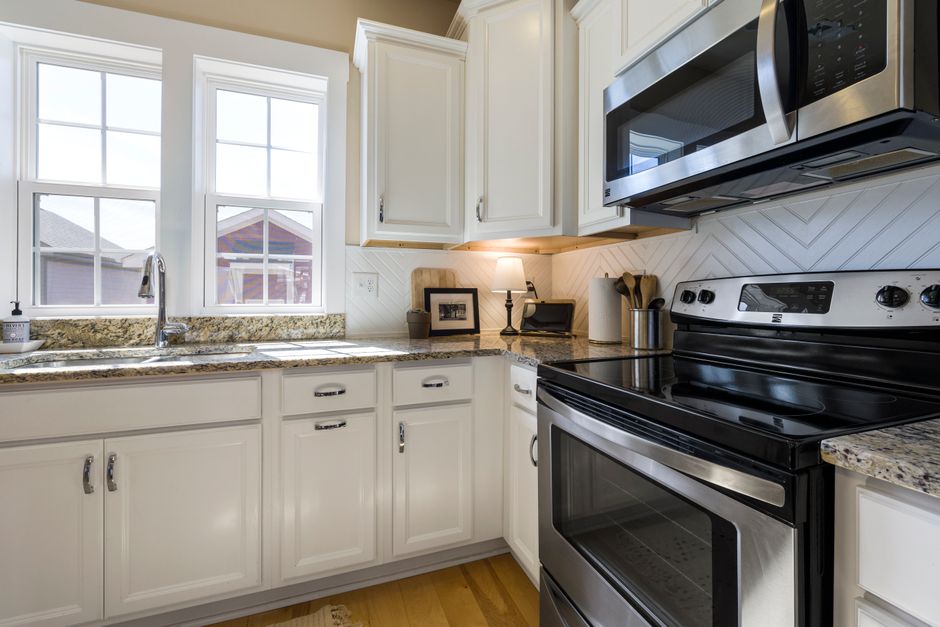
If your kitchen cabinets are structurally sound but visually stuck in a decade you would rather forget, you are facing the same question thousands of Denver-area homeowners ask every year: replace or refinish. A full kitchen remodel in the Front Range now exceeds $30,000 and can climb past $45,000 with demolition, dumpsters, and new construction. A Denver kitchen cabinet refinishing company offers a different path, one that delivers a durable factory finish on your existing cabinets for roughly 30 percent of replacement cost, in five to seven business days, without turning your home into a construction zone. For homeowners in Castle Rock, Castle Pines, Highlands Ranch, and Parker, that math is hard to ignore.
Table of Contents
- Why Denver Homeowners Are Choosing Cabinet Refinishing Over Full Replacement
- What "Factory Finish" Actually Means (And Why It Beats House Paint)
- The Refinishing Process: How a Professional Denver Company Delivers Durability
- Refinishing vs. Replacement vs. Refacing: A Denver Cost and Value Comparison
- Choosing the Right Finish: Matte, Satin, Semi-Gloss, or Gloss
- 2026 Color Trends for Denver Kitchen Cabinets
- DIY vs. Professional Refinishing: The Real Cost of "Saving" Money
- How to Care for Your Factory-Finished Cabinets
- Why Choose a Local Denver Cabinet Refinishing Company?
Why Denver Homeowners Are Choosing Cabinet Refinishing Over Full Replacement
The numbers tell a clear story. A full kitchen remodel in the Denver metro area starts around $30,000 and routinely reaches $45,000 or more when you factor in demolition, new cabinetry, countertops, and the inevitable surprises that come with opening walls. Professional cabinet refinishing, by contrast, typically lands between $4,000 and $10,000. That is a savings of 50 to 70 percent, and the finished result is nearly indistinguishable from brand-new factory cabinetry.
Beyond the cost, there is the question of what you are actually throwing away. Industry assessments show that roughly 85 percent of existing cabinet boxes are structurally sound enough to last another 25 years with a professional industrial coating. These are often solid wood or plywood boxes built to standards that would cost a fortune to replicate today. Tearing them out means paying for demolition, disposal, and replacement, all to solve a cosmetic problem.

There is also a sustainability angle that resonates with Colorado homeowners. Every refinishing project keeps approximately 1,200 pounds of high-quality wood out of local landfills. That is material that does not need to be harvested, milled, shipped, or discarded.
Finally, consider the return on investment. A fresh factory finish can add $10,000 to $15,000 to a home's appraisal value immediately. In competitive Denver neighborhoods like Washington Park and Cherry Hills, properties with updated, neutral cabinetry sell 15 percent faster than those with dated wood tones. Whether you plan to stay for years or list next spring, refinishing is one of the highest-ROI upgrades available.
What "Factory Finish" Actually Means (And Why It Beats House Paint)
The phrase "factory finish" gets used often in the refinishing industry, but it refers to something specific. It describes a spray-applied, industrial-strength coating, typically a lacquer or precatalyzed primer and topcoat system, that cures into a rock-hard surface. This is not standard latex house paint brushed or rolled onto cabinet faces. The difference in chemistry, application, and durability is vast.
Spray application creates a smooth, even, seamless layer that bonds at a molecular level with the prepared surface. Brushstrokes leave texture, ridges, and microscopic weak points where moisture and grease can eventually penetrate. A sprayed factory finish has none of those vulnerabilities. It lays down flat, cures uniformly, and resists chipping, peeling, and yellowing for 15 to 20 years.
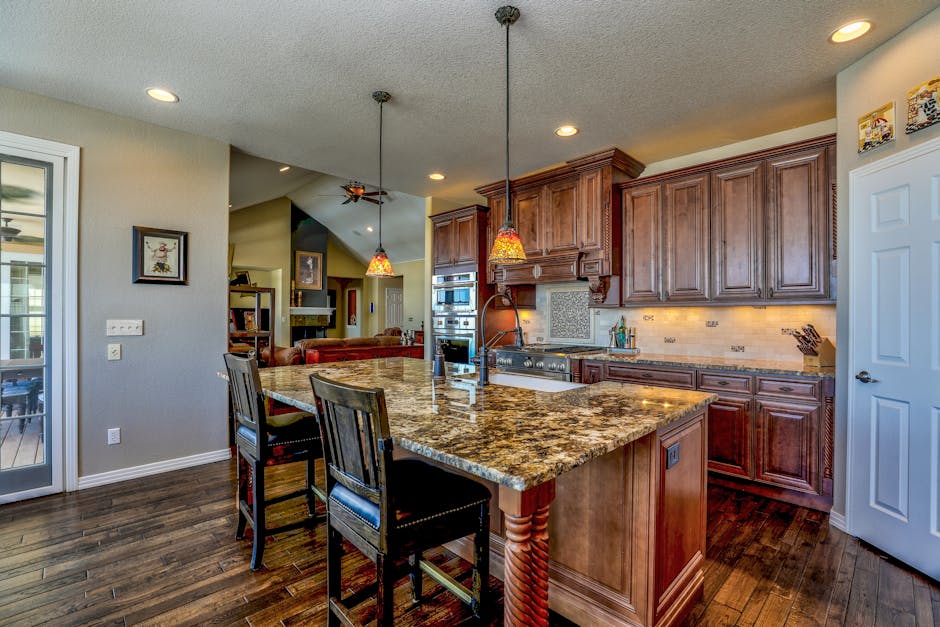
Denver's climate offers a hidden advantage here. The average humidity hovers around 15 percent, which is unusually low. In humid environments, coatings can struggle to cure fully, remaining slightly soft or taking longer to harden. Denver's dry air allows specialized industrial coatings to cure harder and faster, forming a surface that stands up to daily wear in a busy kitchen.
When a refinishing company talks about a factory finish, they are promising an outcome that matches what you would expect from cabinets built in a controlled manufacturing facility. The sheen is consistent. The color is uniform. The surface is tough enough to handle spills, scrubbing, and Colorado's dry indoor air without failing.
The Refinishing Process: How a Professional Denver Company Delivers Durability
Step 1 – Preparation (75% of the Project Time)
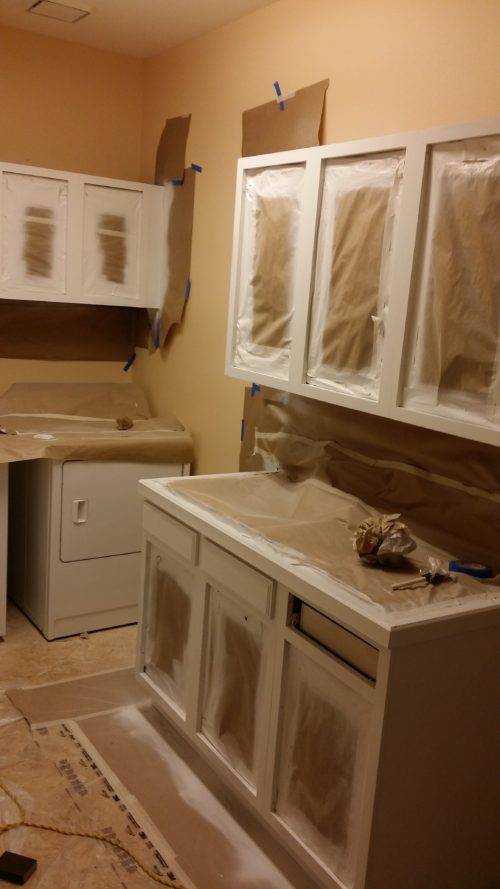
The secret to a finish that lasts two decades is not in the topcoat. It is in the preparation. Professional refinishing teams spend up to 75 percent of total project time on cleaning, degreasing, sanding, and masking. Every cabinet surface in a kitchen accumulates cooking oils, airborne grease, and hand oils over the years. Those contaminants are invisible but deadly to adhesion. A thorough degreasing removes them completely.
Sanding follows. This step creates the "tooth," a microscopic texture that gives industrial primers something to grip. Without proper sanding, even the best coating will eventually separate from the surface. The goal is not to strip the wood bare but to abrade the existing finish enough for a mechanical bond.
For homes built before 1978, which are common in Denver's historic neighborhoods, EPA lead-safe practices are not optional. A qualified refinishing company follows strict containment protocols: plastic barriers, HEPA-filtered vacuums, and careful disposal procedures that protect your family and comply with federal regulations. If a contractor cannot speak to their lead-safe certifications, keep looking.
Step 2 – Spraying and Curing
Once the kitchen is masked and the surfaces are prepped, the spraying begins. Doors and drawer fronts are typically removed and sprayed in a controlled environment, either a dedicated shop space or a fully sealed area within the home. This prevents dust, pet hair, and airborne particles from settling into the wet finish.
Industrial-grade primers go down first, followed by thin, even layers of topcoat. Some Denver companies use advanced curing technology, such as UV instant-curing systems, that harden the finish in seconds under specialized light. These systems are low-VOC, produce no lingering odors, and eliminate the days of drying time that traditional lacquers require. The result is a finish indistinguishable from what you would get on brand-new, factory-built cabinets, completed in a fraction of the time.
Step 3 – Reassembly and Final Inspection
After curing, the doors and drawer fronts are reinstalled. Hinges are adjusted, drawer slides are tested, and every surface is inspected under good light. A professional team checks for consistency in sheen, color match across all pieces, and proper alignment. There should be no drips, sags, or thin spots. Most projects wrap up in five to seven business days, compared to three months or longer for a full remodel, and you can live in your home throughout the entire process.
Refinishing vs. Replacement vs. Refacing: A Denver Cost and Value Comparison
| Option | Typical Cost | Timeline | Durability | Disruption |
|---|---|---|---|---|
| Full remodel | $30,000–$45,000+ | 3+ months | New cabinets (15–25 yrs) | Major; kitchen unusable |
| Cabinet refacing | $8,000–$15,000 | 2–3 weeks | New doors, old boxes | Moderate |
| Professional refinishing | $4,000–$10,000 | 5–7 days | 15–20 years | Minimal; live at home |
Refinishing costs roughly 30 percent of what a full replacement would run, making it the most cost-effective path to a like-new kitchen. Refacing occupies a middle ground: it replaces doors and drawer fronts but leaves the existing cabinet boxes in place. While refacing can address damaged or warped doors, it costs two to three times more than refinishing and still does not give you brand-new boxes.
For Denver homeowners preparing to sell, the speed of refinishing is a strategic advantage. You can have the project completed in a week and list the following weekend. The updated, neutral cabinetry that buyers in Washington Park, Cherry Hills, and Highlands Ranch expect will be in place, helping your property move faster and at a stronger price.
Choosing the Right Finish: Matte, Satin, Semi-Gloss, or Gloss
The sheen you choose affects both the look and the daily experience of your kitchen. Matte finishes hide fingerprints and small imperfections exceptionally well. They suit modern, farmhouse, and minimalist kitchens and require only gentle cleaning with a soft cloth. Satin is the most popular choice across the Front Range. It balances durability with a soft, warm glow and forgives the smudges that accumulate on high-touch surfaces around handles and edges.
Semi-gloss offers higher durability and easier wipe-downs, making it a strong candidate for busy family kitchens. It reflects more light, which can help smaller spaces feel larger and brighter. Gloss delivers maximum shine and a bold design statement, but it shows fingerprints and smudges more readily than any other sheen. A professional refinishing company can walk you through samples, help you match the finish to your kitchen's natural light, and advise on what will hold up best given how you actually cook and live.
2026 Color Trends for Denver Kitchen Cabinets
Neutral, warm whites and creamy off-whites continue to dominate in 2026. These colors offer timeless appeal, work with virtually any countertop and backsplash, and deliver strong resale value. They are the safe, smart choice that never looks dated.
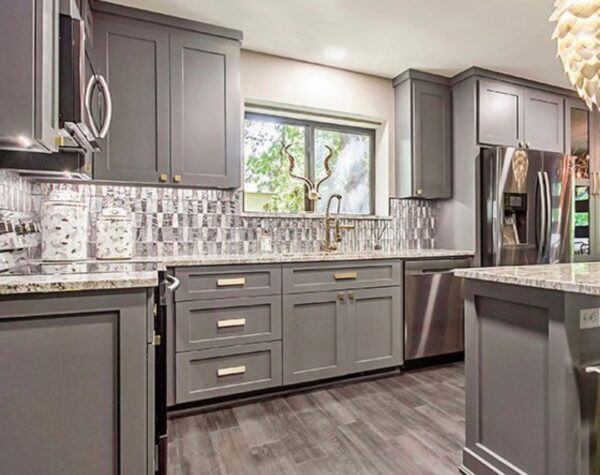
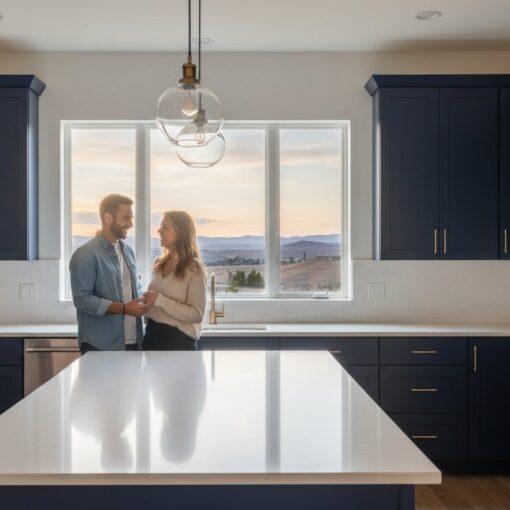
For homeowners willing to take a bit more risk, deep green and navy blue are emerging as statement colors on lower cabinets, paired with neutral uppers. This two-tone approach adds depth and personality without overwhelming the space. Dark islands with light perimeter cabinetry remain popular across Castle Rock and Parker, especially when accented with matte black or brushed brass hardware. The 2026 palette leans into soft greiges and warm taupes, colors that feel current but not trendy. A factory finish in any of these shades gives your kitchen a custom, high-end look without custom pricing.
DIY vs. Professional Refinishing: The Real Cost of "Saving" Money
DIY cabinet refinishing kits and brush-on products cost between $200 and $600 in materials. That number looks appealing until you account for what those kits cannot do. Without commercial-grade spray equipment, achieving a smooth, factory-quality finish is extremely difficult. Drips, brush marks, orange-peel texture, and adhesion failure are common outcomes, and fixing them often means starting over.
Renting a sprayer, buying specialty coatings, and taking a week off work quickly erodes the apparent savings. A DIY project that stretches across three or four weeks of evenings and weekends has a real cost in time, frustration, and lost use of your kitchen. Professionals arrive with industrial sprayers, premium coatings, and years of experience. The $4,000 to $10,000 investment includes a finish engineered to last 15 to 20 years.
If you are preparing to sell, the stakes are even higher. A professional factory finish adds $10,000 to $15,000 in appraisal value. A DIY job with visible imperfections can actually hurt your listing. Buyers notice uneven sheen, rough textures, and paint on hinges. The professional route pays for itself at resale.
How to Care for Your Factory-Finished Cabinets
Maintaining a factory finish is straightforward. Clean with a soft, damp cloth and a small amount of mild soap. Avoid abrasive pads, harsh chemical cleaners, and citrus-based degreasers, which can dull or soften the coating over time. Wipe up spills immediately, especially oils and acidic liquids like vinegar or tomato sauce, to prevent staining.
Dust weekly with a microfiber cloth to keep buildup from dulling the sheen. Avoid hanging wet dish towels over cabinet doors or placing hot appliances directly against finished surfaces. Heat and moisture are the primary enemies of any cabinet finish, factory-applied or otherwise. With these simple habits, your finish will maintain its luster for 15 to 20 years. No waxing, polishing, or special treatments are required.
Why Choose a Local Denver Cabinet Refinishing Company?
A local Denver team brings more than just proximity. They understand the dry climate, the historic bungalows, and the modern farmhouse styles that define Front Range homes. They know how coatings behave in 15 percent humidity and how to prep surfaces that have weathered decades of Colorado's temperature swings. That local knowledge translates into better results.
Service extends across Castle Rock, Castle Pines, Highlands Ranch, Parker, and the greater Denver metro area. The quoting process is fast and low-pressure, often handled entirely by text. There is no need for a high-pressure sales visit. The spray application happens in a controlled shop environment, never in a dusty garage or a makeshift kitchen booth, which means a flawless, dust-free finish every time.
The coatings used are low-VOC and non-toxic, safe for families and pets. For pre-1978 homes, EPA lead-safe practices are standard procedure. Every project concludes with a detailed walkthrough and warranty-backed workmanship. When you are ready to transform your kitchen, you can reach out for a quote and expect a response within 24 hours. Many Denver-area homeowners find that a fresh factory finish is the smartest investment they can make in their home, whether they plan to enjoy it for years or sell in 2026.