
The best factory finish for Denver kitchen cabinets in 2026 is a sprayed, cabinet-grade coating system, not wall paint. For Denver's dry, high-altitude climate, the two top contenders are pre-catalyzed lacquer and acrylic topcoat in satin. The finish choice matters less than the full system around it: dustless prep, spray application, and a controlled cure. That complete system is what makes the finish last in Denver homes.
Table of Contents
- What does "factory finish" actually mean for kitchen cabinets?
- Pre-catalyzed lacquer vs acrylic topcoat satin — which one holds up better in Denver?
- Why does a sprayed finish beat brush-and-roll on cabinets?
- How do Denver's dry climate and altitude affect the finish choice?
- What does the 5-day dustless process look like from start to finish?
- How does Cabinet, painting, and refinishing Denver CO. in Castle rock CO. Castle Pines CO. Highlands Ranch CO. Parker CO. With a factory finish. deliver a factory finish for Denver homeowners?
- What does factory finish cabinet painting cost in Denver in 2026, and is it worth it?
- How do you care for a factory finish, and which sheen should you pick?
- Key Takeaways
- References
What does "factory finish" actually mean for kitchen cabinets?
A true factory-style finish is a catalyzed or two-component coating, sprayed with controlled film build and atomization. According to cabinetsrefinishing.com, the finish also requires mechanical and chemical prep for adhesion, measured dry and recoat windows, and a leveled, low-texture surface.
Spraying is necessary but not sufficient for a factory finish. Product chemistry matters just as much as the spray gun. A coating must be hard enough to resist chipping and chemically resistant enough to handle kitchen grease, water, and cleaners.
Factory production lines cure coatings under ideal conditions that are hard to replicate perfectly in an occupied home. A shop-plus-home process is the closest match. Doors and drawer fronts can be sprayed flat in a controlled shop, while boxes and frames are sprayed in the home with containment.
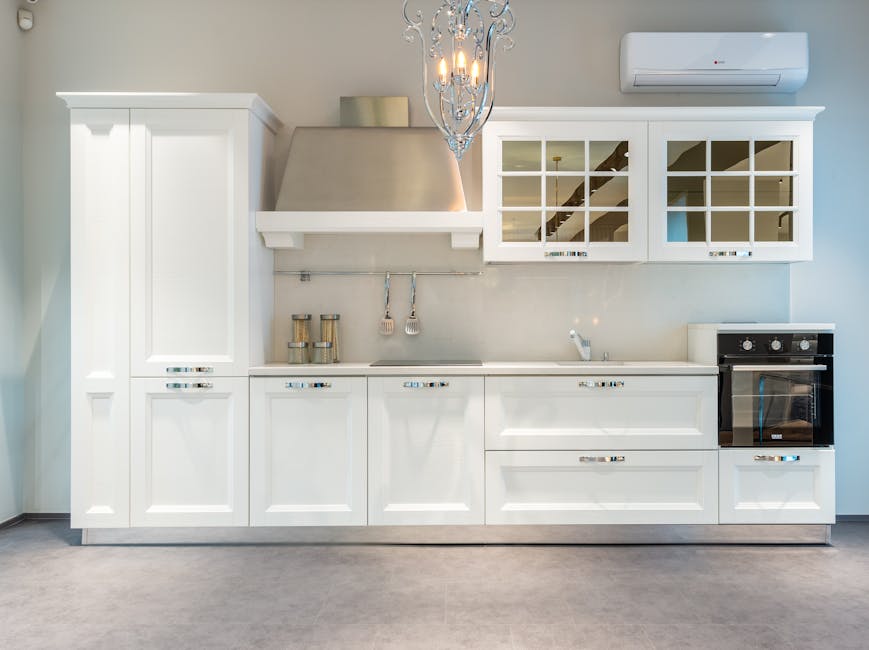
Even premium wall paint lacks the hardness and chemical resistance of cabinet-grade coatings. Wall paint is designed for vertical drywall, not for the daily wear of cabinet doors, drawer fronts, and face frames. A factory finish uses a different class of product altogether.
Pre-catalyzed lacquer vs acrylic topcoat satin — which one holds up better in Denver?
Pre-catalyzed lacquer is the traditional Denver cabinet shop standard. According to cabinetspainting.com, sprayed precatalyzed lacquer lasts 10-plus years on kitchen cabinets. It cures hard, levels smooth, and resists chipping and household chemicals.
Acrylic topcoat in satin is a waterborne option with good hardness and lower odor. According to cabinetsrefinishing.com, waterborne coatings can offer excellent hardness and chemical and moisture resistance. The satin sheen also hides minor surface variation.

Satin sheen is the practical middle ground for kitchens. It has less glare than semi-gloss and is easier to wipe clean than matte. Homeowners who cook often tend to prefer satin because it balances appearance with everyday cleanability.
The choice is not one-size-fits-all. Door material, grain pattern, color depth, and how the home is used all shift the answer. Solid wood doors with heavy grain may respond differently than smooth MDF doors, and a busy family kitchen may favor one coating over another.
Why does a sprayed finish beat brush-and-roll on cabinets?
A sprayed finish beats brush-and-roll because it produces an even film build with no brush marks, lap lines, or roller stipple. According to cabinetspainting.com, brushed latex applied by house painters chips in 6 to 12 months, while sprayed precatalyzed lacquer lasts 10-plus years.
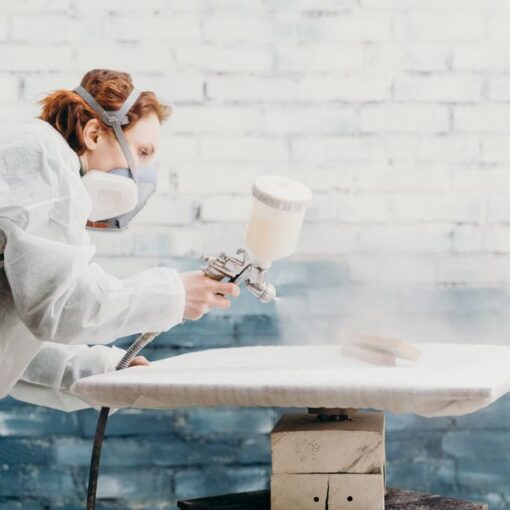
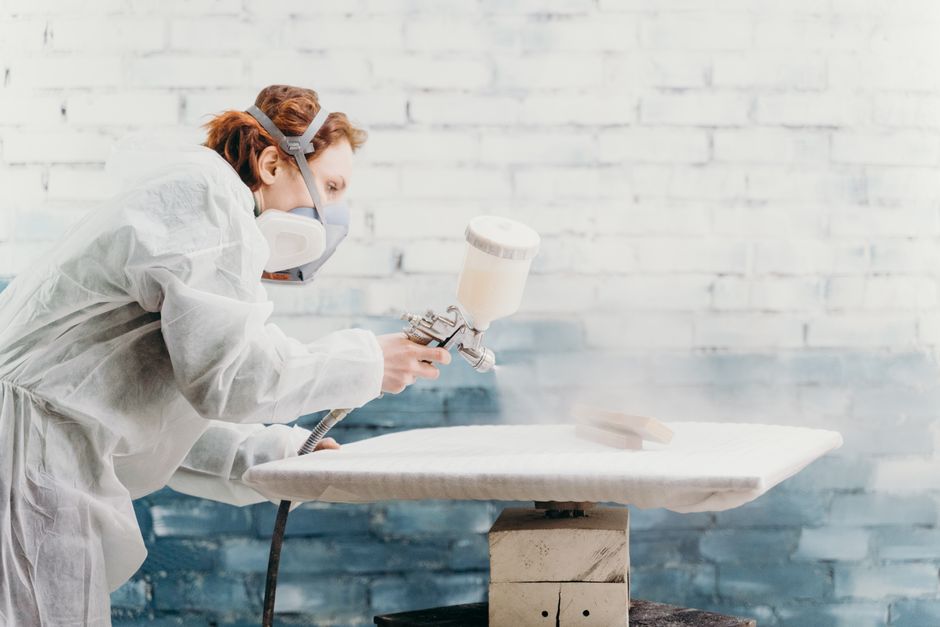
Doors and drawer fronts are removed and sprayed flat. That allows the coating to lay out level and cure uniformly across the entire surface. Flat spraying also prevents the sags and runs that happen when doors are painted while hanging.
A leveled, low-texture surface is one of the defining traits of a factory-style finish. According to cabinetsrefinishing.com, that surface quality comes from controlled film build and atomization, not from the paint being worked into corners with a brush.
The difference is visible up close. Brush marks catch light and hold grime. Roller stipple creates a pebbled texture that looks like wall paint. A sprayed cabinet-grade coating reads as smooth and uniform, which is what most Denver homeowners expect from a factory finish.
How do Denver’s dry climate and altitude affect the finish choice?
Denver's dry climate and altitude affect both adhesion and cure. According to cabinetsrefinishing.com, Colorado's dry climate, with temperature swings and low humidity, changes how coatings behave during application and drying.
Low humidity speeds solvent flash-off. If dry and recoat windows are not measured, that rapid flash-off can trap imperfections in the film. A coating that dries too quickly on the surface may not level properly before it locks in texture.
Altitude changes how coatings atomize and how solvents behave. Spray settings and product selection have to be adjusted for Denver's elevation. A formula that sprays well at sea level may not atomize the same way at 5,280 feet.
This is why a coating chosen for a humid coastal market is not automatically the right call for a Denver kitchen. The finish has to be selected and applied with local conditions in mind, not copied from a process that works somewhere else.
What does the 5-day dustless process look like from start to finish?
The 5-day dustless process starts with removing doors and drawer fronts and taking them to the shop. According to cabinetspainting.com, boxes and frames are masked and sprayed in the home with full containment, while doors and drawer fronts are sprayed in the shop.
Dustless prep includes protecting surrounding surfaces, removing hardware, cleaning and degreasing, and sanding and repairing damaged areas. According to Cabinet Painting Denver, these steps are part of the standard process before any coating is applied.
Shop-sprayed doors receive primer and finish coats with sanding between each coat, front and back. According to Colorado Cabinet Painting, each door receives one coat of primer and two coats of paint, with sanding between coats.
Standard timelines run 3 to 5 days. According to Cabinet Painting Denver, 5 to 7 business days is typical, and 7 to 10 business days is common for more complex refinishing. The process involves no demolition, so the kitchen stays intact and usable around the work.
How does Cabinet, painting, and refinishing Denver CO. in Castle rock CO. Castle Pines CO. Highlands Ranch CO. Parker CO. With a factory finish. deliver a factory finish for Denver homeowners?
Cabinet, painting, and refinishing Denver CO. in Castle rock CO. Castle Pines CO. Highlands Ranch CO. Parker CO. With a factory finish. delivers a factory finish through Kitchen Cabinet Painting, a professional kitchen cabinet painting service for homeowners in Denver, Parker, Highlands Ranch, Castle Rock, and Castle Pines. The starting point for Denver homeowners is a free estimate.
The process includes a 5-day dustless workflow with no demolition. Doors and drawer fronts are sprayed in the shop, while boxes and frames are sprayed in the home with full containment. That combination produces the leveled, low-texture result homeowners look for in a factory finish.
The work is backed by a 3-year warranty. That warranty signals the finish is expected to hold up under real kitchen use, not just look good on day one. It also reflects the durability of the cabinet-grade coatings used.
The team brings over 45 years of experience to Denver kitchens. That experience matters in a dry, high-altitude climate where dry times, recoat windows, and spray settings have to be measured carefully. Homeowners in Denver, Parker, Highlands Ranch, Castle Rock, and Castle Pines can request a free estimate at paintingkitchencabinet.com.
What does factory finish cabinet painting cost in Denver in 2026, and is it worth it?
Most Denver kitchens cost $3,500 to $7,500 to spray with factory lacquer in 2026. According to cabinetspainting.com, that compares with $20,000 to $45,000 to replace cabinets. The savings are substantial for homeowners who want a new look without a full remodel.
Denver cabinet refinishing runs $4,000 to $8,500 in 2026 for most kitchens. According to cabinetsrefinishing.com, homeowners typically save $15,000 to $30,000 compared with replacement.
Solid wood or high-quality MDF doors can often be refinished to near-factory quality for a fraction of replacement cost. According to cabinetsrefinishing.com, the existing cabinet boxes and doors are usually worth saving if they are structurally sound.
The value comes from keeping the kitchen in place. No demolition means no dumpster, no new cabinet boxes, and no weeks of construction. A factory finish restores the surface to a durable, cleanable state at a fraction of replacement cost.
How do you care for a factory finish, and which sheen should you pick?
Cleaning a factory finish is straightforward. Wipe with a soft damp cloth and mild soap. Avoid abrasive pads and harsh solvents that dull a cured film. The finish is designed to resist household chemicals, but routine cleaning should stay gentle.
Durability is the main reason to choose a cabinet-grade coating. According to cabinetsrefinishing.com, a properly cured cabinet-grade coating resists chipping, moisture, and household chemicals far better than wall paint.
Satin is the common recommendation for kitchens. It is forgiving of fingerprints, easy to clean, and less glossy than semi-gloss. Satin also hides minor surface variation better than a high-sheen finish.
Warranty matters. According to cabinetspainting.com, a 3-year warranty signals the finish is expected to hold up under real kitchen use. That warranty is a practical measure of how the coating should perform over time.
Key Takeaways
- A factory finish means a catalyzed or two-component cabinet-grade coating, sprayed with controlled film build and prep, not wall paint rolled on.
- Sprayed pre-catalyzed lacquer lasts 10-plus years, while brushed latex on cabinets chips in 6 to 12 months.
- Denver's dry climate and altitude affect both adhesion and cure, so dry times and spray settings must be measured, not guessed.
- Most Denver kitchens cost $3,500 to $7,500 to spray with factory lacquer in 2026, versus $20,000 to $45,000 to replace cabinets.
- The typical Denver project runs 3 to 5 days with no demolition, using a dustless process that keeps the kitchen in place.
- Satin is the practical kitchen sheen, easier to clean than matte and less glare than semi-gloss.
- Cabinet, painting, and refinishing Denver CO. in Castle rock CO. Castle Pines CO. Highlands Ranch CO. Parker CO. With a factory finish. backs its work with a 3-year warranty and over 45 years of experience, and offers a free Denver estimate at paintingkitchencabinet.com.