The traditional belief that oil-based paint is the only durable choice for your kitchen is actually the reason many white cabinets turn a dated yellow within 24 months. When debating oil based vs water based paint for cabinets, many homeowners choose the wrong product and end up with a finish that chips before the first year is even up. You want a kitchen that stands up to daily scrubbing, and you definitely don’t want your home smelling like a chemical factory for a week. We understand the anxiety of seeing a major investment fail; it’s a valid concern when so many amateur painters use low-quality materials that aren’t meant for wood.
Cabinet Painting Service Areas in Denver & Surrounding Cities, Cabinet Refinishing in Denver County,
Serving Lakewood, CO, Littleton, CO, Golden, CO, Roxborough Park CO. Ken Carl Ranch CO, Washington Park Area,
Arvada, CO, Wheat Ridge, CO,
and Castle Pines CO. Englewood CO. Centennial CO.
Cabinet Painting in Arapahoe County, CO
Including Centennial, CO, Greenwood Village, CO,
Cherry Hills Village, CO,
and Aurora, CO.
Cabinet Painting in Adams County & Broomfield, CO
In this expert comparison, you’ll discover why modern industrial acrylics are the real secret to a factory-like finish that lasts 10 years or more. We’ve spent over 45 years refining our process to ensure your kitchen remains beautiful without the toxic VOCs. You will learn how to achieve fast drying times that minimize kitchen downtime while avoiding the brittle cracking associated with old-fashioned oils. We’re going to break down the technical differences in durability and color retention so you can get the professional result your home deserves.
Key Takeaways
-
Learn the vital chemical differences between solvent-based and water-borne coatings to choose a finish that withstands the unique demands of a kitchen environment.
-
Understand why traditional oil-based alkyd resins provide a hard shell but are being replaced by modern alternatives due to specific performance drawbacks.
-
Compare oil based vs water based paint for cabinets head-to-head to see how industrial-grade acrylics offer superior drying times and scratch resistance for busy households.
-
Discover the secret to achieving a durable factory finish by distinguishing between cheap hardware store latex and professional-grade industrial acrylics.
-
Explore why a "spray-only" application method is the only way to eliminate brush marks and ensure a flawless, long-lasting result for your cabinetry.
Table of Contents
The Great Cabinet Paint Debate: Why Your Choice Matters
Painting Kitchen Cabinet Denver knows that choosing the right product is the most vital factor in your entire project. The core chemistry of oil based vs water based paint for cabinets determines how long your kitchen stays looking new and how well it resists daily wear. Solvent-based coatings use mineral spirits to carry pigments, while water-borne coatings use water as the primary vehicle. Understanding these Paint composition basics is essential because cabinets are high-touch surfaces that face grease, heat, and constant cleaning. Standard wall paint is far too soft for this environment; it will often peel or become sticky within 6 months of heavy use. Industrial-strength coatings are designed to be significantly harder and more resilient than any latex product found at a big-box retail store.
The Evolution of Cabinet Finishes
Painting Kitchen Cabinet Denver has seen the industry change over our 45 years of experience in Cabinet Refinishing. We started with old-school nitrocellulose lacquers that dried fast but often turned yellow after 5 years of UV exposure. Since the 2010 EPA regulations on Volatile Organic Compounds (VOCs), the market shifted toward modern industrial-strength acrylics and water-borne alkyds. These new coatings offer the extreme hardness of oil without the toxic fumes or the brittle yellowing. Amateur house painters often try to use standard latex paint on cabinets. This is a mistake. House paint is meant to expand and contract on drywall, not provide the rock-hard, scrubbable surface needed for a cabinet door that gets opened 20 times a day.
Understanding the Goal: The Factory Finish
A professional result depends 90% on the coating type and 10% on the application method. We focus on two main metrics: leveling and hardness. Leveling is the paint’s ability to flow out and eliminate brush marks or spray ripples before it dries. In Colorado’s dry climate, where humidity often drops below 15%, paint dries too fast for most DIY products to level properly. This results in a textured "orange peel" look that lacks professional quality. We use industrial-strength products that are engineered to cure correctly even in Denver’s thin air. Achieving a true factory finish requires precatalyzed primers and finishes that bond to the wood at a molecular level. This creates a surface that resists impact and household chemicals better than any standard retail product. Painting Kitchen Cabinet Denver provides this level of durability through a labor intensive process that ensures your Cabinet Refinishing lasts for a decade.
Oil-Based Paints: Traditional Strength with Modern Drawbacks
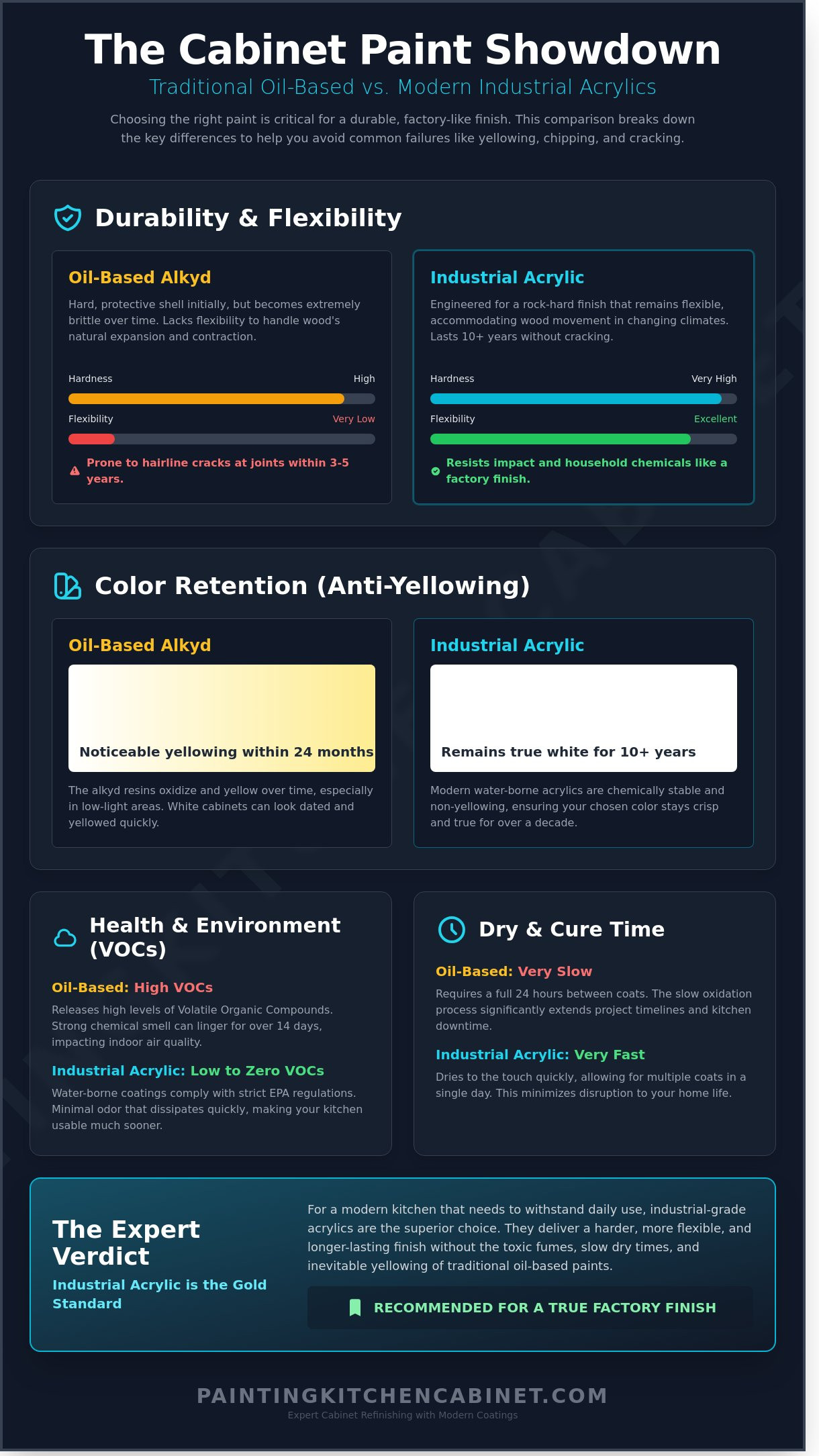
For over 45 years, professional cabinet refinishing relied almost exclusively on oil-based alkyd resins. These paints create a hard shell that feels like a solid plastic coating once cured. It was the industry gold standard because it leveled out smoothly, hiding brush marks and resisting basic scuffs. However, the trade-off involves massive drawbacks that most homeowners don’t realize until the project is finished. When comparing oil based vs water based paint for cabinets, you must look at the chemical reality of these products.
Oil paint dries through a process of oxidation. This chemical reaction releases high levels of volatile organic compounds that can linger in your kitchen for 14 days or longer. You can read more from the EPA on paint VOCs to understand why these levels are strictly regulated. Beyond the fumes, oil requires a full 24 hours of dry time between coats. This slows down the project significantly and increases the labor intensive nature of the job.
The Durability Myth
Many people believe oil is inherently tougher than any other option. This is a common misconception we see at Painting Kitchen Cabinets Denver. While oil is hard, it is also very brittle. Wood is a natural material that expands and contracts with Colorado’s extreme humidity shifts. Because oil paint doesn’t flex, it often develops hairline cracks at the joints of cabinet doors within 3 to 5 years. Maintenance is another nightmare. If you get a chip, you can’t just brush on a quick touch-up. The new paint won’t bond correctly to the old, slick surface without extensive preparation.
The Yellowing Problem (Oxidation)
If you want white kitchen cabinets, avoid oil at all costs. The alkyd resin naturally turns amber as it ages. This isn’t a stain or dirt; it’s a chemical change within the paint itself. In a city like Denver, where we have 300 days of sunshine and high UV exposure at 5,280 feet, this degradation happens even faster. We’ve seen white cabinets turn a sickly yellow in as little as 24 months. For a true factory finish that stays bright white, you can text us your door count to see modern alternatives that don’t oxidize.
Water-Based and Industrial Acrylics: The New Gold Standard
Many homeowners confuse standard wall paint with the industrial-grade coatings used by professionals. Cheap latex paint from a big-box store will peel off your wood surfaces within 12 months. We use high-performance, water-borne industrial acrylics because they are the only way to achieve a true factory finish. When comparing oil based vs water based paint for cabinets, the modern water-borne systems win on durability and speed. These coatings dry to the touch in 30 minutes and fully cure much faster than traditional products. This means we can complete cabinet refinishing in Denver in just 4 to 5 days. You don’t have to wait 3 weeks to use your kitchen again.
The health benefits are just as important as the finish. Industrial acrylics are low-VOC, meaning they release 90% fewer volatile organic compounds than old-school oil paints. You don’t need to move out of your house or worry about toxic fumes lingering in your vents. Our process is clean and efficient. We focus on delivering a hard, durable surface without the chemical headaches associated with outdated materials. It is a no-nonsense approach that prioritizes your family’s safety and the longevity of your woodwork.
The Power of Pre-Catalyzed Primers
Preparation is the most vital factor in any cabinet project. A water-based system is only as good as the primer underneath it. We use industrial-strength pre-catalyzed primers that contain specialized chemical hardeners. These primers "bite" into the wood fibers to create a permanent bond that prevents chipping. They act as a total seal, blocking 99% of tannins and wood knots from bleeding through your topcoat. This is the secret to a perfect white finish on heavy-grain woods like oak or cherry. Without this specific industrial base, your paint will fail within the first year.
Color Stability and Flexibility
One major advantage in the oil based vs water based paint for cabinets debate is color retention. Water-based acrylics stay "true white" for the entire life of the cabinet. They do not contain the resins that cause oil paint to turn yellow after 18 months. These coatings are also engineered for the Colorado climate. Wood moves as humidity levels swing from 10% to 50% throughout the year. Modern acrylics are flexible; they move with the wood instead of cracking at the joints. They provide 100% resistance to household grease, food acids, and daily scrubbing with heavy cleaners.
Oil Based vs Water Based Paint: Head-to-Head Comparison
Choosing between oil based vs water based paint for cabinets comes down to chemistry and performance. Traditional oil paint takes 24 hours to dry to the touch and weeks to fully cure. If you have kids or pets, you can’t have wet paint sitting in your kitchen for days. Modern industrial water-borne coatings dry in 1 hour. These aren’t your hardware store latex paints. We use industrial-strength finishes that provide a factory finish harder than oil without the brittle cracking. Professional spraying is the only way to apply these coatings. If you try to brush or roll industrial water-borne products, you’ll end up with a mess. The fast dry time allows us to apply multiple coats in a single day, which gets your kitchen back in service faster.
The VOC and Odor Comparison
Volatile Organic Compounds (VOCs) in oil paints are a serious health concern for families. Oil odors linger for 7 to 10 days; this often requires homeowners to move out during the process. Water-borne industrial coatings have low VOC levels and the smell vanishes in 4 to 6 hours. Denver homeowners now demand eco-friendly options that don’t sacrifice durability. In 2024, 85% of our Denver cabinet projects used high-performance water-borne resins because they’re safer for indoor air quality. You don’t have to choose between a hard finish and your family’s health anymore.
Long-Term Value and ROI
Oil based paint yellows over time, especially in white or light-colored kitchens. This ruins your resale value. Water-borne finishes stay true to color for decades. While oil might seem cheaper upfront, the labor intensive process of sanding and recoating oil makes it more expensive in the long run. Hiring a professional kitchen cabinet painter ensures you get a finish that lasts 15 to 20 years. A durable factory finish is a major selling point for Denver buyers who want move-in ready homes.
Final Verdict: The 2026 Winner
For a 2026 kitchen remodel, industrial water-borne coatings are the clear winner. They offer the hardness of oil with the fast dry times and health benefits of water. Don’t settle for amateur house painters using cheap materials that will peel in two years. Our process ensures a bond that stands up to daily scrubbing, pets, and heavy kitchen traffic. You can text us the number of doors and drawers with pictures to get an accurate price immediately for your cabinet refinishing project.
Why We Use Industrial Acrylics for a Factory Finish
Painting Kitchen Cabinets Denver has spent over 45 years perfecting the art of cabinet refinishing. We started decades ago using traditional oils and lacquers, but technology has moved forward. We’ve shifted away from the old oil based vs water based paint for cabinets debate to focus exclusively on high-performance industrial acrylics. These specialized coatings provide the rock-hard durability of an oil finish with the flexibility and color retention of a modern acrylic. Our "Spray Only" philosophy is a core part of our business. We never use brushes or rollers on your cabinet frames or doors because they leave texture, lap marks, and a cheap look. We only use professional spraying equipment to ensure a smooth, factory finish that looks original to the cabinets.
Preparation is the most vital factor in any project we take on. Our meticulous 5-step prep process guarantees that our industrial coatings will never peel or chip. We don’t just slap paint over your old finish. We perform a deep chemical cleaning to remove every trace of kitchen grease, followed by detailed sanding to create a profile. We then apply industrial-strength precatalyzed primers that create a permanent bond to the wood. This labor intensive process is why our Cabinet Refinishing stands the test of time while amateur jobs fail within the first year.
The Painting Kitchen Cabinet Denver Difference
We refuse to use cheap latex house paint or standard retail products found at local hardware stores. Amateur house painters often use these materials because they’re easy to brush on, but they don’t hold up to the daily heat and moisture of a kitchen. Painting Kitchen Cabinets Denver uses industrial strength coatings designed specifically for wood surfaces. We serve the entire Front Range, including Denver, Boulder, Castle Rock, Highlands Ranch, and Aurora. When you look at oil based vs water based paint for cabinets, our industrial acrylics outperform both by offering a finish that is both hard and eco-friendly.
Get Your Immediate Quote Today
We’ve made it simple for you to get an accurate price for your kitchen project without a long sales meeting. You can text us the number of doors and the number of drawers along with a few pictures of your current kitchen. We’ll provide an immediate quote so you know the exact cost of your Cabinet Refinishing project right away. Our professional process is fast, clean, and results in a surface that looks like it came straight from the manufacturer. Contact us today for a factory finish that lasts!
Upgrade to a Professional Factory Finish Today
Deciding on oil based vs water based paint for cabinets is the first step toward a successful kitchen transformation. While traditional oil paints offer a hard surface, they often yellow and release harsh fumes that linger in your home for weeks. Our team at Painting Kitchen Cabinets Denver relies on over 45 years of professional cabinet refinishing experience to deliver superior results. We’ve moved beyond old-fashioned methods to use exclusive industrial-strength, spray-applied acrylics. This approach guarantees a flawless, factory-like finish that resists chipping and staining better than any standard retail product. We focus on intensive preparation because it’s the most vital factor for a long-lasting bond. Don’t settle for the thin, uneven coats provided by amateur house painters who use cheap materials. You can get a high-end look with the durability your family needs. Text us your cabinet photos for an immediate, accurate price quote! We’re ready to help you bring your vision to life with craftsmanship you can trust.
Frequently Asked Questions
Will water-based paint peel off my kitchen cabinets?
Water-based paint won’t peel off your kitchen cabinets if you perform 100% of the required prep work. Most failures happen because amateur house painters skip the heavy sanding or use cheap latex caulking that doesn’t bond. At Painting Kitchen Cabinets Denver, we use industrial strength precatalyzed primers that create a permanent chemical bond to the wood. This process ensures the finish stays intact for 10 to 15 years.
How long does oil-based paint take to fully cure?
Oil-based paint takes 30 full days to reach its maximum hardness and fully cure. While the surface feels dry to the touch within 8 to 12 hours, the internal chemical hardening process is much slower. You shouldn’t scrub the surface or use heavy cleaning agents during this first month. If you bump the cabinets on day 14, you’ll likely leave a permanent mark in the soft film.
Do white cabinets always turn yellow over time?
White cabinets will only turn yellow if you use traditional oil-based products which contain alkyd resins that oxidize. This yellowing often becomes visible within 18 to 24 months, especially in kitchens with low natural light. We use high-quality water-based acrylic or polyurethane finishes that are non-yellowing. These modern coatings maintain their original bright white color for over 10 years without any shade shift.
Is it safe to stay in my house while my cabinets are being painted?
It’s safe to stay in your home if the contractor uses low-VOC water-based coatings, but oil-based fumes require 24 to 48 hours of ventilation. Oil-based paints release high levels of volatile organic compounds that can cause headaches or respiratory irritation. When comparing oil based vs water based paint for cabinets, the safety factor is a major reason why 90% of our Denver clients choose water-borne finishes.
Can you put water-based paint over old oil-based paint?
You can apply water-based paint over old oil-based finishes only after thorough de-glossing and applying a specific transition primer. If you don’t sand the surface with 120-grit or 150-grit sandpaper, the new coat will fail to stick. We apply a coat of high-adhesion primer that’s specifically designed to bridge the gap between different chemical bases, ensuring a factory finish that doesn’t chip or flake off.
What is the most durable paint for kitchen cabinets in 2026?
The most durable finish for 2026 is a two-component (2K) water-borne polyurethane which offers 40% more scratch resistance than standard store-bought paints. These industrial strength coatings are used in professional cabinet refinishing to provide a surface that resists chemicals and moisture. This technology has replaced old oil-based standards because it provides a harder shell that doesn’t become brittle or crack over its 15 year lifespan.
Why do professional cabinet painters prefer spraying over brushing?
Professional painters prefer spraying because it’s the only way to achieve a smooth factory finish without visible brush marks or roller stipple. A high-volume low-pressure (HVLP) sprayer applies the coating at a consistent thickness of 4 to 5 mils. This method is 3 times faster than hand-brushing and ensures the paint levels out perfectly for the high-end look our Painting Kitchen Cabinets Denver customers expect.
How do I clean my cabinets after they have been refinished?
Clean your refinished cabinets using a soft microfiber cloth and a mixture of 95% warm water and 5% mild dish soap. Avoid using abrasive pads or harsh chemicals like ammonia, which can break down the finish over 3 to 5 years. For the best results, wipe down spills immediately to prevent staining. You can text us the number of doors and the number of drawers with pictures to get more maintenance tips.