
Factory-finish sprayed cabinet painting in Aurora and the south Denver metro runs $4,000 to $8,000 in Denver and Aurora, $4,500 to $9,000 in Parker and Highlands Ranch, and $5,000 to $11,000 in Castle Pines and Castle Rock in 2026, priced per linear foot of cabinetry. The finish itself, a pre-catalyzed lacquer primer plus an acrylic topcoat that cures to a satin, lacquer-hard surface, is what separates a 3 to 4 day professional job from a brush-and-roller repaint that peels.
Table of Contents
- What does kitchen cabinet painting cost in Aurora and the south Denver metro in 2026?
- Is sprayed or brushed cabinet painting better for kitchens in Parker and Highlands Ranch?
- What is a factory finish and why does it beat latex or enamel on cabinets?
- How does Cabinet, painting, and refinishing Denver CO. deliver a factory finish in Castle Rock, Castle Pines, Highlands Ranch, Parker, Aurora, and Denver?
- Which 2026 cabinet colors are selling in Aurora new builds and Castle Pines luxury kitchens?
- Do HOA rules affect cabinet painting in Highlands Ranch, Stonegate, and Castle Pines Village?
- How long does factory-finish cabinet painting last in Colorado's dry, high-altitude climate?
- Is painting cabinets cheaper than replacing or refacing them in Aurora?
- Key Takeaways
- References
What does kitchen cabinet painting cost in Aurora and the south Denver metro in 2026?
The 2026 price bands for factory-finish cabinet painting are $4,000 to $8,000 in Denver and Aurora, $4,500 to $9,000 in Parker and Highlands Ranch, and $5,000 to $11,000 in Castle Pines and Castle Rock. These figures reflect a sprayed, shop-finished system, not a brush-and-roller repaint.
Pricing is calculated per linear foot of cabinetry. A standard kitchen with 20 to 30 linear feet of upper and lower cabinets, a modest island, and standard door and drawer fronts lands in the lower half of each band. Larger islands, stacked uppers, appliance panels, and extended cabinet runs push the total toward the top.
Door count and drawer front count change the total because every door and drawer face is removed, labeled, prepped, and sprayed individually. Cabinet height matters too. Ceiling-height uppers and tall pantry or oven towers add linear footage and require more material and labor than standard 30- or 36-inch uppers.
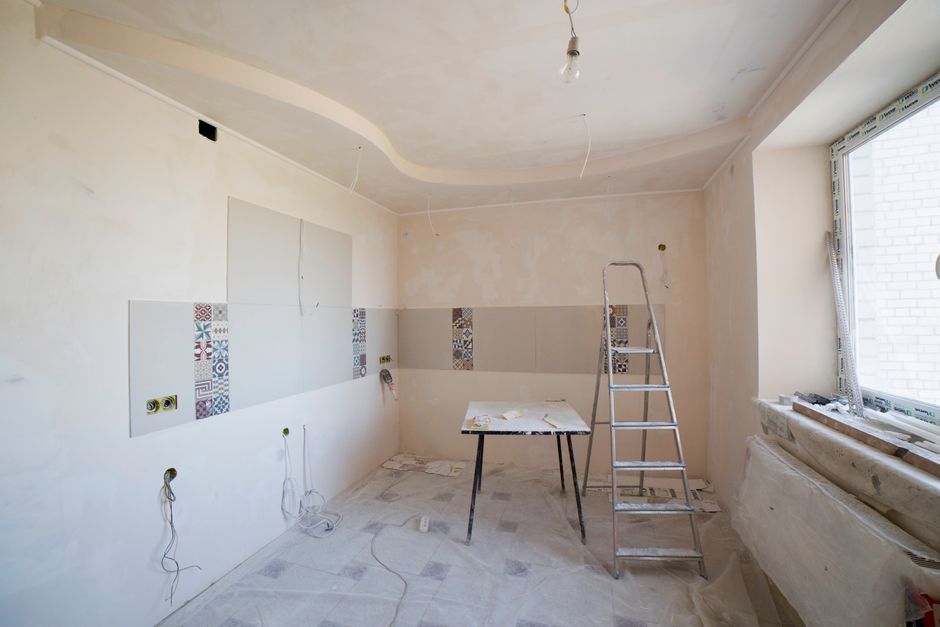
Prep condition drives cost. Cabinets with heavy grease buildup, silicone contamination, or previous latex paint require more degreasing, sanding, and priming before the finish system can be applied. Hardware reinstallation, soft-close hinge adjustment, and touch-up on site also add labor.
HOA or scheduling constraints can affect price in gated communities and master-planned neighborhoods. Limited work hours, parking restrictions, and approval timelines can compress the production window and add coordination time.
National averages do not reflect this market. Thumbtack lists a professional cabinet painting range of $1,200 to $7,000, but that range reflects brush-and-roller work, extra charges for door removal, and lower-grade paint. A factory-finish sprayed system in Aurora and the south metro is a different product and a different price point.
Is sprayed or brushed cabinet painting better for kitchens in Parker and Highlands Ranch?
Yes, sprayed cabinet painting is better for kitchens in Parker and Highlands Ranch. Brush and roller work leaves visible strokes, lap marks, and thin edges that show under task lighting, especially on flat-panel and Shaker doors in newer homes.
Those failures accelerate in Colorado's dry, high-altitude climate. Low humidity causes fast drying, which prevents brush-applied films from leveling out. The result is a textured surface with ridges that catch light. Film shrinkage at panel edges leads to cracking, and repeated contact at drawer pulls causes chipping and peeling.
CertaPro Painters of Aurora states that mounted cabinets are usually painted with hand rollers or brushes. That method leaves the cabinet boxes in place and applies paint in a vertical or horizontal stroke pattern that cannot match a sprayed film for uniformity.
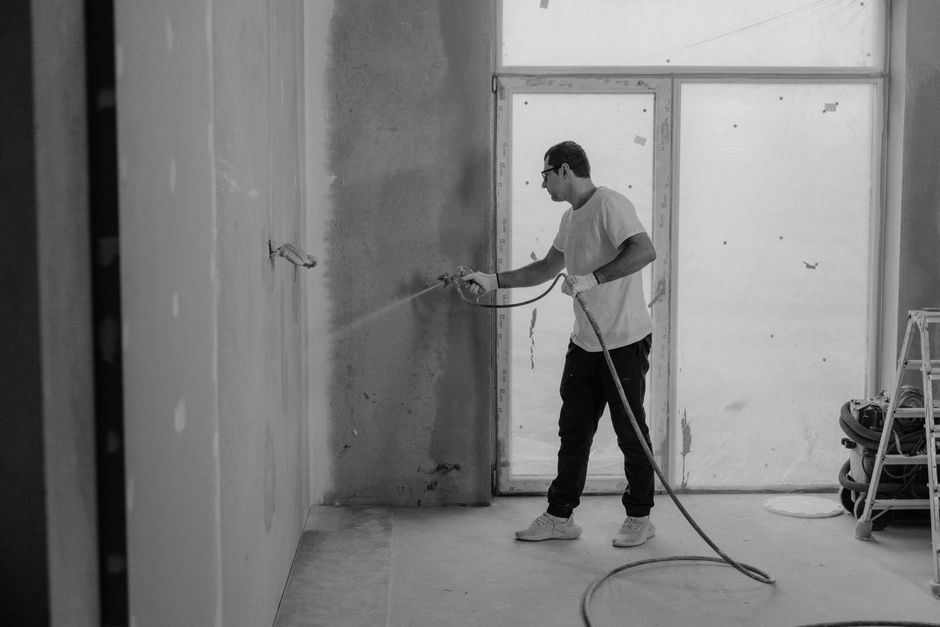
The sprayed alternative removes doors and drawers from the home. Each piece is labeled, prepped, and sprayed flat in a controlled shop environment. The flat orientation allows the finish to flow out evenly, eliminating sags, runs, and brush texture. The cabinet boxes are then sprayed or hand-finished on site with the same product system.
The timeline for a sprayed factory-finish job is 3 to 4 days. Homeowners can stay in the house during the work because the doors and drawers are sprayed off site. The kitchen remains partially usable, and the on-site portion produces far less dust and odor than spraying inside the home.
What is a factory finish and why does it beat latex or enamel on cabinets?
A factory finish is a catalyzed coating system built on a pre-catalyzed lacquer primer and an acrylic topcoat that hardens like lacquer paint and lays down in satin. The primer bonds to the prepared cabinet surface and blocks stains and tannins. The acrylic topcoat cross-links as it cures, forming a hard film that resists moisture, heat, and repeated wipe-downs.
Standard latex and enamel paints do not perform the same way on cabinets. Latex stays soft for weeks, blocks and sticks when doors touch, and can yellow over time in low-light areas. Enamel lays down thicker but remains flexible, which means it can peel at edges and chip at high-contact points around sinks, ranges, and dishwashers.
Satin is the recommended sheen for kitchen cabinets. Thumbtack notes that semi-gloss, gloss, and satin finishes are smooth and easy to clean, while matte finishes have a non-uniform surface that attracts dust and grease and is more vulnerable to damage during wipe-downs. Satin splits the difference: it cleans easily but hides minor surface imperfections better than gloss.
A catalyzed, shop-sprayed film outperforms latex and enamel around moisture and heat. The pre-catalyzed primer seals the wood or existing finish, and the acrylic topcoat cures to a lacquer-hard surface that withstands steam from dishwashers, splatter from ranges, and standing water at the sink base.
N-Hance of Denver uses a cabinet-formulated primer and an acrylic-polyurethane paint blend cured with UV light to create a rock-hard finish. The principle is the same: a catalyzed or cross-linked film outperforms air-dried latex and enamel on cabinet surfaces.
How does Cabinet, painting, and refinishing Denver CO. deliver a factory finish in Castle Rock, Castle Pines, Highlands Ranch, Parker, Aurora, and Denver?
Cabinet, painting, and refinishing Denver CO. delivers a factory finish through an in-home estimate that includes a sample door in satin finish. Homeowners approve the sheen and color on an actual cabinet door before any work begins, which removes the guesswork from color selection.
The process starts with removing every door and drawer front. Each piece is labeled so it returns to its original location. The doors and drawers are sprayed flat in a shop using a pre-catalyzed lacquer primer and an acrylic topcoat that hardens like lacquer paint. The flat spray orientation produces a satin finish without brush marks, runs, or sags.
The cabinet boxes are prepared and finished on site. Hardware is removed, surfaces are degreased and sanded, and the same primer and topcoat system is applied. The doors and drawers are then reinstalled dustless, with hardware adjusted and aligned. The full timeline is 3 to 4 days, and homeowners can remain in the home during the job.
Cabinet, painting, and refinishing Denver CO. serves all six cities in this market: Denver, Aurora, Parker, Highlands Ranch, Castle Pines, and Castle Rock. The service area map on paintingkitchencabinet.com shows the coverage across the south Denver metro.
The system used by Cabinet, painting, and refinishing Denver CO. matches the approach described by Five Star Painting of Southeast Denver, which lists kitchens, bathrooms, bar areas, and game rooms among the spaces where cabinets are painted. The difference is the specific pre-catalyzed lacquer primer and acrylic topcoat satin system, which is designed for the dry Colorado climate.
Which 2026 cabinet colors are selling in Aurora new builds and Castle Pines luxury kitchens?
The 2026 cabinet color palette for Aurora new builds and Castle Pines luxury kitchens centers on white, greige, navy islands, black, and wood-tone combinations. White remains the dominant perimeter color, while greige has replaced gray as the warm neutral that works with both cool and warm stone.
Aurora new builds in Tallyn's Reach and Southshore favor white or greige perimeter cabinets with a navy or black island. The contrast creates a defined focal point without overwhelming the open floor plans common in those neighborhoods. Wood-tone accents, often on a hood or island, add warmth to otherwise neutral kitchens.
Castle Pines and Castle Rock luxury kitchens run larger and lean into deeper tones. Black perimeter cabinets with brass or matte black hardware, full-height navy islands, and walnut or white oak accents appear more often in these higher-end homes. Two-tone layouts, perimeter plus island, are the most common configuration.
Satin sheen changes how color reads compared with flat or gloss. Flat finishes absorb light and make navy and black look chalky. Gloss reflects too much and highlights every imperfection. Satin gives navy and black depth without glare, and it keeps white and greige looking clean rather than plastic.
Two-tone layouts price out higher than single-color jobs because the island doors and drawer fronts require a separate color match, separate spray batches, and additional masking and labeling. The per-linear-foot cost rises when a second color enters the scope.
Five Star Painting of Southeast Denver lists dressing rooms, kitchens, bathrooms, bar areas, and game rooms among the rooms where cabinet painting applies. The same color logic extends to those spaces, but the kitchen drives the 2026 palette in this market.
Do HOA rules affect cabinet painting in Highlands Ranch, Stonegate, and Castle Pines Village?
Usually, HOA rules do not restrict interior cabinet color, but they often affect work hours, dumpster placement, and any exterior-visible activity. Interior cabinet painting rarely requires design review because the work is not visible from the street. The constraints come from noise, parking, and construction access.
Southshore and Tallyn's Reach in Aurora, Highlands Ranch HOA, Castle Pines Village, and Stonegate in Parker all maintain rules around contractor hours and vehicle placement. A shop-sprayed process reduces on-site disruption because the doors and drawers are sprayed off site. The on-site portion is quieter, produces less dust, and requires no spray booth or large equipment in the driveway.
CertaPro Painters of Aurora removes doors and hardware, sands and preps surfaces, applies paint or stain to doors, applies paint or stain to mounted cabinets, then reassembles the cabinets. That process keeps most of the finishing work off the driveway and inside the home, which aligns with HOA expectations.
Homeowners should confirm approval timelines before scheduling. Some HOAs require a contractor to be on an approved vendor list or to provide proof of insurance before work begins. A 3 to 4 day cabinet painting window can be delayed if the approval paperwork is not submitted in advance.
Five Star Painting of Southeast Denver is located at 17313 E Weaver Drive, Aurora, CO, 80016, and works in the same HOA-governed neighborhoods. Local contractors familiar with these communities know which rules apply and how to schedule around them.
How long does factory-finish cabinet painting last in Colorado’s dry, high-altitude climate?
Factory-finish cabinet painting lasts significantly longer than latex or enamel in Colorado's dry, high-altitude climate. Low humidity and altitude stress cheap films because they dry too fast, level poorly, and crack early at joints and panel edges. A catalyzed primer and acrylic topcoat system is formulated to cure properly even when the air is dry.
The pre-catalyzed lacquer primer seals the substrate and prevents moisture and tannin bleed. The acrylic topcoat hardens like lacquer paint, creating a film that resists the expansion and contraction that causes cracking in Colorado's temperature swings. The warranty that backs the system reflects that durability.
Care is straightforward. Mild soap and water clean the satin surface without damaging the film. Abrasive pads and harsh cleaners should be avoided because they can dull the sheen. Grease and standing water should be wiped up promptly, especially around the range and sink base.
Repainting every few years with latex costs more over time than a one-time factory-finish job. The labor to remove doors, prep, and repaint repeats each cycle. A catalyzed sprayed finish extends the interval between jobs and preserves the cabinet appearance for resale.
Thumbtack recommends semi-gloss, gloss, or satin finishes over matte for durability. N-Hance of Denver uses a UV-cured acrylic-polyurethane blend to create a rock-hard finish. The principle is consistent: harder, catalyzed films last longer on kitchen cabinets.
Is painting cabinets cheaper than replacing or refacing them in Aurora?
Yes, painting cabinets is cheaper than replacing or refacing them in Aurora. The 2026 factory-finish painting bands of $4,000 to $8,000 in Denver and Aurora, $4,500 to $9,000 in Parker and Highlands Ranch, and $5,000 to $11,000 in Castle Pines and Castle Rock undercut full replacement, which typically starts above $15,000 for a standard kitchen and rises quickly with custom sizes.
Refacing options like N-Hance of Denver replace doors and veneers but keep the existing cabinet boxes. Refacing costs more than painting because new doors, drawer fronts, and veneer materials are manufactured and installed. Painting keeps the current layout and door style while changing only the color and finish.
Replacement makes sense when cabinet boxes have failed, water damage has compromised the structure, or the layout no longer works. Painting wins when the boxes are sound and the door style is acceptable. A sprayed factory finish can make dated oak or maple doors look current without the cost of new doors.
Painting preserves the kitchen footprint. No plumbing, electrical, or countertop work is triggered because the cabinets stay in place. That avoids the hidden costs of replacement, which often include countertop removal, backsplash repair, and appliance disconnection.
Thumbtack lists a national average of $1,200 to $7,000 for professional cabinet painting, but that range reflects brush-and-roller work and extra charges for door removal. The factory-finish sprayed system in this market sits at the higher end because it includes shop spraying, catalyzed coatings, and dustless reinstallation.
Key Takeaways
- Factory-finish cabinet painting in 2026 runs $4,000 to $8,000 in Denver and Aurora, $4,500 to $9,000 in Parker and Highlands Ranch, and $5,000 to $11,000 in Castle Pines and Castle Rock.
- Pricing is calculated per linear foot and rises with door count, island size, cabinet height, and prep condition.
- The featured system uses a pre-catalyzed lacquer primer with an acrylic topcoat that hardens like lacquer paint and finishes in satin.
- Doors and drawers are removed and sprayed in a shop, then reinstalled dustless, with a 3 to 4 day timeline and the option to stay in the home.
- Brush and roller work leaves visible strokes and peels faster in Colorado's dry, high-altitude climate.
- Satin is the recommended sheen because it cleans easily, while matte finishes attract dust and grease.
- Cabinet, painting, and refinishing Denver CO. serves Denver, Aurora, Parker, Highlands Ranch, Castle Pines, and Castle Rock, and offers a free in-home estimate with a sample door in satin finish at paintingkitchencabinet.com.
References
- Southeast Denver Cabinet Painting Services — Five Star Painting
- Cabinet Refinishing & Painting Services in Aurora, CO — CertaPro Painters of Aurora
- Cabinet painters near Aurora, CO — Thumbtack
- Cabinet Refacing Aurora CO — N-Hance of Denver


