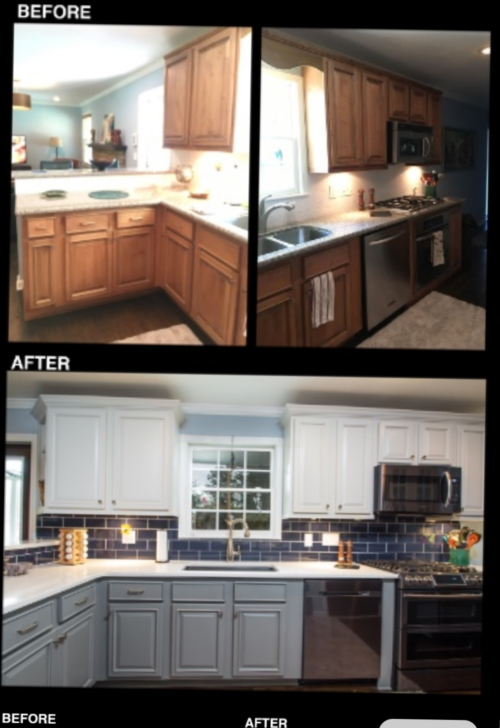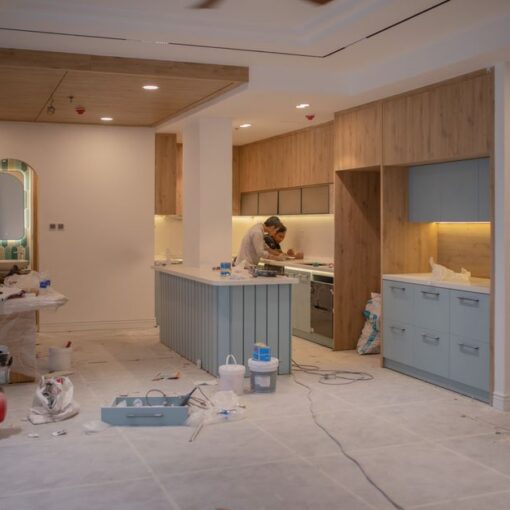
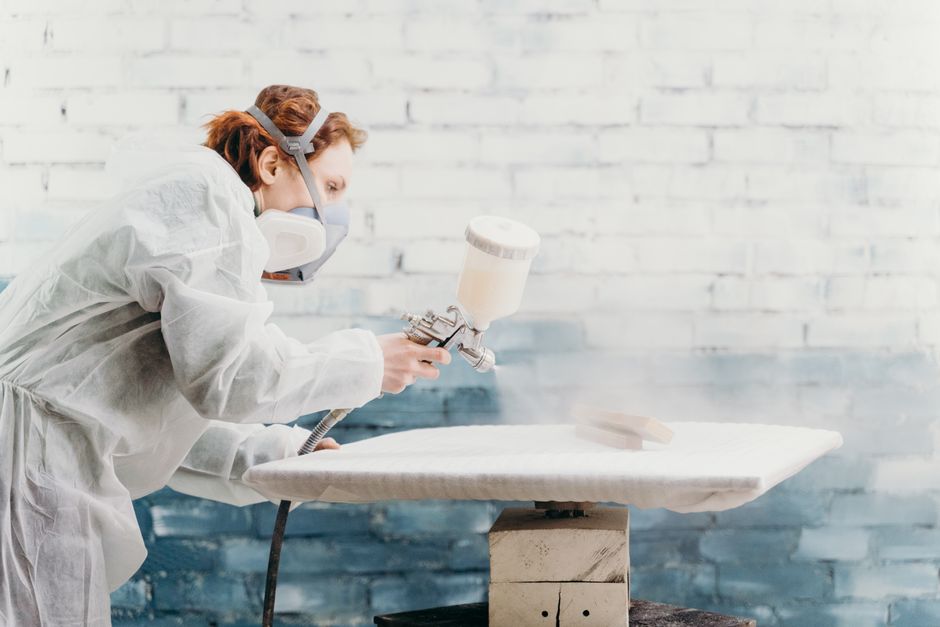
Yes, a real factory finish is guaranteed in Parker and Castle Rock in 2026, but only when the finish is a true catalyzed 2K poly coating sprayed off-site in a controlled booth and backed by a written 5-year warranty. A brushed or rolled latex coating marketed as a factory finish is not a factory finish at all. Homeowners in Parker, Castle Rock, Highlands Ranch, and Castle Pines can verify the difference before paying by requesting a sprayed sample door, a hardness scratch test, and a written warranty document.
Table of Contents
- What does "factory finish" actually mean for South Metro homeowners in 2026?
- How can you tell a real factory finish from a fake one before you hire anyone in Parker or Castle Rock?
- Why isn't Sherwin-Williams Emerald a factory finish for cabinets?
- Why do luxury homes in Parker, Castle Rock, Highlands Ranch, and Castle Pines need a real factory finish?
- What does a guaranteed factory finish cost per door in Parker, Castle Rock, Highlands Ranch, and Castle Pines in 2026?
- How does Cabinet, painting, and refinishing Denver CO. deliver a guaranteed factory finish in Castle Rock, Castle Pines, Highlands Ranch, and Parker?
- What does the 5-year written warranty cover, and can it transfer if you sell your home?
- Is 2K poly safe for an occupied home, and does it hold up to Colorado seasons?
- Key Takeaways
- References
What does "factory finish" actually mean for South Metro homeowners in 2026?
A factory finish means the cabinet doors and drawer fronts are sprayed off-site in a controlled spray booth using HVLP equipment, not painted in place inside a home. The controlled environment removes dust, humidity, and temperature swings that ruin a smooth film. According to InchPerfect Cabinet Painting, professional spray application is the standard for a true factory-grade result in Parker and surrounding South Metro communities.
The coating itself matters just as much as the booth. A real factory finish uses a two-component, or 2K, polyurethane or conversion varnish. A catalyst is mixed into the coating before spraying. That catalyst triggers a chemical cross-linking reaction that hardens the film from the inside out, rather than relying on evaporation alone. According to Cabinet Painting Denver, two-component polyurethane coatings cross-link chemically to achieve superior hardness in about 72 hours.
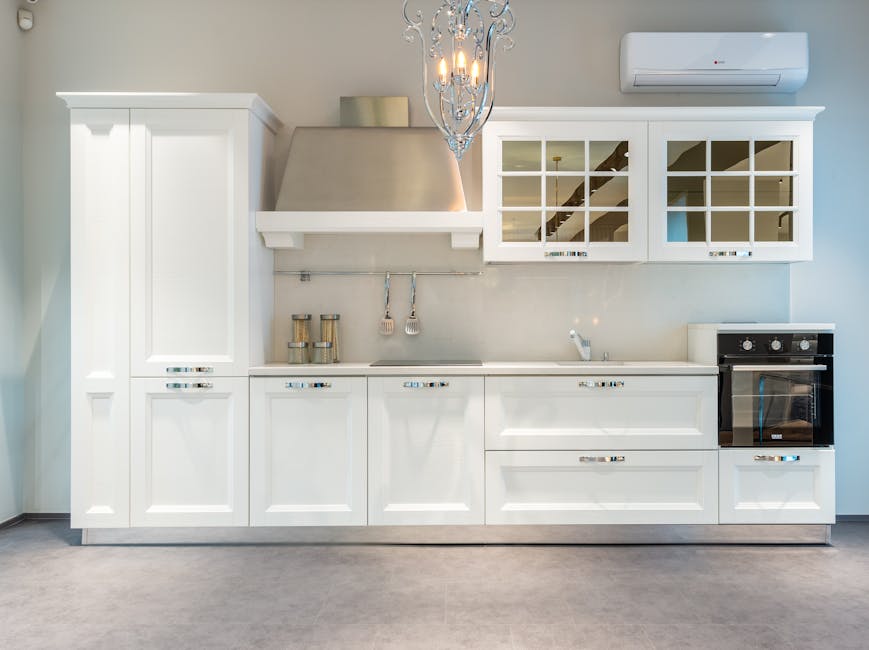
Film thickness is another defining feature. A sprayed 2K system builds a uniform film, typically around 4 mils, across the entire door face and edge profile. That consistency is what gives the finish its clean, glass-like appearance. A latex film applied by brush or roller cannot achieve that uniformity, and the film stays soft long after it feels dry to the touch.
For oak cabinets in Highlands Ranch and Castle Pines, grain filling is part of a true factory finish. Without grain fill, the open pores of oak show through the coating and create a textured surface. A real factory finish includes grain filling so the surface reads smooth and closed, not open-pored. According to InchPerfect Cabinet Painting, oak cabinets can be refinished, though some natural wood grain may remain visible unless additional grain-filling work is included.
The word guaranteed only means something when it is written. A verbal promise is not a warranty. Homeowners should ask for a written warranty document that names the coating system, the application method, and the specific failures covered. In Parker, Castle Rock, Highlands Ranch, and Castle Pines, a legitimate factory finish guarantee is a physical document, not a sales phrase.
How can you tell a real factory finish from a fake one before you hire anyone in Parker or Castle Rock?
You can tell a real factory finish from a fake one by looking for brush strokes, roller stipple, and orange peel texture under raking light, then testing the film hardness with a fingernail. A true 2K poly film resists a dent. A soft latex film dents and stays dented. These physical tells are visible and testable before you sign anything in Parker or Castle Rock.
Brush strokes and roller stipple are the most obvious signs of a fake factory finish. A real sprayed 2K coating levels out into a smooth, continuous film. A brushed or rolled latex coating leaves ridges, stipple, and uneven build at edges. Under raking light from a window or a flashlight held at a low angle, those defects become impossible to miss.
Orange peel is another tell. Orange peel is a bumpy texture that resembles the skin of an orange. It happens when a coating is sprayed incorrectly or when a wall paint is forced through the wrong equipment. A real factory finish from a controlled spray booth should show no orange peel on the face of the door.
The fingernail test is the fastest verification. Press a fingernail firmly into an inconspicuous area of a sample door. A catalyzed 2K poly film resists the dent and springs back. A latex film, even one that has dried for weeks, dents and holds the mark. According to Cabinet Painting Denver, a consumer-grade alkyd enamel may feel dry in hours but can take over 30 days to fully cure and harden.
Yellowing in strong Parker sun is a long-term sign of a thin latex coating. Latex and uncatalyzed enamels yellow when exposed to UV light and kitchen heat. A real 2K poly system is formulated to resist yellowing far longer. Visible oak grain showing through the paint is another sign of a thin coating that was never grain-filled.
Before hiring anyone, ask to see a sprayed sample door and request a hardness scratch test. A legitimate South Metro cabinet refinisher will have samples on hand and will demonstrate the scratch resistance of the cured 2K film. Then ask for the warranty in writing and read what it actually covers. If the warranty is verbal or vague, the finish is not guaranteed.
Why isn’t Sherwin-Williams Emerald a factory finish for cabinets?
Sherwin-Williams Emerald is not a factory finish for cabinets because it is a wall paint formulated for walls, not a catalyzed cabinet coating. Emerald has no catalyst component. Without a catalyst, there is no chemical cross-linking, so the film stays soft and chips at high-touch points like handles and drawer edges. A soft film cannot carry a real factory finish warranty, so the guarantee is void from day one.
Wall paints like Emerald are designed to be applied over large, flat, vertical surfaces and to be cleaned or repainted easily. They are not designed for the abrasion, impact, and moisture exposure that cabinet doors and drawer fronts endure daily. According to Cabinet Painting Denver, the professional-grade direction for high-end cabinet work is toward catalyzed, waterborne systems, not wall paints.
The hardness difference is measurable. A 2K polyurethane cross-links chemically and reaches superior hardness in about 72 hours. A wall paint like Emerald dries by evaporation only. The film may feel dry in hours, but it never achieves the cross-linked hardness of a catalyzed coating. That softness is why latex and wall paint films chip at the edges of doors and around hardware.
The warranty issue is straightforward. A coating manufacturer will not warrant a wall paint used on cabinets. A cabinet refinisher who sprays Emerald and calls it a factory finish cannot offer a real written warranty against chipping, peeling, and yellowing because the product is not rated for that use. Homeowners in Castle Rock and Highlands Ranch should ask what coating system is being sprayed and whether it is a true 2K catalyzed product.
The industry direction confirms the distinction. By 2026, over 80% of high-end cabinet refinishing jobs are projected to use catalyzed, waterborne systems, according to Cabinet Painting Denver. Wall paints are not part of that professional standard.
Why do luxury homes in Parker, Castle Rock, Highlands Ranch, and Castle Pines need a real factory finish?
Luxury homes in Parker, Castle Rock, Highlands Ranch, and Castle Pines need a real factory finish because a soft, uncatalyzed coating undercuts the value of a $700,000 to $1.2 million home with a $50,000 or higher kitchen. The finish is the first thing a buyer sees and touches. A chipped, peeling, or yellowing cabinet finish signals neglect and reduces resale value.
The Kitchen Cabinet Manufacturers Association A161.1 standard sets the benchmark for a finish that belongs in a luxury kitchen. According to Cabinet Painting Denver, the KCMA A161.1 standard requires a cabinet finish to withstand exposure to vinegar, lemon juice, coffee, and mustard for 24 hours without noticeable discoloration or damage. A real catalyzed 2K finish is built to meet that standard. A latex wall paint is not.
The KCMA standard also cycles a finished door five times between a 120°F hotbox and a -5°F cold box. That heat and cold cycling simulates the temperature swings that Colorado homes experience seasonally. A catalyzed film handles those swings without cracking or delaminating. A soft latex film expands and contracts differently and fails earlier.
The failure rate of non-catalyzed application is high. An estimated 60% of DIY cabinet painting projects show signs of failure, such as chipping or peeling, within 18 months, according to Cabinet Painting Denver. That failure rate is unacceptable in a luxury kitchen where the cabinets are used daily.
A consumer-grade enamel may feel dry in hours but can take over 30 days to fully harden. During that window, the finish is vulnerable to dents, scratches, and adhesion failure. A real 2K poly system reaches superior hardness in about 72 hours. For a luxury home in Castle Pines Village or Pradera, that difference is the gap between a finish that lasts and one that fails early.
What does a guaranteed factory finish cost per door in Parker, Castle Rock, Highlands Ranch, and Castle Pines in 2026?
A guaranteed factory finish in the South Metro typically runs $5,500 to $12,500 for a full kitchen, or $110 to $180 per door, depending on kitchen size, door count, and add-ons. According to InchPerfect Cabinet Painting, most Colorado kitchens fall between approximately $3,500 and $7,500 for cabinet refinishing, though larger luxury kitchens in Castle Pines and Pradera run higher.
Per-door pricing is the clearest way to compare quotes. A small 10×10 kitchen with 20 to 25 doors and drawer fronts will land at the lower end of the range. A large luxury kitchen with 40 or more openings, an island, and custom profiles will land at the upper end. The table below shows the expected per-door range across the four primary South Metro service areas.
| Service Area | Small 10×10 Kitchen | Large Luxury Kitchen |
|---|---|---|
| Parker | $110-$140 per door | $150-$180 per door |
| Castle Rock | $110-$140 per door | $150-$180 per door |
| Highlands Ranch | $115-$145 per door | $155-$180 per door |
| Castle Pines | $120-$150 per door | $160-$180 per door |
Add-ons change both price and result. Grain filling on oak adds roughly $15 per door and produces a smooth, closed-pore surface instead of visible grain texture. Island work runs $700 to $1,400 depending on size and whether the island is a contrasting color. Two-tone and glaze add labor and material cost while changing the visual character of the kitchen.
| Add-On | What It Changes | Price Impact |
|---|---|---|
| Grain Fill | Smooths open oak grain for a flat, factory surface | About $15 per door |
| Two-Tone | Contrasting island or upper/lower color split | $700-$1,400 for island work |
| Glaze | Adds depth and shadow to recessed profiles | Varies by door count and profile |
The 5-year written warranty covers chipping, peeling, and yellowing. It does not cover abuse, impact damage, or normal wear from misuse. Homeowners in Parker, Castle Rock, Highlands Ranch, and Castle Pines should confirm exactly what the warranty document lists before signing. A real factory finish warranty names the coating system and the application method, not just a vague promise.
How does Cabinet, painting, and refinishing Denver CO. deliver a guaranteed factory finish in Castle Rock, Castle Pines, Highlands Ranch, and Parker?
Cabinet, painting, and refinishing Denver CO. delivers a guaranteed factory finish through Kitchen Cabinet Painting, a professional kitchen cabinet painting service with a factory finish for homeowners in Denver, Parker, Highlands Ranch, Castle Rock, and Castle Pines. The service is priced by free estimate and built around an off-site spray booth, a true 2K poly system, and W-2 crews with no subcontractors.
The off-site spray booth is the foundation of the finish. Doors and drawer fronts are removed, prepped, grain-filled where needed, and sprayed in a controlled environment. That removes dust, pet hair, and humidity from the equation. The 2K poly system is catalyzed before spraying, so the film cross-links chemically and hardens to a durable, smooth surface.
The family-owned operation uses W-2 crews, not subcontractors. That means the people spraying the cabinets are trained, supervised, and accountable to the company. For homeowners in The Meadows, Founders Village, Sterling Ranch, and Roxborough, that structure protects the consistency of the finish from job to job.
Verification is part of the process. Homeowners receive factory samples and a hardness scratch test before committing. The 5-year written warranty is provided as a document, not a verbal promise. A soft-close upgrade option is available, and same-week scheduling is offered for South Metro homeowners.
The service area covers Parker, Castle Rock, Highlands Ranch, Castle Pines, Roxborough, Lone Tree, Pradera, The Meadows, Founders Village, Castle Pines Village, and Sterling Ranch. Homeowners in those communities can request a free estimate and see the factory finish difference before paying.
What does the 5-year written warranty cover, and can it transfer if you sell your home?
The 5-year written warranty covers chipping, peeling, and yellowing of the factory finish. Abuse is excluded. Impact damage, gouges, and damage from improper cleaning are not covered. Homeowners in Parker and Castle Rock should read the warranty document to confirm the exact exclusions before signing.
A written document beats a lifetime verbal claim because a written warranty names the coating system, the application method, and the covered failures. A verbal lifetime promise is unenforceable and usually attached to a soft latex finish that cannot support a real warranty. The fine print matters. A warranty that covers only adhesion but not yellowing is not a factory finish warranty.
Transferability matters in South Metro luxury resale. If the warranty transfers to a buyer, it becomes a selling point during a home sale. Homeowners should ask whether the warranty document includes a transfer clause. A transferable 5-year warranty signals that the finish is expected to last well beyond the sale date.
The warranty only holds when the finish is a true catalyzed system. A latex or wall paint coating cannot support a 5-year warranty against chipping, peeling, and yellowing because the film is too soft and too reactive to UV and heat. The warranty and the 2K poly system are inseparable. One cannot exist without the other.
Is 2K poly safe for an occupied home, and does it hold up to Colorado seasons?
Yes, 2K poly is safe for an occupied home when it is a low-VOC waterborne system sprayed off-site. The off-site spray booth removes the coating process from the living space entirely. Doors and drawer fronts are sprayed in a controlled environment, cured, and then returned to the home. That eliminates the fumes and dust that would come from spraying inside an occupied kitchen.
Waterborne 2K systems have lower VOC content than solvent-based conversion varnishes. They meet modern air quality standards while still cross-linking chemically for hardness. The catalyzed reaction happens in the film, not in the air of the home. For homeowners in Highlands Ranch and Castle Pines, that means a durable finish without a long evacuation period.
The KCMA heat and cold cycling standard explains why catalyzed films hold up to Colorado seasons. According to Cabinet Painting Denver, the KCMA standard cycles a finished door five times between a 120°F hotbox and a -5°F cold box. A cross-linked 2K film expands and contracts without cracking. A soft latex film does not.
Yellowing in strong Parker sun is a known failure of latex and uncatalyzed enamels. A real 2K poly system is formulated to resist UV yellowing far longer. The written 5-year warranty covers yellowing precisely because the catalyzed film is designed to resist it. Homeowners should confirm that the warranty document names yellowing as a covered failure.
Key Takeaways
- A real factory finish is a catalyzed 2K poly coating sprayed in a booth, cured hard over 7 to 14 days, and backed by a written 5-year warranty.
- Brush strokes, roller stipple, orange peel, fingernail dents, and yellowing in sun are the visible signs of a fake factory finish.
- Sherwin-Williams Emerald is a wall paint with no catalyst, so it stays soft, chips at handles, and cannot support a factory finish warranty.
- 2K polyurethane cross-links chemically to reach superior hardness in about 72 hours, while consumer enamels can take 30 or more days to fully cure.
- The KCMA A161.1 standard tests finishes against vinegar, lemon juice, coffee, and mustard for 24 hours plus repeated 120°F to -5°F cycling.
- South Metro guaranteed factory finish pricing runs roughly $5,500 to $12,500, or $110 to $180 per door, with grain fill, island, two-tone, and glaze as add-ons.
- The 5-year written warranty covers chipping, peeling, and yellowing but not abuse, and homeowners should confirm transferability at resale.
References
- Best Paint for Kitchen Cabinets: A Professional Grade Guide for 2026 — March 11, 2026
- Cabinet Painting Parker CO | InchPerfect — date unknown