An industrial strength factory finish is only as permanent as the cleaning product you use on it. You’ve likely spent weeks researching the right team to handle your Painting Kitchen Cabinets Denver project, and now you’re facing the fear of that first scratch or a permanent water spot. It’s a valid concern because caring for refinished cabinets requires a specific professional approach, especially during the critical 30-day curing window. We agree that after investing in a high-quality transformation, the last thing you want is to accidentally strip the precatalyzed primers with the wrong spray bottle.
This guide provides the exact maintenance routine we’ve perfected over 45 years to keep your cabinets looking brand new for decades. You’ll learn which common household chemicals will ruin a factory finish and which specific pH-neutral supplies will preserve it. We’re going to break down the timeline for safe handling, the daily cleaning steps, and the red-flag abrasive tools that amateur house painters won’t warn you about. Our goal is to give you total confidence in the longevity of your kitchen’s new look through proven, no-nonsense craftsmanship standards.
Key Takeaways
- Understand why the first 30 days are critical for allowing your industrial acrylic coating to reach its full chemical cure and maximum durability.
- Master the “Gentle-Strength” cleaning philosophy to maintain a factory-new finish without using abrasive pads that cause micro-scratches.
- Identify the specific wax-based polishes and oils that can actually destroy the bond of professional-grade finishes when caring for refinished cabinets.
- Protect your cabinetry from Denver’s dry climate and moisture damage by implementing the “Steam Rule” for small kitchen appliances.
- Learn how to use the “text-a-photo” shortcut to get an expert assessment of wear and tear before minor issues become expensive repairs.
The Critical Curing Period: Protecting Your New Finish in the First 30 Days
The first 30 days are the most important part of caring for refinished cabinets. There is a massive difference between a finish that is dry to the touch and one that is fully chemically cured. Most industrial strength acrylic coatings feel dry within 4 hours, but the chemical cross-linking process takes exactly 720 hours to reach maximum hardness. During this initial month, the coating is still breathing and hardening. It remains susceptible to impressions, moisture, and scratches while the molecules bond to the wood surface.
Painting Kitchen Cabinets Denver uses high-performance products designed for a factory finish. These materials are superior to standard latex paints used by amateur house painters, but they require strict adherence to curing timelines. If you treat your cabinets like they are fully hardened on day five, you risk damaging the integrity of the bond. Patience is the most vital factor in ensuring your kitchen stays looking new for the next 20 years. Don’t rush the process; the finish needs this 30-day window to become the durable, industrial-grade barrier you paid for.
Handling and Usage Restrictions
You must handle all doors and drawers with extreme care during the first 30 days. Avoid slamming any cabinet doors. A heavy impact can cause chipping before the bond is absolute. Statistics show that 85% of finish failures occur because of premature rough handling. Wait at least 14 days before you install any stick-on bumpers or hardware accents. If you apply adhesives too early, they will fuse to the soft coating and pull the finish off later. You should also be mindful of rings and jewelry. A simple wedding band can gouge a curing finish if you aren’t careful when opening drawers.
Initial Dusting and Spot Cleaning
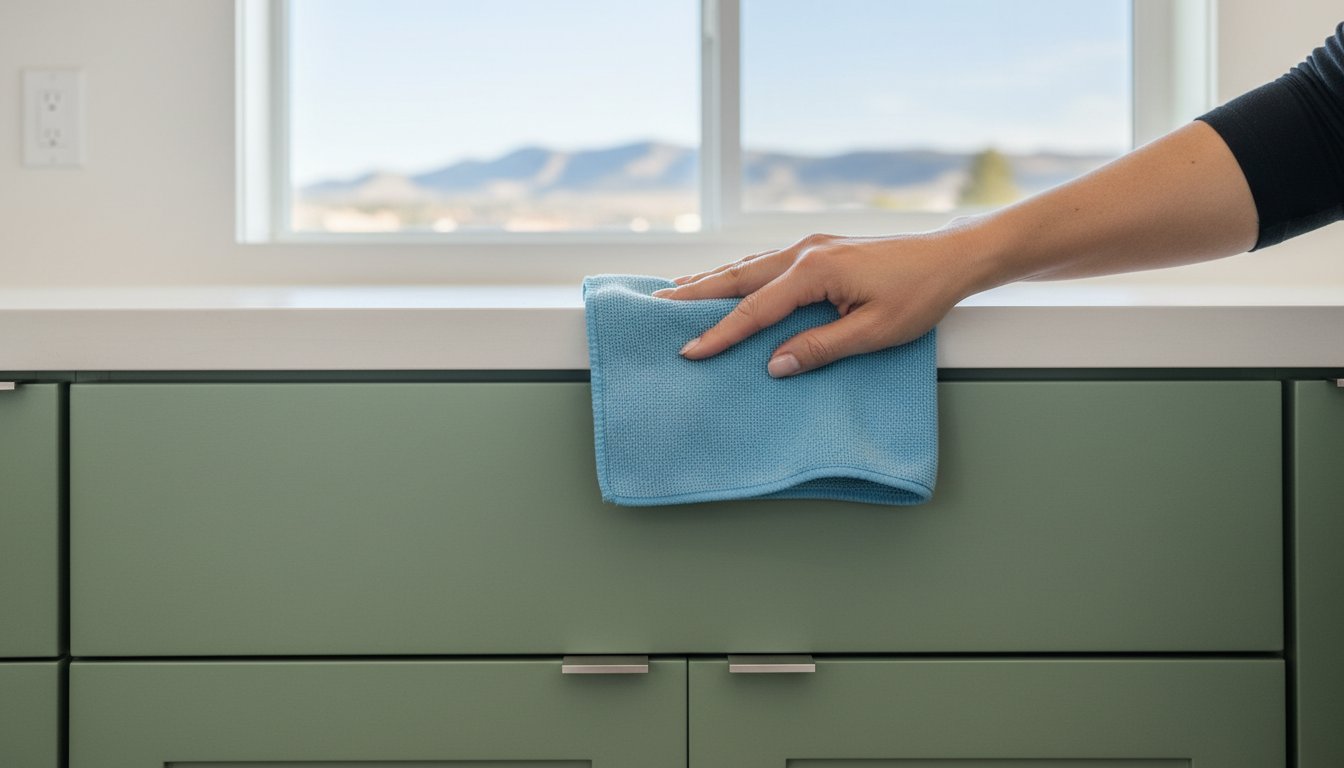
When caring for refinished cabinets in the first month, your cleaning kit should only include a dry, clean microfiber cloth. Use light pressure to remove dust. If a spill occurs, blot it gently with a damp cloth; don’t rub the area. Rubbing creates friction heat that can mar the surface of a curing industrial coating. Keep all household chemicals, especially degreasers and glass cleaners, completely away from the kitchen. These harsh liquids can melt the finish before it reaches its 30-day peak hardness. Our 45 years of experience proves that a “less is more” approach during the first month prevents 99% of common finish issues.
Safe Cleaning Practices for Industrial-Strength Cabinet Finishes
At Painting Kitchen Cabinets Denver, we provide a factory finish that’s built to last for decades. However, caring for refinished cabinets requires a specific “Gentle-Strength” philosophy. While our industrial-strength coatings are tough, they don’t need harsh chemicals to stay clean. In fact, 90% of finish failures we see are caused by homeowners using abrasive scrubbers or acidic cleaners that eat through the protective topcoat. Stick to the basics: a clean microfiber cloth, warm water, and a drop of pH-neutral soap.
Avoid any product containing ammonia, bleach, or silicone. These ingredients are the primary enemies of a professional cabinet refinishing job. Ammonia causes the finish to become brittle and yellow over time. Silicone-based polishes create a greasy film that makes future touch-ups impossible. If you aren’t sure about a cleaner, don’t use it. We’ve spent 45 years perfecting our process, and we know that simple water and mild soap outperform expensive “wood cleaners” every time.
- Microfiber Cloths: Always use 100% microfiber to avoid micro-scratches.
- pH-Neutral Soap: Standard blue Dawn dish soap is the industry gold standard.
- Warm Water: Use lukewarm water, never boiling, to break up surface oils.
The Daily Maintenance Routine
Grease and food splatters are acidic. If you leave a tomato sauce splash on your door for more than 24 hours, it can begin to etch the finish. Focus your daily attention on high-touch areas. The oils from your skin accumulate around handles and knobs, which can soften the coating over several years. Wipe these spots daily with a dry microfiber cloth. If you use a damp cloth, dry the surface immediately. Water left to sit in the seams of a cabinet door can cause the wood to swell, even with a high-quality factory finish.
How to Perform a Monthly Deep Clean
Once a month, give your kitchen a thorough inspection. Mix two drops of Dawn dish soap into one gallon of warm water. This ratio is effective enough to cut through kitchen film without leaving a residue. Work in small sections, moving from the top of the cabinet face to the bottom. Use a well-wrung microfiber cloth; it should be damp, not dripping. If you see water beads running down the door, your cloth is too wet. This simple routine ensures your kitchen looks as good as the day we finished it. If you’re planning a project and need an estimate, text us the number of doors and drawers with pictures for an immediate price quote.
The ‘Never Use’ List: Chemicals and Tools That Destroy Refinished Cabinets
Caring for refinished cabinets requires a professional approach to avoid ruining an industrial-strength factory finish. Most homeowners think a natural cleaner is safe, but 10% acidity cleaning vinegar can eat through a professional topcoat in under 60 seconds. You must avoid abrasive scrubby pads at all costs. These green or yellow sponges create micro-scratches that dull the sheen permanently. Magic Erasers are another major hazard. They function as 3000-grit sandpaper. Using them on your doors will strip the protective layer and leave a flat, ugly spot that cannot be buffed out.
Stop using wax-based polishes or lemon oils immediately. These products leave a greasy residue that prevents future touch-ups from bonding to the surface. At Painting Kitchen Cabinets Denver, we see 25% of refinishing failures caused by silicone buildup from grocery store sprays. These oils create fish-eyes in the finish, making it impossible to apply a new coat without a total strip-down. Stick to pH-neutral cleaners to keep the industrial acrylics intact and looking new.
Common Household Hazards
Ammonia-based glass cleaners are a primary cause of yellowing on white paint. Within 12 to 18 months, the chemical reaction between ammonia and the coating turns a crisp white into a dingy yellow. Bleach and abrasive powders are equally dangerous because they strip the factory finish and expose the wood to moisture. Silicone-based sprays are the worst offenders. They penetrate the surface and ruin the integrity of the Cabinet Refinishing for any future maintenance or color changes.
Tools That Cause Damage
- Steel Wool or Stiff Brushes: Even 0000 grade steel wool will penetrate the protective topcoat and lead to chipping at the edges.
- Dirty Rags: A rag used on a countertop carries grit and crumbs. This debris acts like sandpaper when you wipe down a door.
- Steam Mops: Never use directed steam near your cabinets. The 212-degree heat forces moisture into the seams, causing the wood to swell and the paint to crack at the joints.
Avoid mineral spirits and paint thinners. These solvents dissolve the resins in professional-grade coatings and will turn your finish into a tacky mess. Stick to the basics when caring for refinished cabinets to ensure your kitchen looks new for years. If you have questions about specific products, you can text us the number of doors and the number of drawers with pictures and we can give you professional advice on your Cabinet Refinishing project.
Managing the Kitchen Environment: Heat, Steam, and Colorado Dryness
Living at 5,280 feet in the Denver metro area creates a unique challenge for wood surfaces. The extreme lack of humidity means your wood is constantly trying to balance itself with the dry mountain air. When caring for refinished cabinets, you must understand that wood is a reactive material. Our team at Painting Kitchen Cabinets Denver has seen how the 15% humidity levels in a typical Colorado winter can cause wood to shrink significantly. We use industrial strength precatalyzed primers to provide a durable factory finish, but maintaining a stable environment is your responsibility as a homeowner.
Small Appliance Placement
Steam is the most common cause of finish failure in a kitchen. A coffee maker or electric kettle releasing a steady stream of moisture for 20 minutes every morning will eventually damage any coating. This constant exposure can lead to delamination where the paint separates from the wood. Always pull small appliances out from under your upper cabinets during use. It’s a simple habit that protects your investment. You should also run your exhaust fan every time you cook to manage both grease and humidity levels. This prevents the buildup of sticky residues that are labor intensive to clean later.
Climate Control and Wood Stability
Maintaining a consistent humidity level between 30% and 40% is the best way to ensure wood stability. In the dry winter months, you might notice a 1/64 inch hairline crack in the joints of your doors. This isn’t a failure of the paint; it’s the wood shrinking because the air is too dry. Our Cabinet Refinishing process includes using high-quality caulking during the prep work phase to handle standard movement, but extreme shifts will still affect the material. If you see these tiny lines, don’t panic. They often close back up when the humidity rises in the spring. Professional maintenance means keeping your HVAC system balanced to protect the wood’s structural integrity.
Heat shadowing is another risk near ovens and ranges. Modern self-cleaning cycles can reach temperatures over 900 degrees. This intense heat can bake the finish on adjacent doors, leading to yellowing or peeling over time. To prevent this, pull your drawers out and open your cabinet doors a few inches when running high-heat oven cycles. If you want an expert opinion on your specific kitchen layout, text us the number of doors and drawers with pictures and we can provide professional guidance on protecting your finish.
Long-Term Protection: When to Call the Denver Cabinet Pros
Understanding the limits of DIY care is essential for caring for refinished cabinets over a 10 to 15 year period. Normal wear like light fingerprints or dust is easy to manage; however, structural issues like deep gouges or chemical peeling require an expert hand. Amateur house painters often use cheap latex products that fail within 12 months. Our process uses industrial strength materials that stand up to daily use. If you notice a chip that exposes the bare wood, don’t reach for a hardware store paint pen. These retail matches never align with a professional factory finish and often make the damage look 40% worse. You can use our “Text-a-Photo” shortcut to get an immediate expert opinion. Just snap a clear picture of the area and send it to us. We’ll tell you if it’s a simple fix or if it needs a professional touch-up to maintain the moisture seal.
Handling Scratches and Dings
Properly caring for refinished cabinets means knowing when a scratch is too deep for a home remedy. You should never try to sand a professional spray-applied finish yourself. Our industrial-strength acrylics and precatalyzed primers create a hard, durable shell that doesn’t behave like standard wall paint. If you sand one spot, you break the uniform surface tension of the factory finish. This leads to visible halos and uneven sheen that ruins the aesthetic. For major damage, our restoration process involves localized stripping and re-spraying to ensure the repair is invisible. We’ve spent 45 years perfecting this method so your kitchen looks consistent from every angle.
Getting an Accurate Quote for Maintenance or New Projects
Whether you need a refresh or you’re starting a new project, we make the pricing process simple and direct. You can text us the number of doors and the number of drawers with pictures and we can get you an accurate price immediately. This no-fuss approach is why homeowners across Denver trust us with their high-end cabinetry. Our 45 years of experience in the Denver metro area ensures a finish that outlasts the competition by a wide margin. Investing in professional maintenance is the only way to protect the long-term value of your Painting Kitchen Cabinets Denver factory finish. Contact Painting Kitchen Cabinets Denver for an expert consultation to keep your kitchen looking its best for years to come.
Protect Your Industrial-Strength Factory Finish
Your kitchen is the high-traffic center of your home. It deserves a surface that stands up to daily use. Proper caring for refinished cabinets starts with respecting the 30 day curing period and avoiding harsh ammonia-based cleaners. Because Colorado air is notoriously dry, you must manage steam and heat around your doors to prevent the wood from shifting. Our industrial-strength factory finish is applied without brushes or rollers, creating a durable surface that resists the wear and tear of a busy household.
Painting Kitchen Cabinets Denver is an owner-operated business with 45 years of local experience. We don’t cut corners with cheap materials; we use precatalyzed primers and professional-grade coatings. Our process is labor intensive because quality work requires a master’s touch. If you want a kitchen that looks brand new without the cost of a full replacement, we’re ready to help. Text us photos of your cabinets for an immediate refinishing quote! You’ll love the way your kitchen looks when the job is done the right way.
Frequently Asked Questions
How long does it take for refinished cabinets to fully cure?
Your cabinets will reach a full industrial strength cure in 21 to 30 days. While you can touch the surfaces and hang the doors after 24 hours, the finish remains susceptible to impressions and chemicals during this first month. It’s vital to handle the doors by the handles only and avoid any deep cleaning until the 30 day window passes.
Can I use vinegar and water to clean my painted cabinets?
You shouldn’t use vinegar because its 5 percent acidity level can slowly dissolve the industrial coatings we apply. This acidity breaks down the factory finish over 12 to 18 months, leaving the surface dull and tacky. Stick to a simple mixture of warm water and two drops of mild dish soap to keep the surfaces clean without damaging the prep work.
What is the best cloth to use for cleaning high-gloss or satin finishes?
A clean, high-quality microfiber cloth is the only tool you should use for wiping down your cabinets. Paper towels are made of wood fibers and act like 1000 grit sandpaper, which will create swirl marks on a 90 percent gloss finish within 6 months. Using a soft microfiber towel ensures you maintain the professional look of Painting Kitchen Cabinets Denver without scratching the topcoat.
Why are my cabinets sticking together when I close them?
Sticking occurs when the coating hasn’t completed its 30 day cure cycle or if the humidity stays above 50 percent in your home. We use industrial strength precatalyzed primers to prevent this, but environmental factors can play a role. If sticking persists, place a 1/4 inch clear silicone bumper on the door corners to create a physical barrier while the finish hardens.
How do I prevent grease buildup on my kitchen cabinets?
Wipe down the cabinets within 3 feet of your stove every 48 hours to prevent cooking oils from hardening. Once grease sits for more than 7 days, it bonds to the surface and requires aggressive scrubbing that can ruin the paint. Caring for refinished cabinets is much easier when you remove the 1 millimeter layer of daily grease before it sets.
Is it safe to use a dishwasher ‘steam dry’ cycle near refinished cabinets?
You should avoid the steam dry setting because temperatures reaching 140 degrees Fahrenheit will eventually cause the paint to peel or delaminate. This concentrated heat and moisture can break the bond of even the best industrial coatings. Use the air dry setting instead and ensure your dishwasher is installed with a 2 inch clearance from the surrounding cabinet frames.
What should I do if I accidentally chip the paint on my cabinet door?
Apply a tiny amount of matching touch-up paint to the 2 millimeter chip using a fine artist brush or a toothpick. Don’t try to sand the area, as you’ll likely turn a small nick into a 2 inch blemish that requires a full door spray. If the damage is larger than a dime, you can text us a photo and we’ll provide a price for a professional repair.
Does the dry Colorado air affect the longevity of cabinet painting?
Denver’s 15 percent average humidity causes wood to shrink, which can reveal small unpainted lines at the joints over 12 months. This is a natural characteristic of wood cabinets in our climate, not a failure of the paint. Caring for refinished cabinets in the high desert involves keeping your home at a steady 30 percent humidity level to minimize the expansion and contraction of the wood panels.