The lowest cabinet painting quote you receive is almost always the most expensive mistake you’ll make in 2026. You’ve likely noticed that estimates for the same kitchen can fluctuate by $2,500 or more, which leaves you wondering if you’re paying for quality or just a contractor’s overhead. It’s stressful to worry that a budget price means a low-quality brush finish that will peel within twelve months. Our professional cabinet painting cost estimator is designed to eliminate that guesswork by providing a transparent breakdown of unit-based pricing and Denver labor rates.
We know you want a kitchen that looks brand new without the $30,000 price tag of a full remodel. We’ll show you why professional prep work represents 70% of our labor and how industrial strength precatalyzed primers create a durable factory finish. You’ll learn the exact price per door and drawer we’ve used over our 45 years in the trade. This guide explains how to calculate your budget and even shows you how to get an accurate quote by texting us your door count and photos today. We’re here to provide the direct, no-nonsense pricing information you need for a successful renovation.
Key Takeaways
- Learn why professional Painting Kitchen Cabinet Denver experts use unit-based pricing instead of square footage to ensure an accurate, no-nonsense budget.
- Utilize our professional cabinet painting cost estimator to understand why meticulous prep work represents 70-80% of a durable, factory-grade finish.
- Identify how specific wood species and current cabinet conditions, such as grease or water damage, will influence your final refinishing quote.
- Compare the true costs of DIY against professional standards to avoid the common failures seen with amateur house painting techniques.
- Master the “Text-a-Quote” system to get an immediate, accurate price for your kitchen transformation throughout the entire Denver metro area.
What Factors Determine Your Cabinet Painting Cost?
Many homeowners think painting cabinets is the same as painting a bedroom wall. It’s not. Real cabinet refinishing is an industrial process that requires a different skill set than standard house painting. Amateur painters often use basic latex paint and brushes. We use 45 years of trade experience to provide a durable factory finish that lasts. When you look at a cabinet painting cost estimator, you’re paying for a specialized technical trade, not just a bucket of color.
Labor and preparation work account for 75% to 80% of your total project estimate. This is because cabinets are high-touch surfaces exposed to grease, heat, and moisture. A professional crew spends 3 to 4 days on prep work alone. This includes degreasing with industrial cleaners, mechanical sanding to create a profile, and meticulous masking of your entire kitchen. If a contractor offers a low price, they’re likely cutting these vital steps. Skipping prep leads to peeling paint within 12 months.
The layout and the specific kitchen cabinet materials also drive the price. A standard kitchen with 20 openings, which is usually 15 doors and 5 drawers, serves as the baseline for most quotes. Larger kitchens with 40 or more openings require double the labor and materials. Islands, wine racks, and crown molding add complexity to the masking process. Oak cabinets require extra labor for grain filling, while MDF requires specialized sealers to prevent swelling. Using a cabinet painting cost estimator helps you account for these variables before the first drop of primer is sprayed.
Labor vs. Materials: Where Your Money Goes
Your money goes toward high-performance precatalyzed primers and industrial-strength acrylic coatings. These materials are designed specifically for wood cabinetry. They’re much harder than the standard latex paint found at big-box retailers. Cheap materials stay soft and cause blocking, where the doors stick to the frames and pull the paint off. Professional-grade coatings cost 40% more than house paint, but they provide a surface that resists stains and impacts for over 10 years. We don’t use cheap latex caulking that cracks; we use high-solids fillers that move with the wood.
The “Factory Finish” Quality Premium
A brush-and-roll application is a DIY method that leaves visible textures and streaks. It never looks like it came from a showroom. We use professional spray equipment, including HVLP and airless systems, to achieve a flawless surface. This requires a controlled environment and specialized exhaust systems to manage overspray. Our 45 years of experience ensures that every door has a smooth, glass-like feel. This factory finish is the most vital factor in increasing your home’s resale value and ensuring the job doesn’t need to be redone in two years. You’re paying for a permanent upgrade, not a temporary fix.
The Door and Drawer Method: How to Estimate Your Project
Professional cabinet painters in Denver don’t use square footage to price jobs because it’s an inaccurate metric for high-end finishing. A wall can be measured in feet, but cabinets are complex three-dimensional objects. One kitchen might have ten large doors while another has thirty small drawers; the labor required for the latter is significantly higher. Our cabinet painting cost estimator uses the “unit method” to provide a transparent, fixed price that reflects the actual work involved in cleaning, sanding, and spraying each piece.
Using a unit-based system prevents “quote shock” and ensures you aren’t paying for empty space. It allows us to account for the labor intensive process of achieving a factory finish. Amateur painters who guess at prices often cut corners on prep work when they realize the job is harder than they thought. We’ve spent over 45 years refining this system to ensure our industrial strength coatings are applied correctly every time.
Counting Your Kitchen Units
A unit is any individual moveable face of the cabinetry.
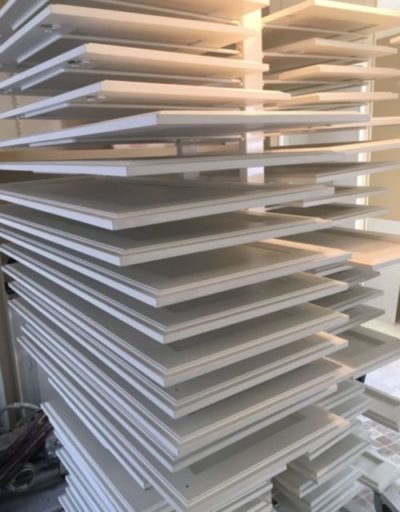
When you start your count, look at every door and every drawer front. Standard cabinet doors are one unit each. However, large pantry doors or utility closet doors that exceed 40 inches in height are counted as two units. This is because they require more rack space in our drying facility and more time for sanding and priming. We’ve found that 85% of standard Denver kitchens follow this rule exactly.
Drawer fronts are counted as one unit each. You should skip “dummy” fronts, which are the non-moving panels often found in front of sinks, unless you specifically want them refinished to match the rest of the kitchen. Most homeowners in the Denver metro area, from Highlands Ranch to Thornton, find that counting units is the fastest way to get an honest price. You can text us the number of doors and drawers along with a few photos to get an immediate estimate for your project.
Calculating the Total Estimate
For 2026, the standard price range for professional cabinet refinishing in Colorado is $125 to $175 per unit. This price includes the full professional process: degreasing, mechanical sanding, applying precatalyzed primers, and finishing with industrial strength coatings. Below are sample calculations based on common kitchen sizes in the Denver area:
- Small Kitchen (20 Units): A typical condo or galley kitchen usually costs between $2,500 and $3,500.
- Medium Kitchen (40 Units): A standard suburban kitchen in Arvada or Lakewood typically ranges from $5,000 to $7,000.
- Large Kitchen (60 Units): Custom kitchens with islands and desk areas often range from $7,500 to $10,500.
You must also factor in “extra” items that aren’t moveable faces. Crown molding, light valances, and wine racks are usually priced by the linear foot or as a flat add-on. For example, crown molding in 2026 typically adds $12 to $18 per linear foot to the total. End panels that are integrated into the cabinet box are also counted as units if they require the same level of preparation and finish as the doors. This method is the most transparent way to ensure you’re paying for the actual surface area being treated with our factory-grade materials.
Variables That Increase or Decrease Your Refinishing Quote
Calculating an accurate price for your kitchen involves more than just counting boxes. When you use a cabinet painting cost estimator, you must account for the physical state of the wood and the specific labor required to achieve a factory finish. At Painting Kitchen Cabinets Denver, we see a 35% price variance between a standard repaint and a full restoration project. The fastest way to get your specific number is simple. You can text us the number of doors and the number of drawers with pictures and we can get you an accurate price immediately. This direct approach removes the guesswork that many amateur house painters rely on.
- Wood Species: Open-grain woods like Oak require significantly more labor than closed-grain woods like Maple or Cherry. Oak has deep pores that swallow paint. This leads to an uneven, textured look if the wood isn’t handled with specific techniques. Maple provides a naturally smoother surface, often reducing the labor hours needed for sanding.
- Current Condition: We often encounter heavy grease buildup near stoves or water damage on sink bases. Removing 15 years of cooking oils requires industrial strength degreasers and extra sanding cycles. If your current finish is peeling or flaking, we have to sand back to a stable substrate, which increases the time spent on site.
- Color Transitions: Moving from a dark espresso stain to a bright white involves more than just a single coat. It requires high-hide precatalyzed primers to prevent tannin bleed-through. This transition typically requires 25% more material and labor compared to a mid-tone color change.
- Hardware Upgrades: Changing 1990s exposed hinges to modern soft-close hidden hinges adds about $20 per door in labor. This covers the cost of filling old holes, drilling new Forstner bit cups, and aligning the doors for a perfect fit.
Grain Filling and Surface Preparation
Prep work is the most vital factor in a 20-year finish. For Oak cabinets, we apply industrial grain fillers to bridge the deep pits in the wood grain. This process adds roughly 30% to the total labor cost but it’s the only way to get a smooth, modern look. We also specialize in fixing “failed” DIY jobs where homeowners used cheap latex caulking or failed to sand properly. Stripping off peeling hardware-store paint is a labor-intensive process. It can double the initial prep time compared to starting with a factory-stained surface. Our 45 years of experience shows that shortcuts in prep always lead to failure within 12 months.
Specialty Finishes and Glazing
A standard solid color is your baseline for any cabinet painting cost estimator. If you want a Cabinet Glazing or distressed look, expect the quote to increase by 20% to 25%. This involves a multi-step process where we apply a base coat, a hand-rubbed glaze, and a protective industrial clear coat. Two-tone kitchens are another major variable. Painting an island a different color than the perimeter cabinets adds a flat fee of $350 to $600. This covers the extra masking, pump cleaning, and setup time required when switching colors mid-job. We provide these high-end finishes across Denver, Aurora, and Arvada using the same rigorous standards.
Our company is based on quality work at affordable Cabinet Refinishing prices. We don’t use cheap house paint. We use industrial strength coatings that stand up to the heat and moisture of a working kitchen. Whether you’re in Lakewood or Centennial, the variables remain the same. The more preparation and detail your specific wood species requires, the higher the investment in your home’s value. We focus on delivering a durable factory finish that lasts for decades, not just a few years.

Professional Estimating vs. DIY: Is the Saving Worth the Risk?
Homeowners searching for a cabinet painting cost estimator often focus only on the sticker price of professional labor. They see the quote and decide to tackle the project over a few weekends. This is usually where the trouble starts. Cabinet refinishing is a technical trade, not a simple weekend hobby. If you use standard house paint and a basic brush, your kitchen will look like it was painted with a brush. It won’t have that smooth, factory finish that adds value to your home. Amateur house painters make the same mistake. They use cheap latex caulking that cracks within six months. We see these failing jobs every day in Denver homes.
The reality of DIY is that you aren’t just saving money; you’re assuming all the risk. A professional finish is meant to withstand 10 to 15 years of heavy use. A DIY job using the wrong materials often starts peeling within 12 months. When that happens, the cost to fix it is significantly higher than the original estimate. We have to perform a labor intensive stripping process to remove the failing product before we can even start our prep work.
The Hidden Costs of DIY
A professional finish requires professional tools. A high-end HVLP sprayer costs $1,150 in 2026. You also need industrial ventilation masks, high-grade sanding blocks, and heavy-duty floor protection. Most DIYers spend $850 on mid-grade supplies and still end up with a failing finish. The time investment is the biggest shock. A professional crew completes a standard kitchen in 5 days. A DIY project usually drags on for 5 weeks. Your kitchen stays a construction zone for over a month, which is a massive hidden cost to your quality of life.
- Industrial Sprayer: $900 – $1,200 for entry-level professional gear.
- Labor Hours: 40 to 60 hours for an unexperienced person to clean, sand, prime, and paint.
- Fixing Mistakes: Stripping failed DIY paint costs $2,500 to $4,000 extra in labor.
Why Denver Professionals Use Industrial Acrylics
We don’t use the paint you find at big-box hardware stores. In 2026, the market price for high-performance industrial primers has reached $105 per gallon. These are precatalyzed primers designed to bite into factory wood finishes. Standard latex paint won’t stick to your cabinets long term. It will peel around the handles where oils from your skin break down the chemical bonds. Our industrial acrylics pass a 24 hour moisture soak test. They resist kitchen grease and high heat from ovens.
When you use a cabinet painting cost estimator, you’re paying for the science of bonding. Our process includes a meticulous cleaning to remove every trace of cooking oil. We then apply industrial strength coatings that create a hard, durable shell. This finish protects your home value and ensures you don’t have to paint again for a decade. Professional finishes are a long-term investment in your property’s equity.
To get a real number for your project without the guesswork, text us the number of doors and drawers with pictures and we can get you an accurate price immediately.
How to Get an Accurate Quote from Painting Kitchen Cabinet Denver
Getting a real price for your kitchen renovation shouldn’t involve waiting a week for a salesman to visit your home. Painting Kitchen Cabinet Denver uses a direct Text-a-Quote system that provides a firm price in minutes. Most homeowners spend 10 to 15 minutes gathering their information and receive a response almost immediately. This speed is only possible because we have over 45 years of experience. Since 1981, we’ve refined our pricing model to be the most reliable cabinet painting cost estimator in the Colorado market. We’ve completed thousands of kitchens across the region, which allows us to provide fixed pricing without the need for long, drawn-out onsite consultations.
Our service area is extensive. We serve the entire Denver metro area and surrounding cities. This includes Aurora, Lakewood, Thornton, Arvada, and Westminster. We also provide our professional refinishing services in Centennial, Boulder, Highlands Ranch, and Castle Rock. If you live in Longmont, Broomfield, Parker, or Littleton, our team is ready to transform your kitchen. Because we’re local specialists, we understand the specific climate needs of Colorado homes. We use industrial strength coatings that stand up to our dry air and temperature fluctuations. You won’t find amateur house painters here; you’ll find seasoned craftsmen who prioritize a factory finish.
The “No Brush, No Roll” guarantee is central to our reputation. We don’t use the standard tools you’ll find at a big-box hardware store. Using a brush or roller leaves texture, marks, and uneven surfaces that look cheap. Instead, we use a professional spray process with precatalyzed primers and industrial-grade finishes. This creates a smooth, durable surface that looks like it came straight from a high-end manufacturer. Our 45 years of trade mastery ensures there are no hidden fees or “estimate creep” during the project. The price we quote is the price you pay for a true factory finish.
The 3-Step Quote Process
Our streamlined cabinet painting cost estimator process removes all the guesswork from your kitchen project. Follow these three simple steps to get your price today:
- Step 1: Count your doors and drawers. Walk through your kitchen and count every individual cabinet door and every drawer front. Don’t forget the island or any pantry doors.
- Step 2: Take clear photos of your kitchen layout. Stand back so we can see the full runs of cabinets. We need to see how the cabinets meet the ceiling, floor, and appliances.
- Step 3: Text your info to our expert team. Send the count and the photos to our team. We’ll review the details and send back an accurate price immediately.
Why Work With a Local Denver Specialist?
We are a small, owner-operated business that takes immense pride in our craftsmanship. We don’t outsource our labor to random subcontractors. When you hire us, you’re getting decades of technical expertise and transparent communication. Our company is built on delivering quality work at affordable cabinet refinishing prices. We focus heavily on prep work, which is the most vital factor in a long-lasting finish. We use industrial strength materials that outperform standard latex paints by 300 percent in durability tests. Text us your door count today for an accurate price immediately!
Secure Your 2026 Kitchen Transformation
Choosing the right professional determines whether your kitchen looks brand new or requires a costly redo in six months. Painting Kitchen Cabinets Denver focuses on the most vital factor: meticulous preparation followed by the application of industrial strength acrylic products only. We don’t use cheap latex caulking or amateur house painting techniques. Our team brings 45+ years of experience to every job to deliver a factory-like spray finish guarantee that standard brushes cannot match. This cabinet painting cost estimator guide shows that pricing is based on the door and drawer method; it’s the most accurate way to budget for your renovation. You deserve a durable finish that stands up to heavy kitchen use. We’ve spent over four decades refining our process so you get a high-quality result without the stress of a DIY failure. It’s time to upgrade your home with the expertise of seasoned craftsmen who prioritize quality work at affordable prices. Painting Kitchen Cabinets Denver provides the reliability you need for a successful project.
Text us your door and drawer count for an instant quote!
We’re ready to start your project and give your cabinets the professional finish they deserve.
Frequently Asked Questions
How much does it cost to paint a standard kitchen in Denver in 2026?
In 2026, a standard 25-piece kitchen in Denver costs between $3,800 and $5,200 for a professional factory finish. This price includes all labor and industrial-grade materials like precatalyzed primers. Factors like the total number of doors and drawers determine the final quote. Painting Kitchen Cabinets Denver provides accurate pricing when you text us pictures and the count of your cabinet pieces directly to our team.
Is it cheaper to paint or reface kitchen cabinets?
Painting is roughly 55% cheaper than refacing because you aren’t paying for new doors or drawer fronts. Refacing a standard kitchen often exceeds $12,000, while our cabinet painting cost estimator usually places professional painting under $5,500. You keep your high-quality solid wood frames and get a durable finish that lasts just as long as new laminate or veneer without the massive markup.
Do painters charge more for white cabinets?
Most professionals charge 12% more for white or very light colors because they require three or four coats for total opacity. Darker wood tannins often bleed through light colors, so we use extra layers of industrial-strength primer to prevent yellowing. This process is more labor intensive than applying darker pigments; however, it ensures a solid, uniform look that won’t fade or show wood grain over the next 10 years.
How long does a professional cabinet paint job last?
A professional job using industrial coatings lasts 10 to 15 years before showing wear. We focus on the prep work, which is the most vital factor in preventing peeling or chipping. Amateur house painters use cheap latex products that fail in 2 years, but our factory finish withstands daily cleaning and heat. You can extend this lifespan by 25% if you avoid abrasive chemical cleaners and use simple soap and water.
Do I need to empty my cabinets before the painters arrive?
You must empty all items from your cabinets 24 hours before our team arrives to begin the masking process. We spray our finishes to achieve a smooth surface, and the fine mist can settle on dishes or food if they remain inside. Removing 100% of your belongings allows us to clean the interior edges and frames properly. This ensures the industrial strength coating bonds correctly to every square inch of the wood.
What is the difference between cabinet painting and cabinet refinishing?
Cabinet painting involves applying an opaque, solid color over the wood, while refinishing typically refers to stripping the old finish and applying a new stain. Painting is the best choice for 85% of homeowners who want to hide dated wood grains like oak or maple. Our process at Painting Kitchen Cabinets Denver creates a factory finish that looks like new furniture rather than a simple coat of house paint.
Can you paint over previously painted or laminate cabinets?
We can paint over previously finished or laminate surfaces as long as we use high-adhesion precatalyzed primers. Laminate requires a specific 3-step sanding process to ensure the coating doesn’t peel away from the plastic substrate. If your cabinets were painted by amateurs using latex, we must strip that layer first. This adds about 20% to the labor time, but it prevents the new finish from failing or bubbling.
Why is spray painting better than using a brush or roller?
Spraying provides a 100% smooth factory finish that is impossible to achieve with a brush or roller. Brushes leave physical ridges and valleys where grease and dirt collect, leading to failure within 3 years. We use HVLP sprayers to apply a uniform thickness across every door and drawer. This method is faster and creates a more durable surface that looks like it came straight from a high-end manufacturer’s showroom floor.