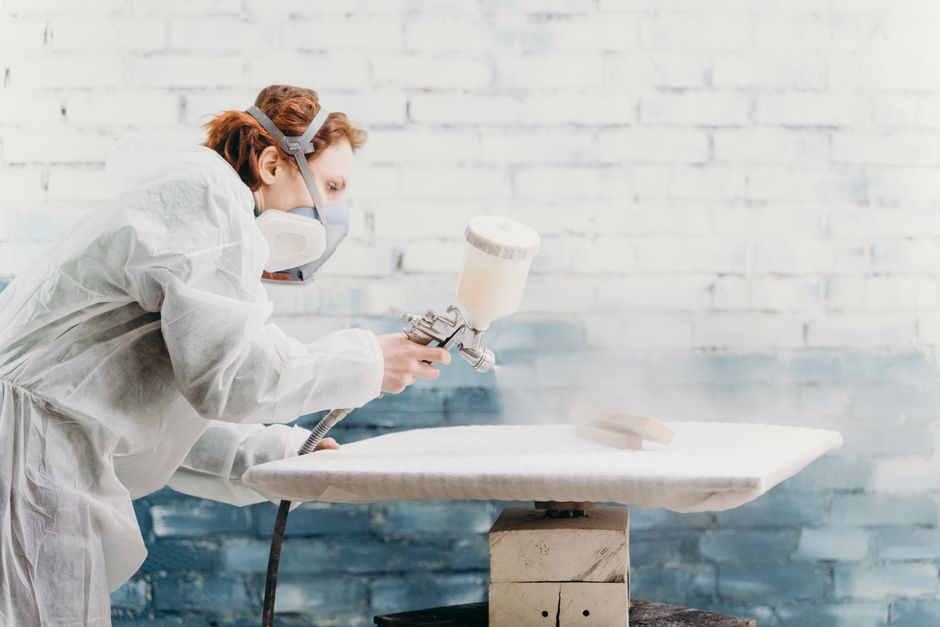
Yes, factory finish cabinet painting is worth it in Denver because a sprayed 2K lacquer topcoat seals cabinet surfaces against Colorado's dry air, while brushed latex coatings fail within 6 to 12 months. Cabinet, painting, and refinishing Denver CO. in Castle Rock CO, Castle Pines CO, Highlands Ranch CO, and Parker CO delivers a factory spray finish with a 5-year warranty. The work is done by a licensed and insured W-2 crew with no subcontractors.
Table of Contents
- Why do brushed cabinet finishes peel in Denver's dry climate?
- What is a factory finish cabinet painting process from prep to cure?
- How does Cabinet, painting, and refinishing Denver CO. deliver a factory spray finish?
- How much does factory finish cabinet painting cost compared to new cabinets in Denver?
- How long does a factory finish cabinet painting project take?
- Which Denver neighborhoods does factory finish cabinet painting serve?
- What should you check before hiring a cabinet painter in Denver?
- Key Takeaways
- References
Why do brushed cabinet finishes peel in Denver’s dry climate?
Brushed cabinet finishes peel in Denver because the region's low humidity and wide seasonal temperature swings pull moisture out of wood and stress any film that sits on the surface. Denver's arid climate creates a cycle where wood expands and contracts repeatedly, and a coating that cannot flex or hold its bond will crack and separate.
Brush and roller application leaves uneven film thickness, lap marks, and trapped air that become failure points. A brush stroke deposits more coating in some areas and less in others, which means the finish cures unevenly. Trapped air bubbles create tiny voids where moisture and grease can enter, weakening the bond between the coating and the cabinet surface.
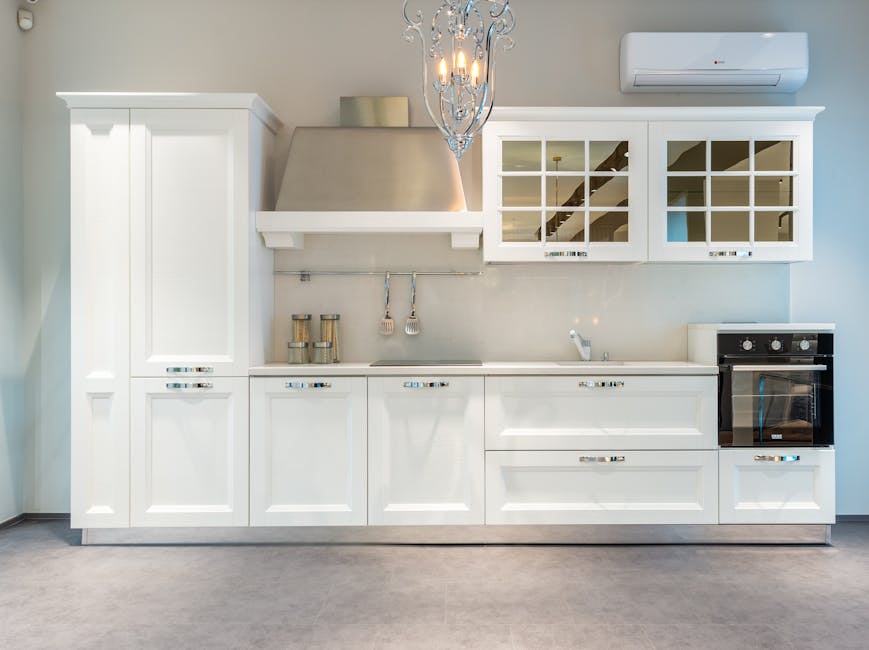
House painters who brush latex onto cabinets produce finishes that chip in 6 to 12 months, according to cabinetspainting.com. Latex paint sits on top of the wood rather than sealing into it, and the dry Denver air accelerates the breakdown of that surface film. The result is peeling along edges, chipping at corners, and visible wear around handles and drawer pulls.
A sprayed coating lays an even, sealed film across the whole door face. The atomized spray reaches into corners, edges, and recessed panel profiles that a brush cannot coat uniformly. That continuous film resists the expansion and contraction cycle far better than a hand-applied coating, which is why sprayed finishes hold up for years instead of months in Colorado homes.
What is a factory finish cabinet painting process from prep to cure?
A factory finish cabinet painting process runs from protection and degreasing through sanding, priming, spraying, and curing. The sequence starts with protecting surrounding surfaces, removing hardware and doors, cleaning and degreasing, and sanding and repairing damaged areas, according to Cabinet Painting Denver. Every step removes contaminants and creates a surface that can accept the primer and color coats.
Imperfections are filled after primer so the surface is level before color coats. Colorado Cabinet Painting states that Bondo is applied after primer to cover imperfections. Filling after primer matters because the primer reveals dents, scratches, and grain texture that would otherwise show through the final finish.
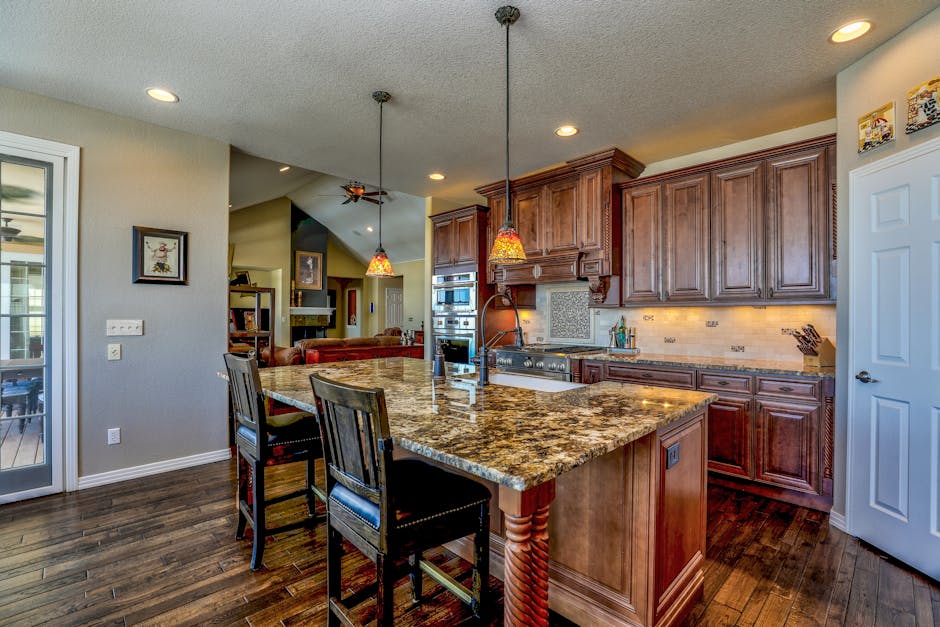
Doors and drawer fronts are sprayed in a dedicated shop, never in a garage or kitchen. Elevated Cabinet Painting states that all cabinet doors and drawer fronts are sprayed at its dedicated shop. A controlled shop environment keeps dust, pet hair, and household debris away from wet coatings, which is essential for a smooth factory-style result.
Each piece gets one coat of primer and two coats of paint, front and back, with sanding between coats. Colorado Cabinet Painting describes this exact sequence for cabinet doors sprayed at its shop. Sanding between coats removes any raised grain or minor dust nibs and gives the next coat a mechanical bond, which builds a harder and more uniform film.
The final stage is curing, and a controlled shop environment matters for a hard, durable film. Sprayed coatings need stable temperature and humidity to cross-link properly. When doors cure in a dedicated shop rather than a kitchen with cooking steam and temperature swings, the finish reaches full hardness before the doors return to the home.
How does Cabinet, painting, and refinishing Denver CO. deliver a factory spray finish?
Cabinet, painting, and refinishing Denver CO. delivers a factory spray finish through a dustless system, factory spray 2K lacquer, and a process built on more than 20 years of experience. The company has been family-owned and operated in the Denver area since 2005. That continuity means the crew has worked on Denver-area cabinetry through every seasonal condition the Front Range produces.
The dustless system and factory spray 2K lacquer seal cabinets against Colorado's dry climate. A 2K lacquer is a two-component coating that cures through a chemical reaction rather than simple solvent evaporation, which produces a harder and more chemical-resistant film than single-component paints. The dustless system keeps airborne particles out of the spray zone so the lacquer lays down clean and smooth.
The crew is licensed and insured W-2 employees, with no subcontractors on any job. That staffing model means the people who prep, spray, and reinstall the cabinets are accountable to the company directly. No third-party crew is brought in, so the finish quality and job site behavior stay consistent from the first day to the final walkthrough.
The company backs its work with a 5-year warranty and provides photo proof on completed work. The warranty covers the finish performance over time, and photo proof documents the condition of the cabinets before, during, and after the project. That record gives homeowners a clear reference for what was done and how the finish should look.
Service covers Castle Rock, Castle Pines, Highlands Ranch, Parker, and the greater Denver metro. The same shop-based spray model applies across all service areas, so homeowners in each community receive the same process and finish standard. For more detail on the service area, see painting kitchen cabinets Denver CO.
How much does factory finish cabinet painting cost compared to new cabinets in Denver?
Factory finish cabinet painting costs a fraction of full cabinet replacement in Denver. Most Denver kitchens cost $3,500 to $7,500 to spray with factory lacquer, while replacement runs $20,000 to $45,000, according to cabinetspainting.com. The gap between those ranges is the single biggest reason homeowners choose refinishing.
The savings versus full-cabinet replacement is reported between 50% and 70%. Elevated Cabinet Painting states that cabinet painting offers savings of 50 to 70 percent versus full-cabinet replacement. In dollar terms, cabinetspainting.com reports that refinishing saves $15,000 to $30,000 compared with replacing cabinets.
Refinishing avoids the cost of new boxes, countertop disruption, and demolition. New cabinets require removing countertops, disconnecting plumbing, and often repairing drywall and flooring. Cabinet painting keeps the existing layout intact, which means the kitchen stays functional and the project avoids the hidden costs that come with tear-out and reconstruction.
Cost depends on door count, cabinet condition, and finish selection. A kitchen with more doors and drawer fronts takes more labor and materials. Cabinets with heavy grease buildup, deep scratches, or failing old finish need more prep time, and a grain-cover finish on golden oak or laminate can add steps that affect the final price.
How long does a factory finish cabinet painting project take?
A factory finish cabinet painting project typically takes 5 to 7 business days, with complex refinishing running 7 to 10 business days. Cabinet Painting Denver lists standard project timelines of 5 to 7 business days and 7 to 10 business days for more complex refinishing. That window covers the full sequence from door removal through reinstallation.
The shop-based model picks up doors early in the week and reinstalls them at the end. Colorado Cabinet Painting states its typical job finishes in 5 days, starting Monday with door pickup and finishing Friday with door installation. While doors are at the shop, the cabinet boxes in the home are prepped and coated.
Box prep in the home includes protecting surrounding surfaces, cleaning and degreasing the frames, sanding, and applying primer and finish to the face frames and end panels. Colorado Cabinet Painting states that cabinet boxes in the home are brush and rolled, while doors are sprayed at the shop. The home portion of the work is contained so the kitchen remains usable during the week.
Cure time adds to the schedule before cabinets are ready for normal use. Even after doors are reinstalled, the sprayed lacquer continues to harden over the following days. Homeowners should expect to wait a short period before loading cabinets heavily or cleaning the surfaces, so the finish reaches its full durability.
Which Denver neighborhoods does factory finish cabinet painting serve?
Factory finish cabinet painting serves Cherry Creek, Washington Park, Hilltop, and Castle Pines as core service areas. These neighborhoods contain a large share of Denver's older and higher-value housing stock, where original cabinetry is often worth refinishing rather than replacing. The same factory spray process applies in each community.
Service extends to Castle Rock, Highlands Ranch, and Parker. Cabinet, painting, and refinishing Denver CO. serves Castle Rock, Castle Pines, Highlands Ranch, Parker, and the greater Denver metro. Elevated Cabinet Painting also lists Highlands Ranch, Castle Rock, and Parker among its service areas, along with Denver, Westminster, Broomfield, Thornton, Arvada, Littleton, and Aurora.
Older housing stock in Cherry Creek, Washington Park, Hilltop, and Castle Pines often has golden oak or laminate cabinets that respond well to a grain-cover spray finish. cabinetspainting.com states that it specializes in Golden Oak grain-cover and laminate and MDF cabinets. A sprayed finish fills the open grain of oak and bonds to laminate surfaces that latex paint cannot grip.
The shop-based spray model works the same regardless of neighborhood. Doors and drawer fronts leave the home and go to a dedicated spray shop, while the cabinet boxes are prepped on site. That consistency means a kitchen in Hilltop receives the same sprayed lacquer finish as a kitchen in Castle Pines, with no variation based on job site conditions.
What should you check before hiring a cabinet painter in Denver?
Confirm licensing and insurance, and ask whether the crew is W-2 employees or subcontractors. A licensed and insured company protects the homeowner from liability and signals that the business operates above board. Asking about W-2 status reveals whether the people on the job are direct employees with training and accountability or outside labor brought in for the project.
Ask whether doors are sprayed in a dedicated shop or on-site with brushes and rollers. cabinetspainting.com states that it never uses brushes or rollers on cabinets, while Colorado Cabinet Painting sprays doors at its shop and brushes and rolls boxes in the home. The answer tells you what finish quality to expect on the most visible surfaces.
Request the warranty terms in writing and compare them across providers. Cabinetspainting.com offers a 3-year warranty, while Cabinet, painting, and refinishing Denver CO. backs its work with a 5-year warranty. A written warranty should state what is covered, for how long, and what conditions apply, so the homeowner knows what recourse exists if the finish fails.
Ask for photo proof of completed kitchens and references in your area. Photo proof shows the actual finish quality on real projects, not stock images or idealized samples. References in Cherry Creek, Washington Park, Hilltop, or Castle Pines let a homeowner see the work in person and ask about the crew's conduct and schedule.
Confirm the coating type, since precatalyzed or 2K lacquer performs differently than latex paint. cabinetspainting.com uses low V.O.C. precatalyzed lacquer and states that sprayed precatalyzed lacquer lasts 10 or more years, while brushed latex chips in 6 to 12 months. The coating chemistry, not just the application method, determines how the finish holds up in Denver's dry climate.
Key Takeaways
- Brushed latex cabinet finishes in Denver chip within 6 to 12 months, while sprayed precatalyzed lacquer lasts 10 or more years.
- A factory finish process runs from protection and degreasing through sanding, priming, spraying, and curing.
- Cabinet doors and drawer fronts are sprayed in a dedicated shop, not in a garage or kitchen.
- Cabinet painting in Denver typically costs $3,500 to $7,500, while replacement runs $20,000 to $45,000.
- Most cabinet painting projects finish in about one week, with complex refinishing taking longer.
- Cabinet, painting, and refinishing Denver CO. has been family-owned since 2005, uses a dustless system and 2K lacquer, and backs work with a 5-year warranty.
- Service covers Cherry Creek, Washington Park, Hilltop, Castle Pines, Castle Rock, Highlands Ranch, and Parker.
References
- Cabinet Painting Denver – Factory Finish — date unknown
- Colorado Cabinet Painting | Denver, CO — date unknown
- Cabinet Painting Denver | Factory Finish Specialists — date unknown
- Elevated Cabinet Painting: Kitchen Cabinet Painting in Denver — date unknown