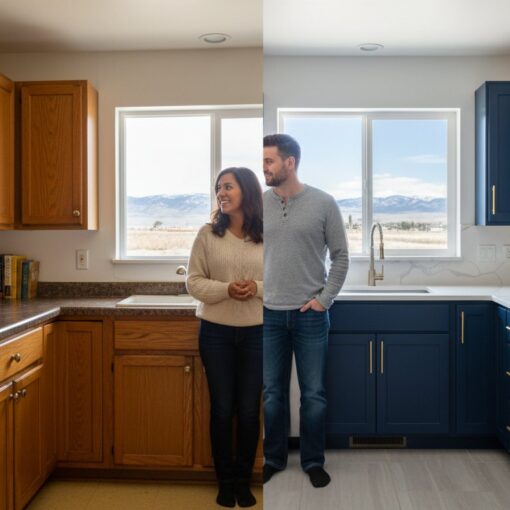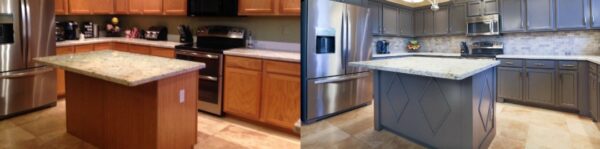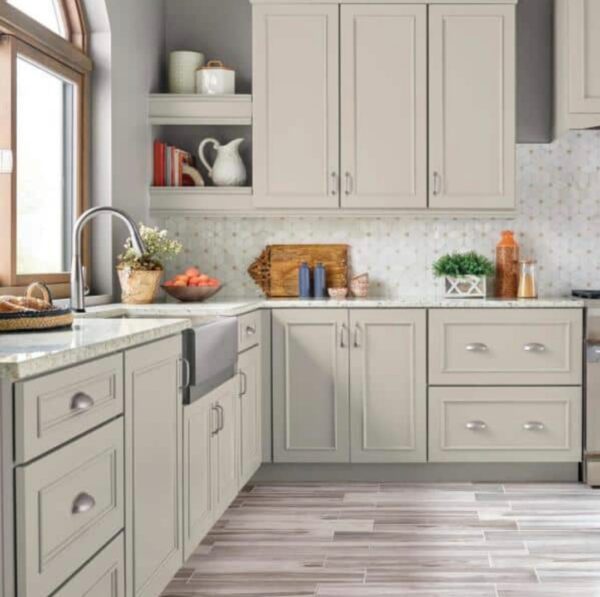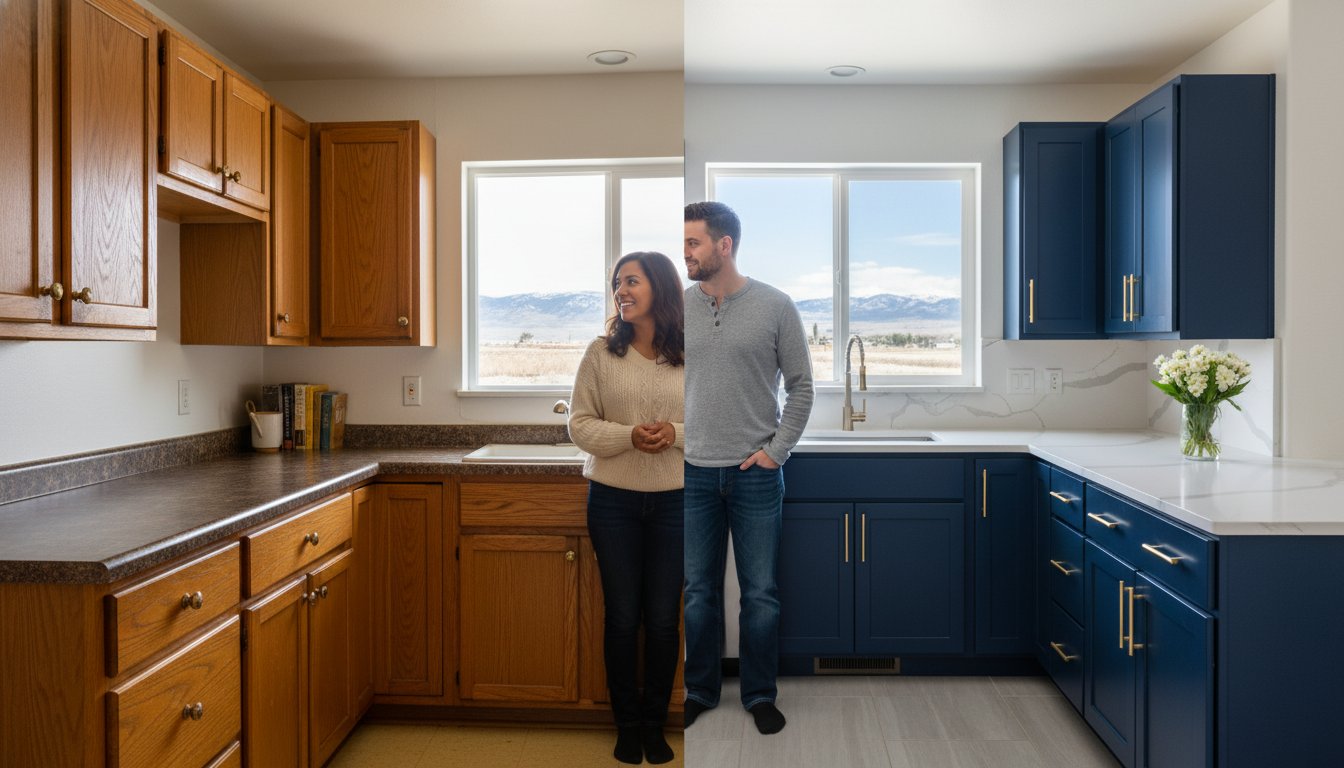
You walk into your kitchen and the cabinets stare back at you. Not broken, not falling apart, just tired. The honey oak finish that looked fine in 2005 now feels heavy and dated. You open a browser and type exactly what thousands of Douglas County homeowners search every month: "kitchen cabinet painters with factory finish near me." The results pour in, but the real question sits underneath that search: can someone actually make my old cabinets look like they came from a high-end factory line, without charging me $30,000 to replace them?
Table of Contents
- Why "Factory Finish" Matters for Your Kitchen Cabinets
- The True Cost of Hiring Kitchen Cabinet Painters (2026 Pricing)
- How Professional Painters Achieve a Flawless Factory Finish
- Can You Paint Over Factory-Finished Cabinets? (Yes, Here's How)
- How Long Does the Project Take? (Timeline for Castle Rock Homeowners)
- What Warranty Should You Expect? (Trust Signals)
- DIY vs. Professional: The Real Cost-Benefit Analysis
- Frequently Asked Questions
- Serving Castle Rock, Castle Pines, Highlands Ranch and Parker
The answer is yes, and the process is more refined than most people realize. If you have been searching for kitchen cabinet painters with factory finish near me, you are likely looking for that perfect balance of quality and value. You want the glass-smooth surface, the even sheen, the durability that stands up to kids, grease, and Colorado's dry indoor air. You want cabinets that look indistinguishable from new factory-painted units, at a fraction of the cost. This guide walks through exactly how that happens, what it costs in the Castle Rock and Highlands Ranch market, and what separates a lasting finish from one that peels in eighteen months.
Why "Factory Finish" Matters for Your Kitchen Cabinets
The term "factory finish" gets thrown around a lot in cabinet painting circles, but it refers to something specific. It is not about the cabinet material itself. It is about the application method: spraying paint in a controlled environment rather than brushing or rolling it on by hand.
When cabinets come from a manufacturer with a painted finish, they are sprayed in a dust-free booth under consistent temperature and humidity. The paint atomizes into a fine mist and settles evenly across the surface. No brush strokes. No roller stipple. Just a smooth, hard shell that cures uniformly.
Professional cabinet painters replicate this by using HVLP or airless spray systems, either inside a sealed containment tent built in your garage or at an off-site shop. The difference between a sprayed finish and a hand-applied one is immediately visible. Light reflects evenly across the door face. The coating bonds more thoroughly into corners and along panel grooves. Over time, a sprayed finish resists chipping, grease penetration, and cleaning chemicals far better than anything applied with a brush.
Local painters who specialize in this work can match the exact sheen level you want, from dead-flat matte to a soft satin to a semi-gloss that mimics factory lacquer. The goal is simple: when the job is done, no one should be able to tell the cabinets were painted after installation. They should look like they arrived that way.
The True Cost of Hiring Kitchen Cabinet Painters (2026 Pricing)
National pricing data for cabinet painting lands in a broad range, typically $3,000 to $10,000 or more depending on kitchen size and market. In Douglas County and the south Denver metro, homeowners should expect to pay between $3,500 and $7,500 for a standard kitchen with 30 to 40 doors and drawer fronts.
Several factors push that number up or down. The total door and drawer count is the biggest driver. A small galley kitchen in a Castle Pines townhome will cost less than a sprawling open-concept kitchen in The Meadows with a large island and forty-two upper doors. Cabinet material matters too. Solid maple or oak takes paint beautifully with standard prep. MDF doors need grain filling and careful sanding to avoid swelling. Thermofoil or laminate surfaces demand specialized bonding primers and more labor, which adds cost.
Paint grade also affects the quote. Standard acrylics work fine for many projects, but catalyzed urethane finishes, which cure harder and resist moisture better, cost more per gallon and require more skill to spray. Some painters charge extra for off-site shop spraying versus on-site tent containment. Both methods can produce excellent results, but shop spraying allows for higher heat curing and tighter dust control.
Compare these numbers to full cabinet replacement. Stock cabinets from a big-box retailer run $8,000 to $16,000 installed. Semi-custom or custom cabinetry easily hits $15,000 to $50,000 or more. Professional painting saves 50 to 70 percent while delivering a finish that looks and performs comparably to new factory-painted units. A written estimate should break out prep labor, primer, paint materials, and reassembly so you can see exactly where your money goes.
How Professional Painters Achieve a Flawless Factory Finish
Step 1: The "80% Prep" Rule
Ask any experienced cabinet painter what makes the difference between a job that lasts and one that fails, and they will tell you the same thing: prep is 80 percent of the work. The actual spraying is almost an afterthought compared to what happens before the first drop of paint leaves the gun.
The process starts with degreasing. Kitchen cabinets accumulate cooking oils, grease, and hand oils over years of daily use. Paint will not bond to a greasy surface no matter how good the primer is. Professionals use TSP or a comparable degreaser to strip every trace of contamination from the door faces, frames, and interiors.
Next comes sanding. Every surface gets mechanically scuffed to create a profile the primer can grip. On solid wood, this also smooths out raised grain and minor scratches. On previously finished surfaces, sanding breaks the gloss and gives the new coating something to hold. Gaps, dents, and imperfections get filled with wood filler or bondo and sanded flush.
Then the doors and drawer fronts come off. Each piece gets labeled so it returns to its exact original location. Hardware goes into labeled bags. Countertops, floors, and appliances get masked and protected. In Colorado homes, where drywall dust and cooking grease often build up in tandem, skipping any part of this prep sequence guarantees adhesion problems down the road.
Step 2: Priming for Adhesion
Primer selection is not one-size-fits-all. The substrate dictates the chemistry.
For solid wood with knots or tannin bleed, a shellac-based primer seals the wood and prevents yellow-brown stains from bleeding through the finish coat. For previously painted or clear-coated surfaces, a high-bonding acrylic primer provides the grip needed. For laminate, melamine, or thermofoil, a specialized bonding primer like Stix or XIM is essential. These primers chemically etch into the slick surface and create a layer that finish paint can hold onto.
The primer gets sprayed, not brushed. Spraying forces the primer into corners, crevices, and panel grooves where a brush might skip or leave excess material. Once the primer cures, the surface gets a final light sanding to knock down any raised grain or dust nibs, then wiped clean with a tack cloth.
Step 3: Spraying the Finish
The finish coats are where the factory comparison becomes real. Doors are laid flat or hung on a rack inside a dust-free spray booth or zip-walled containment tent. The painter applies the finish in thin, even passes, building coverage without runs or sags.
The paint products used at this stage are not what you grab off the shelf at a home center. Professional cabinet painters typically use catalyzed urethanes, conversion varnishes, or high-performance acrylics like Benjamin Moore Command or Sherwin-Williams Emerald Urethane. These coatings cure harder than standard wall paint, resist moisture and grease, and level out to a smooth, factory-like surface.
Off-site shop spraying, like the approach used by premium services, allows for controlled heat curing that accelerates hardness and reduces dust contamination. On-site spraying with proper containment and ventilation can match those results when the painter knows how to manage airflow and drying conditions. Either way, the finished doors should feel like glass to the touch.
Can You Paint Over Factory-Finished Cabinets? (Yes, Here’s How)
One of the most common concerns homeowners raise is whether paint will actually stick to cabinets that already have a factory finish. The worry makes sense. Factory finishes on thermofoil, melamine, and laminate are designed to be slick, non-porous, and resistant to everything. Paint seems like it would slide right off.
The solution comes down to two things: mechanical adhesion and chemical bonding. Mechanical adhesion means sanding. The factory surface gets scuffed with fine-grit sandpaper to create microscopic scratches the primer can key into. This does not damage the cabinet; it simply dulls the shine and gives the new coating something to hold.
Chemical bonding comes from the primer. High-adhesion bonding primers are formulated specifically for slick, non-porous surfaces. They etch into the substrate at a molecular level and create a bridge between the old finish and the new paint.
Different materials respond differently. Solid wood is the best candidate for repainting; it takes sanding and primer easily. MDF paints beautifully but needs careful handling to avoid water absorption at cut edges. Thermofoil and laminate are riskier. They require aggressive sanding and the right primer, and even then, some thermofoil doors with peeling or delaminating surfaces should be replaced rather than painted. A reputable painter will assess each door honestly and tell you if any are beyond saving. The best indicator of confidence is the warranty: a contractor who offers five or more years of coverage on adhesion is standing behind their prep process.
How Long Does the Project Take? (Timeline for Castle Rock Homeowners)
Most standard kitchens wrap up in four to seven working days, start to finish. The exact timeline depends on kitchen size, number of coats, and drying conditions, but the rhythm is consistent across most professional jobs.
Day one focuses entirely on prep: degreasing, sanding, filling, masking, and removing doors and hardware. By the end of the day, the kitchen is protected and the doors are in the spray area. Priming usually happens on day one or early day two. The primer needs time to dry and cure before sanding, so day two often includes a light sanding pass and the first finish coat.
Days three and four bring additional finish coats, with drying time between each. Most kitchens need one coat of primer and two finish coats for full coverage and durability. Days five through seven cover reassembly: doors go back on their hinges, drawer fronts get reattached, hardware gets installed, and the painter does touch-ups on any minor imperfections.
During the entire process, the kitchen remains functional. Cabinet boxes stay mounted on the wall. The sink, refrigerator, and stove are accessible. You can cook, wash dishes, and go about daily life. The doors are the only pieces that leave the room. After reassembly, the paint continues to cure for seven to fourteen days. During that window, avoid heavy scrubbing, slamming doors, or hanging anything on the door faces. After full cure, the finish reaches its maximum hardness and can handle normal kitchen abuse.
What Warranty Should You Expect? (Trust Signals)
Warranties in the cabinet painting industry vary widely, and they tell you a lot about the painter's confidence in their own work. The industry baseline is one year. Many painters offer that and nothing more, which essentially covers you if the paint peels immediately.
Premium cabinet painters offer five to ten years of written warranty coverage. This protects against peeling, chipping, cracking, and fading that result from workmanship defects or paint failure. It does not cover abuse: scratches from pots and pans, water damage from leaks, or impact damage from kids and pets.
In Colorado's climate, where indoor air stays dry for much of the year, paint adhesion faces different stresses than in humid regions. Wood expands and contracts with seasonal humidity shifts, and a coating that cannot flex slightly will eventually crack. A five-year warranty signals that the painter has accounted for these conditions in their prep and material choices. Before signing any contract, ask for the warranty terms in writing and confirm what is and is not covered.
DIY vs. Professional: The Real Cost-Benefit Analysis
A DIY cabinet painting project looks appealing on the surface. The material costs seem manageable: a gallon of good cabinet paint runs $50 to $100, primer costs $30 to $60, and an HVLP sprayer rental might run $75 per day. Add sandpaper, drop cloths, tape, degreaser, and filler, and you are looking at $300 to $500 in supplies plus two or three weekends of labor.
The hidden costs are where DIY falls apart. Spraying cabinets well is a skill developed over dozens of kitchens. First-timers routinely produce runs, orange peel texture, and dust nibs trapped in the finish. Doors painted in a garage or basement pick up airborne particles that ruin the smooth surface. Within six to twelve months, poorly bonded paint begins peeling at the edges, and the whole project needs to be redone, this time by a professional who charges extra to strip the failed DIY job first.
The professional value proposition is straightforward. You pay for skill, speed, equipment, and a guaranteed result. Most homeowners would rather spend their weekends hiking in Castlewood Canyon or grabbing breakfast in downtown Parker than sanding cabinet doors in the garage. The "fun things to do this weekend" angle is real: painting cabinets is not on anyone's list.
There is also a resale consideration. Professionally painted cabinets can recoup 70 to 80 percent of their cost at sale by making the kitchen look updated and move-in ready. A DIY paint job that looks amateurish can actually reduce buyer confidence and lead to lower offers. The math favors hiring a pro.
Frequently Asked Questions
How much should I pay to have my kitchen cabinets painted in Castle Rock?
Expect $3,500 to $7,500 for a full kitchen with 30 to 40 doors and drawer fronts. Smaller kitchens fall below that range; larger or more complex projects can exceed it. Get three quotes and compare what each includes: prep scope, paint brand, number of coats, and warranty length.
What cabinet colors are outdated in 2026?
Honey oak, golden oak, and dark cherry finishes continue to fade from popularity. The warm, orange-toned woods that dominated early-2000s Colorado builds now read as dated. Trending colors include deep charcoals like Sherwin-Williams Iron Ore, warm whites such as Creamy and Alabaster, and two-tone schemes with darker lowers and lighter uppers. Navy blue on lower cabinets with white uppers remains a strong choice for kitchens with good natural light.
Do factory painted cabinets hold up?
Yes. Professionally sprayed factory finishes provide even coverage and a hard, durable surface. With proper care and avoidance of abrasive cleaners, a quality cabinet paint job lasts ten years or more. The key variable is not whether the finish was applied in a factory or on-site, but whether the prep and application were done correctly.
Can you paint thermofoil cabinets?
Yes, but only with proper mechanical sanding and a high-adhesion bonding primer. Thermofoil is a plastic-based veneer that resists paint adhesion. Some thermofoil doors, especially those already peeling or delaminating, cannot be saved and should be replaced. A professional assessment will identify which doors are viable candidates.
Serving Castle Rock, Castle Pines, Highlands Ranch and Parker
Our service area covers the communities where Douglas County homeowners live and invest in their properties: Castle Rock, including downtown, The Meadows, and Terrain; Castle Pines; Highlands Ranch, from Eastridge to Westridge; and Parker, including Parker East and Stonegate.
These neighborhoods share a common architectural window. Most homes were built between the late 1990s and the mid-2010s, and many kitchens still have the original oak or maple cabinets installed by the builder. The bones are solid. The layout works. The finish just needs a refresh. That is where a factory-quality spray finish transforms the space without the cost and disruption of tearing everything out.
If your kitchen is ready for that transformation, get a free, no-obligation estimate. We bring the factory finish to your home, right here in Douglas County.