What if the difference between a kitchen transformation that looks amateur and one that rivals a factory finish comes down to a single decision you make before any paint touches your cabinets?
You’re absolutely right to be concerned about the quality of finish you’ll get from local painters. Most homeowners discover too late that traditional brush and roller methods simply can’t deliver the smooth, durable results they expected. The reality is that finding a skilled cabinet painter that sprays requires understanding exactly what separates true professionals from amateur house painters who cut corners with cheap materials and outdated techniques.
This detailed guide will show you exactly how to identify and select the best spray cabinet painter in your area, ensuring you get that coveted factory-quality finish that lasts for decades. You’ll discover the specific questions to ask potential contractors, the red flags that signal poor workmanship, and the preparation standards that separate exceptional results from disappointing ones.
We’ll walk through the spray painting process, cost considerations, and the critical factors that determine whether your cabinet refinishing project becomes a source of pride or regret.
Key Takeaways
- Spray painting delivers a superior factory finish without brush marks, making it the professional standard for cabinet refinishing work.
- A qualified cabinet painter that sprays can complete your project faster than traditional methods while delivering long-term value despite higher initial costs.
- Denver’s climate conditions directly impact paint drying times, requiring local expertise for optimal spray painting results.
- Portfolio review and spray painting experience are critical factors when selecting a professional cabinet painter for your project.
- Proper preparation and space protection protocols separate amateur painters from seasoned professionals who guarantee quality results.
Why Choose a Cabinet Painter That Sprays?
When homeowners decide to refresh their kitchen cabinets, the application method makes all the difference between a mediocre finish and a factory-quality result. A cabinet painter that sprays delivers superior outcomes compared to traditional brush and roller techniques, transforming tired cabinets into stunning focal points that last for decades.
Spray painting uses specialized equipment to atomize paint into fine particles, creating an even coat without brush marks or roller stipple. This technique eliminates the streaks and texture patterns that plague hand-applied finishes. The result? A smooth, glass-like surface that rivals what you’d find on brand-new cabinetry straight from the manufacturer.
Many homeowners mistakenly believe spray painting is only for large commercial projects or requires expensive professional equipment. That’s simply not true. Professional cabinet painters use HVLP (High Volume Low Pressure) and airless spray systems specifically designed for residential work, delivering precise control and exceptional results in home kitchens.
The advantages of spray application extend far beyond aesthetics:
- Faster application: Spray painting covers surfaces 3-4 times faster than brushing
- Superior durability: Even coating thickness prevents premature wear and chipping
- Professional appearance: No brush marks, drips, or texture inconsistencies
- Reduced drying time: Thinner, more uniform coats cure faster and more completely
Understanding Spray Painting Techniques
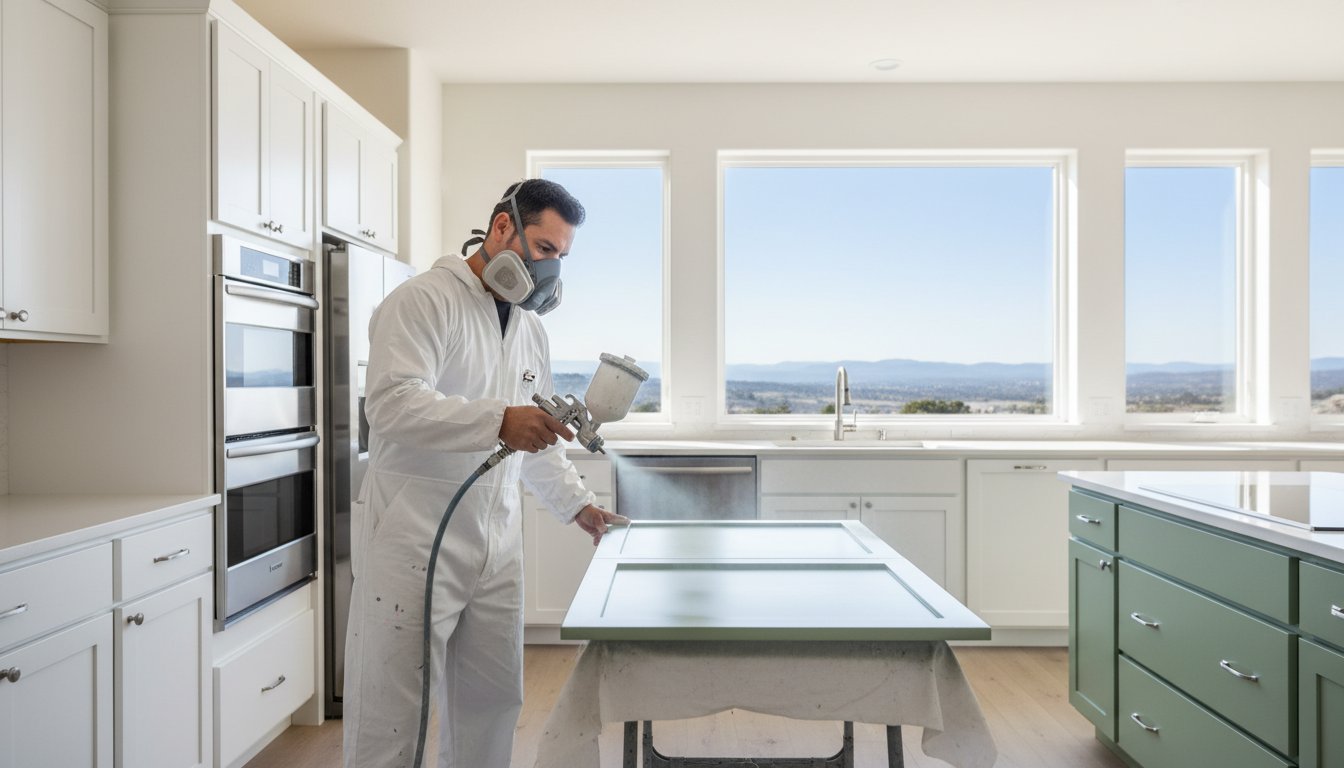
Professional spray painting begins with meticulous preparation. Cabinet doors and drawer fronts are removed, thoroughly cleaned, and sanded to create proper adhesion. The spray process itself involves multiple thin coats rather than one thick application, ensuring each layer bonds properly with the previous one.
HVLP systems use lower pressure to reduce overspray while maintaining excellent atomization. Airless sprayers work well for larger surfaces but require more skill to avoid runs and sags. The choice depends on cabinet style, paint type, and workspace constraints.
The Impact of Spray Painting on Finish Quality
Spray-applied finishes penetrate wood grain more effectively than brush application, creating stronger adhesion and longer-lasting results. The consistent film thickness prevents the uneven wear patterns common with hand-applied coatings. Professional spray techniques also allow for complex color matching and specialized finishes that would be impossible to achieve with brushes.
Quality spray work transforms cabinets so dramatically that many visitors assume the entire kitchen was renovated. Explore our detailed guide on spray painting benefits to see exactly how this technique delivers factory-quality results in your existing kitchen.
Spray Painting vs. Traditional Methods: A Comparison
When choosing a cabinet painter that sprays, you’re investing in a fundamentally different process than traditional brush and roller methods. The differences go far beyond the application tool. They impact your timeline, budget, and the final appearance of your cabinets.
Professional spray painting delivers results that brush application simply can’t match. The atomized paint particles create a uniform coating without the texture marks left by bristles. This isn’t just about aesthetics. The smooth surface resists dirt accumulation and makes cleaning effortless.
Cost and Efficiency: Which Saves More?
Initial equipment costs for spray systems run higher than brushes and rollers. Professional-grade spray equipment requires significant investment in compressors, spray guns, and ventilation systems. However, the labor efficiency gains offset these upfront expenses quickly.
A skilled cabinet painter that sprays completes projects 40-60% faster than brush application. This time savings translates directly to labor cost reductions. The precision of spray application also reduces material waste by 15-20% compared to traditional methods, where excess paint often gets absorbed into brush bristles or lost to dripping.
Long-term value becomes clear in maintenance requirements. Spray-applied finishes typically last 8-12 years before needing touch-ups, while brush-applied coatings may require attention every 5-7 years due to brush marks that trap dirt and moisture.
Quality and Aesthetic Differences
The visual distinction is immediate. Spray application eliminates brush marks completely, creating that coveted factory finish appearance. This smooth surface reflects light evenly, making colors appear more vibrant and consistent across all cabinet surfaces.
Durability testing shows spray-applied coatings perform better under stress. The even film thickness prevents weak spots where brush strokes overlap or where bristles create thin coverage areas. Professional spray systems apply coatings at consistent mil thickness, ensuring uniform protection.
Environmental impact favors spray methods when executed properly. Modern spray equipment captures overspray, reducing volatile organic compound emissions by up to 30%. The reduced material waste and longer-lasting finish mean fewer recoating cycles over the cabinet’s lifetime.
The precision control available with spray application allows for complex color transitions and specialty finishes that remain impossible with brushes. Professional cabinet refinishing achieves results that transform kitchens completely, delivering the smooth, durable finish that homeowners expect from quality craftsmanship.
Local Considerations: Hiring a Spray Painter in Denver
Denver’s unique climate and market conditions create specific challenges that directly impact cabinet painting results. When searching for a cabinet painter that sprays, understanding these local factors can make the difference between a project that lasts decades and one that fails within months.
The Mile High City’s elevation of 5,280 feet creates lower air pressure that affects paint application and drying times. Professional spray painters who understand Denver’s conditions adjust their techniques accordingly. They know that rapid moisture changes between seasons can cause improperly applied finishes to crack or peel prematurely.
Denver’s dry climate, with humidity levels often dropping below 20% during winter months, accelerates solvent evaporation during the spraying process. This means timing becomes critical. Experienced local professionals schedule their spray work during optimal weather windows and use climate-appropriate primers and topcoats that perform well in Colorado’s temperature swings.
The local market offers a clear advantage: established cabinet painters have developed relationships with suppliers who stock products specifically formulated for high-altitude, dry climate conditions. These aren’t the same materials you’d find at big box stores. Professional-grade precatalyzed primers and industrial-strength topcoats designed for Colorado’s environment deliver superior adhesion and durability.
Evaluating Local Expertise
Look for cabinet painters with at least 5 years of Denver-area experience. Check recent reviews that specifically mention how finishes have held up through multiple Colorado winters. Ask potential contractors about their experience with altitude-related challenges and what adjustments they make to their spray techniques. The best professionals can explain exactly how Denver’s climate affects their process and what steps they take to compensate.
Navigating Local Regulations and Standards
Denver County requires specific permits for certain cabinet painting projects, particularly those involving lead paint in homes built before 1978. Professional cabinet painters that spray understand these requirements and maintain proper certifications. They also follow Colorado’s strict VOC (Volatile Organic Compound) regulations, which limit the types of paints and solvents that can be used in residential projects.
Compliance isn’t just about avoiding fines. It ensures your project meets insurance requirements and maintains your home’s value. Local professionals stay current with changing regulations and use only approved materials that won’t void warranties or create liability issues.
Choosing a local provider means faster response times, immediate availability for touch-ups, and deep knowledge of Denver’s specific challenges. Discover top-rated painters in Denver who understand these local considerations and deliver results that last.
Criteria for Choosing the Right Cabinet Painter
Finding the right cabinet painter that sprays requires careful evaluation of specific qualifications that separate true professionals from amateur house painters. The spray painting process demands specialized equipment, extensive training, and years of hands-on experience to deliver that factory finish quality you’re paying for.
Assessing Professional Experience
Experience matters more than flashy marketing. Look for painters with at least 5 years specializing specifically in spray-painted cabinets. General house painters who occasionally spray cabinets don’t have the muscle memory and technical knowledge required for consistent results. Ask about their training on spray equipment brands like Graco or Wagner, and whether they understand the critical differences between lacquer, conversion varnish, and catalyzed coatings.
Certification from paint manufacturers like Sherwin-Williams or Benjamin Moore indicates serious commitment to professional standards. These programs teach proper surface preparation, spray techniques, and troubleshooting methods that separate the pros from weekend warriors.
Reviewing Portfolios and Customer Feedback
A strong portfolio shows before-and-after photos of actual cabinet projects, not stock images. Look for consistent spray patterns, smooth finishes without brush marks, and clean lines around hardware. The photos should demonstrate work on different cabinet styles and wood types.
Customer reviews reveal the complete picture. Pay attention to comments about cleanup, project timeline adherence, and how the finish has held up after 6-12 months. Red flags include complaints about overspray damage, uneven coverage, or peeling within the first year.
Check for mentions of preparation work in reviews. Professional cabinet painters that spray spend 60-70% of their time on prep work because it’s the foundation of a durable finish. Reviews that praise thorough sanding, proper priming, and meticulous masking indicate a contractor who understands the process.
Cost transparency separates legitimate professionals from fly-by-night operators. Reputable painters provide detailed written estimates breaking down labor, materials, and timeline. They explain their process upfront and don’t surprise you with additional charges for “unexpected” prep work that any experienced professional should anticipate.
Beware of estimates that seem too good to be true. Quality spray painting requires expensive equipment, premium materials, and significant time investment. Contractors who drastically underbid either cut corners or plan to hit you with change orders later.
Ready to find a qualified cabinet painting professional? Get your accurate quote today by texting us your door and drawer count with photos.
What to Expect from a Professional Spray Painting Service
Working with a professional cabinet painter that sprays requires understanding the comprehensive process from start to finish. Quality spray painting isn’t just about applying paint. It’s about meticulous preparation, proper protection, and following proven procedures that deliver factory-level results.
The entire process typically spans 3-5 days, depending on your kitchen size and the complexity of your cabinet configuration. Professional spray painters use industrial-grade equipment and precatalyzed primers that require specific curing times between coats.
The Consultation and Quotation Process
During the initial consultation, experienced painters will examine your existing cabinet condition, door style, and current finish. They’ll assess the wood type, check for damage, and determine the preparation work required. You can text the number of doors and drawers with pictures to get an accurate price immediately.
Essential questions to ask include: What type of primer and paint will be used? How many coats are included? What’s the warranty coverage? How will my kitchen be protected during the work? A comprehensive quote should detail every step, from removal and prep work through final installation.
Professional painters will also discuss color options, finish types (satin, semi-gloss, or gloss), and timeline expectations. They should explain their preparation process in detail, since prep work is the most vital factor in achieving a durable finish.
The spray painting process follows a systematic approach:
- Complete door and drawer removal with careful labeling
- Thorough cleaning and degreasing of all surfaces
- Detailed sanding to create proper adhesion
- Application of high-quality primer in controlled spray booth environment
- Multiple thin coats of finish paint with proper flash time between coats
- Professional reassembly with new hardware if requested
Caring for Your Newly Painted Cabinets
Your newly sprayed cabinets need 30 days to fully cure, even though they’ll be ready for normal use within 24-48 hours. During the first week, avoid hanging anything heavy on doors and use gentle cleaning products only.
For long-term maintenance, clean with mild soap and water using a soft cloth. Avoid abrasive cleaners or scrub brushes that can damage the finish. The industrial-strength coating applied by a professional cabinet painter that sprays should maintain its appearance for 10-15 years with proper care.
Learn more about maintaining a factory finish to protect your investment and keep your cabinets looking pristine for years to come.
Transform Your Kitchen with Professional Spray Painting
Choosing the right cabinet painter that sprays requires careful evaluation of experience, technique, and local reputation. Professional spray painting delivers superior results compared to brush application, creating that coveted factory finish that lasts for years. The preparation work remains the most critical factor in achieving durable, professional results that won’t chip or peel.
When hiring in Denver, verify your contractor uses precatalyzed primers and industrial-strength topcoats. Don’t settle for amateur house painters who cut corners with cheap materials. The investment in professional spray painting pays dividends through enhanced durability and that smooth, flawless appearance you can’t achieve with traditional methods.
Ready to get started? Contact us to find the best spray cabinet painter in Denver! With over 45 years of industry experience and specialization in spray painting techniques, we deliver the factory finish your kitchen deserves. You can text us the number of doors and drawers with pictures for an accurate price immediately.
Your dream kitchen transformation is just one phone call away.
Frequently Asked Questions
Why is spray painting better than brush painting for cabinets?
Spray painting delivers a smooth, factory-like finish that’s impossible to achieve with brushes or rollers. The spray application eliminates brush marks, streaks, and texture variations that plague traditional painting methods. Professional spray equipment atomizes the paint into fine particles, creating an even coating that penetrates into wood grain and provides superior adhesion compared to brush application.
How long does spray painting kitchen cabinets take?
A professional cabinet painter that sprays typically completes most kitchen cabinet projects in 3-5 days, depending on the number of doors and drawers. This includes proper preparation time, primer application, and multiple topcoat layers with adequate drying time between each coat. The spray process itself is faster than brush painting, but the extensive prep work and curing time determine the overall timeline.
Can I choose any color for my spray-painted cabinets?
Yes, spray painting allows for virtually unlimited color options since most paint manufacturers offer custom color matching services. Professional cabinet painters use high-quality paints that can be tinted to match any color sample, from classic whites and neutrals to bold contemporary hues. The spray application ensures consistent color coverage across all cabinet surfaces, even in detailed areas and recessed panels.
What makes a professional cabinet spray painter different?
Professional cabinet spray painters use industrial-grade equipment, precatalyzed primers, and specialized spray booths that amateur painters don’t have access to. They understand proper surface preparation, which includes thorough cleaning, sanding, and filling imperfections before any paint application. Experienced professionals also know how to adjust spray patterns, pressure settings, and paint viscosity to achieve optimal results on different cabinet materials.
Are there any downsides to spray painting cabinets?
Spray painting requires extensive masking and protection of surrounding areas since overspray can travel several feet from the application point. The process also demands proper ventilation and safety equipment due to airborne particles. Additionally, spray painting typically costs 15-25% more than brush painting due to the specialized equipment, materials, and labor-intensive preparation work required.
What preparation is needed before spray painting cabinets?
Proper preparation involves removing all cabinet doors and hardware, thoroughly cleaning all surfaces with degreasing agents, and sanding to create proper paint adhesion. All holes, dents, and imperfections must be filled with wood filler and sanded smooth. The cabinet boxes require careful masking of surrounding walls, countertops, and appliances to prevent overspray damage during the spraying process.
How do I care for spray-painted cabinets to ensure longevity?
Clean spray-painted cabinets with mild soap and water using a soft cloth, avoiding abrasive cleaners or scrubbing pads that can damage the finish. Wipe up spills immediately and avoid hanging wet towels or cloths on cabinet doors. The high-quality finishes used by professional spray painters typically last 10-15 years with proper care, compared to 5-7 years for brush-painted surfaces.