A botched cabinet paint job is more than a disappointment; it’s a costly mistake that can diminish your home’s value. The fear of peeling paint, visible brush strokes, and a finish that looks amateurish is a valid concern, and it’s often the direct result of hiring a generalist instead of a specialist. The truth is, painting cabinets is a labor-intensive trade that requires a different skill set than painting walls. Hiring the right professional cabinet painting company is the single most important decision for ensuring a result that lasts.
In this guide, we break down the critical differences you need to understand. We will arm you with the knowledge to distinguish a true cabinet finishing expert from a standard house painter. You’ll learn the essential questions to ask about their preparation process, the specific industrial-strength products they should be using, and how to identify a company that guarantees a flawless, durable factory finish. This is about making a smart investment, not just a cosmetic change.
Key Takeaways
- Learn the critical difference between a general house painter and a cabinet finishing specialist to avoid a costly hiring mistake.
- Discover the non-negotiable preparation steps that account for 90% of a durable, factory-grade finish.
- Use our vetting checklist to identify a true professional cabinet painting company and avoid contractors who take shortcuts.
- Understand why a professional job is a long-term investment that saves you from the high cost of a failed project or full replacement.
The Specialist Advantage: General Painter vs. Cabinet Painting Company
Many homeowners assume that any painter can paint kitchen cabinets. This is a critical and costly mistake. Painting cabinets is not house painting; it is a form of fine-finish furniture work that demands a completely different skill set, specialized equipment, and industrial-grade materials. A general painter approaches your cabinets with the same tools and techniques used for drywall, leading to a finish that will inevitably fail.
A true cabinet painting company understands the vast differences in preparation, application, and product chemistry. The difference in the final product is not just noticeable-it’s the difference between a durable, factory-like finish and a peeling, chipping mess within a year.
Specialized Knowledge and Materials
A professional cabinet finisher has deep knowledge of how coatings interact with various surfaces. Understanding different Cabinet construction and materials, like oak with its deep grain or MDF with its porous edges, is vital for proper adhesion. They know how to block tannin bleed from woods like cherry and mahogany. Specialists use industrial-strength, pre-catalyzed primers and acrylic urethane topcoats designed for high-touch surfaces. Standard latex house paint is far too soft; it will never fully cure on a cabinet surface, remaining tacky and easily scratching or peeling under daily use.
The Right Equipment for a Flawless Finish
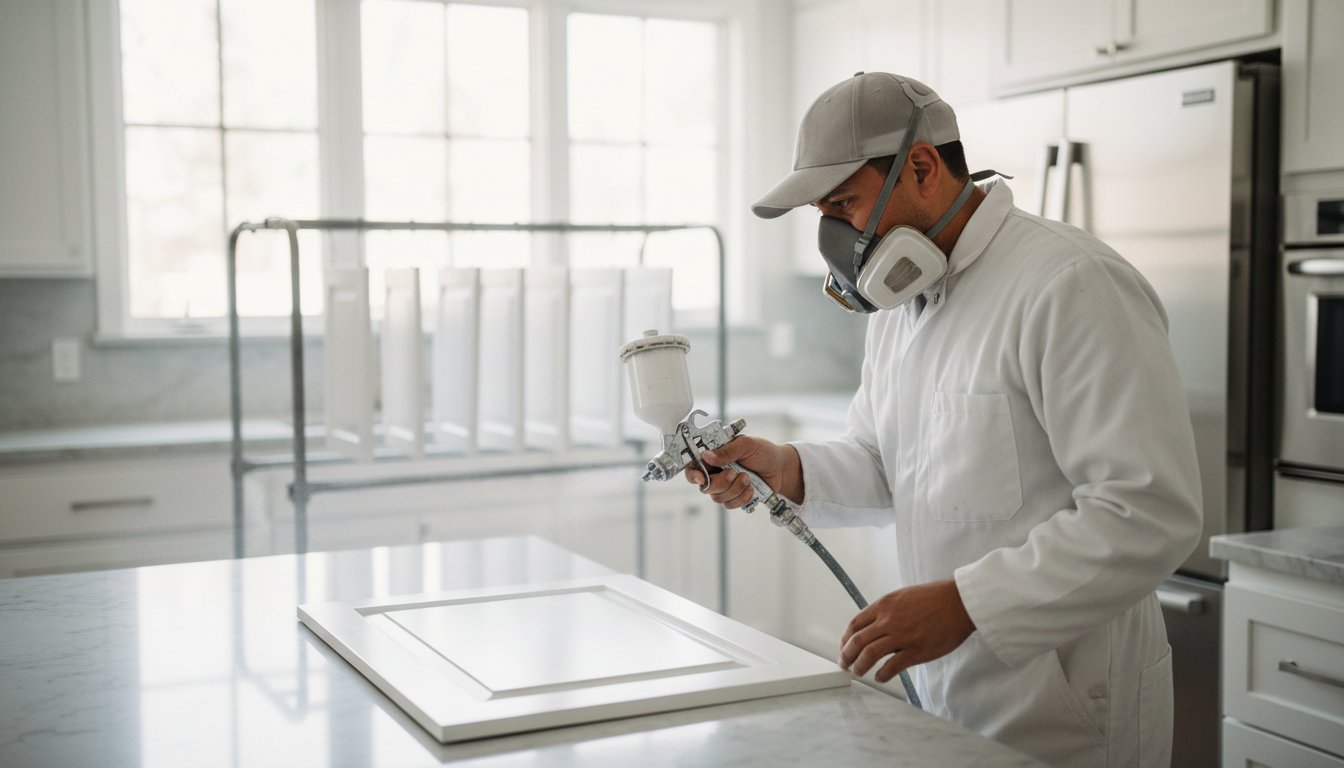
A factory finish is impossible to achieve with a brush and roller. Period. Those tools leave behind distinct marks and an uneven texture that cheapens the look of your kitchen. A dedicated cabinet painting company invests heavily in professional-grade equipment, including:
- HVLP Spray Systems: High-Volume, Low-Pressure sprayers atomize the coating into a fine mist, laying down a perfectly smooth and level surface without drips or texture.
- Dust Extraction and Ventilation: A clean environment is non-negotiable. Professionals use commercial-grade sanders connected to HEPA vacuums and set up negative-air ventilation to ensure no dust or debris contaminates the finish.
This controlled application process is the only way to get a durable, glass-smooth result.
A Refined, Repeatable Process
General painters often drastically underestimate the labor-intensive prep work required for cabinet refinishing. A specialist has a refined, multi-step system honed over hundreds of jobs. This includes meticulous cleaning and degreasing, systematic disassembly, labeling every door and drawer, extensive sanding, and methodical application of primers and topcoats in a controlled, off-site spray booth. This repeatable process ensures every single piece receives the same high level of attention, guaranteeing consistent quality and durability across your entire kitchen.
The Professional Process: What a True Cabinet Painter Actually Does
Anyone can buy a can of paint, but achieving a durable, factory-like finish on kitchen cabinets is a different story. The secret isn’t in the final coat; it’s in the exhaustive preparation that comes before it. We operate on the principle that a quality finish is 90% preparation and only 10% application. This non-negotiable process is what separates a professional cabinet painting company from an amateur house painter. Skipping even one of these critical steps guarantees peeling, chipping, and a finish that fails in months, not years. Here is exactly what to expect when you hire a team dedicated to doing the job the right way.
Step 1: Meticulous Preparation and Cleaning
This is the most labor-intensive phase and the absolute foundation of a lasting finish. Your kitchen is systematically disassembled and protected. This isn’t just a quick wipe-down; it’s a deep restoration process:
- Complete Disassembly: All doors, drawers, and hardware are removed, labeled, and transported for off-site finishing.
- Thorough Degreasing: We use powerful, professional-grade cleaners to strip away years of built-up grease, oils, and contaminants that cause paint to fail.
- Sanding for Adhesion: Every square inch of the cabinet boxes, doors, and drawers is scuff-sanded to create a profile the primer can grip onto permanently.
- Surgical Masking: Your kitchen is fully masked off with plastic and paper to protect your countertops, floors, appliances, and walls from any dust or overspray.
Step 2: Priming and Painting in a Controlled Environment
To achieve a flawless, glass-smooth finish, doors and drawers are taken to a dedicated spray booth. This controlled environment prevents dust and debris from marring the surface. We apply a high-adhesion, stain-blocking primer to seal the wood and prevent tannin bleed-through. After priming, multiple thin coats of industrial-strength acrylic paint are professionally sprayed, with fine sanding between each coat. This meticulous layering is what creates the hard, durable surface you expect from a true factory finish.
Step 3: Curing, Reassembly, and Final Inspection
Paint needs to cure, not just dry. We allow the finish to harden for maximum durability before carefully wrapping and transporting everything back to your home. Our team reassembles your kitchen with precision, installing the doors, drawers, and any new hardware you’ve chosen. The final step is a detailed walkthrough with you to ensure every detail meets our high standards and your complete satisfaction. This commitment to a flawless result is why professional cabinet refinishing consistently provides a high return on investment, a fact supported by data in the National Association of REALTORS® Remodeling Impact Report.

How to Choose the Right Cabinet Painting Company: A Vetting Checklist
Many general painters will claim they can paint cabinets, but cabinet refinishing is a specialized trade that demands specific processes and materials. Not all companies are created equal. Use this straightforward checklist to vet potential contractors, arm yourself with the right questions for the estimate, and learn to spot the red flags that signal an amateur job waiting to happen.
Key Questions to Ask Every Potential Company
A true professional will have clear, confident answers to these questions. Vague responses are a major warning sign.
- What is your exact process for preparing the cabinets? The most vital factor in a durable finish is the prep work. They should detail a multi-step process of cleaning, degreasing, sanding, and caulking.
- What specific type of primer and paint do you use? Look for answers that include industrial-strength, precatalyzed primers and pigmented lacquers or specialty cabinet coatings, not generic house paint.
- Do you spray the doors and drawers off-site in a booth? For a true, smooth factory finish, all removable items should be sprayed in a controlled environment, free of dust and debris.
- Can you provide references and a portfolio of recent work? A reputable company will be proud to show you their past projects and connect you with satisfied clients.
Green Flags: Signs of a Top-Tier Professional
Look for these indicators that you’re dealing with a legitimate and experienced cabinet painting company that stands behind its work.
- They have extensive before-and-after photo galleries and videos showcasing their work.
- They provide a detailed, written estimate that outlines the full scope of work, materials, and timeline.
- They can provide proof of liability insurance and workers’ compensation to protect you and your home.
- They offer a solid warranty on their workmanship and the durability of the finish.
Red Flags: Warning Signs to Watch For
If you encounter any of these red flags, it’s best to walk away. A cheap price often leads to a costly failure down the road.
- They plan to use brushes and rollers on your cabinet doors. This method is for walls, not fine-finish cabinetry. It will leave brush marks and an uneven texture.
- They offer a significantly lower price than competitors. This almost always means they are cutting corners on the most critical steps, like preparation or using cheap, inadequate materials.
- They can’t explain their process or products in detail. A real expert knows their craft inside and out.
- They use generic latex house paint. Standard wall paint is not designed to withstand the high-touch, high-grease environment of a kitchen and will quickly fail.
Vetting a contractor is the most important step in protecting your investment. At Painting Kitchen Cabinet Denver, we are confident in our labor-intensive process and welcome these questions. View our detailed process and gallery to see the professional difference for yourself.
The Investment: Why Professional Cabinet Painting Saves You Money
Viewing professional cabinet painting as a mere expense is a mistake. It is a strategic investment in your home’s value, functionality, and long-term durability. When you hire an expert cabinet painting company, you are not just paying for a color change; you are paying for a result that lasts, adds significant equity to your property, and prevents far greater costs down the line. The difference between an amateur job and a professional, factory-grade finish is measured in years of performance and thousands of dollars in value.
Cost of a Failed Paint Job
A DIY paint job gone wrong is one of the most expensive lessons a homeowner can learn. Amateur work often results in peeling, chipping, and a brush-marked finish that devalues your kitchen. The process to correct this is labor-intensive and costly, involving chemical stripping, extensive sanding, and starting the entire preparation process from scratch. In nearly every case, the cost to fix a failed attempt exceeds the price of hiring a professional in the first place. Don’t risk it. Get a professional quote today.
Professional Painting vs. Full Cabinet Replacement
Before considering a full demolition, understand the overwhelming financial and practical advantages of professional refinishing. A high-quality cabinet painting service delivers a “like-new” result without the extreme cost and disruption of a total replacement.
- Cost Savings: Professional cabinet painting typically costs 70-80% less than installing new cabinets of comparable quality.
- Time Efficiency: A full kitchen remodel can take weeks or even months, leaving your home in a state of chaos. Our process is completed in a fraction of that time.
- Sustainability: Refinishing your existing cabinets is an environmentally responsible choice that keeps perfectly good materials out of the landfill.
Long-Term Durability and Home Value
The industrial-strength coatings and meticulous prep work used by a true cabinet painting company result in a finish that can last for a decade or more with proper care. This isn’t just a temporary fix; it’s a durable, long-term upgrade. A beautifully updated kitchen is a primary driver of home value and one of the most sought-after features for potential buyers. Investing in a professional cabinet finish is recognized as one of the highest return on investment (ROI) home improvement projects you can undertake, adding immediate and lasting value to your property.
Invest in Quality: Choose a True Cabinet Painting Professional
As we’ve covered, the difference between a general painter and a cabinet specialist is immense. A true professional understands that a flawless, durable finish doesn’t come from a bucket of house paint and a brush. It’s the result of a labor-intensive preparation process, specialized equipment, and industrial-grade materials. Choosing the right cabinet painting company is a smart investment in your home that prevents the peeling and chipping common with amateur jobs, saving you money in the long run.
With over 45 years of experience, we have perfected this process. We exclusively use spray application to achieve a true factory finish, and our industrial-strength, durable acrylics are engineered to withstand daily use. We don’t cut corners-our reputation is built on work that lasts. For a no-nonsense, accurate price, get an accurate price immediately. Text pictures of your cabinets to us now.
Take the next step toward a kitchen that looks brand new, backed by craftsmanship you can trust.
Frequently Asked Questions About Cabinet Painting
How long does the cabinet painting process take from start to finish?
A professional cabinet painting project typically takes between 5 to 7 business days for an average-sized kitchen. The process is labor-intensive and cannot be rushed. Day one involves extensive on-site preparation and removal of doors and drawers. The following days are dedicated to finishing the cabinet boxes in your home while the doors are sprayed off-site to achieve a flawless, factory finish. The final day is for careful reinstallation and cleanup.
Will my kitchen be usable during the painting process?
Yes, your kitchen will remain functional throughout the majority of the project. We meticulously mask and protect all of your countertops, appliances, and floors, so you will still have access to your sink, refrigerator, and stove. The main inconvenience is that your cabinet doors and drawers will be removed for off-site finishing, but the core of your kitchen remains usable for daily needs. We work efficiently to minimize disruption to your home.
Do I need to empty all of my cabinets before you start?
Yes, we require that you empty all cabinets and drawers before our team arrives. This is a critical step for two reasons. First, it protects your dishes, food, and other belongings from any dust created during the sanding and preparation phase. Second, it allows our crew to properly clean, degrease, and prep the interior cabinet edges and frames, ensuring a durable and long-lasting bond for the new finish. Proper prep work is everything.
What kind of warranty do you offer on your cabinet painting work?
We stand behind the durability of our work with a comprehensive warranty. Our finish is guaranteed against peeling, bubbling, or chipping resulting from product failure or improper application. Our confidence comes from using industrial-strength, precatalyzed primers and topcoats, not cheap house paint. A reputable cabinet painting company provides a clear warranty because they use the right materials and a proven, meticulous process from start to finish.
How do I clean and maintain my newly painted cabinets?
To maintain the factory finish of your newly painted cabinets, cleaning is simple. Use a soft, lint-free cloth dampened with a mild solution of soap and water. Wipe the surfaces gently and dry them immediately with another soft cloth. Avoid using abrasive scrubbers, harsh chemical cleaners, ammonia, or bleach, as these can damage the protective topcoat. Regular, gentle cleaning is all that is needed to keep your cabinets looking new for years.
Can you paint any type of cabinet material, like oak, MDF, or thermofoil?
Yes, we can paint virtually any cabinet material, including solid wood like oak and maple, MDF, laminate, and even plastic-wrapped thermofoil. The success of the project is not in the material itself, but in the extensive preparation process. Each surface requires a specific prep method and specialized, industrial-strength bonding primers to ensure maximum adhesion and a durable, long-lasting finish. We have the experience to handle any material correctly.