

Why Colorado Climate Changes How You Paint Cabinets
Painting kitchen cabinets in Colorado is not the same as painting in a coastal or humid state. The Front Range and mountain regions combine low humidity, strong UV exposure, and big temperature swings. If you use the wrong products or techniques, you can end up with peeling finish, visible brush marks, and hairline cracks in just a year or two.
This guide is designed specifically for Denver metro homeowners, Front Range suburbs, and mountain and resort properties. You will learn which products work in Colorado’s dry air, how to schedule your project around weather, and how to avoid the most common failures professionals see here. Whether you are upgrading a dated cherry kitchen in Highlands Ranch, a rental condo in Breckenridge, or a mid‑century bungalow in Arvada, you can get a durable, factory‑like finish that holds up to daily use.
Key Takeaway: The climate in Colorado affects dry time, adhesion, and durability. You must adjust products, prep, and timing to get a professional, long‑lasting cabinet finish.

How Colorado’s Climate Affects Cabinet Paint
Colorado’s weather works against cabinet finishes in a few specific ways. Understanding these helps you choose the right approach.
Low Humidity And Fast Dry Times
Typical indoor relative humidity on the Front Range is often 20 to 30 percent. In winter, forced‑air heat can drop that even lower.
Effects on cabinet painting:
- Waterborne products can dry too fast, which causes visible lap marks and brush strokes.
- Edges can dry before you finish a panel, which leads to ridges and poor leveling.
- Sanding between coats can be harder because thin coats may powder instead of feather.
What to do:
- Use higher quality waterborne enamels designed for trim and cabinets.
- Work smaller sections at a time.
- Add a paint extender compatible with your product if allowed by the manufacturer.
Temperature Swings In Primary And Second Homes
Denver homes can see 30 degree temperature swings in a single day. Mountain cabins and resort homes sometimes sit unheated between guest stays.
Effects on cabinet painting:
- If interior temperatures dip below product specs while paint cures, adhesion and hardness suffer.
- Repeated warm‑cold cycling can stress fillers and caulk at joints and seams.
What to do:
- Maintain a stable indoor temperature of roughly 60 to 80°F for the full cure period, usually 7 to 30 days depending on product.
- Avoid painting in garages or unconditioned spaces in winter or during shoulder seasons.
UV Exposure In Open‑Plan Colorado Kitchens
Lots of Colorado kitchens have large south‑ or west‑facing windows and skylights.
Effects on cabinet painting:
- White finishes can yellow or chalk when exposed to intense UV.
- Dark colors can fade or show uneven sheen over time.
What to do:
- Choose high quality cabinet‑grade or trim enamel with superior UV resistance.
- Keep sheen consistent, typically satin or semi‑gloss for cabinets.
- Consider window films or treatments for kitchens with intense direct sun.
Expert Insight: Many premature cabinet failures in Denver homes come from painting in garages, basements, or short‑term rental units where temperature and humidity are not controlled during curing.
Choosing The Right Products For Colorado Cabinets
The product choices you make matter more in Colorado than in more forgiving climates.
Best Paint Types For Colorado Conditions
For most Colorado homes, a high‑quality waterborne alkyd or urethane enamel is ideal. These hybrids combine the hardness of oil with the low odor and quicker dry time of waterborne products.
| Product Type | Pros In Colorado Climate | Cons / Watchouts |
|---|---|---|
| Waterborne alkyd enamel | Hard finish, good leveling, low odor, good UV | Needs proper curing time and prep |
| Waterborne urethane enamel | Excellent durability, chip resistant, low yellowing | Slightly longer cure, needs correct primer |
| Standard acrylic latex | Easy to work with, low VOC | Softer, more prone to blocking and chipping |
| Traditional oil (solvent) | Extremely hard, self leveling | Higher VOC, yellows faster in sun, slower dry |
For Denver and Front Range homes, waterborne alkyd or urethane enamels strike the best balance between durability, climate compatibility, and indoor air quality.
Primers That Hold Up In Dry, High‑Altitude Conditions
Primer is where many DIY jobs fail. On older oak, maple, or cherry cabinets you often have oil‑based finishes, kitchen grease, and tannins that want to bleed through.
In Colorado, you want:
- Bonding primer that adheres aggressively to slick factory finishes.
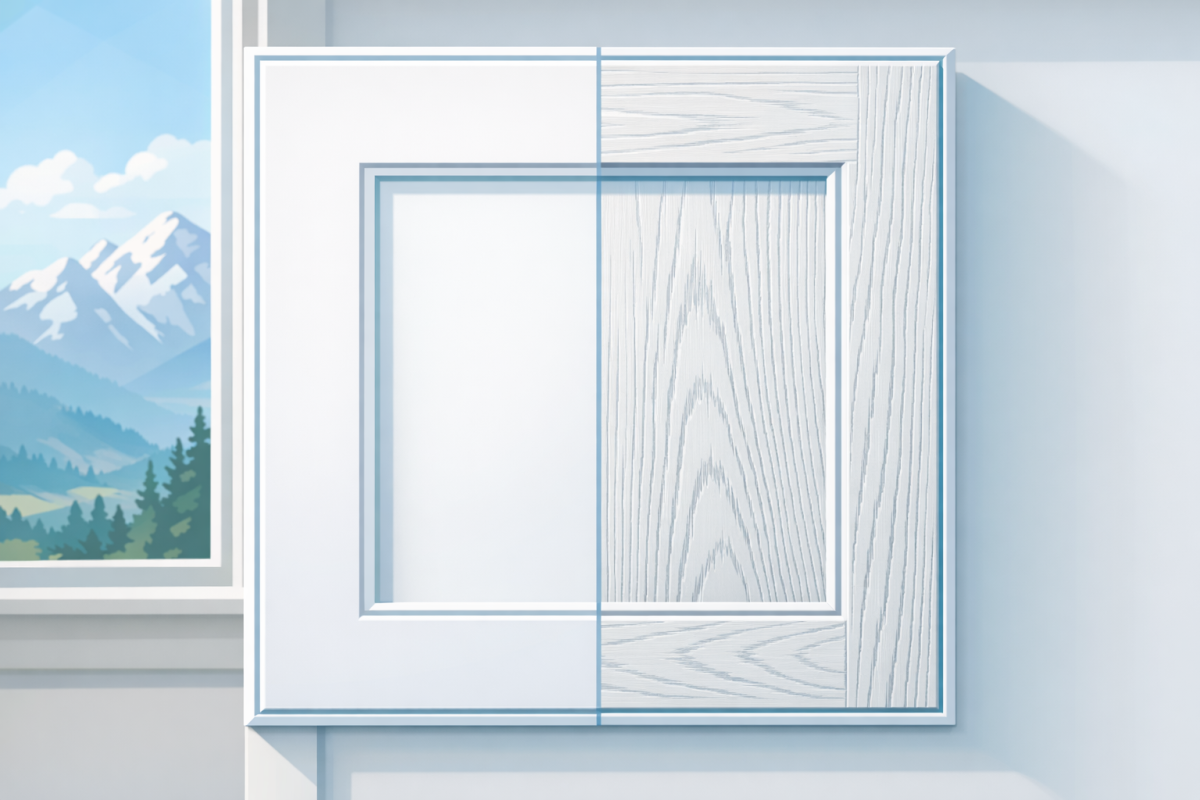
- Stain blocking to prevent tannin bleed, especially with oak and knotty alder.
- Compatibility with your chosen enamel.
Common options:
- Solvent or shellac‑based primers for maximum adhesion and stain blocking. Ideal for older or mystery finishes.
- High‑bond waterborne primers for newer, factory finished cabinets where odor and VOC are concerns.
Pro Tip: In older Denver and mountain homes with heavy oak grain, a shellac‑based primer plus one or two coats of grain‑filling spackle or surfacer can dramatically reduce visible grain through white or light colors.
Fillers, Caulks, And Other Materials
Colorado’s dry air and temperature swings are hard on flexible materials.
- Use high quality, paintable acrylic or urethane‑modified caulk, not cheap painter’s caulk which can crack and shrink faster here.
- Choose wood fillers that cure hard, not soft, especially on door edges and damaged corners.
- For rentals and flips, prioritize durability over ultra‑low VOC. You want products that will survive frequent tenant turnover and cleaning.
Step‑By‑Step Process Tailored To Colorado Homes
The core process is similar everywhere, but small climate‑specific adjustments will protect your finish.
Preparation In A Dry Climate
Better prep equals longer life, especially in high traffic Denver and resort kitchens.
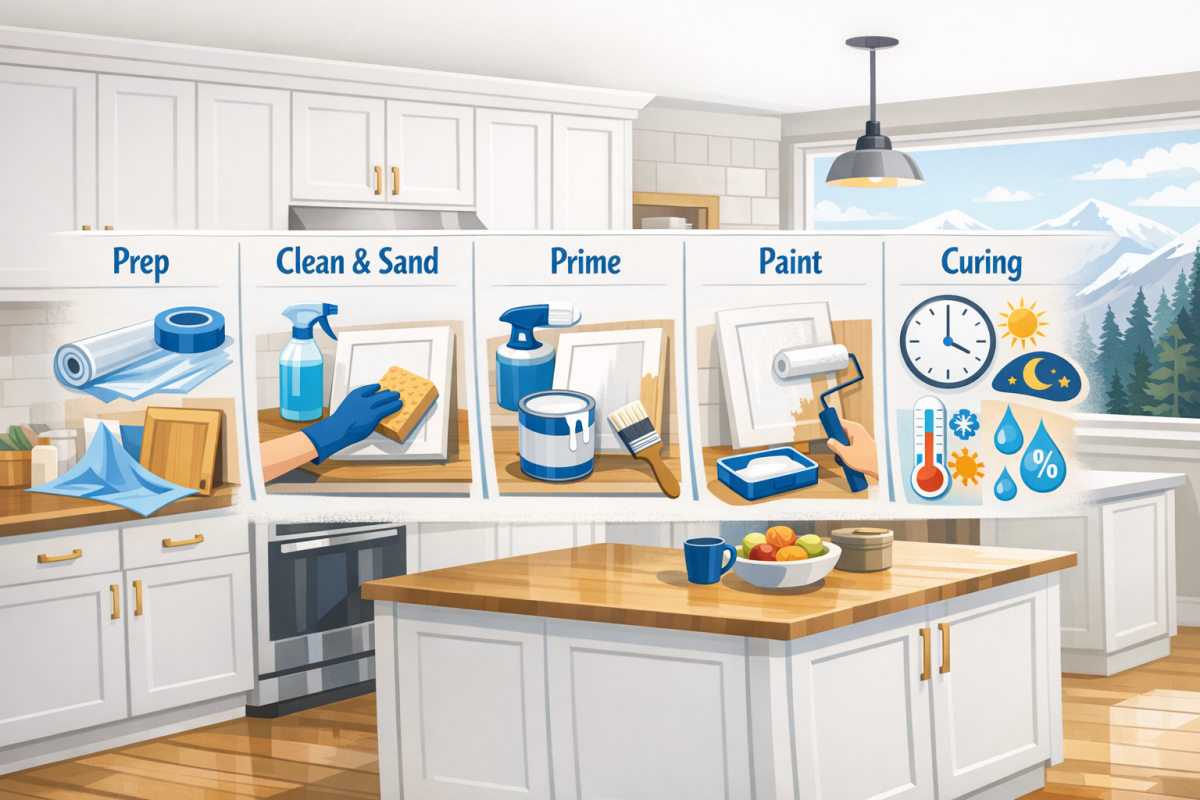
Key steps:
- Label and remove doors and drawers. Mark locations so everything goes back correctly.
- Degrease thoroughly. Use a strong degreaser or TSP substitute, especially near ranges and hoods.
- Scuff sand all surfaces with 120‑180 grit to break gloss. Vacuum and tack cloth or use a microfiber cloth.
- Address grain and damage. Fill dents, dings, and heavy oak grain as desired. Let fillers dry fully in your indoor conditions before sanding.
Note: In low humidity, fillers can skin over but still be soft underneath. Give them the full manufacturer dry time, not just a touch test.
Priming For Adhesion And Stability
Apply primer in controlled conditions, ideally 60 to 75°F with moderate indoor humidity.
- Brush or spray a full, even coat on boxes, doors, and drawers.
- Allow longer open time when brushing by not overworking the product. In Colorado’s dry air, excessive brushing creates ridges.
- Sand primer lightly with 220‑320 grit to smooth fibers and imperfections.
If you see any yellowing or stains bleeding through, spot prime or add a second coat of primer before color.
Painting Doors, Drawers, And Boxes
You can brush and roll, spray, or use a hybrid method.
For Colorado conditions:
- Work in smaller sections so your cut lines do not dry before you can lay them off.
- If brushing and rolling, use a high quality synthetic brush and a fine foam or microfiber roller.
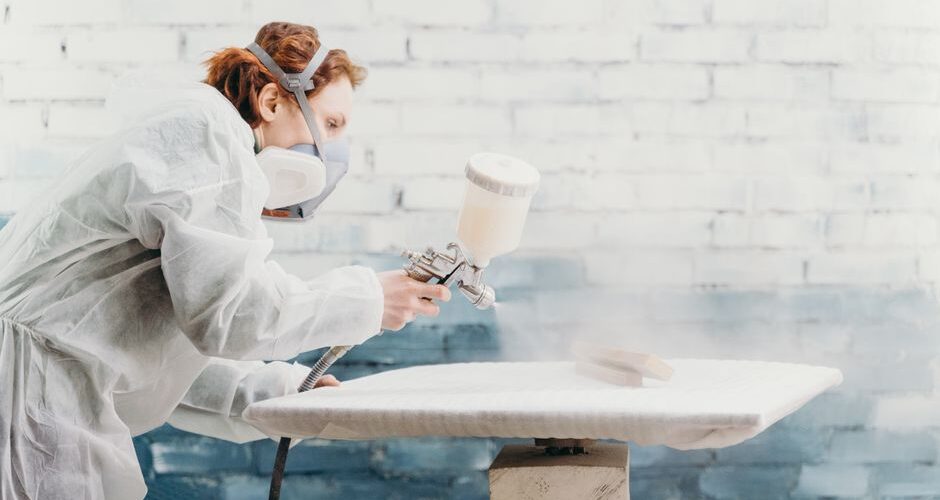
- If spraying, set up in a well ventilated, temperature controlled area, not an unheated garage or out on a deck.
Recommended sequence:
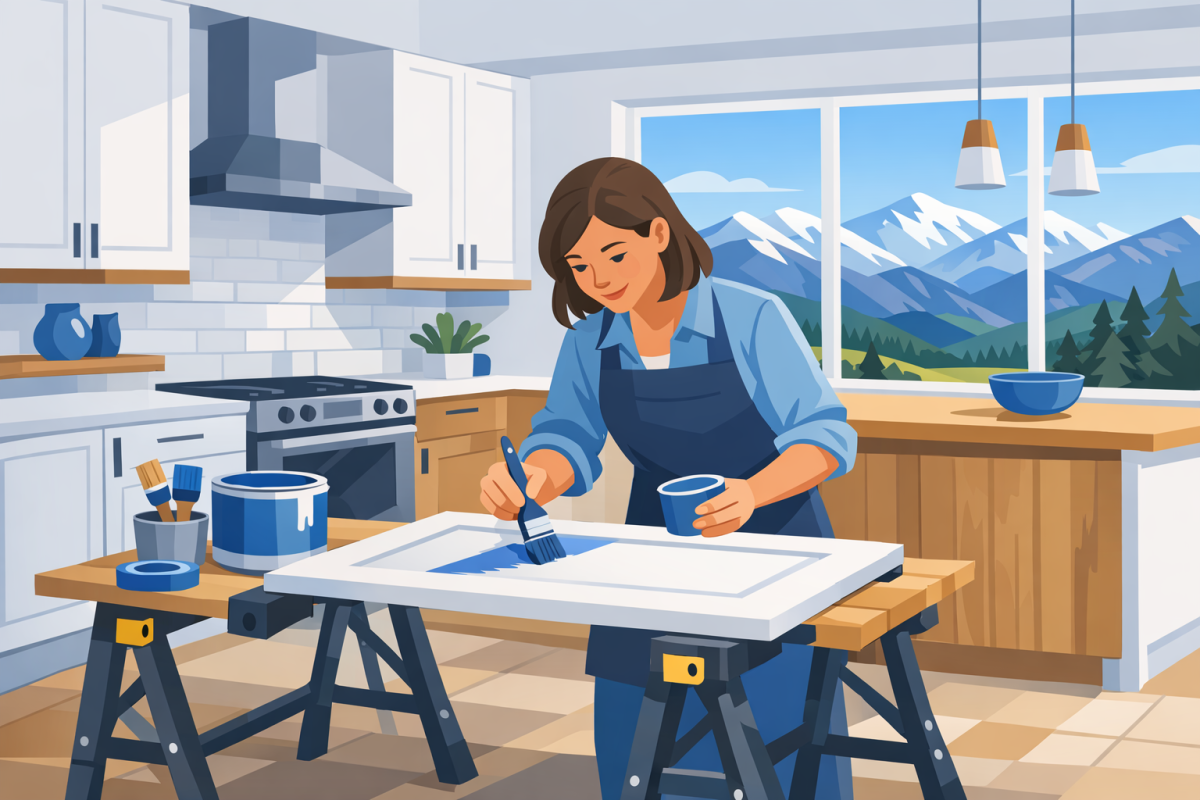
- Spray or roll door backs first, then fronts. Let each side dry on painter’s pyramids or racks.
- Paint cabinet boxes in place, starting with interiors if you plan to paint inside, then face frames, then sides.
Curing And Reassembly In Colorado Homes
Dry to touch is not the same as cured. In Colorado’s dry climate, paint can feel dry quickly while still being soft underneath.
- Follow manufacturer cure times, which are usually 7 to 30 days for full hardness.
- Reinstall doors and drawers carefully after 24 to 48 hours if the product allows, but avoid heavy use.
- For rentals and short‑term rentals, plan at least 7 days of light use before guests arrive.
Important: Maintain stable indoor temperature and avoid leaving windows wide open on cold or very hot days during curing. Big swings can affect hardness and adhesion.
Timing Your Project Around Colorado Seasons
Weather and HVAC patterns influence when and how you should paint.
Painting In Winter With Forced‑Air Heat
Pros:
- Lower outdoor humidity means less moisture migration through walls and cabinets.
- You are already indoors, so disruption can be manageable.
Cons:
- Overly dry indoor air can lead to overly fast dry times and more brush marks.
- Static and dust from heating systems can contaminate finishes.
Adjustments:
- Use air purifiers or temporarily close nearby vents while spraying or rolling.
- Consider using a compatible extender to improve leveling.
Painting In Summer And Shoulder Seasons
Pros:
- Easier to maintain moderate indoor temperatures.
- Possibility to stage sanding and some prep work in attached garages.
Cons:
- Afternoon thunderstorms and open windows can introduce dust and pollen.
- Intense sun on west‑facing kitchens can heat surfaces unevenly.
Adjustments:
- Avoid painting during the hottest part of the day in very sunny kitchens.
- Keep windows mostly closed while spraying to reduce airborne dust.
Special Considerations For Mountain And Resort Homes
Mountain cabins and resort units in places like Vail, Breckenridge, or Winter Park present special challenges:
- Homes often sit vacant, with HVAC off or set very low.
- Owners want projects completed between guest bookings or personal stays.
Recommendations:
- Schedule cabinet painting when you can guarantee stable interior temps for at least 7 days.
- Avoid late fall projects in uninsulated or minimally heated properties.
- Consider slightly more forgiving products if you cannot maintain perfect conditions, accepting a minor tradeoff in ultimate hardness.
When DIY Makes Sense And When To Hire A Pro
Not every Colorado homeowner needs a professional, but many find it worth the cost.
Good Candidates For DIY Cabinet Painting
DIY works well if:
- You have a smaller kitchen and can set up a clean, indoor workspace.
- You are comfortable with sanding, masking, and patient prep work.
- You can control temperature and dust, and you can be without a fully functional kitchen for at least a week.
Ideal for:
- Denver bungalows with compact kitchens.
- Homeowners planning to stay in the home long term and willing to invest time for quality.
When Professionals Are Usually Worth It
Hiring pros is wise if:
- You own a high‑end primary residence, custom home, or luxury mountain property where finish quality is critical.
- The cabinets are heavily grained oak, heavily worn, or previously painted poorly.
- The property is a short‑term rental or flip, where finish failure will cost you in guest reviews or resale value.
Professionals bring:
- Professional spray equipment and climate‑aware product selection.
- Dust control, masking, and workflow that minimize disruption.
- Experience with Colorado‑specific failure modes like tannin bleed and cracking at joints.
Real‑World Example: Many Denver homeowners call pros only after a DIY job begins to chip or peel within a year because the original finish was not sanded or primed properly. Fixing failed paint costs more than doing it correctly the first time.
Colorado‑Specific Help: When To Call Painting Kitchen Cabinets Denver
If you want a factory‑smooth cabinet finish that is tuned for Colorado’s climate, a local specialist can save you a lot of trial and error.
Painting Kitchen Cabinets Denver focuses specifically on cabinet refinishing in Denver and the Front Range. They understand:
- How to select primers and enamels that hold up in low humidity and strong UV.
- How to control dust and temperature in active family homes, rentals, and mountain properties.
- How to schedule projects around guest bookings or real estate timelines.
Typical services include:
- Full cabinet refinishing and color change.
- Grain reduction for dated oak kitchens.
- Durable coatings suitable for vacation rentals and high traffic family kitchens.
If you are unsure whether your current cabinets are good candidates for painting or you need a fast, durable upgrade before listing or renting, it is worth getting a quote.
[CTA: For climate‑specific cabinet painting in the Denver area, visit Painting Kitchen Cabinets Denver at https://paintingkitchencabinet.com – Learn more]
Putting Your Colorado Cabinet Project Into Action
With the right prep, products, and timing, you can get a smooth, durable cabinet finish that stands up to Colorado’s dry air, strong sun, and busy kitchens. Start by assessing your cabinets, controlling your indoor environment, and choosing primers and enamels that perform well here, not just in generic tutorials.
Decide whether your project fits your time, tools, and comfort level, or whether a Colorado cabinet specialist is the better route. Either way, if you respect the climate and follow a disciplined process, you can transform a dated kitchen or mountain rental into a clean, modern space that looks great for years.
Key Takeaway: Respect Colorado’s climate, be meticulous about prep, and use cabinet‑grade products. That combination is what separates long‑lasting cabinet finishes from quick paint jobs that fail.
Frequently Asked Questions
What is the best paint finish for kitchen cabinets in Colorado?
Satin or semi‑gloss is usually best. Both provide enough sheen to clean easily, hide minor imperfections better than high gloss, and look appropriate in most Denver and mountain homes. Semi‑gloss is slightly more durable and reflective, which works well in darker kitchens. Satin offers a softer, more contemporary look that many newer Colorado homes favor.
How long does cabinet paint take to cure in Colorado’s dry air?
Most cabinet‑grade enamels are dry to touch in a few hours, but true curing usually takes 7 to 30 days. Colorado’s dry air can make paint feel dry faster, although the film can still be soft underneath. Lightly rehang doors after 24 to 48 hours if the product allows, but avoid aggressive cleaning, slamming doors, or stacking items against painted surfaces until full cure.
Can I paint kitchen cabinets in an unheated Colorado garage?
It is not recommended. Temperature swings in garages, especially in fall, winter, and early spring, often drop below the minimums for proper curing. Paint that dries in cold conditions can lose adhesion and hardness, which leads to chipping and peeling. If you must work in a garage, you need consistent supplemental heat and good ventilation, which can be difficult to manage safely.
How do I prevent oak grain from showing through painted cabinets?
For heavy Colorado oak, plan on extra steps. After cleaning and sanding, apply a high adhesion primer. Then use a grain filler or high build surfacer to fill open grain. Sand smooth, reprime as needed, then apply your enamel. This process significantly reduces visible grain, especially with white or light colors, and creates a more modern, factory‑style finish.
Are painted cabinets a good idea for Colorado rental and Airbnb properties?
Yes, if done with durable products and professional‑grade prep. Painted cabinets are a cost‑effective way to update older Denver and mountain rentals without full replacement. Use high durability waterborne alkyd or urethane enamels, pay attention to proper curing time before guests arrive, and consider neutral, easy‑to‑touch‑up colors. This combination helps cabinets withstand frequent use and cleaning.
To see more Cabinet Refinishing and Cabinet Painting services in Denver metropolitan areas, tips click on the link below.