You’ve received three quotes for your painting project, and the prices are all over the map. One seems suspiciously cheap, another feels outrageously high, and you’re left confused about what a fair price for quality work actually is. This uncertainty is a common problem for homeowners trying to budget correctly and avoid a low-quality job that will cost more to fix later. The core of this issue comes down to one question: how much do painters charge per hour? Getting a straight answer is the first step toward making a confident hiring decision.
In this 2026 expert breakdown from Painting Kitchen Cabinet Denver, we provide the direct, realistic price ranges you need. We go beyond simple averages to explain the critical factors that justify a professional’s rate, from the labor-intensive preparation required for a durable finish to the specialized skills needed for complex jobs like cabinet painting. By the end of this article, you will understand how to evaluate quotes like a pro, recognize the value of true craftsmanship, and feel confident investing in a flawless paint job that lasts.
Key Takeaways
- While knowing how much do painters charge per hour ($25-$100+) is a start, this number rarely tells the whole story of your project’s final cost.
- Learn why a painter with a higher hourly rate can actually save you money by delivering a more efficient, higher-quality result that lasts.
- Go beyond the hourly rate to understand the key factors that truly determine a professional painting quote, from meticulous prep work to the quality of materials.
- Discover why complex jobs like cabinet painting are priced as a complete project, not by the hour, to guarantee a durable, factory-like finish.
What Is the Average Hourly Rate for a Painter? (The Short Answer)
Nationally, the hourly rate for a professional painter can range anywhere from $25 to over $100 per hour. This is a wide spectrum because it includes everyone from a general handyman with a paintbrush to a highly skilled, union-certified master painter. The final cost is never just one number; it’s a direct result of specific factors that determine the value and quality of the work you receive.
Understanding these variables is critical when you ask, “how much do painters charge per hour?” because you are not just paying for time. You are investing in experience, reliability, and a professional finish that lasts. The price reflects the quality of the prep work, the industrial-strength materials used, and the painter’s commitment to doing the job correctly the first time.
Here is a basic breakdown of what you can expect based on the painter’s business and experience level:
- General Labor / Handyman: $25 – $45 per hour
- Experienced Independent Painter: $50 – $75 per hour
- Established Painting Company / Union Painter: $75 – $100+ per hour
Geographic Location: Denver vs. Rural Rates
Labor costs are directly tied to the local cost of living and market demand. In a major metropolitan area like Denver, painters’ rates are typically higher due to increased operational costs, insurance requirements, fuel, and greater demand for skilled trades. In contrast, a painter in a less populated part of Colorado will likely have lower overhead and can charge less, but may not have the same level of experience with the variety of projects found in a city.
Experience and Credentials: Apprentice vs. Master Painter
An apprentice or new painter will charge significantly less than a seasoned professional with decades of hands-on experience. A master painter’s higher rate reflects a deep knowledge of materials, surfaces, and the labor-intensive preparation techniques required for a durable finish. Furthermore, legitimate professionals are licensed, bonded, and insured. These credentials protect you, the homeowner, from liability and shoddy work. Top-tier professionals are often members of trade organizations like the International Union of Painters and Allied Trades (IUPAT), which signifies a commitment to high industry standards.
Company Type: Solo Operator vs. Established Firm
A solo painter, or “one-man show,” often has the lowest overhead and can offer a competitive hourly rate. However, an established painting firm with multiple crews, a dedicated office, and commercial vehicles will have higher costs to cover. The trade-off is clear: a larger company typically offers greater reliability, comprehensive warranties, and the manpower to complete large jobs efficiently, justifying their higher price structure.
Why an Hourly Rate Can Be Misleading for Your Project
When homeowners start their research, the first question they often ask is, “how much do painters charge per hour?” While this seems like a straightforward way to compare costs, it’s one of the most unreliable metrics in the painting trade. An hourly rate tells you nothing about a painter’s efficiency, skill, or commitment to quality. While official sources like the BLS Occupational Outlook Handbook provide median wage data, this figure doesn’t capture the immense value of proper, labor-intensive preparation work-the single most critical factor for a lasting finish.
The Speed vs. Quality Dilemma
Imagine two painters are hired to paint the same room. Painter A charges $45/hour and finishes in 6 hours. Painter B charges $70/hour and takes 10 hours. On the surface, Painter A seems like the better deal. But the final result tells a different story. The faster, cheaper painter often achieves that speed by cutting corners on the most vital steps:
- Inadequate Prep: Skipping thorough sanding, cleaning, and degreasing of surfaces.
- Poor Masking: Using low-quality tape and materials, leading to messy lines and paint bleed.
- Wrong Materials: Applying cheap primers or skipping primer altogether, which guarantees adhesion failure.
- Rushed Application: Not allowing proper dry time between coats, resulting in drips, streaks, and a weak finish.
The result is a paint job that looks acceptable from a distance but begins to peel, chip, and fail within a year. The slower, more expensive painter invested those extra hours in meticulous preparation, ensuring the final product is durable, smooth, and professional.
Project-Based Pricing: What Are You Really Paying For?
This is why most reputable, experienced painters-especially those specializing in high-end work like cabinet refinishing-provide a flat-rate, project-based quote. Instead of selling you their time, they are selling you a guaranteed outcome. You are paying for a flawless, durable finish, regardless of whether it takes them 40 hours or 50 hours to achieve it.
This approach aligns the painter’s goals with yours. The focus shifts from logging hours to delivering a superior result efficiently. When you receive a project-based price, you’re not just wondering how much do painters charge per hour; you’re investing in craftsmanship, durability, and the peace of mind that comes from knowing the job will be done the right way.
Key Factors That Determine a Professional Painting Quote
When homeowners in Denver ask, “how much do painters charge per hour,” they are often just scratching the surface of what goes into a professional quote. The hourly rate is only a small part of the total cost. A true professional’s price is built on non-negotiable factors that guarantee a durable, high-quality finish. Understanding these elements shows why a higher upfront cost is almost always a better long-term investment in your home.
Factor 1: The Critical Importance of Prep Work
In any high-quality painting project, the preparation is the most labor-intensive part, often accounting for 70-80% of the total labor. This is not an area for shortcuts. Proper prep work is the foundation for a finish that lasts and is the biggest difference between an amateur and a professional job. Key steps include:
- Cleaning and Degreasing: Removing years of grime, oils, and contaminants so the primer can bond correctly.
- Sanding: De-glossing old finishes and creating a smooth, uniform surface for paint adhesion.
- Caulking and Filling: Sealing gaps and repairing imperfections to create seamless, clean lines.
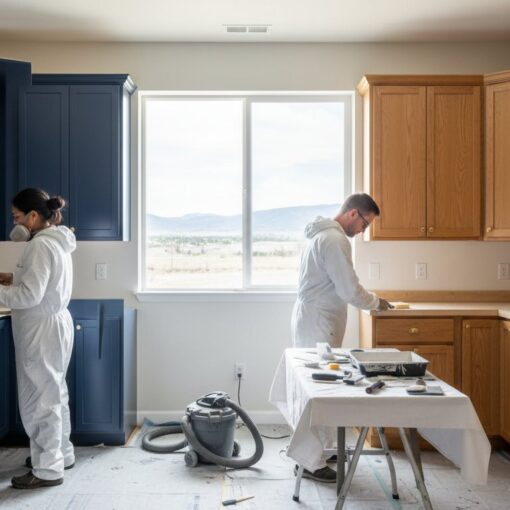
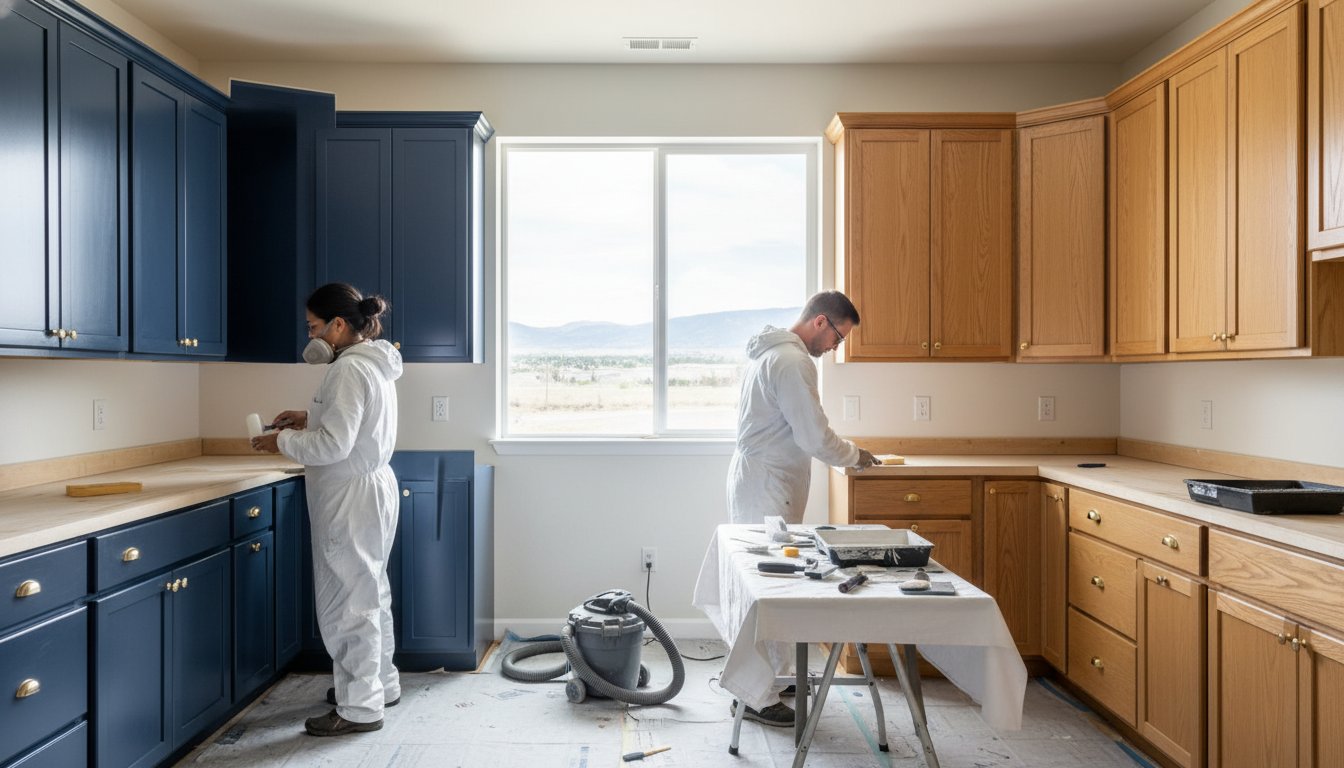
- Masking and Protection: Meticulously protecting floors, countertops, and appliances from any overspray or drips.
Skipping any of these steps guarantees one thing: premature paint failure, including chipping, peeling, and bubbling.
Factor 2: The Quality of Materials and Paint
The materials used directly impact the look and durability of the final product. A low quote often means the painter is using cheap, big-box store paint that will not stand up to daily use. We use industrial-strength materials designed for performance, including pre-catalyzed primers that block stains and bond to tricky surfaces, and durable acrylic urethane topcoats. These professional-grade products cost more, but they are essential for achieving a hard, washable, factory-like finish that cheap latex paint can never replicate.
Factor 3: Application Method and Equipment
How the paint is applied is just as critical as the paint itself. While a brush and roller have their place, a flawless finish on surfaces like kitchen cabinets can only be achieved with professional spray equipment. We use High Volume, Low Pressure (HVLP) sprayers that atomize the paint, laying down a perfectly smooth and even coat without brush marks or roller stipple. This equipment is expensive and requires significant skill to operate correctly. This level of expertise is why a professional’s rate is higher; the median pay for skilled painters was $23.81 per hour in May 2023, according to the U.S. Bureau of Labor Statistics, reflecting the trade’s required precision. This is why understanding how much do painters charge per hour involves factoring in the tools and talent needed for the job.

Cabinet Painting Costs: A Specialist Service Priced Differently
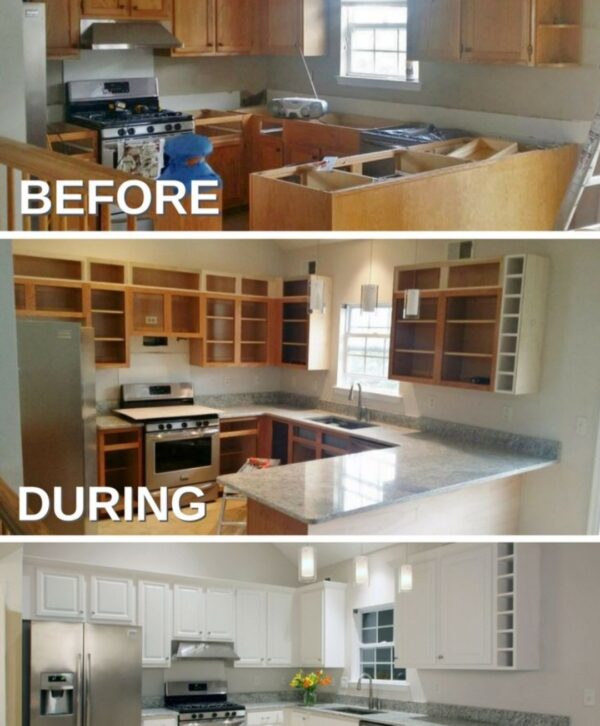
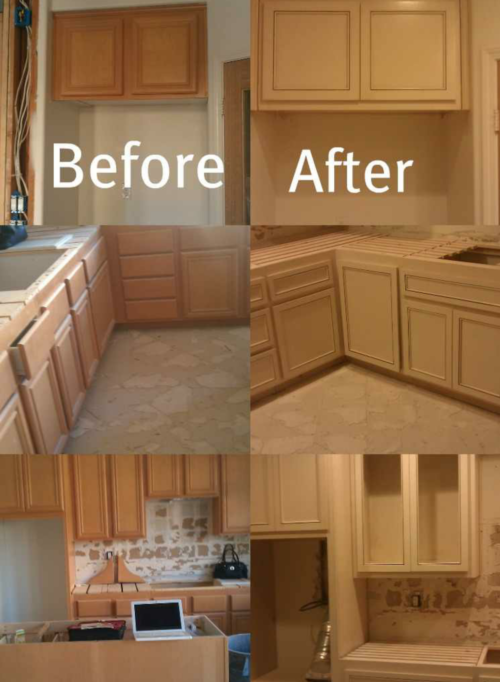
While discussing painter rates in Denver, it’s critical to distinguish between general house painting and a highly specialized service like kitchen cabinet refinishing. Painting cabinets is one of the most labor-intensive and technically demanding jobs in residential painting. It’s not about just changing a color; it’s about creating a durable, smooth, factory finish that can withstand daily use in the busiest room of your home. This level of detail and durability requires a different pricing structure altogether.
If you’re focused on how much do painters charge per hour for a cabinet project, you are already on the wrong track. A professional cabinet painter will almost never charge by the hour, and if they do, it should be considered a major red flag.
Why You Shouldn’t Hire an Hourly Painter for Cabinets
An hourly rate for cabinet painting creates a conflict of interest. The most vital factor for a long-lasting cabinet finish is the meticulous prep work: degreasing, sanding, caulking, and priming. This process is time-consuming. An hourly painter is financially incentivized to rush these critical steps to finish faster. This leads to a finish that will inevitably peel, chip, and fail. Furthermore, general house painters often lack the specific equipment and knowledge of industrial-strength coatings required for a finish that won’t get sticky or scratch easily.
How Professional Cabinet Painters Price Their Work
A true cabinet refinishing specialist provides a detailed, project-based quote. This ensures every step is accounted for and the price is locked in, protecting you from unpredictable costs. This method is transparent and guarantees you are paying for a quality result, not just for time on the clock. The final price is based on several key factors:
- The total number of cabinet doors and drawer fronts.
- The overall size and layout of your kitchen.
- The current condition of the cabinets (e.g., wood type, existing finish, necessary repairs).
- The desired finish (e.g., solid color, glazing, two-tones).
This project-based pricing model removes all guesswork. You receive a firm, fair price for a guaranteed outcome. The difference between an hourly paint job and a professional refinishing project is a difference you can see and feel for years. See what a true factory finish looks like. View Our Work.
How to Get an Accurate Painting Quote and Hire the Right Pro
Understanding the average cost of painting is a good start, but getting a firm, accurate quote for your specific project is what truly matters. A low hourly rate often hides inexperience, skipped steps, and cheap materials that will fail in a few years. To hire a true professional who delivers a lasting finish, you need to look beyond the initial price and evaluate the entire process.
Provide Clear Project Details
A painter can only give an accurate quote if they have accurate information. Vague requests lead to vague estimates. Before you even call, document the scope of your project. For cabinet painting, this means providing a precise count of all doors and drawers. For interior rooms, provide dimensions and details about the condition of the walls. The more information you give, the better the estimate will be. Our process is direct: you can text us the number of doors and the number of drawers with pictures and we can get you an accurate price immediately.
Ask About Their Process, Not Just the Price
Instead of focusing only on how much do painters charge per hour, the most important question you can ask is, “What is your preparation process?” A professional painter will be proud to explain their methods in detail. Key questions to ask include:
- What specific steps do you take to prep the surfaces?
- What exact primers and topcoats do you use for this job?
- How do you ensure a durable, factory-like finish?
If a painter is vague or can’t explain their process, they are not the right choice. Prep work is the most vital factor in a quality paint job, and a true craftsman knows it.
Verify Their Experience and Get It In Writing
Never hire a painter based on a verbal agreement. A professional operation will always provide a detailed, written contract. Before you sign, do your due diligence by checking online reviews, asking for references, and looking at a portfolio of their past projects. The final contract should be a comprehensive document that outlines everything, leaving no room for surprises. It must specify:
- The full scope of work, including all surfaces to be painted.
- A detailed breakdown of the preparation process.
- The specific brands and types of materials to be used.
- The total fixed cost for the project, not just an hourly guess.
- A clear timeline for completion.
This level of detail in a contract is a hallmark of a trustworthy business. For example, established companies like Performance Painting demonstrate the kind of professionalism and clear process homeowners should look for, regardless of their location.
A detailed contract protects both you and the painter, ensuring everyone is clear on the expectations. At Painting Kitchen Cabinet Denver, we put everything in writing because we stand behind our work and our process.
From Hourly Rates to a Flawless Finish: Your Next Steps
Navigating painting costs means looking beyond a simple number. The key takeaway is that a painter’s hourly rate can be misleading, as the final quote is heavily influenced by crucial factors like surface preparation, material quality, and the overall scope of work. Therefore, asking how much do painters charge per hour is often less important than securing a comprehensive, project-based estimate from a seasoned professional. This is especially true for specialized jobs like cabinet refinishing, which demand a specific skill set for a durable, high-quality result.
For homeowners in Denver and all surrounding cities, our team brings over 45 years of dedicated experience to your project. We don’t do quick cover-ups; we deliver a true, factory finish using an exclusive spray-application process built to last. If you’re ready to see the difference that real craftsmanship makes, skip the guesswork. Text us pictures of your cabinets for a fast, accurate, project-based quote!
Your home deserves a professional touch, and now you have the knowledge to hire the right team for the job.
Frequently Asked Questions About Painter Costs in Denver
Is it cheaper to hire a painter or do it myself?
While a DIY project costs less in materials, hiring a professional painter prevents expensive errors and saves valuable time. A pro has the correct equipment, experience for critical prep work, and the skill to deliver a durable, flawless finish. When you factor in the cost of tools you may only use once and the risk of a poor result that needs fixing, hiring an experienced painter provides superior long-term value and a job done right the first time.
How is cabinet painting priced if not by the hour?
Professional cabinet painting is almost never priced hourly because it is a detailed, multi-stage process. Reputable specialists price the job based on the number of cabinet doors and drawers. This fixed-price model accurately reflects the immense amount of labor involved in cleaning, sanding, priming, and applying multiple coats for a factory finish. This method provides you with a clear, guaranteed cost that covers the entire scope of work, not just the time spent in your home.
Why is professional cabinet painting so much more expensive than wall painting?
Cabinet painting is a labor-intensive refinishing service, not just painting. The process demands meticulous preparation, including degreasing, sanding every surface, and masking the entire work area. We use industrial-strength primers and precatalyzed lacquers that are far more durable and costly than house paint. Achieving a perfectly smooth, hard-wearing finish on detailed cabinet doors requires a level of skill and precision far beyond what is needed for rolling paint on a flat wall.
What should be included in a professional painter’s written estimate?
A legitimate written estimate must be detailed and transparent. It should clearly define the scope of work, listing all surfaces to be painted. It must specify the exact prep work involved, the brand and type of paint to be used, and the number of coats. The document should also include a clear breakdown of labor and material costs, the painter’s license and insurance information, a projected timeline for completion, and the agreed-upon payment terms.
Do painters charge extra for ceilings, trim, or difficult-to-reach areas?
Yes, these elements are typically accounted for as separate line items or result in a higher overall project cost. Ceilings, trim, and doors demand more precise work, different paint sheens, and extensive masking. Difficult areas like vaulted ceilings or stairwells require specialized equipment like scaffolding and extra labor for safety and setup. These factors increase the time and skill required, which is always reflected in the final price of a professional paint job.
How can I tell if a painter’s hourly rate is fair for my area?
The best way to gauge a fair price is to get at least three detailed written estimates from insured and reputable local painters. Be cautious of extremely low bids, as they often indicate a lack of insurance, cheap materials, or unskilled labor. When you evaluate what to pay, don’t just ask how much do painters charge per hour; compare the full scope of prep work, the quality of materials specified, and the company’s professional reputation and past work.