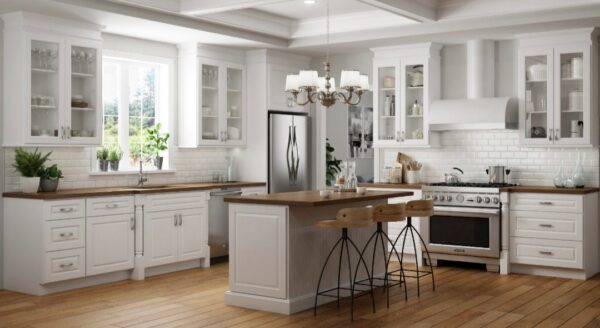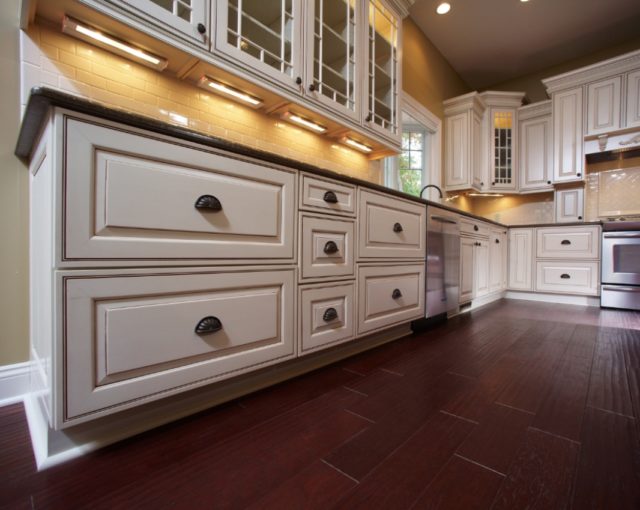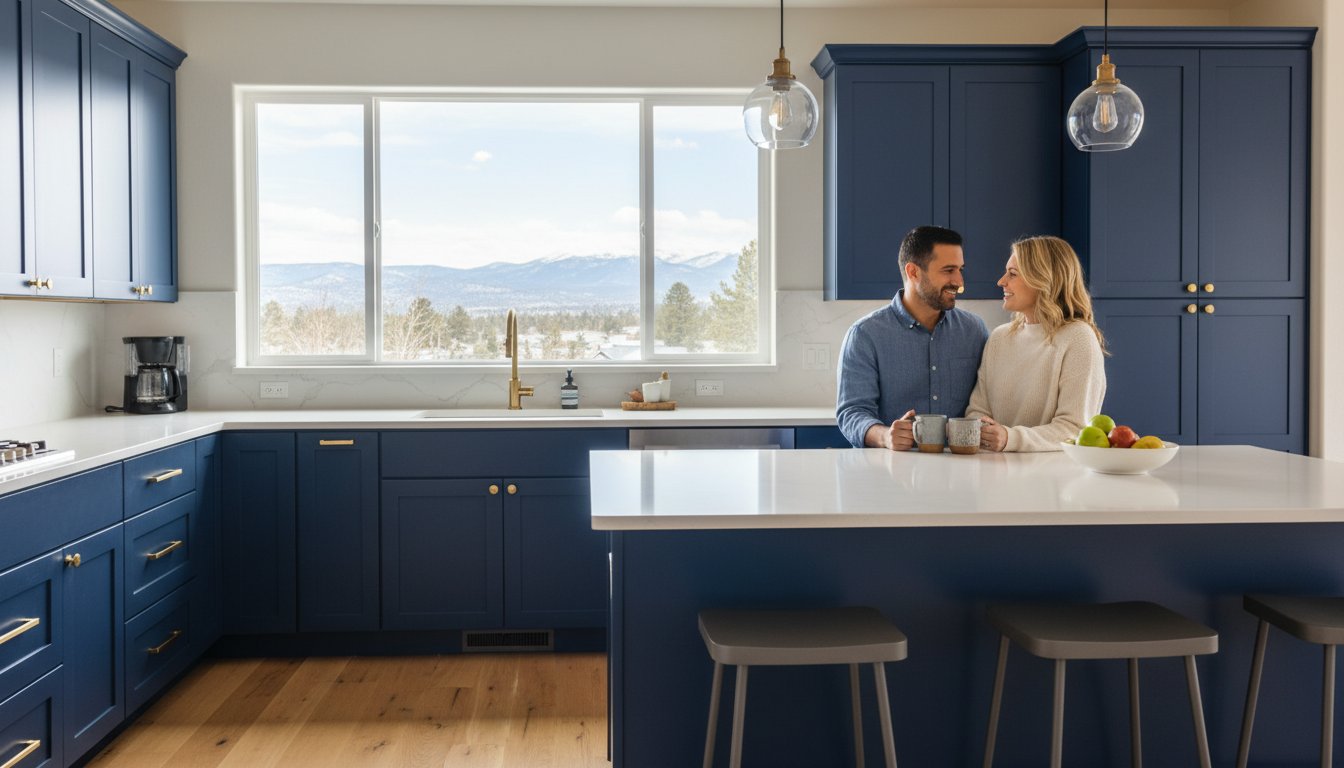
You want cabinets that look like they just arrived from a high-end manufacturer, but you are not interested in the $30,000 price tag or the weeks of demolition that come with a full kitchen remodel. That tension is exactly what factory finish cabinet painting resolves. Homeowners across Castle Rock, Castle Pines, Highlands Ranch, and Parker are discovering that professional spray-applied coatings can replicate the smooth, durable surface of factory-built cabinetry at a fraction of replacement cost. This guide explains what a factory finish actually means, how the process works, what you should expect to pay in the Denver metro area, and which local companies deliver results worth your investment.
Table of Contents
-
Factory Finish vs. Standard Cabinet Painting: Key Differences
-
Top Cabinet Painting Companies in Denver Offering Factory Finish
-
Questions to Ask Before Hiring a Factory Finish Cabinet Painter
-
Frequently Asked Questions About Factory Finish Cabinet Painting
-
Conclusion: Your Next Steps for Factory Finish Cabinets in Denver
What Is a Factory Finish for Cabinets?
A factory finish refers to professional-grade, spray-applied coatings that achieve the same smooth, durable surface found on manufacturer-installed cabinets. The term describes an outcome, not a location. Whether the work happens in a dedicated shop, a mobile spray booth, or a carefully prepared on-site space, the goal is identical: eliminate brush marks, roller stipple, and any visible texture that signals a DIY or low-budget paint job.
The coatings themselves set factory finishes apart from what you buy at the hardware store. Conversion varnish, catalyzed lacquer, and two-component polyurethane are the materials professionals use. These products cure through a chemical cross-linking reaction, not just solvent evaporation, which creates a harder, more impact-resistant surface. They also atomize differently when sprayed, laying down in a fine, even mist that self-levels before curing.
For Denver homeowners, the dry climate adds another reason to care about finish quality. Low humidity and wide temperature swings cause wood to expand and contract throughout the year. Standard latex paints lack the flexibility and adhesion to handle that movement without eventually cracking along joints and edges. Factory-grade coatings are formulated to move with the substrate, which means fewer callbacks and a finish that still looks clean five or ten years later.
Factory Finish vs. Standard Cabinet Painting: Key Differences
Application Method
Standard cabinet painting typically involves brushes and rollers. Even in skilled hands, these tools leave behind subtle texture: brush strokes on frame faces, stipple patterns on door panels, and uneven coverage where surfaces meet at corners. The result can look acceptable from a distance but rarely holds up to close inspection.
Factory finish application relies on high-volume low-pressure (HVLP) or airless spray systems that atomize the coating into a fine mist. The spray pattern covers recessed panels, raised edges, and flat surfaces with uniform thickness. There is no dragging, no lap marks, and no buildup in corners. When you run your hand across a properly sprayed cabinet door, it feels like glass.
One caveat worth verifying: some contractors advertise factory finish but still brush the cabinet frames while spraying only the doors. Ask directly whether every surface, including face frames and end panels, receives spray application. A true factory finish leaves no brushed surface visible anywhere in the kitchen.
Durability and Longevity
The durability gap between standard paint and factory coatings comes down to chemistry. Catalyzed finishes cure through a reaction that creates long-chain polymer bonds, producing a surface that resists chipping, scratching, and moisture penetration. Standard latex or alkyd paints dry through evaporation and remain comparatively soft, especially during the first few weeks after application.
Stain and lacquer factory finishes offer an additional benefit for homeowners who want visible wood grain. The stain penetrates the wood fibers while the lacquer topcoat seals the surface. This combination protects against cooking oils, steam, and daily handling without hiding the natural character of the wood. For kitchens with consistent wood species and attractive grain patterns, this approach delivers warmth that opaque paint cannot match.
Cost and Timeline Comparison
Standard cabinet painting in the Denver area typically runs between $3,000 and $6,000 for an average kitchen, with project timelines of five to seven business days. A factory finish paint job adds cost and time: expect $4,500 to $8,500 and seven to ten business days, reflecting the additional preparation, spray setup, and material quality involved.
Factory finish stain and lacquer work sits at the top of the range, from $5,500 to $10,000, with timelines extending to ten to fourteen business days. The extra time goes into stripping existing finishes, sanding to bare wood, matching stain color across different pieces, and applying multiple clear topcoats.
Put those numbers against the $30,000 average for a full kitchen remodel, and the value proposition sharpens. Research cited by industry sources indicates that a minor kitchen update, including cabinet refinishing, can return up to 113 percent of its cost. Factory finish cabinet painting occupies the sweet spot between budget-conscious repainting and full-scale replacement, delivering a premium aesthetic at fifteen to thirty percent of the cost of new cabinets.
The Factory Finish Process: Step by Step
Preparation and Surface Assessment
Every durable finish starts with what you cannot see. Kitchen cabinets accumulate cooking oils, grease, and hand oils that form an invisible film on surfaces. Industrial degreasers break down that film, and skipping this step guarantees adhesion failure down the road. After degreasing, the sanding begins. Professionals use progressive grits, starting around 80 to remove old finish and moving through 120 to 220 to create a uniform scratch pattern that gives the primer a mechanical bond. Companies that advertise no-sand shortcuts are not delivering factory finish results.
Once surfaces are clean and sanded, the crew fills dents, dings, and old hardware holes with wood filler and sands everything flush. A tinted primer goes on next, matched to the final color to reduce the number of finish coats needed and to build depth that reads as richness rather than flat color.
Spray Application
Doors and drawer fronts come off their hinges and move to a controlled spraying environment. Some companies, like Walls by Design, use a mobile spray booth set up on the property that contains overspray while maintaining proper ventilation. Others, like Kitchen Transformed, transport doors to a dedicated shop. Both approaches protect the rest of your home from airborne finish particles.
The application itself involves multiple thin coats, typically two to three coats of primer followed by two to three coats of finish, with light sanding between each to knock down any dust nibs or imperfections. For stain work, the color goes on as a wiped application that builds depth, followed by clear lacquer or conversion varnish sprayed over the top for protection. Each coat flashes off in fifteen to thirty minutes under controlled conditions before the next goes on.
Curing and Reinstallation
Catalyzed finishes continue to harden for seven to fourteen days after application, even though they are dry to the touch within hours. Homeowners should treat freshly finished cabinets with care during this window, avoiding heavy cleaning or abrasive contact. One alternative technology comes from N-Hance of Denver, which uses UV light to cure finishes instantly. That approach cuts total project time to three to five days and eliminates the curing wait.
When reinstallation begins, the crew mounts doors and drawer fronts with care. Many homeowners take this opportunity to upgrade to soft-close hinges, which prevent the slamming that chips finish over time. A final inspection checks for dust nibs, runs, or uneven sheen before the crew considers the job complete.
Stain vs. Lacquer vs. Paint: Choosing Your Factory Finish
Paint holds fifty-two percent of the current market share, and for good reason. It hides mismatched wood species, covers previous stain colors completely, and opens up bold color choices that stain cannot replicate. For kitchens with oak cabinets from the 1990s or a mix of wood types accumulated over years of additions, paint delivers a clean, unified look.
Stain preserves the natural grain pattern and works best when all cabinets share a consistent wood species. The process costs more because it demands grain-matching across doors and frames, plus additional steps for color application and clear topcoating. The payoff is a kitchen that feels warm and organic, with wood character still visible under the protective finish.
Lacquer functions as a clear or tinted topcoat applied over stain or paint. It provides the hardest surface finish available and offers a practical advantage: minor scratches can often be repaired with solvent blending rather than full refinishing. Glaze adds another dimension, applied over paint or stain and then wiped away to leave color concentrated in recessed panels and detailed edges. The technique requires a skilled hand but creates depth that flat color cannot achieve.
Color trends in 2026 lean toward warm neutrals like greige and creamy white, with sage green and deep navy appearing frequently in Denver-area projects. Natural wood stains, particularly walnut and white oak, are gaining traction in Castle Rock and Highlands Ranch, where homeowners want to balance modern updates with the region’s rustic architectural traditions.
Top Cabinet Painting Companies in Denver Offering Factory Finish
Walls by Design
Based in Castle Rock and operating since 1999, Walls by Design holds a 4.9-star rating across 518 reviews. Their mobile spray booth system allows doors to be finished on-site without overspray entering the home, and they back their work with a lifetime warranty that includes free yearly touch-ups. Service area covers Castle Rock, Castle Pines, Highlands Ranch, Parker, and the broader Denver metro.
Paint Denver
Paint Denver carries a 4.9-star rating from 406 reviews and focuses on residential interior painting with a strong cabinet specialization. Their volume of completed projects provides a deep portfolio for prospective clients to review, and their online presence makes it easy to see consistent quality across dozens of kitchens.
Imhoff Fine Painting
With a perfect 5.0-star rating across 52 reviews, Imhoff Fine Painting operates as a boutique service with high-touch client communication. Homeowners with smaller kitchens or those who want a more personalized consultation process will find their approach appealing. The lower review count reflects a selective project load rather than limited experience.
Kitchen Transformed
Serving Parker, Castle Pines, Highlands Ranch, and Aurora, Kitchen Transformed sprays all doors at their dedicated shop rather than on-site. This approach minimizes disruption inside the home. They also offer cabinet door replacement as an upgrade option for homeowners whose existing doors are damaged or whose layout would benefit from updated door profiles.
N-Hance of Denver
Established in 2022, N-Hance brings UV-cured finish technology to the Denver market. Their process cures coatings instantly under ultraviolet light, enabling a three-to-five-day turnaround with no lingering odor. For homeowners who need the fastest possible timeline without sacrificing factory-quality results, this technology represents a genuine differentiator.
Cost Guide: Factory Finish Cabinet Painting in Denver CO
Base pricing for factory finish cabinet painting in the Denver area runs from $4,500 to $8,500 for an average kitchen with thirty to forty linear feet of cabinetry. Several factors push that number toward the higher end: a large number of doors and drawers, challenging wood species, existing finishes that require extensive stripping, and the choice of stain over paint all add labor hours.
Upgrades worth budgeting for include soft-close hinges, which typically add $300 to $600, and new hardware, which ranges from $200 to $800 depending on style and quantity. If your cabinet doors are structurally compromised or you want a completely different door profile, door replacement adds $2,000 to $5,000 to the project total.
Most quotes include removal and reinstallation of doors and hardware, surface preparation, spray application, and jobsite cleanup. Confirm whether the quote covers spraying the cabinet frames or only the doors; frame spraying should be standard for any company claiming factory finish results. What the quote does not include: new countertops, backsplash installation, plumbing, or electrical work. Many cabinet painting companies coordinate with other trades if you are planning a broader kitchen refresh.
Questions to Ask Before Hiring a Factory Finish Cabinet Painter
Do you spray cabinet frames on-site, or only doors? Frames must be sprayed, not brushed, for a true factory finish. If the answer hedges on this point, keep looking.
What brand and type of coating do you use? Listen for names like Benjamin Moore Advance, Sherwin-Williams ProClassic, or catalyzed conversion varnish. Generic answers about premium materials without specifics suggest the company may be using lower-grade products.
Do you carry general liability insurance and workers’ compensation? Verify coverage before allowing anyone to work in your home. Reputable companies provide proof without hesitation.
What is your warranty, and what does it cover? Industry standard runs two to five years. Walls by Design offers a lifetime warranty, which is exceptional. Understand what the warranty includes: peeling, adhesion failure, and excessive wear should be covered; normal aging and homeowner damage typically are not.
Can you provide references from the last three factory-finish projects in Castle Rock or Highlands Ranch? Local references confirm experience with home styles and construction methods common to your area. A company that works primarily in central Denver may not understand the specific needs of a Castle Pines home.
How do you handle dust control and ventilation during spray application? Mobile spray booths and negative air pressure setups represent best practices. The answer tells you how seriously the company takes protecting the rest of your home.
DIY vs. Professional Factory Finish: What You Need to Know
A DIY approach to cabinet painting costs between $300 and $800 for materials: sprayer rental, paint, primer, sandpaper, and degreaser. That number looks appealing against a $4,500 professional quote, but the gap narrows when you account for what you are not getting.
Proper spray technique requires practice. Runs, orange peel texture, and overspray are common mistakes that become permanent once the coating dries. Consumer-grade sprayers cannot atomize catalyzed coatings properly; professional HVLP systems start around $1,000 and go up from there. Even if you invest in equipment, spraying in a residential garage exposes you to volatile organic compounds and risks overspray settling on vehicles, stored items, and the garage itself.
Time is the other factor. A DIY kitchen cabinet project typically consumes three to six weeks of weekends. Professionals complete the same work in five to ten business days. For most homeowners, the combination of equipment cost, learning curve, health considerations, and time investment makes professional service the better value. Factory finish results are achievable by a dedicated DIYer, but only with significant upfront investment and a willingness to accept that the first attempt may not meet expectations.
Frequently Asked Questions About Factory Finish Cabinet Painting
How long does a factory finish last on kitchen cabinets? Ten to fifteen years or more with proper care. Catalyzed finishes outlast standard paint by a factor of two to three, and yearly touch-ups, where offered, extend that lifespan further.
Can you change from stained to painted cabinets with a factory finish? Yes. This is one of the most common transformations. The process requires thorough sanding and a stain-blocking primer to prevent tannins from bleeding through the new paint, but the result looks like the cabinets were always painted.
Is factory finish cabinet painting worth the cost? With up to 113 percent ROI on minor kitchen updates, it ranks among the highest-value home improvements available. The combination of aesthetic transformation and cost savings versus replacement makes it a compelling investment for homeowners planning to sell or stay.
What is the difference between refinishing and repainting? Refinishing involves stripping cabinets to bare wood and applying new stain and lacquer. Repainting applies new color over existing paint or primer. Refinishing costs more and takes longer but preserves or restores the natural wood look.
Do I need to empty my cabinets during the project? Yes. All contents should be removed before work begins. Some companies offer temporary storage containers to help manage the displacement.
How do I clean factory-finished cabinets? Mild soap and water on a soft cloth. Avoid ammonia-based cleaners, abrasive sponges, and vinegar, all of which can dull the finish over time. Wipe up spills promptly, and the finish will maintain its sheen for years.
Conclusion: Your Next Steps for Factory Finish Cabinets in Denver
Factory finish cabinet painting delivers the look and durability of new cabinets at a fraction of replacement cost. For Denver-area homeowners, the combination of specialized local providers, proven coating technologies, and strong return on investment makes this a renovation worth pursuing with confidence.
Start by requesting quotes from at least three companies. Walls by Design, Kitchen Transformed, and N-Hance each bring distinct approaches to factory finish work, and comparing their proposals will clarify what matters most for your kitchen. Verify that every quote includes spray application on all surfaces, ask about specific coating brands, confirm insurance coverage, and read local reviews from homeowners in your area.
Plan your timeline realistically. Spring 2026 slots fill four to six weeks in advance, and even off-peak seasons require two to three weeks of lead time. The wait is worth it. When the crew reinstalls your cabinet doors and the light hits that smooth, even finish, the kitchen will feel new without the cost and chaos of starting from scratch.